
By Daniel Cloake, 23rd September 2025
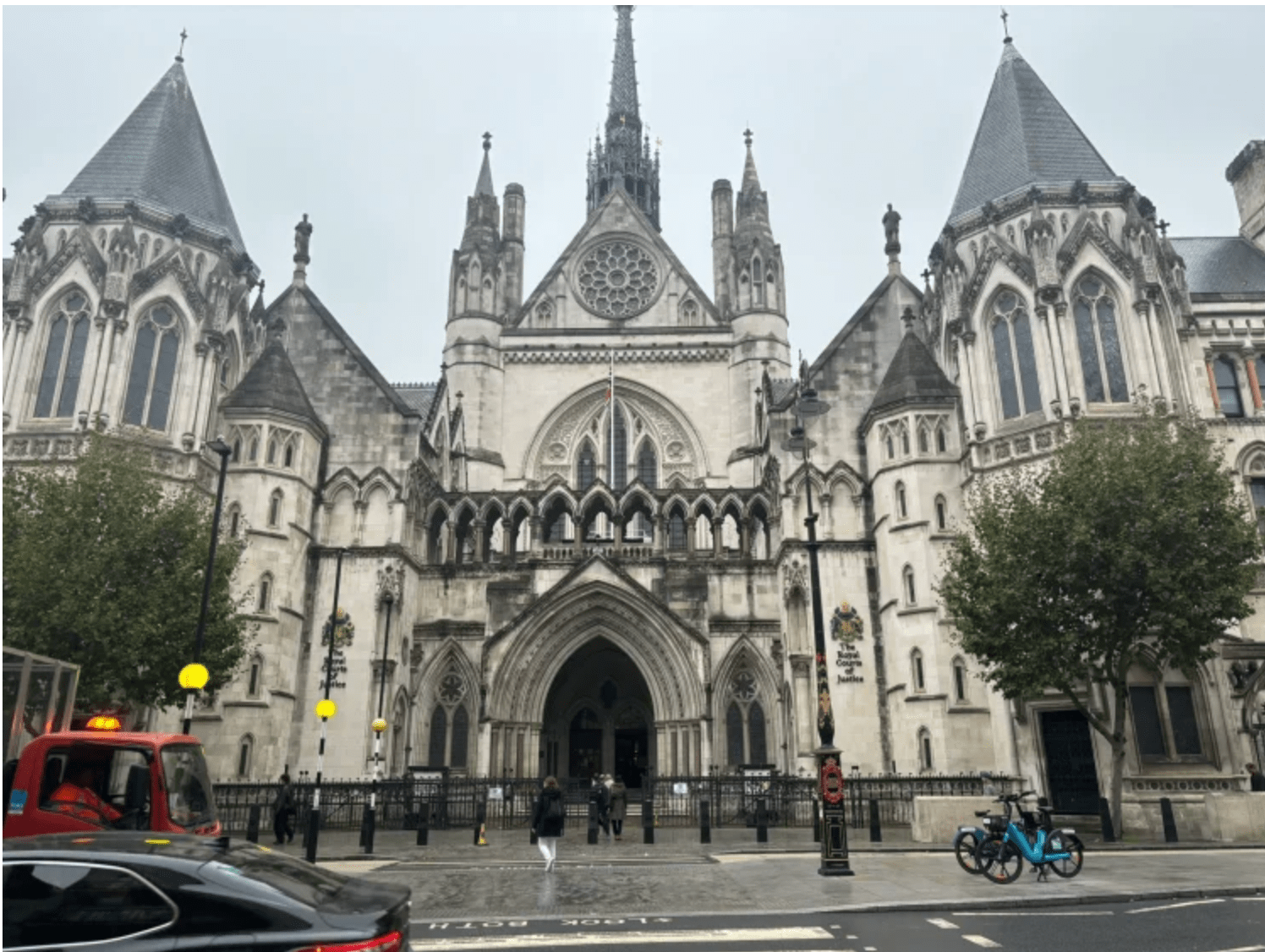
Editorial note: Judgment in this case has now been published: Re Carl Gardner, Deceased (Duration of Transparency Order). This blog is reprinted, with permission (and a few minor changes) from Daniel’s own website: mouseinthecourt.co.uk. Daniel observed this hearing (COP 20006397) in person in Court 33 at the Royal Courts of Justice on September 16th 2025. Celia Kitzinger was also there in person as an intervenor in the case. The Open Justice Court of Protection Project has previously published four blogs about this ongoing case: from earliest to most recent, they are: “Determining the legal status of a ‘Living Will’: Personal reflections on a case before Poole J”; “Validity and applicability of an Advance Decision to Refuse Treatment: A pre-trial review”; “Preparing for possible future lack of capacity: My advance decision to refuse treatment and the case before Poole J”) and “Authenticity of a ‘Living Will'”.
The long-term partner of a man at the centre of Court of Protection proceedings has resisted an application made by his “very private” family to prevent details of the case from being reported following the impending expiry of reporting restrictions.
Mr AB was a 43-year-old man who became incapacitated after suffering hypoxic brain damage following a cardiac arrest on 5th May 2024. He required intensive hospital care to keep him alive which included clinically assisted nutrition and hydration.
The Court of Protection, a specialist court that makes decisions for people who lack the mental capacity to make those decisions themselves, became involved in November 2024.
Among other issues, the Court of Protection was asked to adjudicate on a dispute which relied on the validity of a so-called living will and other documents.
In the words of Mr Justice Poole, in a judgment dated June 2025, the Living Will set out his position to refuse certain medical treatment, including life-sustaining treatments, in the event that he suffered a serious brain injury from which he was unlikely to recover so as not to require full-time-care.
It was said to have been signed about a month before Mr AB had sustained his brain injury but its existence had only come to light in August 2024.
The family took the view that the document was fraudulent, or that it had been signed by him under undue influence.
Ultimately these objections were dropped at the last minute – the fraud accusation disappearing on the first day of a scheduled 4-day trial. Accepting the views of Mr AB in the documents, Mr Justice Poole authorised moving Mr AB to a hospice for withdrawal of clinically assisted nutrition and hydration and palliative care. Mr AB sadly passed away on 8th July 2025.
During the course of these Court of Protection proceedings, the identity of Mr AB, his partner, wider family members, and indeed other details which might allow identification of the same, were prevented from being reported or communicated to others. The details of these restrictions, treated as a contempt of court if breached, are recorded in a so-called transparency order.
The transparency order in this case was amended, in anticipation of the withdrawal of treatment, to expire on August 30th 2025. This would have the effect of removing all reporting restrictions.
The wider family, through Mr AB’s mother, sought to amend this expiry date to either never expire, or expire in 10 years’ time. This application was contested by both Mr AB’s partner and by Professor Celia Kitzinger, a founding co-director of the Open Justice Court of Protection Project, both of whom averred that the reporting restrictions should not be extended.
At a substantive hearing before Mr Justice Poole, with a number of observers watching remotely (although repeated microphone problems meant not always hearing remotely), barrister Parishil Patel KC, on behalf of AB’s mother, told the court their application had changed – and they now sought an expiry date of restrictions in either 2 or 10 years’ time.
Mr Patel told the court his client wished to “prevent publication of very personal, very private details about [AB]” who “was a very, very private person…he wouldn’t want people to know his information“.
He added Mr AB had said as much in his living will – “I like to maintain my privacy. I would not like my photo to be shared on social media“.
Whilst acknowledging that “it’s correct as a matter of principle that any derogation from open justice has to be justified”, Mr Patel submitted that the Article 8 privacy rights of the family members outweighed the Article 10 rights of the public to know the identity of those connected to the case.
Having recognised that Professor Kitzinger has a particular interest in communicating information to enhance the public’s understanding about living wills, he added that the public interest issues in the already-published judgments can be reported and discussed without the need for the identification of family members.
Mr Patel told the court there is a risk to the professional reputations of Mr AB’s relative,s having cited in written submissions that “many allegations were made in the proceedings which were not proven and were not ultimately relevant to the court’s final disposal of the proceedings“.
Barrister Ms Alexis Hearnden, on behalf of Mr AB’s partner, explained that her client wanted “to be able to speak freely about an enormous part of her life”, having become “embroiled in Court of Protection proceedings” over the past year. “At the moment the transparency order prevents her from fully speaking about that.“
Ms Hearnden explained that her client had “erred on the side of caution” so far, and avoided talking about any details of the case which could breach the current transparency order, with the potential consequence of a prison sentence or fine.
Questions to her client about how Mr AB died, or what his funeral arrangements were, had been discouraged save for dealing with logistical issues, we were told.
In written submissions drafted by Victoria Butler-Cole KC and Ms Hearnden, it’s said that the primary reason for anonymisation for Mr AB’s partner and family was to prevent identification of him. Reliance was placed on a line in a previous judgment of HHJ Hodge KC: It was said that now that AB has died, he “no longer has any need for the special protection afforded by anonymity“
The written submissions also said that the partner “is distressed by AB’s death and the court process, and that is exacerbated by the prospect of never being able to speak about what has happened, including even to her friends or family… the strained relationship with AB’s family was a significant reason for the issue of proceedings and the way that they developed“.
There is a strong public interest in the public being informed about the workings of the Court of Protection, and the challenges that are faced on a daily basis by individuals seeking to assert their rights and the rights of others in the Court of Protection
Written submissions on behalf of Celia Kitzinger
The court also heard submissions made on behalf of Professor Celia Kitzinger who was granted intervenor status at this hearing.
Represented pro bono by Emma Sutton KC and Gemma McNeil-Walsh the court was told they echoed the submissions of Mr AB’s partner and that they also resisted the continuation of the transparency order.
Ms Sutton told the court that there were some “unusual aspects” about this case, including the initial allegations that the living will was fraudulent, which were “really important to discuss freely“.
In written submissions it was said that “reporting is currently limited to an abstract form, devoid of much of its human interest; which could well mean that the blog posts (etc), will not be read, and the information will not be passed on” and that “the principle of open justice would be further promoted if the proceedings could be more freely discussed and reported upon without having to navigate the practical difficulties of complying with the terms of the transparency order“.
They acknowledged that although the Article 8 privacy rights of the family were engaged, “they are not weighty enough to justify maintaining the fetter” of the transparency order or sufficient to overturn the Article 10 rights of the partner, the intervenor and the public.
Mr Justice Poole indicated that he would reserve judgment and would hand down a draft to the parties “as soon as I am able“.
Towards the end of the hearing, two members of the public walked in and sat to observe proceedings.
Reassured by the judge that they could remain, but that he’d have to give them a copy of the transparency order, it transpired that they might not fully understand English.
After they had left, Mr Justice Poole commented that although tourists were entitled to come in and look at the work of the court, this exchange “shows some of the complexities which arise” when dealing with transparency orders.
Daniel Cloake is a blogger and news gatherer with a keen interest in Open Justice and the niche and the nuanced. You can read his many other blog posts on his own site“The Mouse in the Court”. He’s also blogged for this Project before (e.g. “I have to tell you something which may well come as a shock”, says Court of Protection judge). He tweets @MouseInTheCourt
 Promoting Open Justice in the Court of Protection
the stress and emotional toll of having a family member get ill and subsequently pass away is enormous in itself. without the strain of worrying you say the wrong thing even to close family or friends the fear it instils keeps you awake at night. It is becoming apparent that even if you had capacity to set up things which to be honest in life most of us ignore as if it will go away. Your wishes are picked over and disputed by everyone. It is sad this person was taken ill and subsequently lost capacity and died. the loss for everyone of his family has taken the wrong turn and arguments disputes broken out. we all have to live with our own concience at the end of the day they lost a loved one and are just trying to cope the best they can. Just my opinion and what do I know
LikeLike