

By Celia Kitzinger, 30th March 2026 A Court of Protection judge has refused an application from South Tyneside Council to make a Civil Restraint Order (CRO) against the father of a young autistic man living in supported accommodation. I observed the hearing (COP 14075351) before Mr Justice Poole sitting in person in the Royal CourtsContinue reading “Judge refuses to make Civil Restraint Order against P’s father”
Tag Archives: Court of Protection
“Open Justice is not open sesame” Court of Appeal told in court document disclosure case
According to the appellant, an “urban myth” had developed about the application of the ‘open justice’ principle to Court of Protection hearings. Flowing from that urban myth, and exemplified by this case, was the proposition that non-parties have rights to access hearings (and materials relevant to hearings) before the Court of Protection, exercisable upon request, and for their benefit (Written submissions of Alex Ruck Keene KC (Hon))
Court of Appeal to decide whether open justice applies to the Court of Protection: Briefing for CA-2025-001953 Re Gardner (Deceased)

In this ‘advance briefing’, I will set out the relevant background and a short summary of the arguments of the appellant and the intervenors. I hope this will assist observers to follow the hearing – either in real-time (in person in the Royal Courts of Justice or via the live-stream) or subsequently via the recording likely to be available after the hearing on the court’s YouTube channel.
The gulf between theory and practice: Open justice in the Court of Appeal
By Celia Kitzinger, 24th February 2026 The judgment is now published (click on the title to read it) Lesley Barnor Townsend -v- Epsom and St Helier University Hospitals NHS Trust [2026] EWCA Civ 195 UPDATE 27th February 2026 The Court of Appeal decision: Permission to appeal was granted on Ground 3 and the appeal hasContinue reading “The gulf between theory and practice: Open justice in the Court of Appeal”
Permission to appeal refused: A procedural dead end

By Elissa Novak (with an introduction by Celia Kitzinger), 22nd February 2026 This is effectively the third tranche of litigation in the long-running case concerning Luba Macpherson and her daughter, “FP”. First came the welfare proceedings for FP which were concluded in 2023[1]. Then came committal proceedings which concluded in 2025 with Luba serving aContinue reading “Permission to appeal refused: A procedural dead end”
How to vary the duration of a Transparency Order from “until further order of the court” to “until the death of P”: My family’s Court of Protection story continued

By Amanda Hill, 12th February 2026 I am the daughter of a protected party in the Court of Protection. I can say that because at a hearing in March 2025, HHJ Murch approved my application to vary the Transparency Order covering my mum’s case, so that I could be identified as a family member ofContinue reading “How to vary the duration of a Transparency Order from “until further order of the court” to “until the death of P”: My family’s Court of Protection story continued”
“This cannot be allowed to carry on”: A non-compliance hearing with NHS Humber and North Yorkshire ICB

According to the OS, there had been “a disagreement between the parties” about whether or not the court ought to make that order in the first place (the ICB wanted instead to focus only on whether and how improvements could be made to JH’s current home) – so it rather looks as though the ICB has simply failed to comply with an order they don’t like.
P removed to residential care due to father’s non-compliance with orders for renal dialysis

P enjoys much of his life, his sports and his social time. His wishes and feelings are to live – but while living at home with his father he’s not been attending dialysis sessions regularly – despite a court order that his father must take him. Father remains in denial of the necessity for treatment and P’s high potassium levels could lead to early death.
Appealing a Court of Protection judgment

This post offers a basic introduction to Court of Protection appeals. It covers (1) the general principles that govern appeals and why appeals fail at an early stage (2) the procedure for making an appeal and some common reasons and (3) some alternatives to an appeal.
Consultation with Health and Welfare Attorneys/Deputies: A ‘lacuna in the system’ exposed in Cwm Taf Morgannwg UHB v RW [2026] EWCOP 10 (T3)

In ignoring her role as decision-maker and failing to consult about treatment, the hospital displayed “a stark disregard for and misunderstanding of the Mental Capacity Act 2005” said the Health and Welfare Attorney.
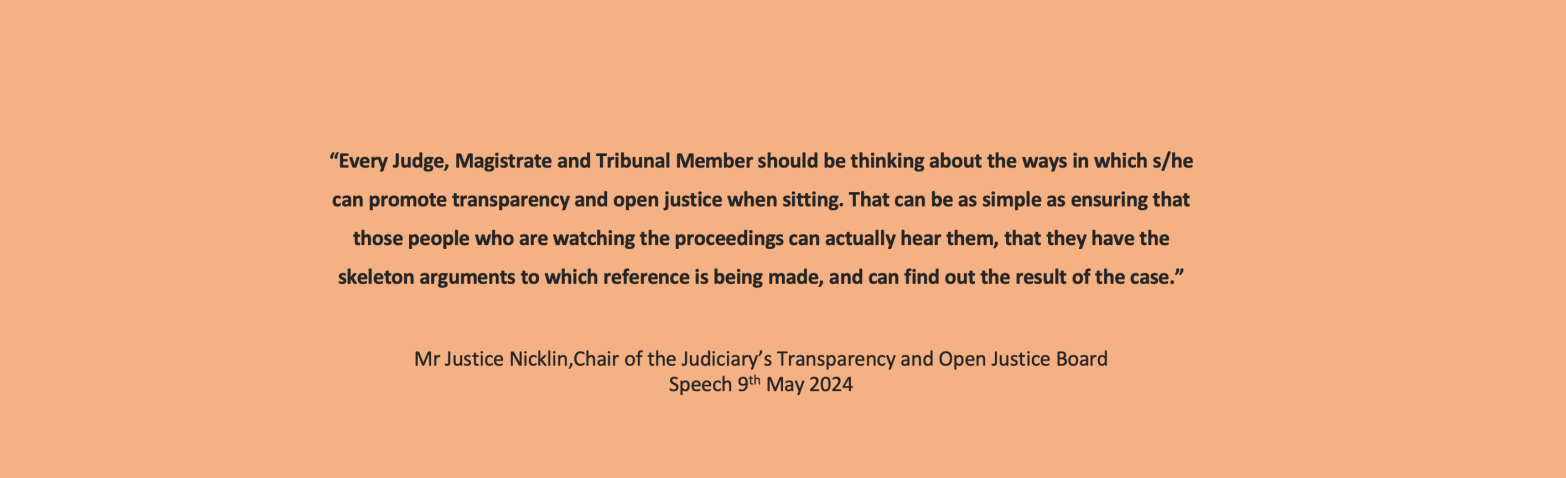
 Promoting Open Justice in the Court of Protection