
By Celia Kitzinger and Kim Dodd, 30th September 2024
Now with updating PostScript, 13th December 2024
We both watched this hearing (COP 20000918) on 30 September 2024 before HHJ Robertshaw in Bristol concerning a 91-year-old lady (P) who has been deprived of her liberty in hospital for several months, as a “social admission” (i.e. there’s no medical reason for her to be there).
She had been living with her son, who was providing care – the care package provided by the Local Authority having largely broken down due to the reluctance of both P and her son to accept their intervention.
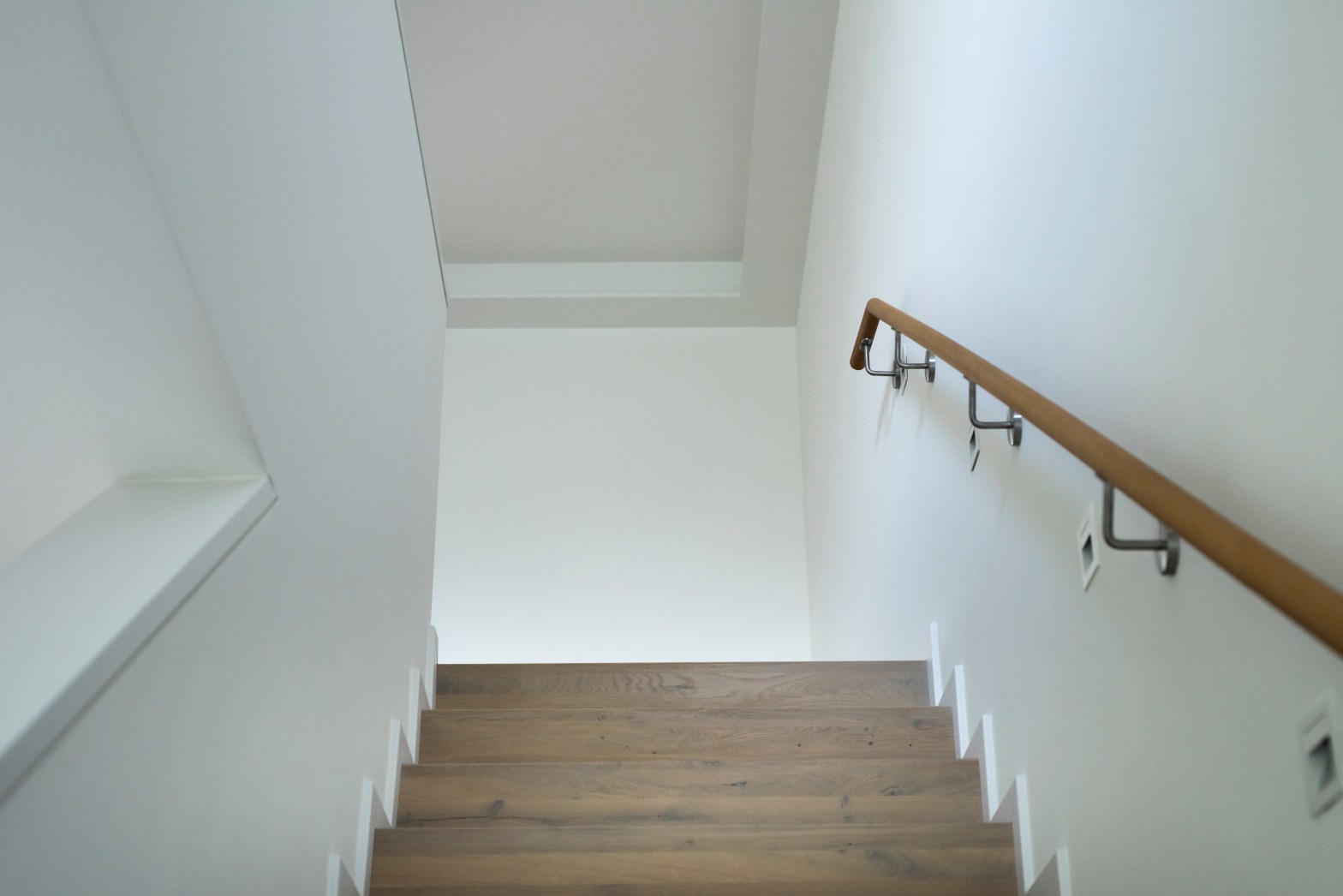
It’s not clear to us what (or who) precipitated admission to hospital, but the Local Authority and the Official Solicitor agree that the home is unhygienic and unsafe: they referred in particular to stairs without a banister and the risk that poses to P who has visual impairments. Their position is that it’s in P’s best interests to go into a care home, at least for the short-term while they make further investigations about her property, her finances, and her capacity to make her own decisions (she has “cognitive impairment”). They say there is reason for the court to believe on an interim basis (s. 48) that P lacks capacity to decide where to live, and they’ve identified a care home that is able and willing to take her, and they’ve included a “conveyance plan” in the bundle for the court. But P has made it clear she objects to being deprived of her liberty and wants to go home.
It was said in the introductory summary that her son would also like her to return home, but in the course of the hearing he expressed no opposition, in principle, to a care home for his mother. He did, however, strongly object to the particular care home proposed because it is a long way from his home and takes about two hours to get there by public transport. He has been visiting her around twice a week and would find it (he said) “impossible” to continue to do so under these circumstances. Relocation to that care home was, however, what the judge authorised – on an interim basis – after ensuring that the local authority would provide financial assistance to the son to enable him to visit his mother once a week.
It was quite a painful hearing to watch. We have each separately reflected on the case and our reactions.
Reflections from Celia
My first reaction was that mother and son were being separated against their wishes, and that intervention by the state to “protect” P’s safety against her wishes was a gross invasion of her right to privacy and family life. As another judge once said, “What good is it making someone safer if it merely makes them miserable?” (Munby J §120 Local Authority X v MM & Anor (No. 1) (2007)).
But the situation was rapidly made more complicated, with allusions to “safeguarding concerns” (never fully specified) that seemed to extend well beyond the possibility of P falling downstairs at home.
The son, who was in court, had applied to be joined as a party. Counsel for P via the Official Solicitor (Hannah Haines) raised concerns about this, saying that there were documents in the bundle detailing some of the “allegations” against him “and there may be, if he were to be a party, arguments as to whether or not all of those documents ought to be disclosed to him or whether they should be redacted or withheld”. This pointed to the possibility of a “closed material” hearing – of which there seem to be far more than was originally believed before the existence of Guidance regulating their use.
The question of whether or not parties (and the son is not – yet – a party) should be prevented from having access to documents and information on which other parties rely is a challenging one. It’s something I’ve considered in some detail after we published misleading information about a case in which there were parallel open hearings (which we watched) and closed hearings (which we were not aware of). In that case, P’s mother (who was a party to the case) was not informed that her daughter was being covertly medicated. Her arguments to get her daughter home, on the basis that she would be able to persuade her daughter to take the medication she was refusing, were therefore otiose. It felt like a huge betrayal of the whole idea of a ‘fair trial’ and of the very idea of ‘open justice’ to learn that the court had misled us (both the observers and P’s mother) in this way. We wrote about it here: “Statement from the Open Justice Court of Protection Project concerning an inaccurate and misleading blog post” and “Reflections on open justice and transparency in the light of Re A (Covert Medication: Closed Proceedings) [2022] EWCOP 44)”).
Although there can be good reasons for closed material hearings (and closed hearings), the effect – always, I think – is an element of unfairness and inequality. How do you defend yourself against arguments you haven’t seen or heard? How do you advance your own position in a convincing way when there are relevant matters being kept secret from you?
The judge in this case was obviously alert to the issues. She said, crisply, “It wouldn’t be just or fair if the court were asked to make a significant decision and was asked to place reliance on allegations placed before the court when [the son] was in ignorance of those allegations and unable to put his position before the court”. Well, yes. Exactly so.
As it turned out, it didn’t come to that, not least because the son wasn’t arguing for his mother to return home, and because the placement was “interim” and not intended to be permanent (albeit that she’s 91 so the notion of “permanence” is somewhat precarious). Instead, the argument at the moment turns on the physical risks of the home environment in terms of banisters and hygiene; there’s apparently no need to draw on any additional risks from the son in making an argument for P to be kept from her home: “so the issue for the court is whether it’s in her best interests to remain in hospital or to go to a care home”. And as there was only one suitable care home available, that decision seemed inevitable under the circumstances.
There was also a proposal (not yet before the court) to appoint a Finance Deputy to assess whether she has sufficient money to ensure her house is made safe – “if she doesn’t, then other issues concerning Son wouldn’t arise and so it wouldn’t be necessary for him to join and be given all that information” (Counsel for P).
The son did not engage at any point with the references to allegations against him. He seemed calm and composed. He said: “I do not have a problem with my mother being placed in a care home except that it must be accessible … [Placement A] is impossible for us to get to….. it’s a million miles away – as far away as you can get and still be in [County] – there’s no bus, and train transport is appalling and then it would require a taxi drive from the train station to [the Placement]. It would be impossible for me to afford that.”
The judge took this seriously and asked counsel to “direct me to the page numbers in the bundle where options for alternative care homes have been set out and the reasons why the Official Solicitor and the Local Authority have reached the conclusion that this care home is the most suitable”. Other care homes had been approached but only one other offer received and that was from a care home rated by the CQC as “Requires Improvement”. The social worker (also in court) was consulted about any outstanding possibilities. It seemed there were none.
The issue of the son visiting his mother became quite fraught. The judge asked what support the son could expect from the Local Authority with visiting his mother at the proposed care home. In response, counsel for the Local Authority (Rachel Baker) referred the judge to “§15 of the attendance note from the meeting with P in August” – apparently to support an implication that the mother might not wish the son to visit and/or that it was not in the best interests of the mother for her son to visit. I don’t know exactly because I haven’t seen this document, or the use made of it in the local authority’s position statement. Nor had P’s son – as the judge pointed out. “You are giving me reasons that make no sense to [P’s son]” said the judge, re-asking her original question.
Judge: “What exploration has the Local Authority had with [P’s son] regarding supporting visits by him to his mother if she was at [Placement A]?”
Counsel for Local Authority: Those explorations have not taken place. The intention is first to get capacity assessments regarding contact.
The son said the new placement was “unacceptable” because it was too far away. “Given my mother’s age she is very distressed that I am not visiting more often, but it’s impractical for me at the moment. I don’t know if you understand that I have cancer and am slightly limited in my activities.”
The judge asked Counsel for the LA again what support she anticipated the LA would offer to enable the son to visit his mother. Counsel for the LA repeated that “there would first of all need to be clarity with regard to capacity to make decisions regarding contact”.
“Please answer my question”, said the judge. “I know you’re seeking clarity about that, but at the moment [the son] is visiting his mother on regular basis […], so what is proposed in next 2 months if P is discharged from hospital to [Placement A].”
Counsel for the LA said she would need to take instruction on that. The judge called a 30-minute adjournment – following which Counsel for the LA reported that the LA was willing to pay for one visit per week (either by taxi, community transport or public transport) on an interim basis until the next hearing.
Counsel for P then expressed some concern about how these visits would take place. Visits in the hospital have been supervised (on whose authority we don’t know). “Given P will be in a private room once she’s moved if that is the order of the court, there would need to be some urgent consideration as to how those visits would be managed”. She also raised the point that – given the “safeguarding concerns” alluded to darkly in this hearing – “if there were restrictions in place and P didn’t agree and she wanted visits with family privately in her room, then that would require capacity assessments to be completed.” (Presumably the same must have applied to render lawful the supervision of visits in hospital?)
The judgment seemed inevitable under the circumstances. Everyone recognises that there’s no medical need for P to remain in hospital, where she’s been for many months. It’s not a good environment for her: she’s in a shared bay with little privacy, and she’s vulnerable to hospital infections there. There’s a dispute as to whether or not it’s safe and in her best interests to return home where she would continue to be looked after by her son – but both the Local authority and the Official Solicitor say there are sound and valid reasons why it’s not in her best interests and – given the state of her home – it’s also unsafe. The son also did not oppose a care home. There’s only one suitable care home – and although it’s difficult for the son to visit his mother there, the Local Authority will pay for him to go once a week until the next hearing. The judge was satisfied that it was in P’s best interests to be discharged from hospital and move to Placement A. She approved the transition plan and the making of the DOLS order. She did not approve contact restrictions (and counsel did not pursue this). The judge will consider the son’s application to become a party at the next hearing, which will be by Teams at 11am on 9th December 2024, for two hours.
After the judge’s decisions had been communicated, counsel raised another matter: our requests for their Position Statements. Both of the represented parties’ Position Statements contain material they don’t want made public. For example (said counsel for P), paragraph 19a. The judge read it silently, then asked: “What is your concern if that paragraph were disclosed?”. Counsel for P replied that “it conveys information which, if [P’s son] was joined, there may be an application made to restrict disclosure of that information and if this is reported it will obviously make that application otiose”. The judge told both advocates to formally file the paragraph numbers that they wanted to redact “bearing in mind that the balance is on disclosure rather than non-disclosure so please identify the relevant paras and please state WHY you want to redact them”.
So, we will probably not get to hear what the allegations are against P’s son – and he will not get to know them either, at least not in the immediate future. He may learn eventually, though, as there were suggestions of a possible future ‘fact-finding’ hearing.
A final caution: it’s quite possible that parts of this report are wrong, because it was perfectly clear that information was being withheld from P’s son, and therefore also from us, and we’ve not been sent Position Statements yet because of counsels’ wish to redact them. We’ll ask for the approved Order in addition to the Position Statements, and if it becomes obvious that we’ve made mistakes when we receive the Position Statements (assuming we do) and the approved Order (which we probably will get as we are entitled to it by law), then we’ll make (tracked) corrections to this blog post. But I suspect we’ll be left in the dark about what’s going on for a while yet.
Reflections from Kim
I’d sent requests to observe four different hearings that day, all of which had been vacated or moved to an ‘on the papers’ exercise, so I had just about given up hope of finding a hearing to observe. I was glad I hadn’t given up because this two-hour hearing was fascinating and depressing in equal measure.
The case was raw for me personally, as it seems to be following a similar trajectory to my dad’s CoP proceedings earlier this year. The conclusion of this hearing – which is that, at least for now, a woman who probably doesn’t have very long to live is being moved (against her will and that of her son) into a care home far away from her own home and family – was difficult to hear. I hope it ends better for P than it did for my dad, who having been forced into care against his will then lost the will to live, and died last month.
As always, this hearing left me with many more questions than answers. Compared to criminal and civil hearings, it seems to me that CoP hearings leave observers almost completely in the dark about the real backstory to the chain of events which led to the jurisdiction and powers of the CoP being invoked in the first place.
While counsel talked about the improvement work necessary for P’s own home to be a viable alternative (adopting an overly paternalistic view that risking falling down your own stairs in your later years while living in your own home, being cared for by your loving son, is somehow much worse than being placed in institutional care), it was not clear who owned the property and to what extent the Local Authority were responsible for the maintenance / safety of her home. Much of the discussion in the hearing centred on who would pay the travel costs for P’s son to visit his mother in the care home in the ‘interim’ period (10 weeks) which suggests both P and her son lack funds. I did a back of a cigarette packet calculation on the rough cost of the hearing (assumedly at the taxpayers’ expense) and worked out that the costs of the directions hearing alone could have covered a taxi to the moon and back (and /or a gold banister for P’s stairs).
It seemed to me that the ‘home-repairs’ were just the LA’s holding position until they could organise themselves to fully address the ‘elephant in the room’ in this case – the ‘allegations’ against the son which have triggered the need for supervised contact and a need for the LA to do further work to ascertain whether or not P has the capacity to decide who she has contact with. I found it disconcerting that P’s son was at the hearing when such a big life-change for his mother was decided upon (albeit, theoretically at least, temporary) whilst his application for joinder as a party was not yet being decided upon. Until he is joined as a party (if ever) this leaves him in the precarious position of not seeing any of the court documentation – neither the all-important bundle which is shared with all parties, nor the Position Statements which Celia and I requested and may get, at least in redacted form. This state of affairs is arguably contrary to the Rule of Law on which our constitution is based.
What was even more surprising for me was the absence of any objection from P’s son. I suspect the poor gentleman was overwhelmed by the whole case and the proceedings themselves (though I noted he took Her Honour’s rebuke of his vaping mid hearing well). I believe, based on my experience both personally and as an observer, that litigants in person are often treated shabbily by the court system. I expected him to ask why there was to be a proposal for a financial deputy, as having cared for and lived with his mum for ten years he surely knew of his mum’s financial position and could easily answer the question of whether she was in a position to fund any necessary improvement works or not.
Even more, I expected him to ask what allegations of safeguarding issues they were referring to. I think he was the only person in the room who didn’t understand the implications of what will be coming next in terms of proposals for restricted, if any, contact with his mother after December this year. The impact of the move, and the potential for further restrictions on the contact between mother and son, are huge. As a member of the public, I feel the need to see a much more robust argument from the LA and the OS to justify such a significant interference in P’s rights and freedoms.
In the meantime, this hearing felt like the start of a drama about to unfold and I am hoping that I can follow the case again at the next hearing on 9th December 2024.
Postscript 13th December 2024 (by Celia Kitzinger)
The hearing of 9th December 2024 was vacated (cancelled). Sadly, this was because P had died. So the Court of Protection is no longer involved in her affairs. What Kim describes as “a drama about to unfold” is now finished. There will be no further hearings, so no “closed material” fact-finding hearing.
The other development is that (finally!) I received a Position Statement on behalf of Surrey County Counsel, redacted as approved by the judge. This assists considerably with understanding why there was more opposition to P’s return home than seemed explicable on the facts as we knew them at the time of the hearing and when we wrote the blog.
Some salient facts which address some of the concerns we raise in the blog post include the following:
- A care package at home was attempted in Autumn 2023 but was unsuccessful because the son often turned staff away from the property and P herself also told carers to go away.
- P has struggled with mental health issues all her life and in Autumn 2023 was concerned about the KGB spying on her and the neighbours shooting her.
- In February 2024, P’s son was arrested on suspicion of assaulting her (and other matters in relation to her). He was bailed with conditions not to go to the property and not to contact his mother.
- An earlier inquiry (there’s no indication by whom) concluded that financial abuse had taken place involving another family member. P’s son has not complied with the LA’s request for financial information. It’s said that he tried to remove his mother’s bank cards from the ward without her knowledge or consent and he disclosed that he has removed money from her account (which he should not have done)
This new (to us) information needs to be taken into consideration in reading the blog post above. It illustrates the value for observers in receiving Position Statements (although we were disappointed to get only the one from the LA and have heard nothing from the OS).
I feel very sad that P died in a hospital she didn’t want to be in, rather than at home with her son as she wanted. If I put her wishes centre-stage, then (still, even knowing what I now know from the Position Statement) I would have wanted her to have the opportunity to return home for her last few weeks of life. I suppose if the court had known that she would be dead in a couple of months, they might have made a different decision at this hearing: that’s what seems to have happened when Ella Lung, also in her nineties, also desperate to return home to her son, finally received a terminal diagnosis – the safeguarding concerns melted away in light of P’s wishes (and Ella had only 20 days at home with her son at the end).
Perhaps I’m simply writing with the benefit of hindsight – but as I wrote at the time, for anyone in their nineties, future plans are necessarily precarious: supporting a protected party to do as they wish – even with the identified risks attached to their preferred course of action – would seem (to me) the kindest way forward and the one which most respects a person’s right to autonomy and to family life.
Celia Kitzinger is co-director of the Open Justice Court of Protection Project. She has observed more than 560 hearings since May 2020 and written more than 100 blog posts. She is on LinkedIn (here), and also on X (@KitzingerCelia) and Bluesky @kitzingercelia.bsky.social)
Kim Dodd has previously blogged for the Open Justice Court of Protection Project (“A newly addicted observer’s reflections“) under the pseudonym of “Jean Louise” as she was at the time a respondent in her dad’s CoP proceedings and subject to a Transparency Order preventing her from identifying herself as a family member of a protected party. That TO has only just been discharged as a result of her dad’s death (the order had effect “until further order of the court OR the death of P“). Having retired early from her own corporate career and studied for a Master’s of Law, Kim has developed her interest in law generally and particularly in the area of the law on coercive control. Kim is currently writing a book about the workings of the Court of Protection. She is on LinkedIn (here).
 Promoting Open Justice in the Court of Protection
This is one of the saddest reports I have read to the end of so far. Once you get drawn into this system, public bodies seem to gang up on family members with a vengeance which is soul-destroying. I appreciate there are circumstances where abuse is present in families, but every week we have newspaper reports about what goes on in residential care homes – and the people who perpetrate those abuses get treated far better than a family member does.
LikeLiked by 1 person
It seems that the elephant in the room (allegations against son) need to be made transparent. On what evidence base/ authority has the contact with son been supervised up to now?
It’s unclear why the LA lawyer responded that an MCA needs to be carried out before the LA consider how they support long distance contact (and Article 8 rights) of P and son, given that the allegations don’t appear to have been fully investigated (have the allegations even been discussed with P and what were her views??)
We don’t jump to do an MCA without a reasonable belief that the person lacks capacity on the decision, and any relevant risks to consider (concerning contact with son) would need to be assessed/ established risks not just allegations.
The current evidence must not be that compelling as it seems that the judge sees no issue with contact (as she has pressed for the LA to fund son’s travel arrangements, which is one positive). I also agree with Kim’s calculations re: the golden bannister, very true!
LikeLiked by 1 person