
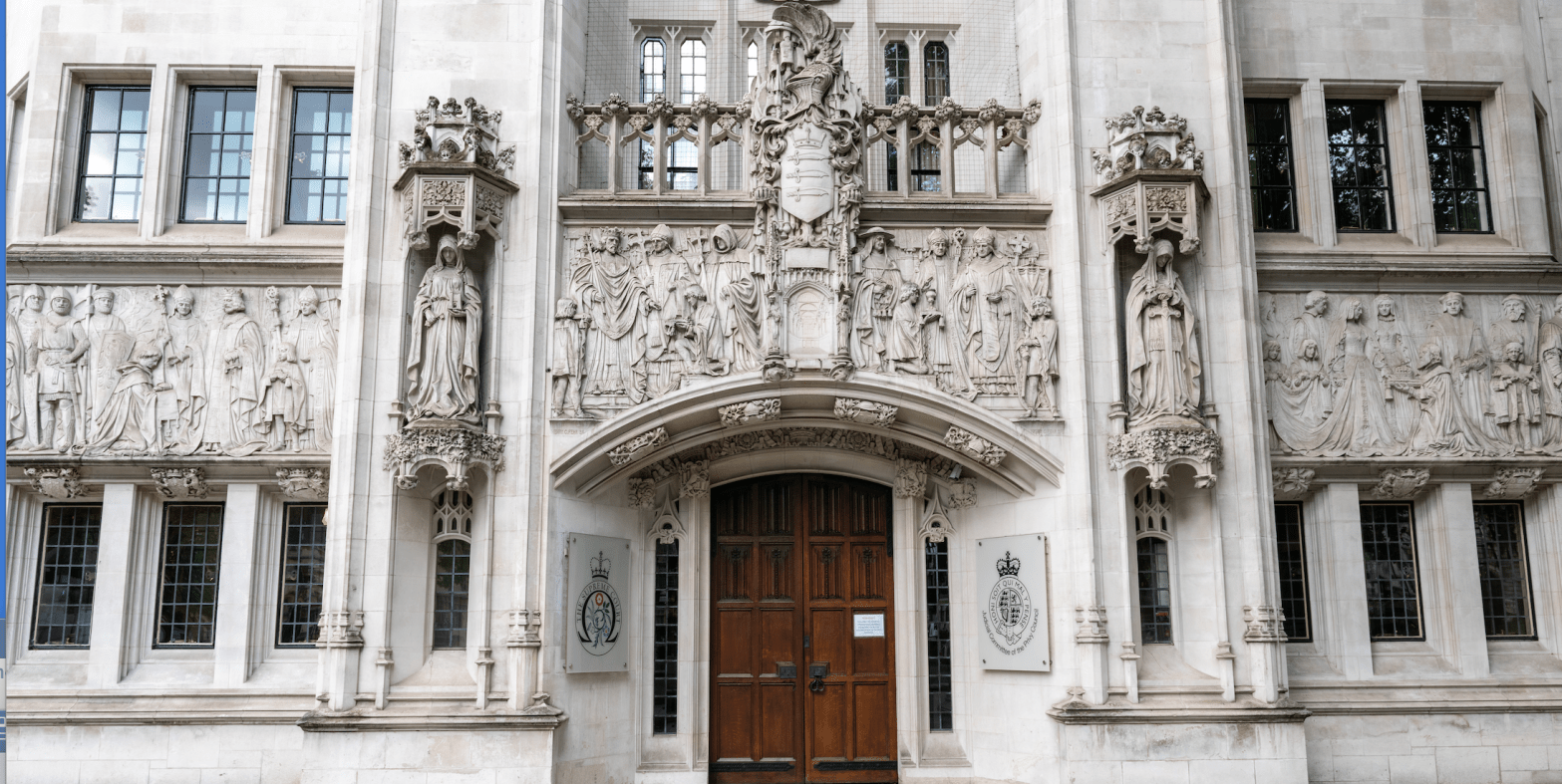
Back in October 2025, the Open Justice Court of Protection Project hosted an open WhatsApp forum as a basis for live discussion of the hearing, over three days, of the case brought by the Attorney General of Northern Ireland, asking the Court to reconsider Cheshire West. More than 150 members of the public joined the group and discussed the hearing (see “When open justice undermines public confidence”) and raised a lot of questions about the work of the Supreme Court and the way it operates. My challenge, after that, was to find a retired Supreme Court judge willing to answer them.
It was a privilege and a pleasure to have the opportunity to talk with former Supreme Court judge, Lord Jonathan Sumption, for an hour over video-link on Friday 28th November 2025.
Lord Sumption was a Justice of the Supreme Court between January 2012 and December 2018, when he retired on reaching the (then) mandatory retirement age of 70. His legal expertise is in Commercial, EU and Competition, Public and Constitutional Law. He has also published extensively about the relationship between politics and the judiciary (e.g. Trials of the State: Law and the Decline of Politics (2019) and Law in a Time of Crisis (2021)) and is an accomplished historian.
****
CK: The reason people are particularly interested in the Supreme Court right now is because of the recent case reconsidering Cheshire West.
JS: I have not reminded myself of the details of that case. I know that it’s a widely held view that it was wrongly decided. The leading judgment however, was given by Lady Hale, who is a considerable authority in the field.
CK: And a feature of the current case before the Supreme Court is that none of the seven justices who heard the case were expert in this field. So, it came as a shock to observers to hear the very basic questions they were asking and some of the language they were using, and the ignorance they displayed about some key aspects of the Deprivation of Liberty Safeguards and the Mental Capacity Act in practice.
JS: I think it’s right that there are no Family judges currently on the Supreme Court. Which is not an unusual state of affairs because Family cases don’t often get there. When Brenda Hale was President of the Court a much larger number of Family cases ended up in the Supreme Court than was the case before, or after. If I can make one general comment at the outset: the function of the Supreme Court is to get the law right and to deal with general questions of principle. On the whole the Supreme Court, rightly in my view, does not like the idea of islands of law governed by principles that are peculiar to that area of law. It seeks to relate specialised areas of law to general principles – and that has been a strong feature of recent case law in family law. So the fact that specialists in this area are surprised, even dismayed, by what goes on when a case involving their field is being heard, shouldn’t actually be that surprising.
CK: Thank you. That’s helpful.
1. Job description
CK: If I can turn to the first set of questions – they are effectively about your job description. We can see what goes on when you’re sitting, but what are you doing the rest of the time? We even wondered about what happens in the lunch break – do you all sit together and talk about the case?
JS: In the lunch break, we do eat together but on the whole we talk about anything other than the case in hand. Frankly one needs a bit of a rest from the case you’ve just spent two-and-a-half or three hours hearing. More generally, the system is this –unless it’s changed since I retired. We receive papers a few days in advance. They will consist of the judgments of the courts below the written arguments of the parties and interveners, and the essential documents. We read those, and we meet about a quarter of an hour before the hearing[1] and exchange preliminary views. That exercise is deliberately kept short because we don’t want to find that people dig themselves into their first impressions about the case before they’ve heard the arguments. We then go in and listen to counsel. It is the job of counsel to acquaint us with any special features of their particular area, bearing in mind that – at the most – there may be no more than one or two of the panel who are specialists in the relevant area. When we’ve finished the hearing, we retire and have a much more detailed session in which each member of the panel will deliver what really amounts to a mini-judgment of, say, five minutes, starting from the most junior and working up to the most senior. At the end of that, we will have an idea of where the majority view lies – or possibly where the unanimous view lies. Somebody will be appointed to write the principal judgment. The view expressed at this meeting is not always writ in stone. People do sometimes change their minds. Actually sitting down to write a judgment is a very exacting discipline, and if there’s something wrong with your reasoning in your mini-judgment, it is the time when you’re likely to discover any logical fallacies in one’s existing view. Sometimes the majority view may change. Although there is always a lead judgment, anybody is entitled to give a judgment. The next stage is when the panel has produced its draft judgments. In the old days, the practice was simply that each judge wrote their own judgment, handed it down like tablets from the mountain, and that was that – you just counted up votes, and that gave you the answer. It’s a much more consultative process now. We look at each others’ drafts, we may criticise them, we may point out things that we think don’t stack up, and sometimes that will result in the judgments being modified. But the worst sin that a judge in the final court of appeal can commit is to leave the law unclear. There is a process of – you can loosely call it – negotiation, in which people who are writing a judgment may take on board points made by others so as to achieve the greatest possible degree of consensus.
CK: Yes, I looked at some of the judgments you’d been involved in and the Nicklinson one struck me because I think every judge wrote a judgment in that case.
JS: That’s true. Some of them wrote very short judgments that were essentially agreements with somebody else, adding a grace note of their own.
CK: And you were picked up for your judgment by academic John Coggan[2] for the moral arguments you introduced in the Nicklinson judgment, which is not your usual stance on how the law should be developed.
JS: They’re not anybody’s usual stance. As I pointed out in the opening paragraph of my judgment in Nicklinson[3], judges try to steer clear of general moral pronouncements, because that tends to get in the way of other cases. Perhaps the second worst sin that a judge in the final court of appeal can commit is accidentally to decide half a dozen other cases that aren’t before him.
CK: What are the pressures on judges to reach a consensus in order to keep the law clear – and can you say a bit more about concurring and dissenting judgments?
JS: You concur with or dissent from the ultimate conclusion, and sometimes it happens that the majority consists of people who agree on the outcome but disagree on the reasons. That’s a very unsatisfactory state of affairs, because it means that although you’ve got a clear answer to the case in hand, we are not giving clear guidance as to what the law is, so that the lower courts can apply it in subsequent cases. We go to quite a lot of trouble to avoid that situation. There have been notorious cases when there was a majority for a particular conclusion, but a majority against every possible reason for reaching that conclusion. That is a very sorry state of affairs. I can remember a case on which I sat in which there were two competing camps, each with two people – plus me. And I had a different reason for taking the view I did from any of my colleagues. That, I thought, would have been a disaster. Seeing that I was in a minority of one, I therefore agreed with one of the other groups, so there would be a clear answer. Now there are those who would say that’s an intellectually dishonest process. But what would be the point, other than indulging one’s personal vanity, in giving a judgment with which nobody agreed. Sometimes you have decide which of two alternative views you disagree with least strongly – because the object is to ensure that the law is clear.
2. Expertise
CK: As a Supreme Court judge you have been involved in making judgments that are absolutely central to your areas of knowledge and expertise, obviously, but equally in others (like Cheshire West) that were not. What is the difference for you as a judge in those two different kinds of contexts?
JS: I was not an expert in mental health issues, but I was extremely familiar with human rights law including the right to liberty. As I have said, we try to relate our conclusion about a particular case to general principles of law, and there is a mass of relevant case law on deprivation of liberty much of which has nothing to do with mental health. If you have no personal experience of the particular area of law that you are dealing with, you have to work harder to get on top of it. But I think that most judges would defend a system in which the panel does not consist entirely of specialists in that area and may not have any specialist in that area. Sometimes when you go into an unfamiliar area of law and read the judgments of the courts below, you say to yourself “Blimey! What’s been going on here?” Specialisms are important and valuable, but specialist practitioners and judges sometimes lose the habit of looking over the garden wall at what’s happening next door. That can mean you get little islands of law governed by completely different principles to the whole of the rest of the law.
CK: So what is the expertise that you bring when you’re not an expert in that particular area of law? What is the knowledge and skill-set you bring that is not subject-specific?
JS: Well, we have a general grasp of the principles upon which the common law works. The common law, which is essentially a system of customary law, is an accumulating body of instincts[4] which have influenced judges over the years. It has certain consistent ways of thinking about problems even if they arise in unfamiliar contexts. A judge who is not a specialist in that area will very often come into a case and find that the principles on which this particular specialism has worked for many years either don’t stack up or are inconsistent with principles that the common law regards as important. To give you one example. One of the very first cases with which I was involved was a case about financial provision in a divorce. For some years, the Family Division had treated companies as being completely transparent. They ignored the general law about companies which treated them as separate legal persons, and they treated the assets of the husband’s company as if they were his (it usually was the husband, but the principle would be the same if it was the wife’s). That may have seemed to many Family judges a just thing to do. But you can’t have a system in which the Chancery Division, which deals with companies, treats them in one way and the Family Division treats them in another.
3. Subpanels
CK: How are the 5 or 7 or however many judges on a panel selected – or do they self-select? – for a particular case. Who chooses who hears a case?
JS: In the first place, the Registrar[5] does. A Registrar is usually an extremely experienced judicial administrator who will know who the specialists are in a particular area, will try to produce a balanced panel. He or she will also try to share out the work equitably between the 12 justices. The initial selection will then go to the President and Vice President of the Court – who may just agree with it or may suggest changes. One thing that doesn’t happen – at any rate in my time – justices were not supposed to lobby for inclusion in a particular panel. And they didn’t, in my experience, either.
CK: Would it be helpful to have more than 12 justices?
JS: Twelve is enough. If the object of increasing the number of justices were to be to ensure more specialists on each panel, I think that would be a bad idea – for the reason I’ve already given. I think that you need a specialist, possibly two, but having a majority of specialists tends to undermine the purpose for which the Supreme Court exists. The workload is manageable with twelve. In my time, the Supreme Court tended to hear about 80 cases a year so each justice would probably hear about 40 cases, on average, in the Supreme Court. Then there were also the Privy Council cases. Remember that we also have to take time to write judgments.
CK: In terms of writing judgments, that must take a lot of time.
JS: Yes, it does.
CK: And at the hearings I’ve watched, the quality of the submissions has varied and I imagine some are more helpful than others. So when the level of knowledge assumed is set at too high a level for the non-specialists or when a submission is simply incoherent (which, in my view, some have been), it must then be much more of a struggle for judges to write a judgment. Because you’ll presumably have to do some background research of your own?
JS: Well, we tend to do background research anyway. But obviously the amount of background research that needs to be done is very much affected by the quality of the submissions that we receive. On the whole, and this is a very broad generalisation, the quality of advocacy in the Supreme Court is high. It is the most prestigious court. Barristers like to appear before it. And clients are prepared to pay for quality once they’ve got to that level of the judicial hierarchy. We do get cases where the advocacy is very poor, but not often.
CK: How do you manage that?
JS: We simply have to do more work ourselves.
CK: So during hearings, I’ve seen judges constantly interrupting advocates and asking for clarification and explanation.
JS: Making a submission is not the same thing as giving a lecture. It’s more like a seminar. It’s a very interactive process. The most productive part of a hearing is often interrogating a barrister about his or her view – “what do you say about this?”, “how do you reconcile what you said an hour ago with what you said 10 minutes ago?”, and so on. This isn’t designed to wrong-foot the barrister or make a fool of him. It’s designed to ensure, first, that we’ve correctly understood his submissions, and secondly that he has an opportunity to address things that may be causing us concern. When a barrister reads the judgment after the case is over, he shouldn’t find himself (or herself) saying, “I wish that I’d known that they were thinking along those lines: I could have put them right!”. That’s a very frustrating thing for an advocate and it’s also a bad thing for the administration of justice. The point on which we didn’t give him an opportunity to put us right may turn out to have been rather a good one.
4. Evidence and arguments
CK: Obviously you have a huge bundle of submissions and evidence and case law in front of you – but do you go outside of that after the hearing, and before handing down a judgment? What’s involved in doing your own background research? Would you google things? Would you talk to colleagues across a different area of law?
JS: You might sometimes talk to other colleagues on the Court itself. You wouldn’t normally discuss it with people outside the Court. You’ve got to be careful about discussing a case with people who are not involved because it’s you who’s actually heard the arguments and read the bundles. But sometimes it is helpful to discuss an issue with a colleague with specialist knowledge. I can remember an English rating case, in which it turned out that quite a lot of the cases were Scottish We were rather impressed with the Scottish cases. But we didn’t have a Scot on our panel, so it seemed sensible to discuss with our Scottish colleagues – there are always two members on the Court – what the basic principles were behind these cases and whether they were based on a completely different set of legal principles to the ones that would apply in England. That’s one example of the kind of thing that happens. In terms of seeking out additional information, that’s sometimes necessary when you’re writing the judgment. When considering an authority cited to you, it is often helpful to know what earlier case-law it was based on and what has been said about it in subsequent cases. The Supreme Court’s task is to keep the law up to date and to keep it coherent. So you very often need to know how the law has come to be as it is. That will quite often involve looking at the earlier legal history. I will add this though: sometimes the legal research will present the case in an entirely new light – in a way that counsel had not anticipated in their submissions. If you are inclined to decide the case on a basis that has not been the subject of submissions by counsel, you should usually give counsel notice of this and either invite written observations or re-list the case for a further hearing. It doesn’t happen that often, because counsel normally get the agenda right – but when it does, you have to counsel the opportunity to address you on the new turn that the argument has taken in private.
5. Interveners
CK: How are decisions made, and by whom, about who gets to intervene, and on what basis are those decisions made?
JS: The decisions are normally made by the Petitions Committee that decides whether to grant leave to appeal or else by the presiding judge of the panel assigned to hear the case.
CK: What is the Petitions Committee?
JS: To appeal to the Supreme Court, you need permission, either from the Court of Appeal or from the Supreme Court itself. Applications to the Supreme Court for permission to appeal come before a petitions committee of three judges. This work is distributed around all 12 justices of the Court. So three judges will be given a pile of applications for leave to appeal and in the next door room three other judges may be looking at a different pile of applications.
CK: And will the judges on the Petitions Committee also be those who hear it if permission to appeal is granted?
JS: Not necessarily.
CK: And on what basis is the decision made about-
JS: The test is not whether we think the judgment of the Court of Appeal was right. That’s one factor. The most important factor is whether this an issue which ought to be decided by the Supreme Court so as to provide a higher level of authority for the decision. The test is whether the case raises a question of legal importance for the law generally. We sometimes refuse leave to appeal, although we think the Court of Appeal got it wrong, simply because it doesn’t actually matter to the general development of the law.
CK: And in terms of applications to intervene?
JS: Interveners need permission to participate. The practice changes from time to time. When I was on the court, there were a lot of interventions. Sometimes they were allowed to address the court through their advocate, and sometimes they were required to present their points in writing. I believe that in the last few years the Court has become more restrictive about interventions. Interveners are normally NGOs or single-issue pressure groups which have some claim to special knowledge or experience of the field. Sometimes the effect of the intervention can be dramatic. For example in the Rwanda case[6], the United Nations Commissioner for Refugees applied to intervene and his legal team basically took over the case when it came to the hearing. That’s unusual – but it’s what happened in that case, because the United Nations Commissioner for Refugees has a great deal of knowledge of this problem on a world-wide basis and was therefore in a position to assist with both evidence and with submissions on the law.
CK: In the Attorney General for Northern Ireland Reference case the Secretary of State was an intervener.
JS: It’s quite common for the Secretary of State to intervene. If an appeal raises issues which significantly affect the public administration, the Secretary of State may have a point of view which ought to be heard. The Secretary of State isn’t entitled as of right to intervene. He’s got to apply for leave to intervene like anybody else – but it is more likely that the Secretary of State will be allowed to intervene than any other applicant, because the State – particularly in public law cases – will normally have a genuine interest. But there are cases where the Secretary of State has been told “no – it’s nothing to do with you”. There was a case not long ago involving hire purchase commissions where the Secretary of State wished to intervene because he thought it would be extremely expensive for the HP companies and their insurers if the decision of the Court of Appeal was upheld. Well, the court is not normally concerned considerations like that. In that case – I wasn’t on the Court at that time, it was after my retirement – the Secretary of State was sent packing.
CK: There was some concern in this case, and also in another recent case – the For Women Scotland Equality Act case – about particular pressure groups that were not allowed to intervene, and they felt they had been excluded from the justice process and that their voices were not heard.
JS: Their concerns are misplaced, in my view. The thing about interventions is that they are designed to allow the court to hear from a party that either has a particular expertise, or has a point of view which will not necessarily be represented by the parties to the appeal. That’s the basis on which people are allowed to intervene. The problem about interventions is that they can give the impression that the hearing is actually a political debate. Most interveners are single-issue pressure groups or NGOs which are basically political lobbyists. The Court is not there to debate the politics of the thing or to give everyone who’s got a bee in their bonnet the opportunity to let it out. So when I was on the Court we probably gave leave to intervene too often, and I think I’m right in saying that it’s become more restrictive subsequently. I think that’s a good thing. Many people have strong views about a particular issue. It doesn’t follow that they should be entitled to intervene into somebody else’s litigation in order to express them. Nine times out of ten, their strong views will be reflected in the submissions of the principal parties. There’s absolutely no point in allowing people to intervene simply for the purpose of duplicating or adding volume to someone else’s submissions.
6. Reference
CK: The case brought by the Attorney General of Northern Ireland was different from other cases I’ve watched before in the Supreme Court which have worked their way up through the Court of Protection and then to the Court of Appeal. It came as a Reference from Northern Ireland and there was no particular person at the centre of the case, and it was a pre-emptive application in the sense that the applicant wanted to know whether enacting the law in a particular way would be lawful – compliant with the European Convention on Human Rights. That’s a very different use of the Supreme Court from the way I’ve seen it used before. Can you say a bit about applications like this.
JS: The Court doesn’t have very many cases like that, but they’re liable to happen in cases which arise from the devolved jurisdictions. The legislatures of Northern Ireland, Scotland and Wales do not have the same plenitude of power that the UK Parliament at Westminster has. Their powers are limited in certain ways – in particular, they are not entitled to enact things that would be contrary to the Human Rights Convention. So there is a procedure, which is most commonly used in the case of Scotland, where before an item of devolved legislation receives the Royal Assent the power to make it is considered by the Supreme Court on a reference by the relevant law officer. You’re right that, normally, the courts are not there to give legal advice. They’re there to decide cases that have actually happened. But cases about the powers of the devolved legislatures are different, because if the devolved legislatures are going to legislate in a way that they have no power to do, that would produce chaos. It is much more sensible that what they are intending to do should be considered in advance by the Court.
CK: So is it a different process for you from considering “did the Court of Appeal get it wrong?” to instead be asking pre-emptively “is this proposed legislation going to be wrong”?
JS: The question is inevitably more abstract. So it’s only appropriate to do that if the issue is sufficiently crisp – for example if there’s a ‘yes’ or ‘no’ answer to it. You don’t want to be doing that if the answer is “it all depends”.
7. Overriding a previous Supreme Court decision
CK: Effectively, the Attorney General of Northern Ireland is saying that Cheshire West got it wrong.
JS: Yes. And if there’s a decision of the Supreme Court that is arguably wrong, the sooner we decide whether it is, the better.
CK: So I have learnt that this means invoking the 1966 Practice Direction which means that the Supreme Court can decide that it got a previous decision wrong. But there aren’t many of these cases and-
JS: That’s because the Court normally gets it right.
CK: I wonder what the process is for getting it right this time. One of the judges hearing the Attorney General of Northern Ireland Reference was also a judge, alongside you, in Cheshire West, that’s Hodge, and he wrote a dissenting judgment. So he is now effectively in the position of re-hearing Cheshire West with the opportunity to make the same judgment (then dissenting) that he made 14 years ago.
JS: He’s got to carry three colleagues with him. He’s not deciding it on his own.
CK: True. But how does the Supreme Court go about deciding that the Supreme Court itself got it wrong?
JS: The same way that it decides any other issue. There is no such thing as an infallible institution. Sometimes we might say, “well, this isn’t the way we’d decide it nowadays, but there are good reasons for leaving the law as it stands, and allowing Parliament to change it”. Sometimes the Court decides that, actually, we cocked up. That happens! Cheshire West is a controversial case. It’s perhaps once every five years maybe that the Court overturns a previous decision of its own. That may be because they think they just got it wrong first time round. It may be because they think that the circumstances have changed. It may be because they think that in cognate areas the law has changed – for example, new statutes.
CK: One of the issues raised by Cheshire West is the cost of that decision. It’s very expensive for the public bodies. You said earlier that the Court isn’t interested in the question of whether it’s expensive to comply with the law.
JS: It may be relevant in public law cases because traditionally the courts do not make decisions that require tax-payers to shell out. Taxation and expenditure are very much matters for Parliament. It is also obviously right that every item of public expenditure has an opportunity cost, so what the government spends on X cannot be spent on Y or Z. That’s one reason for the sensitivity of the courts in cases that have significant implications for public expenditure. When I said that the courts were not interested in the costs of things, I was thinking of private law. The Court will not normally be impressed by an argument which says, “if you decide in favour of the claimants, then an awful lot of insurers are going to go bust”. But it might sometimes be impressed by an argument which says “this has huge implications for public expenditure – and for taxation”. Because that’s a public issue.
8. Open justice
CK: We are an open justice organisation. We believe that members of the public – as well as journalists – should be able to go into public courtrooms and observe hearings and publish information about them. That’s exceptionally well organised by the Supreme Court because it’s live-streamed, the building and the courts are open to the public and it’s a welcoming space. But the proceedings are not always intelligible. So you can be sitting in the room, as I was, and listening to the arguments, and not understanding them. And even the information put up on the court website in advance of the hearing was barely intelligible. What do you think is the responsibility of the Supreme Court to promote better public understanding and transparency?
JS: The pre-hearing handouts ought to be intelligible and accurate. But some legal issues are highly technical. Advocates have limits to the time that they’re allowed to be on their feet. Requiring them to always explain things in language which is not necessary for the Court, but is necessary for the audience behind, is a luxury which – in a time-limited world – we can’t always afford. But the judgment should make it absolutely clear, and should also be written in language that is easy to understand. Moreover, when the judgment is announced, a summary is read by a member of the Court and that summary is exclusively directed to lay audiences. It will never, or certainly should never, be difficult to understand.
CK: Is there anything more you think the Supreme Court could do to be more transparent?
JS: I think it’s an extremely transparent court. I think it has avoided the obscurities which sometimes featured in judgments of the appellate committee of the House of Lords. It has opened up the hearings to an unlimited range of people with the live-streaming. I think that the practice that was invented when the Supreme Court took over from the Appellate Committee of the House of Lords, of reading out a simple summary of the facts and how the case was decided, is an admirable one. There is no such thing as a perfect institution in the world, but I think the Supreme Court comes closer to it than most.
Celia Kitzinger is co-director of the Open Justice Court of Protection Project and she is very grateful to Lord Sumption for accepting the invitation to be interviewed for this post.
Footnotes
[1] Lord Burrows provides a very similar account of the mechanics of the process whereby the justices procede to make their decisions. https://supremecourt.uk/uploads/speech_lord_burrows_130925_5fd59648d9.pdf
[2] Coggon J (2022) Lord Sumption and the values of life, liberty and security: before and since the COVID-19 outbreak Journal of Medical Ethics 48:779-784.
[3] R on the application of Nicklinson and another [2014] UKSC 38 The first paragraph of Lord Sumption’s judgment reads as follows: “English judges tend to avoid addressing the moral foundations of law. It is not their function to lay down principles of morality, and the attempt leads to large generalisations which are commonly thought to be unhelpful. In some cases, however, it is unavoidable. This is one of them” (§207)
[4] “… The common law is not an uninhabited island on which judges are at liberty to plant whatever suits their personal tastes. It is a body of instincts and principles which, barring some radical change in the values of our society, is developed organically, building on what was there before. It has a greater inherent flexibility and capacity to develop independently of legislation than codified systems do. But there is a price to be paid for this advantage in terms of certainty and accessibility to those who are not professional lawyers. The equities of a particular case are important. But there are pragmatic limits to what law can achieve without becoming arbitrary, incoherent and unpredictable even to the best advised citizen, and without inviting unforeseen and undesirable collateral consequences. …” Sumption, in Mirza v Patel [2016] UKSC 42 at para. [226]
[5] Currently Laura Cave and Celia Angus https://supremecourt.uk/about-the-court/executive-team
[7] R (on the application of AAA and others) (Respondents/Cross Appellants) v Secretary of State for the Home Department (Appellant/Cross Respondent) UKSC/2023/0093 plus BBC report of the case here: https://www.bbc.co.uk/news/uk-67423745
 Promoting Open Justice in the Court of Protection
Thank you so very much for this piece – I learned much!
Dr Tracey Ryan-Morgan
Consultant Clinical Neuropsychologist
LikeLike