Public bodies argue about funding – Poole J feels like “a referee or go-between” 

By Amanda Hill, with contribution from Tim Sugden, 5th March 2025

The protected person (“MH”) has been diagnosed with dementia and lives in a care home. This case (COP 14214860) began as a Section 21A appeal (a Deprivation of Liberty challenge) and was initially before a district judge before it turned into a case about serious medical treatment towards the end of 2024 and was (therefore) escalated to the High Court.

For more than ten years, MH has been receiving dialysis. He currently needs haemodialysis for four hours at a time, three times per week. However, he has, over the past few months, become increasingly agitated about his treatment and consequently (say carers providing the dialysis), there is a high risk of fatality. As Mr Justice Poole put it “bluntly”, if a person in an agitated state removes the needle, they could die in under two minutes. This led to the Trust suggesting that dialysis treatment might be stopped.  However, without it, the patient’s life expectancy would be very limited. According to Mr Justice Poole, dialysis is “life sustaining treatment” for MH. His young adult sons are opposing withdrawal of dialysis. 

An urgent application was made and Mrs Justice Theis heard the case on 13th January 2025 but it then passed to Mr Justice Poole on 14th January 2025 (this information comes from the Transparency Order dated 13th January 2025 that I received at the hearing I observed). The Transparency Order states that the issues before the court are: (a) MH’s capacity to make decisions about haemodialysis treatment;(b) MH’s best interests in relation to haemodialysis treatment and whether this should continue (my emphasis).

This blog reports on two hearings: one I observed in person (on 27th January 2025) and one observed remotely by Tim Sugden a month later (28th February 2025).  Tim emailed a Hearing Feedback Form to the Open Justice Court of Protection Project and this enabled me to follow up the case.*

What a difference a month had made. 

Back in January, the judge had “good news” for MH’s two sons, who were sitting in front of me in court. Things seemed to be looking up. But at the February hearing Tim observed, funding was the predominant issue.  I’ll outline first what happened in the January hearing I observed, and then quote from Tim’s feedback on the February hearing. 

The January hearing 

On 27th January2025, Sophia Roper was counsel for MH (via the Official Solicitor). I didn’t catch the name of Counsel for King’s College Hospital Trust, who was in the physical courtroom with me, nor that of counsel for the Local Authority, (London Borough of Lambeth), who was attending remotely.

Mr Justice Poole asked Sophia Roper to provide a summary for me as an observer, which was very helpful. I learnt that since the previous hearing, MH has had a trial of being supported to attend his dialysis sessions, including transportation from where he is living, and it has generally gone well. He is not as agitated, either during transportation or during treatment. Future sedation through covert medication was mentioned in court as a possibility, and the judge stressed that the court would have to specifically authorise that. There was general agreement that MH lacked capacity to make decisions about his medical care and that it was in his best interests to be transported to hospital to receive dialysis. 

Who pays? 

Supporting MH to receive treatment is labour intensive and there was a question about who was going to provide and pay for it in future. His sons have been involved but, as counsel for P pointed out, “His sons should be getting on with their education and their lives: supporting their father should not be onerous for them”.  One of them has to work to support his family. She also raised the issue of who was going to provide funding. The Trust’s position was that they did not have the resources to fund support. The Local Authority had agreed some funding but it was probably not sufficient. 

The judge asked for submissions from the NHS Trust, who said something that I found quite surprising. He said that he had only found out 30 minutes before the hearing that funding for support to receive treatment (from the LA) was limited to two weeks. The LA were being asked to fund one-to-one support, and the Trust hadn’t previously been aware that funding was limited. The Trust was also concerned that they would end up funding costs for the s.21A appeal, which they were not involved in. 

At this the judge stated: “I hope you don’t think I am being too harsh, but it was the Trust’s decision to stop dialysis, which made it a serious medical treatment application”. When that matter is resolved the case could be transferred back to a lower tier judge.  

At the end of the hearing, the judge made it clear that there were two possibilities in terms of proceedings: either “two parallel hearings” or “one matter relating to MH”. He said: “for avoidance of doubt my view is the latter; I don’t want to give a free pass for the costs to the Trust which are s.21A and not serious medical treatment but I am staying [the s.21A application]. For avoidance of doubt, all matters are before me”. 

Counsel for the Trust stated that work could continue on the s.21A appeal “as long as it is earmarked as that” to which the judge replied “someone, somewhere may have to work that out”. 

The two sons were in court listening and I wondered what they thought of what they were hearing. Towards the end of the hearing, the judge addressed them directly and explained in plain language what the hearing covered and what had been decided. It did make me wonder why that sort of language couldn’t have been used from the start to enable them to follow the hearing. But I know that’s not the way things are done. 

The judge asked if what he had explained was clear to them and if they had any questions. One of the sons asked a question about the dialysis. The judge said: “Dialysis will continue but it depends if your father refuses or if he becomes agitated, and that’s why the Trust stopped it before…..it will have to come back to court…..will need your continued support, and professional support. As you have heard, the funding for that has not been secured, but it is life-sustaining treatment. But the funding decision is not in my hands. Dialysis will continue, and thank you for your help.  One of you is next of kin, so if there are meetings, it is very important that one of you to go to those meetings”.

At the end of the hearing, the judge personally thanked “those who are acting pro bono and those who over the last 10 days have acted to move things on, including clinicians and family.”   

The February hearing

I am quoting from Tim’s feedback form, as I feel it gives a perfect flavour for what happened at this next hearing. The protected person was again represented by Sophia Roper. Tim states that he couldn’t hear the names of counsel and there was no introduction so he has guessed their names.  London Borough of Lambeth was represented by Ms Flanagan (?) and King’s College Hospital Trust by Ms Stanley (?), who were in court in person. The East London ICB was represented by Eliza Sharron by video link. One of the sons was in the courtroom and the other was (intermittently) on the link. 

After setting out a brief background, Tim outlined what happened during the hearing:

Final reflections

I found it depressing reading Tim’s feedback form. How sad for the sons to hear those funding arguments. I do wonder what can be done to make funding decisions easier. After all, it is all taxpayers’ money, only in different silos. Using court time to decide who pays for what doesn’t seem to be the best use of either time or money. And how are the protected person’s best interests served by that? 

I hope to observe the next hearing on 14th April 2025 and will report back on what happens next. 

Amanda Hill is a PhD student at the School of Journalism, Media and Culture at Cardiff University. Her research focuses on the Court of Protection, exploring family experiences, media representations and social media activism. She is on LinkedIn (here), and also on X as (@AmandaAPHill) and on Bluesky (@AmandaAPHill.bsky.social)

Tim Sugden retired in 2022, after a career in children’s services, to devote his time to providing accommodation and support to refugees from Ukraine.

* We encourage other observers, especially those who don’t want to write blogs, to complete these Hearing Observation questions too – they are massively helpful to us, as this blog post demonstrates. You can find the form on our “Observer Resources page.

Response to the Transparency and Open Justice Board proposed “key objectives”

By Celia Kitzinger, 3rd March 2025

The Transparency and Open Justice Board recently sought views on the Board’s proposed key objectives.

The Board was created in April 2024 by the Lady Chief Justice, who said that it would “…set objectives for all Courts and Tribunals, focussing on timely and effective access in terms of listing, documents and public hearings. It will engage with the public and interested parties to make sure that these objectives properly reflect what should be delivered by a modern justice system.”  Those objectives were published on 6th December 2024, with responses invited by 28th February 2025.  The Board says that the key objectives “… represent the high-level outcomes that, once finalised, will guide the Board’s work; help to identify areas where changes can and should be made; and, finally, will be used to measure the success of the Board’s work”.  (https://www.judiciary.uk/wp-content/uploads/2024/12/Transparency-and-Open-Justice-Board-Key-Objectives-Engagement-explanatory-notes-1.pdf)

The Board’s consultative “Key Objectives” document consists of three numbered  paragraphs (§[1] is confusingly divided into numbered sub-paragraphs) as follows, and reproduced here in its entirety: 

Transparency & Open Justice Board

Key Objectives: Proposals

1. The principles of transparency and open justice require the proceedings and decisions of Courts and Tribunals to be open and accessible to the public and the media. On a practical level this should include: 

(1) timely and effective access to information about cases that are pending before a Court or Tribunal including: 

(a)  identification of the principal subject matter of the case and, if available, the date of the next hearing; 

(b)  for each hearing that has been scheduled: 

  • the identity of the case (including the names of the parties); the Court or Tribunal before which the hearing is to take place; where the hearing is to take place;
    the date and time of the hearing; 
  • the general nature of the hearing, e.g. application, case management hearing, or trial; 
  • whether the hearing is to be held in public; and, when known, 
  • the name(s) of the judge(s)/magistrate(s)/tribunal member(s) hearing the case; and 

(c) details of any reporting restrictions that apply to a case and the terms of any restrictions; 

(2) timely and effective access to the core documents relating to the proceedings held by the Court or Tribunal, including: 

(a)  the document that identifies the principal subject matter of the case e.g. a Claim Form or Appeal Notice in a civil or tribunal case, or the Summons or Indictment in a criminal case; 

(b)  the evidence (including any expert and/or audio/visual evidence) that is, or has been, considered by the Court or Tribunal at a hearing in public; 

(c) any written submissions (including skeleton arguments) that are, or have been, considered by the Court or Tribunal at a hearing in public; and 

(d) any public judgments or Orders of the Court or Tribunal.

(3) effective access to hearings of Courts and Tribunals held in public, including: 

(a)  enabling members of the public and media representatives to attend the hearing in person (including maintaining designated spaces for media representatives) or remotely by video link where appropriate; 

(b)  permitting, where appropriate, broadcasting of the whole or part of the hearing; and 

(c)  enabling transcripts to be obtained of proceedings in public (subject to any applicable fees). 

2. Open justice is the default position but there are recognised limitations to the principle. Some of the limitations are imposed by statute or statutory rules, which are set by Parliament not the Judiciary; any changes are a matter for Parliament, not the Judiciary. Sometimes, a Court or Tribunal will only be able to do justice in a particular case by departing from the principle of open justice. Any such departure from open justice must be necessary, proportionate, and justified. 

3. In some areas, the ability of the Courts and Tribunals to deliver open justice is dependent upon the availability of resources and support from the Ministry of Justice and HMCTS. 

Our Response

Responses were requested via a Microsoft form with just four questions – and an undeclared maximum number of characters assigned to each response box so that my text was cut off mid-flow when I pasted it in and I had to edit it down (repeatedly) until the form accepted it. (Please, Mr Justice Nicklin, if you’re going to use this response format again, let us know how many characters we have for each response box so that we can draft our responses accordingly – not having this information wasted a lot of time!) I’ve reproduced my response here: the only ways in which what follows differs from the submitted document are that I’ve corrected three typos and added the footnotes.

Q1 Please state your name and address here

Celia Kitzinger, Open Justice Court of Protection Project (founded in June 2020 to support the judicial aspiration for transparency  openjustice@yahoo.com

Q2 Do you agree that these are the correct objectives? 

Insofar as they go, yes  – they’re pretty self-evident as articulations of open justice principles, and as such they already form the basis of a lot of campaigning for transparency – but see [3] below for additions. 

The proposal for moving forward with them is disappointing insofar as it asks only the Courts and Tribunals to “carry out an evaluation of the extent to which their current practice and procedure achieve the Key Objectives“.  Many open justice organisations are also equipped to carry out this evaluation – in fact many of us have done so (repeatedly over the years, in relation to different objectives) and have made proposals already as to how what you are now calling your “Key Objectives” could be realised.[1]  At the very least, Courts and Tribunals need to consult with court observers as to the extent to which their current practice and procedure achieve the “Key Objectives” and what changes could improve the situation. But I would hope that you would invite us to make independent submissions to the Board on the extent to which the Courts and Tribunals we seek to report on achieve the Key Objectives.  Otherwise you will have a wholly lopsided view of the extent to which the Key Objectives have been realised.

I also note that a common response over the years to our calls for open justice principles to be properly implemented has been that changes need time and sufficient resources.  I have been hearing that message for years in relation to listings of hearings (Courtel/Courtserve listings are dismally inadequate) and access to hearings (insufficient staffing levels, staff training needs). Is there any evidence that resourcing is going to change? If not, do you risk setting unachievable objectives?

3. Do you think there is something that has been missed from the objectives? If yes, what else do you think should be included?

Yes.  

1(1)(b) should include an indication of the modality of the hearing (e.g. remote, hybrid, in person – and whether a link is available for public observation of an in-person hearing). It should also include where possible a time estimate for the hearing so that observers can plan accordingly. (In fact the good news is that Courtel/CourtServe does generally include this information – although the High Court does not.[2])

1(1)(c) needs expanding to cover the procedure in place for challenging reporting restrictions rather than present them as a fait accompli; our Project plays an important role in seeking variations to the so-called “Transparency Order” in the Court of Protection – both in relation to protecting the vulnerable person’s Art 8 right to privacy, and in relation to advancing the public’s Art 10 rights to freedom of information. We find the reporting restrictions handed to us in advance of hearings are often (a) riddled with obvious errors; and (b) show no engagement (at all) with the requisite Art8/Art 10 balancing exercise.  We often assist with this, and the Court of Protection judges have become accustomed to our interventions – sometimes made orally in court, sometimes via email and sometimes via COP 9 formal applications.  

1(3)(a) needs to include reference to the Equality Act and the need to make reasonable adjustments for public observers with disabilities.  For example, we have tried to support a Deaf observer who has struggled because (as I understand it) there are problems with the Court’s new AV platform which – unlike MS Teams – does not have a facility for automatic transcription (which judges have previously given permission for her to use on Teams). We also have observers with impaired hearing who often struggle in physical courtrooms because they’re routinely made to sit at the back so can’t lip-read or because mike quality in hybrid hearings is often very poor. Signs in courtrooms are also difficult for visually impaired observers. Lifts are often broken causing problems for those with mobility issues.[3]

The words “timely and effective” – as used throughout your document – need careful operationalisation with an understanding of the different perspectives of (a) HMCTS staff (b) judges and (c) those of us seeking to observe hearings. It’s frustrating (for example) that judges complain that we have asked to observe hearings “too late”, when we send a request at 5pm the day before i.e. within an hour of the Courtel/CourtServe listings being published[4].

Finally, our assessment is that, despite the undoubted ongoing challenges, the Court of Protection has in fact made dramatic improvements in transparency since June 2020.  The key changes we would still like to see relate to:

        (a) naming of applicant/respondent public bodies in the public listings (First Avenue House does this reliably; the regional courts in the COP list on Courtel/CourtServe do not).  There is rarely any legitimate reason to withhold the names of public bodies from publication and it’s not clear to us why this practice in the COP has been allowed for so long. This fits in your Key Objective (1)(b), first bullet point

        (b) Listing of, access to, and reporting restrictions relating to committal hearings for contempt of court (we have made submissions to the MOJ on this). The PD states these should normally be held in public and the applicant and defendant names published in the cause lists. This often doesn’t happen and we believe that family members of protected parties can be subject to effectively “secret” hearings at which they risk prison sentences.

        (c) Listing of, access to, and reporting restrictions relating to “closed” hearings (i.e. hearings from which a judge has excluded a party and their legal representatives).  We have made submissions to the COP about this and the previous vice-president (Hayden J) wrote Guidance which seems to be more honoured in the breach than the observance.

4. Do you think there is something that has been included within the objectives that shouldn’t be? If yes, what? 

Yes.  I don’t see how [2] and [3] are “key objectives” – or indeed, objectives at all.  On a cynical reading, they sound more like reasons why the objectives listed in [1] can’t actually be met.

What next?

We await the next stage of the consultation exercise. We hope the Project will be consulted and properly involved in the proposed implementation and “evaluation” of the objectives. We will report back!

Celia Kitzinger is co-director of the Open Justice Court of Protection Project. She has observed more than 590 hearings since May 2020 and written more than 100 blog posts. She is on LinkedIn (here), and also on X (@KitzingerCelia) and Bluesky @kitzingercelia.bsky.social)

Footnotes

(all added for the purposes of this blog post)

[1]Evaluations published by the Open Justice Court of Protection project include: Anxious scrutiny or boilerplate? Evidence on Transparency Orders   “Private” Hearings: An Audit by Celia Kitzinger; A review of transparency and open justice in the Court of Protection by Daniel Clark. We have also, in response to a previous consultation exercise back in September 2023, created a set of 20 Key Performance Indicators (KPIs) for the Court of Protection to be used in assessing to what extent the court is delivering on open justice and transparency (see: Evidence for Ministry of Justice Consultation on “Open Justice: The way forward”. I think it’s fair to say there’s been little or no enthusiasm from HMCTS or the court for engaging collaboratively with us in relation to these KPIs.

[2] The High Court also never includes information what  “the principal subject matter”, which speaks to 1(1)(a) of the Board’s proposal. Curiously, this is so despite the fact that the Transparency Orders for cases heard in the High Court often include explicit orders from the judges as  to how the case should be listed – and this regularly includes listing what the Board refers to as ‘the principle subject matter” (i.e. the issues to be decided by the court).

[3] We are aware that these access problems also often affect the protected person and their family, and can also affect lawyers and judges with disabilities (see the Disabled Solicitors’ NetworkBringing Disability to the Bar.  The judiciary’s  Equal Treatment Bench Book does specify that considerations relating to disability access “…  apply to everybody who is participating in, or may attend at, a hearing. A physical impairment/disability can impact upon the parties, the representatives of the parties, witnesses, observers, members of the jury, tribunal lay members, clerks and ushers, amongst others. It is important that focus is not on the parties alone. Consideration of adjustment ought to take place where a physical disability impairs any potential participant’s engagement with the court/tribunal process” (my emphasis).  In practice, we’ve not seen much attention paid to disability access for observers.

[4] There are ongoing discrepancies between the way transparency matters are understood and approached by HMCTS staff, the judiciary, and members of the public.  We are trying to communicate across the divides and explore the different perspectives, e.g. via consultation with senior HMCTS staff, representation at COP User Group meetings and by publishing what we hope might be helpful guidance for judges (see  Fifteen Top Transparency Tips for Judges)

A young man failed by NHS South West London ICB and the London Borough of Wandsworth

By Daniel Clark with reflections from Sophie Monaghan and Claire Martin, 27th February 2025 

The protected party, XY, is an autistic man in his twenties who previously had an active and sociable life. Over the past few years, his mental health has deteriorated. This resulted (in 2023) in a traumatic detention under the Mental Health Act 1983. 

XY returned home in 2024, and these proceedings (COP 13261362) relate to an application by his deputies for health and welfare (his mother, father, and siblings), who ask the court to authorise the deprivation of his liberty that arises from his care in his own home. The judge has now reconstituted the case so that it is the public bodies, not XY’s family, who are the applicants. This means that the job of presenting the case is on them, and not lay parties. 

I (Daniel) have observed three cases in this hearing: one in person on 3rd October 2024 (“the October hearing”), one hybrid hearing which I observed remotely on 17th December 2024 (“the December hearing”), and one fully remote on 6th February 2025 (“the February hearing”). There were five observers in total at the February hearing, including Claire Martin, Sophie Monaghan, and me.  

All the hearings I observed were before District Judge Clarke, who sits at First Avenue House. As far as I can tell, she has had oversight of the case since the application was first made.  

The NHS South West London Integrated Care Board (“the ICB”) was represented by Ulele Burnham of Doughty Street Chambers. The London Borough of Wandsworth (“the LA”) was represented by Lindsay Johnson of Cornerstone Barristers. 

At the December hearing, the judge joined South West London & St George’s NHS Trust as a party to proceedings. At the February hearing, the Trust was represented by Eloise White-Thomson of Bevan Brittain LLP. 

XY has been represented by  Eleanor Leydon of 39 Essex Chambers, acting as his litigation friend via the Official Solicitor – though at the October hearing he was represented by somebody else whose name I didn’t catch. I observed that hearing in person and didn’t catch the barrister’s name because there was no opening summary, and no introductions. I will discuss the experience of what can only be described as “opaque justice” at an in-person hearing in a separate blog. 

XY’s mum, who is one of his deputies for health and welfare, is also a party to proceedings. While the other deputies are not parties, it has been clear that they all have the same position. XY’s mum was represented by Oliver Lewis, of Doughty Street Chambers, who has been acting pro-bono (that is, for free) and via direct access (that is, there are no solicitors that instruct him). At the hearing in December, he was joined by his pupil, Jordan Briggs

Unfortunately, Oliver Lewis was not available for the hearing in February nor will he be available for the next hearing listed for the afternoon of 31st March 2025. It also became clear at the February hearing that there was no other barrister in his chambers who could act at the end of March. This means that XY’s mum will be unrepresented and, while XY’s mum would rather have formal representation, the judge was not willing to change the date of this hearing. 

This blog is in 5 sections. First (1), I will give a brief background to the case, and an overview of the three hearings I’ve. observed. Then I will discuss three themes across these three hearings: (2) restrictions on internet use; (3) the exclusion of XY’s family, who are also his deputies for health and welfare, and, (4) non-compliance with court orders.

Finally (5) Claire will reflect on the way in which this case exemplifies how reasonable concerns about inadequate support are often delegitimised.

I am grateful that the judge gave permission for position statements filed in advance of the December and February hearing to be disclosed to me (I didn’t ask the judge’s permission for the October hearing). In granting this permission, she made it clear that it did not create an obligation for the parties to share their position statement. As such, only the local authority and XY’s mum have elected to do so.

I am also grateful that the judge made provision for the Order made after the December hearing to be shared with me, which meant that I could be confident that I had understood what decisions had been made. The judge also made provision for the Order that listed the February hearing to be shared with me. This meant that I knew that the case would be back in court, which I otherwise may have missed (and also meant I could alert other members of the public to the case).

A brief background

Following an incident in 2024, the details of which I do not know, XY was detained pursuant to the Mental Health Act 1983. This detention, in a hospital not in his local area, was a traumatic experience.

Following some months detained in hospital, XY was discharged to his own property with the support of carers at a ratio of 2:1. That is to say, two people are with him at all times. During this time, his physical and mental health continued to decline. His care is funded by a mixture of funds from the LA and the ICB.

As I understand it, it was XY’s family (who are also his health and welfare deputies) who applied to the Court of Protection. It sounds like they did this via the Re X procedure because his care arrangements amount to a deprivation of liberty, and require the authorisation of the court. It is usual for the local authority in which a person resides to make this type of application, and I do not know why they failed to do so here.

The October hearing was predominantly concerned with trying to find a way forward. The public bodies had not complied with the judge’s previous orders (though there was no explanation why they were not complied with, nor what the orders actually related to);. The judge was therefore not clear on what restrictions she was being asked to approve. Despite being invited to do so, the judge declined to authorise the deprivation of XY’s liberty arising from his care arrangements as being in his best interests. This was because she had not seen an up-to-date care plan that was agreed between the parties. She also remarked that she has “concerns about how litigation has been conducted”. 

At the October hearing, Counsel for the ICB said there was hope of transcending the “impasse or the difficulties that have bedevilled the two statutory bodies working together”. This is a common theme in this case. The local authority and ICB have had a fractured response to supporting XY, with both of them disagreeing about what exactly they are responsible for. 

The core of this disagreement seems to be with regards to who is responsible for providing what services given the fact that XY is funded under s117 of the Mental Health Act 1983. He is in receipt of this funding because he has been detained pursuant to section 3 of the Mental Health Act, and is therefore eligible for funded aftercare. Mind explain that it is the responsibility of the ICB and local authority to provide aftercare services, “Sometimes there are disputes between different integrated care boards, local health boards and local authorities about who has to provide or pay for your aftercare services”. 

This means that, while shocking, the delays in this case are symptomatic of a broader problem, and are not specific to this case. 

At the December hearing, it was clear that very little progress had been made. In the words of the judge: “yet again there is an inability to identify who should be responsible for what”. There was nevertheless some agreement between the ICB and local authority as to who would file what evidence. It was also agreed that they would work together on creating “an umbrella care plan”. 

However, a letter from XY’s GP had raised concerns about his deterioration. As the judge put it, “I am told he is spending 23 hours in bed to the extent his muscles are wasting. He’s spending most of that time [unclear]. It’s probably impacting on his mental health…This is not something I should be seeing – a pattern of deterioration, not improvementI am saying that there is enough to raise a suspicion that everything may not be alright. I am saying this matter should be an expeditious enquiry”. 

The judge set down a strict timetable for the filing of evidence, and listed a hearing before her at the end of March 2025. Oliver Lewis indicated that he was unavailable on this date but the judge told XY’s mum that, “I cannot fit this hearing at the convenience of your barrister. You are always welcome to attend unrepresented, and we will do our best to accommodate you”.

The timetable has already failed, necessitating an additional hearing, on 6th February 2025. I will say more about this in section (4).

Restrictions on internet use

There is no dispute between the parties that XY lacks the mental capacity to make decisions about his internet use. It is also agreed that it is not in his best interests to have unsupervised and/or unmoderated use of the internet. This is as a result of the risk that he experiences in internet use. These risks have been briefly discussed in open court but it was clear that the judge and XY’s mum were keen to avoid the details, so I have decided not to report on them here. 

At the October hearing, the judge expressed concern that XY had been assessed as lacking capacity for his internet usage “but there is no plan to address what may be unhealthy use of the internet” – that is to say, what best interests decision should be made with regards to his internet use. Counsel for the ICB submitted that, given XY’s care plan was going to be reviewed later that month, “it seems appropriate for the review of that care plan to conclude”. Nobody disagreed, and the judge approved that direction of travel. 

At the December hearing, submissions were made on behalf of XY’s mum that Cyber Spider ought to be commissioned. Cyber Spider’s website explains that it provides assessments and interventions with the aim of developing a personalised ‘cyber care plan’.

Counsel for XY’s mum told the court that, “their reports have been very useful in providing the parties and the court [in other cases] on how certain websites can be blocked before certain times. XY is very technologically capable and Cyber Spider have the expertise to put in place software that blocks his ability to…without the provider turning off the Wi-Fi. It has to be done in a XY specific and autism informed way. There has to be some nuance[i].

The position of the local authority was that they’d made a public law decision not to commission Cyber Spider and therefore the Court of Protection had no jurisdiction to order its commission. There is however a distinction between Cyber Spider being commissioned and Cyber Spider providing a report on the options. 

Nevertheless, the judge decided instead to, “direct [that] the local authority will set out a best interests analysis in relation to use of internet and social media, and whatever its public law decisions are. And I will indicate that should include information that they have considered any free resources on CyberSpider’s website (because I can’t see how you object to that [Counsel for LA]). If you’re not happy, you may make a COP9 application for a further specific direction on the expert”.

The issue of internet use was raised again at the February hearing. This time, however, the judge’s patience in waiting for a decision had run short. It is quite unusual to observe a judge who appears angry but, on this issue, she clearly was. For example, she intermittently raised her voice as she spoke, and described the glacial speed of progress as “not acceptable”. She also moved around in her chair a lot (whereas in the October hearing she was relatively still) which seemed to me to be a sign of irritation. 

Counsel for the local authority told the court that a best interests decision had been made that XY’s internet use would, at all times, be supervised. What XY ought not to do on the internet, or what care staff should do if he did do those things, was far from clear.

The judge wanted to know who was responsible for implementing those best interests decisions. I have decided to quote (from contemporaneous notes) what happened in that exchange because it gets to the heart of the way that public bodies have been badly failing XY. The words in capitals are the judge’s own emphasis.

Judge: I am asking about restrictions on internet use. Anyone? [silence] Nobody? Does that notdisclose a SERIOUS problem?

J: So how are we going to remedy that? Because it is no good, with a vulnerable individual, determining they lack capacity and should have supervision, and then not knowing who is responsible. WHO is responsible for implementing it? 

J: When did that start?

SW: It is part of his support plan.

J: That is not an answer. You took a best interests decision since last time. When did it start being implemented?

SW: I think it has been implemented …. [Support staff] have been doing it.

JSince when? The last hearing?

SW: Since the best interests decision was taken.

J: Who communicates that they [the care provider] have to start doing the supervision?

SW: I sent an email to [the care provider]. They agree they will implement.

J: Who follows up to make sure it’s happening?

SW:  I am supposed to. It was supposed to be part of the review. I’m supposed to follow that up. 

J: And when will that happen?

SW: I will send off a date maybe in the next week. Yeah, I will do that.

J: It seems to me that we are yet again in the situation that there is a lack of responsibility clearly being defined about who is responsible. It is NOT acceptable that a best interests decision has been made and there is no information as to how it is being implemented and followed up… I appreciate the efforts to tell me about that but this is crucial. This is a young lad who has been on the internet [detailed risks] when he has no capacity to do so. So it seems to me that there needs to be further evidence about who is taking responsibility, how it is working.

This was one of the most remarkable exchanges I have ever observed in court.  At the end of this exchange, in which the judge did intermittently raise her voice and placed stress on key words, the represented parties were silent. As Claire Martin discusses at the end of this blog, it was actually XY’s mother who broke the silence despite the fact that it was the public bodies who were being reprimanded.

In sum, the judge was angry, the representatives of the public bodies had no answers, and the social worker seemed to give solutions only when prompted.

The judge has stressed at all three hearings I have observed that her job is to establish whether the restrictions on XY’s liberty are proportionate and in his best interests. It is not the role of the court to interfere in the on-the-ground care management. 

And yet, as a result of what can only be described as incompetence on the part of the local authority, she is now having to micromanage care planning and care.[ii]

The exclusion of XY’s family

It had been the position of XY’s family that his internet use played a large part in his mental and physical deterioration. At the October hearing, this appeared to be dismissed by both the local authority and ICB. By the time of the February hearing, they were finally listening. 

However, XY’s family had been left out of the loop. XY’s mum told the court in February that, following the best interests decision about supervision of internet use, “we were given less than 24 hours to respond to the document [a care plan] from them”.

This is not the only issue on which the public bodies have ignored XY’s family, who are also his court-appointed deputies for health and welfare. Toward the end of 2024, the ICB made a decision to reduce the level of support that XY receives, from 2:1 to 1:1. This had been enacted toward the end of January 2025, and a few days later XY “ejected a support worker from his home”. 

This meant that the carer had to sit in their car, outside the property, while XY was alone and unsupervised inside the property. XY’s mum, representing herself during the February hearing, told the court that XY’s family had informed the public bodies that this reduction in support needed to be done at XY’s pace. 

In other words, this parlous situation could have been avoided if the public bodies had just listened to those who know XY best.

The judge was concerned by this development. She directed the ICB to have a meeting within 24 hours to discuss the appropriate level of support for XY. While she continued to decline to authorise a care plan as being in his best interests, she did authorise the deprivation of liberty that would arise from close supervision (either 1:1 or 2:1).

Frustratingly, this is not the only time that XY’s family have been excluded. In the February hearing, XY’s mum also told the court that, “we’re not consulted in [the drafting of] any of the care plans”. 

Counsel for the ICB responded that XY’s mum’s “anxiety was raised in that she was not in the email loop…that is an administrative error that arose in the context of the emails [about] these proceedings”.

What I found most startling about this was that I had been (accidentally) included in emails between the parties. If I had been copied into these emails, why wasn’t XY’s mum? How is it that a family member and party to proceedings can be excluded from email chains, but I – a public observer – am (erroneously)included? 

The judge noted that this is an unacceptable state of affairs. As she put it, “there appears to be a disconnect between various people taking decisions and the level of involvement of the deputies…so I will include a recital reminding the parties you [XY’s mum] are an unrepresented party [who is also a deputy] and they must comply with their obligations to consult on best interests decisions under s4 of the Mental Capacity Act, and they should do so with a sufficient time to consider and respond to anything before the deadline of any filing that they have to do”.

The very fact that this recital had to be included demonstrates that the public bodies have utterly failed in their duties. Sadly, it was not exactly new. At the October hearing, the judge directed that the Order contain a recital “encouraging all parties to work together”. 

Non-compliance with court orders

Non-compliance with court orders is another issue that has plagued the case. At the October hearing, the judge stated that “not all of those directions [made at a prior hearing] have been complied with”. She raised this again at the end of the hearing: “I am concerned that the directions made on the last occasion have not been fully complied with, and I continue to remain concerned”.

On Monday 3rd February 2025, the judge made an Order, without notice to the parties, that set down a hearing for that Thursday (6th February 2025).  This was because it had come to the court’s attention (via an email from XY’s mum) that the parties were not complying with the timetable for filing evidence she had set down at the December hearing. 

In her opening summary at the February hearing, the judge acknowledged that “this is not the first occasion on which the timetable has somewhat slipped and so I listed this hearing, and required attendance of the parties, in order to look at what directions might be needed to keep this matter on track”.


It was the universal position of the parties that there was (in the words of Counsel for the local authority) “no need to disturb the hearing date in March”.

XY’s mum, who was representing herself, told the court that, “I don’t have faith in anything being filed on time because we haven’t seen that yet”. 

Even when new directions were being made at this February hearing, the parties did not offer any indication as to how they would be followed. 

The judge authorised XY’s deprivation of liberty arising from 24 hours of supervision on a maximum of a 2:1 basis. This is the only deprivation she was willing to authorise. She also directed that the ICB and Trust have a meeting about these matters within 24 hours, and that she wanted to see minutes of the meeting and a witness statement: “Who is going to provide an update? [no response from any party] Deafening silence”. 

Once again, the judge had to expressly state that XY’s mum will also be provided with the update. The fact that the judge felt like she had to say that a party should receive communications demonstrates to me just how fractured and dysfunctional the relationship has become. 

The judge concluded the hearing with a word of warning to the public bodies. 

This matter has been going on a lengthy period of time, it is in nobody’s interests. Sometimes action needs to be taken urgently. It seems to me that this is one of those matters. If there are problems, I expect you to make an application to vary the dates…If there are further delays, I will consider whether to make a costs order, and that order today is simply postponing that consideration…I will CERTAINLY consider if there are any further defaults, unless there are good reasons and an application in advance to meet the date.”

While the threat of a costs order may hang heavy over the heads of the public bodies, it is surely the case that they should need no such threat. A very vulnerable adult is being sorely let down by the incompetence of public bodies. If the threat of a costs order is what it takes to make them actually do something – so be it. But it shouldn’t be this way. 

This case will return to court on the afternoon of Monday 31st March 2025. 

Reflection I by Sophie Monaghan (Consultant Clinical Psychologist)

I am struck by the frustration and desperation of  P’s mum for the continued deterioration of her son’s well being. That she, as an expert in her son, and with rights as his carer and Deputy for Health and Welfare, is needing to take things to the CoP to get it moving.

Despite all this she presented as calm, and indeed I was struck by her preparedness and ‘professionalism’ – far more than the huge number of other people in the call.

The paralysis of action/diffusion of responsibility was striking. When we understand how this level of risk and concern for a client would play out at the clinical level (with the case being heard at the CoP for goodness sakes!), I am staggered that the NHS Trust seemed so relaxed, ill-prepared and ‘off-the-ball’.

Where does it end for XY?

It feels the direction is so sad and it felt that XY was lost in all this.

Reflection II: How reasonable concerns are delegitimised 
by Claire Martin, Consultant Clinical Psychologist

I observed the February 6th 2025 hearing in this case, remotely, with four other public observers. There were a lot of people on the remote link, and there were several people in the courtroom, including the judge and two training judges, P’s mother, and other people whose identities I don’t know. 

I wrote down thirteen other people’s names on the remote link, who were connected with the case in some way. These people included all counsel for the hearing (for the ICB, the Local Authority, for P) a social worker and a doctor for the NHS Trust. I think there were solicitors on the link too. Given the number of people involved in this young man’s case, I was shocked at how poorly his care, their communication and the trajectory of the CoP proceedings were going. 

Daniel has described the judge’s exasperation at the slippage of court-ordered timescales and the fact that this hearing had been called by the judge to try to get things back on track. 

I will focus on some of the language used in the hearing and consider how XY’s mother is framed and positioned in the case. 

Daniel wrote this, above. It got me thinking:

Yes. How is it that a family member and party to the proceedings can be excluded from email chains? It is curious that it’s XY’s mother and not one of the legal professionals being excluded. XY’s mother is not only representing herself at this hearing (since her counsel was unable to represent her): she is also XY’s deputy for health and welfare and is one of the people in his life (I am guessing) most likely to know an awful lot about him – his preferences, likely responses to things such as care, actions and attitudes of others, the environment around him. She is very likely to be a resource to the care system and now, legal teams, involved in trying to work out how best to help XY. It doesn’t seem as if she’s being treated as a resource. 

The word ‘anxiety’ used in relation to XY’s mother is interesting to me. Did XY’s mother tell counsel for the ICB that she (a party in the case) was ‘anxious’ about being left out of emails for the hearing? I don’t think I would have felt ‘anxious’ about it – I think I would have felt angry and would have wondered whether this was deliberate, given the context that XY’s mother has also said that she is not consulted about drawing up his care plans. 

Positioning someone as ‘anxious’ casts them in a certain light – a bit fretful, nervous, worrisome. Working in the health service, I often hear families’ concerns or reasonable complaints framed as them being ‘anxious’ about their loved one’s care. I think it can be a manoeuvre to delegitimise their (often perfectly reasonable) concerns and belittle their status as a full participant. Conversely, I don’t hear the word ‘anxious’ being used about powerful professionals when they speak up or raise concerns. 

In her book ‘Complaint’, Sara Ahmed talks about ‘what we can learn about power from those who complain about abuses of power’. She says in the introduction:

Could it be that XY’s mother raising issues regarding her exclusion from her son’s care and court proceedings is seen as ‘just complaining’ and, therefore can be dismissed by imputations of ‘anxiety’ and (so common) explanations of ‘administrative error’? Certainly during the hearing, even though counsel for the ICB said she had apologised to XY’s mother, I did not hear anyone say that they would look into how on earth she wasexcluded from the emails, or not consulted about her son’s care plans.

Often the ‘complainer’, by complaining, becomes the problem – rather than what they are complaining about. If you’re ‘anxious’ about something – that’s ultimately a ‘you’ problem, isn’t it? 

As Daniel notes, it is quite remarkable that a judge finds it necessary to include a recital that parties must take note of s4 of the MCA 2005, with the judge saying to XY’s mother:

In this 2017 research paper, called “‘It’s sometimes hard to tell what patients are playing at’: How healthcare professionals make sense of why patients and families complain about care”, the researchers interviewed many health care professionals and concluded: 

We find that interviewees rationalised patients’ motives for complaining in ways that marginalised the content of their concerns. Complaints were most often discussed as coming from patients who were inexpert, distressed or advantage-seeking; accordingly, care professionals hearing their concerns about care positioned themselves as informed decision-makers, empathic listeners or service gate-keepers. […]  We note that it was rare for interviewees to describe complaints raised by patients as grounds for improving the quality of care. (Adams M, Maben J, Robert G. ‘It’s sometimes hard to tell what patients are playing at’: How healthcare professionals make sense of why patients and families complain about care. Health. 2018;22(6):603-623. doi:10.1177/1363459317724853) 

At the hearing, XY’s mother said the following: 

I’m very grateful for you picking this up and holding the hearing today – I don’t have a lot of faith of things being complied with – they have not done so far. We are not consulted about care plans, not listened to. He’s not eaten anything except two oranges since Tuesday …. [Missed] carer …. locked out of house, [carer] sitting in the car for day and night shifts. He continues to lose weight, you can barely pull his trackies up … Doctor’s report on independence – [but there’s] no access to crash pads. The care-coordinator [name] from [place] is helpful – but can he be part of proceedings? He has made recommendations to the care company which have not been heard. […]  [XY] is in crisis NOW. The internet – it’s not going to work, it’s not practical [the plan the LA has put in place]… it’s been 24 hours now without supervision. I don’t want to delay the hearing [at end of March]– nothing seems to get done without the hearings….]. [emphasis of XY’s mother]

It was upsetting to hear a mother who has clearly been trying her best to be helpful to services providing care to her son, to have been repeatedly shut out and not listened to. It is important to say that, throughout the hearing, XY’s mother was calm, measured and did not appear at all ‘anxious’ or emotional. Goodness knows how she managed that though. 

I found the last part of the exchange (which Daniel quotes above) between the judge and XY’s social worker, about responsibility for implementing the plan for internet use, exemplified what XY’s mother was expressing about his poor, disjointed, care: 

Judge: It seems to me that we are yet again in the situation that there is a lack of responsibility clearly being defined about who is responsible. It is NOT acceptable that a best interests decision has been made and there is no information as to how it is being implemented and followed up… I appreciate the efforts to tell me about that but this is crucial. This is a young lad who has been on the internet [detailed risks] when he has no capacity to do so. So it seems to me that there needs to be further evidence about who is taking responsibility, how it is working.

XY’s mother: I would say on the best interests decision, we were given less than 24 hours to respond to a document from them, we did it. We pointed out that all these interventions … would not work…. 

Sara Ahmed again: “To be heard as complaining is not to be heard”. 

It seemed to me that the judge was having to micromanage a very badly conceived and implemented best interests care plan for XY, given that his mother – and again, deputy for health and welfare and a party to proceedings – is not heard and included by services looing after her very vulnerable son. 

XY’s mother: Thank you and thank you for bringing this hearing today and getting things back on track.

I don’t think our courts should have to be performing this function, forcing health and social care bodies to carry out their basic functions and to cooperate with one another, and include (as they legally must) a person’s family in the discharge of their duties. 

Daniel Clark is a member of the core team of the Open Justice Court of Protection Project. He is a PhD student in the Department of Politics & International Relations at the University of Sheffield. His research considers Iris Marion Young’s claim that older people are an oppressed social group. It is funded by WRoCAH. He is on LinkedIn, X @DanielClark132   and Bluesky @clarkdaniel.bsky.social.

Claire Martin is a Consultant Clinical Psychologist, Cumbria, Northumberland, Tyne and Wear NHS Foundation Trust, Older People’s Clinical Psychology Department, Gateshead. She is a member of the core team of the Open Justice Court of Protection Project and has published dozens of blog posts for the Project about hearings she’s observed (e.g. here and here). She is on X as @DocCMartin and on BlueSky as @doccmartin.bsky.social


[i]Claire Martin has written about a previous case in which a judge considered restrictions on internet use in a way that did not lose sight of the protected party: ‘The point is this – she is scared and vulnerable’: Judge about Laura Wareham. See also: “For now, it’s a ‘no’”: Court considers access to Grand Theft Auto, by Gill Loomes-Quinn
[ii] Multiple blogs published by the Open Justice Court of Protection Project document a tendency for judges to be clear that it is not their job to micromanage care planning and delivery. For example:  How much court ‘oversight’ should there be in long-running COP cases? By Claire Martin; Tony Hickmott: Not the happy ending everyone had hoped for by Amanda Hill & Lucy Series; Tangled webs, ‘enmeshment’, and breakdown of trust: Re A: (Covert medication: Closed Proceedings) – an implementation hearing  By Claire Martin‘Micro-management’ or appropriate case management by the court for a ‘dangerous young man’? By Claire Martin

P has capacity to decide to leave hospital – but there’s nowhere for him to go: Untangling capacity, “being on a DOLS”, and the care plan

By Amanda Hill, 24th February 2025

P, the protected party in this case, is a young man in his twenties, with an acquired brain injury and a spinal injury that has caused paraplegia. He’s been in hospital since October 2024 but has been medically fit for discharge for some months.  There’s an earlier blog post here: Detention in hospital, capacity and treatment: Silent contributions from P in court which reports the judge saying that “P needs to leave the hospital as soon as possible.” 

But P was still in hospital three months later at the time of this hearing, COP 14244533 before HHJ Burrows in Manchester on 7th February 2025. 

I observed the hearing remotely, as did P, who was in a room at the hospital with another person, presumbly a member of his legal team. Everybody else was in the physical courtroom, including Ben McCormack (counsel for P via the Official Solicitor),  Aisling Campbell (counsel for NHS Lancashire and South Cumbria ICB) and Eliza Sharron (counsel for the Leeds Teaching Hospitals NHS Trust).  

At least, I think it was Aisling Campbell and Eliza Sharron. I found it hard to hear the introductions and there was no summary of the case (so it wasn’t best practice in accordance with guidance from the former Vice-President of the Court of Protection, Mr Justice Hayden). But as I had read Celia’s blog, I was familiar with the background. The Local Authority was not represented in court

As the judge stated during this hearing, P wants to leave hospital, the hospital want him to leave, and “people shouldn’t be in hospital if they don’t need to be”.  (I try to be as accurate as possible when reporting speech but it won’t be completely accurate since we are not allowed to audio-record hearings and I don’t touch type.) 

As at the previous hearing, no suitable accomodation was available .  What had changed since the previous hearing, when there was a question about whether P had capacity to make decisions about where he lived and received care, was that P is now presumed to have capacity to make the relevant decisions. The judge stated that the capacity assessor “is not able to say that the presumption of capacity is rebutted”. 

Much of the hearing therefore focussed on what would happen to P once he left hospital. The nub of the problem was that there was nowhere for P to go. There was concern about P’s welfare if he discharged himself with no accomodation in place. But, since he is now presumed to have capacity to make his own decisions, the court cannot stop him from discharging himself. The discussions that took place in the hearing shed light on the difficulties facing people like P, public bodies with statutory responsibilities, and the role of the Court of Protection. 

Remaining in hospital: P’s view of “Being on a DoLS” and the role of multiple agencies 

It was clear from what P’s counsel reported, and later what P himself said, that P was desperate to leave hospital. And the judge acknowledged that the situation had been going on for too long. At one point P’s counsel  stated that the hospital “don’t want him there and P doesn’t want to be there” and the judge stated “We have been saying that all along”. But there seemed to be some misconceptions about why P was still in hospital. At the start of the hearing, the judge said that P was concerned about the status of “being on a DoLS”. P’s view was repeated later in the hearing when counsel for P ( via the OS) stated that “the DoLS has been ( the legal authority) stopping him….looking for his own flat”. P thought that “being on a DoLS” was stopping him from finding rented accomodation. The judge asserted that P was not the only one who “has difficulty with that as a status”. He said that people think “the court has sentenced them to prison”. The judge stated clearly that it was a “misunderstanding” and that “being on a DoLS” is not a status. He reiterated that it is important for professionals to state that restrictions are due to the care plan and that P will need a care plan even if the court has no further involvement. 

He outlined two components of the court’s role: P’s capacity to make decisions and then his best interests and the subsequent care plan. The judge then stated baldly that “due to the chaos of interactions between various state agencies in this case, care has been given an ambiguous definition.” He continued by saying that P has been kept in hospital for “months on end” because it has been deemed to be in his best interests. Now he has been assessed as having capacity to make the relevant decisions for himself (except in relation to litigation), his best interests will still be there. The judge said “there are still good reasons for him to have a care plan but the court will not have power over them”. 

HHJ Burrows has come across this ‘misunderstanding’ before and in a judgment published in December 2024, [2024] EWCOP 76 (T2), he explains clearly (see §45 – §62)why being “ on a DoLS” is not a status. Quoting directly from that judgment: “The Court approves the restrictions, it does not create them.” (§62)

Free to leave hospital – but where will P go? 

This hearing took place at 12pm on a Friday. It seemed to be a fast moving situation, as the judge stated at the start of the hearing that things had been coming into him when he was in his room so he wanted Counsel to “bring him up to speed”. He asked where P would go if, “as is traditional on a Friday”, he were discharged from hospital at 4pm, or he discharged himself. Various options were raised during the hearing. Counsel for the ICB stated that P could remain in hospital while the ICB investigated a B&B option. Counsel for the Trust later also stated that a B&B could be found if P was presenting as homeless and having capacity. But, if the DoLS was lifted, there would be no legal basis to keep P restricted and he could discharge himself. If he was street homeless, maybe he could stay with friends and family and become a priority for emergency accomodation? The judge seemed to prefer the idea of P staying in hospital than “sofa-surfing”. Counsel for P (via the OS)stated that the local Council would have responsibility for finding P accomodation. They would want to know as much as possible about P to find suitable accomodation, given that P uses a wheelchair and has ongoing health needs, such as needing wounds treated. The judge wanted a concrete answer as to who would take responsibility for finding accomodation for P: “Who is going to tell them that he might be on the market this afternoon?”. Counsel for P (via the OS)  suggested that discussions would happen as soon as the hearing finished. 

P’s voice in court

I could see from the screen that P had been listening intently to these discussions about his future and his lawyer reported that P knew that he needed continuing treatment and he was also happy to have welfare checks. P’s preference was to have a fixed address. The judge was told that P would like to speak to him, if there was time. P briefly spoke, finishing his short address by saying  “I feel like I deserve a second chance….I just want my independence back, I feel I deserve it”. The judge replied that he had “good news” for P. 

The ongoing role of the court and P having to prove himself in the ‘real world’

During discussions at the start of the hearing, the judge said that he was “trying to get my head around the order you want me to make…..we have got to the point where enough is enough”. Normally, if the court is satisfied that P does have capacity to make decisions concerning where he lives and his care, the Court of Protection’s involvement ends. The judge spelled it out by saying “I am interested in his welfare but I have no interest as a judge in his welfare if I order now (that he does have capacity for everything except conducting litigation)…everything else becomes a matter for him”.

But there remained concern for P. The judge stated that when P is back in the real world, he is likely to come up with things that “may test that” (evidence to “rebut the assumption of capacity”).  Counsel for the ICB had already said that they were “very worried about P and that he will come to harm”. They went on to suggest that two weeks would “give P a chance to prove himself”. In his final statement to the court, the judge said that there was still uncertainty about how P would make decisions about his care and “uncertainty about his capacity in the real world.” (my emphasis). The implication was that if P didn’t prove himself capable of keeping himself safe, the Court would become involved again.  The judge concluded that, “unusually”, he would list another hearing for two weeks time. This was to avoid having to go through the process of making a new formal application to the court. The judge hoped, though, that there would be no need for the hearing. 

The situation now is that he can make decisions for himself , it is not for the court to tell him what to do, he has capacity (except for litigation). I hope he looks after himself as he is physically and mentally vulnerable and I hope he will look after himself in the community. It’s important he stays in hospital until he has somewhere to go but ….he can do what he likes from now on….I wish P the best of luck now that he is free to leave.”

And, after the judge thanked the capacity assessor for her work, the hearing ended and P was free to do what he liked. For the time being. 

Reflections 

This hearing highlights the difficult situation where there are concerns about a person’s vulnerability but where they are deemed to have capacity to make decisions for themselves. Keeping somebody in hospital because they have nowhere to live does not seem an acceptable solution. I ask myself what was gained for P in the gap between the hearing that Celia observed in October 2024 and this hearing in February 2025? P was free to leave hospital but still had nowhere to go, just like last October. And it seems as though he blames the Court of Protection for his prolonged stay in hospital, whereas the Court was actually authorising restrictions in his care plan. It seemed to me, from what the judge was saying, that mulitple public bodies being involved had not helped this situation. And the confusion around who had responsibility for doing what for P after the hearing didn’t seem clear. 

There are echoes in the issues arising in this hearing with another case that I have blogged about: A “Catch 22” situation for P or Hobson’s Choice?  Disagreement among professionals as to whether P has capacity and a finely balanced decision for the judge . P was being kept in hospital amid doubts about his capacity to make decisions for himself, and having nowhere to go. 

Alex Ruck-Keene wrote about this type of situation in relation to a different case [CT v London Borough of Lambeth & Anor [2025] EWCOP 6 (T3)] :“The flashpoint in this case was around discharge from hospital (in particular in a situation where one potential option had been discharge to be street homeless). Capacity in the context of homelessness is a notoriously difficult area, not least because it is so often loaded with assumptions about individuals, and also capacity being used as a gatekeeper by organisations with stretched resources.” (see Capacity, insight and professional cultures – an important new decision from the Court of Protection). He points readers to research that is being carried out on the subject of “assessment of the mental capacity of people who are experiencing multiple exclusion homelessness (MEH)”

I did also wonder about the need for P to prove himself once he left hospital. It felt a bit like the court was saying:  we know you are vulnerable and we are worried about what your decisions will be once you are no longer supervised. So if you step out of line, we will get involved again. Would the pressure of future court involvement once again weigh on P? I can understand why there is concern about P , but is it the role of the Court of Protection to act as a deterent to keep P on the straight and narrow, so to speak? 

I am also curious about why P was assessed as having capacity in all areas except capacity to conduct litigation. Having the position statements may have shed light on that. I sent a message to the judge after the hearing asking that he give permission for the parties to share their position statements with me,  as it is always helpful to read the different arguments being made. But so far I haven’t had a reply. And I must admit that I didn’t feel brave enough to ask the judge during proceedings. 

The term DoLS seems to be frequently misunderstood by professionals and this is then passed onto a protected party.  Is it easier for professionals to blame a judge for a situation that a P finds themselves in? Or is it that the professionals themselves don’t understand Deprivation of Liberty Safeguards? His Honour Judge Burrows has made it clear what he thinks about the term “Being on a DoLS”. 

I made a note in my diary to see if this case was listed again on 21st February. I looked, but I couldn’t find it. I hope this means that P has adapted well to being back in the real world. Like the judge, I wish him good luck. 

Amanda Hill is a PhD student at the School of Journalism, Media and Culture at Cardiff University. Her research focuses on the Court of Protection, exploring family experiences, media representations and social media activism. She is on LinkedIn (here), and also on X (@AmandaAPHill) and Bluesky (@AmandaAPHill.bsky.social)

Access to the Court of Protection in London: Do court buildings support transparency and open justice?

By Daniel Clark, 17th February 2025

Remote hearings, commenced during the COVID-19 lockdowns, have made it possible for more people to observe (and write about) cases in the Court of Protection. In fact, the majority of the blogs on the Open Justice Court of Protection Project website are written about remote hearings.

At the risk of stating the obvious, the Court of Protection does continue to sit in person. That is to say, all of the lawyers, the judge, and (sometimes) all the parties are in a physical courtroom. 

We have a fairly good idea of how easy (or otherwise) it is to observe a hearing remotely. Sometimes we have to chase the links by phone and email; sometimes we hear nothing back at all. Other times, we receive the link well ahead of time. 

What we don’t know so well is what access is like to the physical courtroom. Of course, we have plenty of blogs from in-person hearings[i], and these can give us a fairly good idea. These blogs often focus on the hearing itself, and detail issues like audibility and “private” signs on a court door. 

When I started a research project with the Open Justice Court of Protection Project, we thought it would be good to look at how accessible the court buildings are: that is, before a hearing has even started. 

This research project

The project (a Researcher Employability Project, or REP) is a requirement of my PhD funder, the White Rose College of the Arts and Humanities (WRoCAH). I had to undertake research with an external organisation, and I decided to make this offer to the Open Justice Court of Protection Project. 

The first part of this research was compiling all of the rules, practice directions, statute, and case law that explains how judges should make decisions about transparency and open justice. The results of that research are here: “A review of transparency and open justice in the Court of Protection“.

WRoCAH offer some funding for travel and accommodation, so I asked them for the funds to stay in London for a couple of days. London could be described as the “home” of the Court of Protection, where its most senior judges regularly hear cases.

WRoCAH approved my application and, at the start of October 2024 (2nd-4th October), I stayed in London in order to get an idea of what access was like at the Royal Courts of Justice and First Avenue House. In my experience, it is a much smoother process to get a link for a remote hearing at either one of these courts compared to some of the regional courts, and I was interested to see how the in-person experience compared.  

Of course, this is by no means a rigorous academic study. The only way to do that would be to visit each court that hears Court of Protection cases, assess access and transparency there, and then compare it to the experience of accessing a remote hearing. While WRoCAH have been extremely generous with the funding that they have provided for this project, I think it’s fair to say that this would be a step too far.

It’s also worth emphasising that this is a London-centric blog. It’s my hope in 2025 to visit some regional courts, and report back on how the experience compares.  

I will first (1) discuss my first impression of both courts, as well as the process of getting through security. Then I will compare the process of finding the courtroom at (2) First Avenue House and then (3) the Royal Courts of Justice. I’ll then (4) raise a concern about the small font size of the signs at both courts, and (5) consider issues for all-day hearings, like toilets and the options for lunch. I then (6) make some tentative recommendations based on my own experience before ending with (7) a brief overview of access, reasonable adjustments and the Equality Act.

1. Entering the court: Security and first impressions 

While in London, I decided to walk to both courts. It was a lovely, warm, October week, and my hotel wasn’t too far away. It is however possible to catch the tube: Chancery Lane is the closest to First Avenue House and Temple is closest to the Royal Courts of Justice. 

The Royal Courts of Justice is a large and imposing building. From the outside, it looks like it could be a church – a fairly beautiful church at that. I could admire its exterior as I walked down Bell Yard (adjacent to the court) and then on to the Strand (which is where you can find the main entrance). 

By contrast, my first impression of First Avenue House was that it looked like it could be a building that contains council offices. As I walked down Browlow Street (adjacent to the court) I didn’t know what I was looking at until I turned left into High Holborn. There I immediately spotted a sign above the entrance, that reads, “Central Family Court” and “Court of Protection”. 

There’s a small entranceway that contains a very large noticeboard. On the noticeboard is the daily cause list for each courtroom so you can check before entering the building that you’re in the right place and have got the right time

At the Royal Courts of Justice, the daily cause lists are affixed to a noticeboard inside the court. To check those, you need to go through the security process first. 

When the Open Justice Court of Protection Project tells you to expect airport-style security at a courtroom, you must believe it. You need to empty your pockets, place your belongings (including hats and coats) through a scanner, and then you walk through a scanner. You also need to be prepared for the fact that you might be further scanned by a wand-type metal detector. You will be asked to take a sip of any drink that you have with you.

My visit to First Avenue House was exemplary. There were lots of security staff but each one of them was polite, explaining what I needed to do and when. This would surely be reassuring to those who had no idea what they needed to, especially family members and friends experiencing high levels of stress. 

As it happened, it took me about two minutes to get through security – there was only person in front of me. I suspect that this was because I was attending just after lunch, and so there were fewer people entering the building.

When I attended the Royal Courts of Justice, I decided to use the main entrance (though there are other, more discrete, side entrances). I did this because that’s where most people would aim to enter from. 

I arrived at 9:05 to a short queue that was mainly comprised of people in suits – lawyers, I assumed. It took me 15 minutes to get through security and, to my surprise given the size of the building, there were fewer security guards here than at First Avenue House. 

They were however very friendly, and (when I explained I’d never been before) pointed me in the direction of the enquiry desk just past the security line.

2. Finding the courtroom: The experience at First Avenue House  

It was fairly easy to find the courtroom in First Avenue House because there are signs everywhere. There is also an enquiry desk almost as soon as you enter, staffed (when I visited at least) by two people.   

I knew from the signs that I needed to head to the fifth floor, which is where the Court of Protection sits. Once I arrived there (by lift, though there are stairs) I couldn’t see any signs telling me what to do next. 

It turned out that I needed to “present” myself to the Court of Protection enquiry desk, so that I could sign in and receive a copy of the Transparency Order for the case that I was planning to observe. I only discovered that I needed to do this because I was asking where the courtroom was. A simple sign (preferably in large print – I’ll discuss this later) would be helpful. 

However, of all the people I spoke to during my visit to London courts, the staff at the Court of Protection desk were the most friendly and helpful. They were as kind, patient, and courteous in person as they are in their email correspondence.

I had to sign an attendance sheet, which I understand is common practice at in-person hearings. The form directs you to sign your name and address but, when I asked, it turned out that I could provide my email address in lieu of my home address. This will be reassuring for many people who (for whatever reason) don’t feel comfortable providing their home address. I do however wonder whether the form should include a reference to this option. I was there to ask questions but somebody who is visiting the court for the first time, without any idea of what to expect, might write their address even if they don’t want to. 

I was also provided with a copy of the Transparency Order, and told that I could ask the court staff about it if I had any concerns or questions.

3. Finding the courtroom: The (less positive) experience at the Royal Courts of Justice

It’s perhaps more accurate to describe the Royal Courts of Justice as an estate. In fact, I think I was a little underprepared for just how big it is. 

Lots of walking doesn’t even begin to cover it, and the signs tend to intermittently appear and disappear.  There are also a lot of steps. I’d guess that you wouldn’t be walking for further than half a minute before you come across at least a small flight of stairs.

I was told by staff at the enquiry desk that the building is wheelchair accessible. The website advertising tours of the RCJ also states that, while noting that it’s “only just” accessible – though that’s partly because the tour goes ‘behind the scenes’ to places most court users would not normally need to access if they were simply attending for a court hearing.


I think the “only just” description is accurate. I saw one lift not working, and the website does state that sometimes the building becomes inaccessible due to technical issues. But this isn’t really good enough, is it? We can’t meaningfully speak of an open justice system that accepts, as a matter of course, that sometimes wheelchair users will not be able to access the building.

I decided to first head for Court 39, which is where Mr Justice Poole was sitting as a judge of the Court of Protection. I also recognised this courtroom from the lists, and therefore knew that other Court of Protection cases are heard in there. 

However, I struggled to make sense of the map and had asked at the enquiry desk where Court 39 is. They explained it’s in the Queen’s Building, and gave me pretty good directions. Neither the online list nor the printed lists include this extra information, so members of the public are left with a choice between deciphering a large map or asking for help at the desk – not great if you’re in a rush. 

Once I finally arrived at Court 39 (signs for which only start to appear as you get closer), I noted an immediate problem. The court entrance is located on a long corridor with multiple other courtrooms: this is also where Family Court cases are heard (almost always in private). Fixed to the wall next to each courtroom entrance was this message: “NO ENTRY TO THE PUBLIC SAVE FOR ACCREDITED PRESS/MEDIA REPRESENTATIVES”. 

I can well imagine that a member of the public could be put off from entering a courtroom with this sign next to the entrance, and court staff shouldn’t be surprised by this. It’s like me having a “NO POST” sign on my letterbox, and then being surprised when the Royal Mail doesn’t deliver to me. 

On the door of courtrooms where Family Court cases were being considered, there was an additional “In Private. No Admittance” sign. But a member of the public who doesn’t know whether they should be allowed in anyway won’t necessarily notice this (and certainly won’t know how to interpret this disparity). 

Luckily, there was a very friendly (and very busy) court usher who noticed me sitting at a table, and enquired who I was (she thought I might be a party who was late to a hearing). She confirmed that the cases were being heard in open court in Court 39, and that I was very welcome. 

Once I’d decided which hearing to observe, I waited for quite a while – a hearing beforehand ran over by quite a lot. However, I wasn’t asked to sign an attendance form, which I understood was common practice. I also wasn’t given a copy of the Transparency Order until, at the start of the hearing I’d chosen to observe, the judge instructed the parties to give it to me. I wrote about that case here: “Treatment for Anorexia Nervosa: A brief directions hearing (with a new postscript on transparency)“.

4. Text size of signs

There was a stark similarity between the Royal Courts of Justice and First Avenue House: the text on notices is not very big.

The court lists, pinned on the foyer wall and inside the court building, were in the same font size as when they are posted online to CourtServe or the Royal Courts of Justice Daily Cause List. That isn’t a problem online because you can make them bigger but, at the risk of stating the obvious, you can’t do that when looking at a piece of paper. 

In theory you could take a photo of the list, and enlarge it on your phone – but in practice you can’,t because (for reasons of security and privacy) it isn’t permitted to take photographs inside court buildings. 

You could also try to look at the list by searching for it on Google on your phone. That isn’t wholly practical because the reception in both courts is quite poor, and the instructions on how to join the HMCTS WiFi network aren’t near the daily cause lists. 

It isn’t just the daily cause lists that are in small print. In the waiting room at First Avenue House, I had to squint (admittedly I do use reading glasses) to read a sign that told me a water cooler was located on the sixth floor.

To its credit, First Avenue House does have multiple signs that all information could be asked for in an alternative format: for example, large print and braille. Perhaps ironically, this was not in a size of text that I would expect somebody who needs large print documents to be able to read. It goes without saying that it wasn’t in braille, either. 

This was a similar problem in the Royal Courts of Justice: all of the signs were in a small font and the daily cause lists in the entrance were tiny. A copy of the standard Transparency Order was on a noticeboard outside Court 39 (where Mr Justice Poole was sitting as a judge of the Court of Protection). There were no other Court of Protection cases before other judges that day so I do not know whether this is standard practice or done at the direction of Mr Justice Poole.I thought that this was a good idea, notwithstanding the fact that it wouldn’t apply in every case. However, once again, the text was in the same size as it would be in a digital copy. This is an unnecessary, and easily corrected, barrier to access for those with poor eyesight. 

5. What if I wanted to stay all day?

It’s not uncommon for a hearing to be listed for a full day (and even if not observing the same case all day, the public could observe multiple hearings in one day). I therefore wanted to check how practical that was.

One important element for this is the toilets. It would be difficult to stay without them. In both courts, these are easy to find (if you can read the signs) and there are plenty of them (though the toilets at the Royal Courts of Justice don’t quite match the grandeur of the rest of the building – they reminded me of railway station toilets, especially in the Queen’s Building). 

There were toilets in both courts that were clearly marked as “accessible” and also operational. Those (male) toilets not identified as “accessible” were still well lit with wide doorways. Of course, I can’t vouch for the female toilets!

First Avenue House doesn’t have a café (at least not one I could find). However, I found the security process to be quick, and I don’t think it would be an undue burden if members of the public left the courtroom in order to get some lunch.While this does come with the disclaimer of the fact that the restaurants and cafes nearby are a little expensive (this is central London after all), there is also a nearby Tesco and Sainsbury’s where somebody could buy a meal deal. Alternatively, of course, somebody could bring their own lunch. 

Just down the road is the Royal Courts of Justice, and (as detailed above) I found the security process to be a lot slower there – most probably because of the sheer volume of people going into the building. It therefore wouldn’t be ideal if somebody needed to “pop out” to get some lunch.  It does however have a café, and I spent some time there before the hearing I’d chosen to observe.

The coffee was fairly cheap. I paid £2.55 for a black coffee, which wasn’t the nicest I’ve ever had but that’s hardly a barrier to open justice! The pre-packaged sandwiches were a bit more expensive at about £3-4 though this isn’t too far from the cost of a meal deal.  I didn’t notice any halal or kosher choices but I did notice a vegan sandwich. That doesn’t mean halal or kosher choices aren’t available – regrettably I didn’t look in too much detail because, after quite a disappointing breakfast, lunch was far from my mind! Again, somebody would be able to bring their own lunch.

6. Some tentative recommendations

All in all, I enjoyed this visit to London. I’ve never been in a court before and, if I’m honest, I did enjoy my first experience of observing in-person hearings. There were some problems with audibility of the hearing itself at First Avenue House but I’m going to discuss that in another blog about the case itself (to be published in the next month or so).

I do think that there are some ways that the court buildings themselves could be made more accessible, both to those who need adjustments and members of the public more generally.

First, HMCTS need to consider how the Royal Courts of Justice can improve the physical accessibility of the court building. It really isn’t acceptable that a wheelchair user could arrive at court only to find that a lift has broken, and not be able to access it. I appreciate it’s an old building but does that really mean the technology can’t be updated?  Of course, this isn’t just a problem for HMCTS, and nor is it unique to the Royal Courts of Justice – the government needs to invest in our court buildings.

Second, staff at the Royal Courts of Justice need to review the “PRIVATE” signs that seem to be a permanent fixture outside some of the courtrooms. I expected them to be there, and knew what they said wasn’t accurate. Other members of the public, perhaps observing a court hearing for the first time, may not. 

Finally, both the Royal Courts of Justice and First Avenue House need to review the font size of their signs. It’s all well and good to have helpful messages about water coolers and where to ask for information in Braille but, if somebody can’t read it, that’s no help at all. 

7. Accessing court and reasonable adjustments

The Equality Act 2010 is a piece of UK wide legislation that provides legal protection from discrimination for people with protected characteristics. 

§4 of the Act identifies the following protected characteristics: age; disability; gender reassignment; marriage and civil partnership; pregnancy and maternity; race; religion or belief; sex; sexual orientation. Note that this list is in alphabetical order, and does not imply a ‘hierarchy’ of protected characteristics. 

§20 of the Act then imposes a duty to make reasonable adjustments to avoid a disadvantage that may arise from certain features of an environment. One example given is ‘a feature of an approach to, exit from or access to a building’ §20(10(b). In practice, this means that buildings with steps leading to its entrance ought to provide a ramp or lift so that wheelchair users and those of reduced mobility can access the building in question. 

For a more in-depth look at reasonable adjustments, I recommend reading this blog by Daniel Holt (whose website says that he is a barrister and Disability Activist): Reasonable Adjustments Explained

The Equal Treatment Bench Book guides judges in how they can make adjustments for those with disabilities in order to ensure that they can fully participate in the court process. For example, §177 gives examples of adjustments that had been made in criminal trials, such as, “requesting that all witnesses be asked “very simply phrased questions” and “to express their answers in short sentences”, to make it easier for a defendant (who had complex needs but no intermediary) to follow proceedings”. 

These reasonable adjustments should also be made to court buildings. By making court buildings accessible, they are become both welcoming to all people as well as further the judicial aspiration for open and equal access to justice. As Helen Richardson, a Policy and Research Officer at the Magistrates’ Association, put it: “without accessible court buildings, an inclusive court estate that guarantees equal access to justice for all cannot be achieved.”

The Royal Courts of Justice have acknowledged problems with making this a reality because its listed status means there are restrictions on adjustments that they can make. However, at the end of 2023, they relaunched their “Disability Contact Officer network”, which is a team that devotes time to supporting people with disabilities. They run workshops for their colleagues, and help them with using accessible language.


This court also aims to provide large print forms, ensuring that “hearing enhancement systems are available and making sure ramps and lifts are available”.  In my view, ensuring that lifts are available is a somewhat different goal to ensuring that lifts are functional

Accessible courts don’t just ensure that all members of the public are welcome to participate in, and observe, court hearings. They are also important for lawyers and the judiciary, who may also need reasonable adjustments to assist their participation.  

However, a 2023 report from the Magistrates’ Association describes the court estate as “insufficiently accessible”, which has an effect on the the recruitment of magistrates, as well as how frequently they can hear cases. 

Inaccessible courts are bad for the public, bad for lawyers, and bad for the judiciary.  

Daniel Clark is a member of the core team of the Open Justice Court of Protection Project. He is a PhD student in the Department of Politics & International Relations at the University of Sheffield. His research considers Iris Marion Young’s claim that older people are an oppressed social group. It is funded by WRoCAH. He is on LinkedIn, X @DanielClark132   and Bluesky @clarkdaniel.bsky.social.

Note: This blog reports on research conducted as part of a Researcher Employability Project (REP), which is funded by the White Rose College of the Arts & Humanities (WRoCAH). Notwithstanding this funding, which only Daniel is in receipt of, the Open Justice Court of Protection Project retains editorial control over this blog. Furthermore, the views expressed in this blog are those of Daniel, and not those of WRoCAH. Further information about the REP can be requested by sending an email to openjustice@yahoo.com


[i] For example: An in-person hearing on anorexia (Re CC): Observer’s rollercoaster and the role of “hope” by Sydney White; My first in-person observation at the Royal Courts of Justice by Amanda Hill; Exemplary open justice: An in-person hearing at Teesside Combined Court  by Claire Martin; Inaudible in-person proceedings: A practical barrier to transparency and open justice by Tim Sugden; A committal hearing to send P’s relative to prison – and the challenges of an in-person hearing by Claire Martin

What is wrong with Deprivation of Liberty and selling P’s home to pay care fees?

By Jenny Kitzinger, 10th February 2024

Mr G is a man in his sixties with vascular dementia and frontal lobe damage. The Court of Protection has found that he lacks capacity to litigate and to make decisions regarding his residence and care. He has lived mostly in residential care since 2019 – but he doesn’t want this, and believes he is perfectly capable of returning to live in his own flat. The question before the court now is: should his flat be sold?

Over the last four years, I have observed multiple court hearings about Mr G (and blogged about them eight times), so when I saw his case number appear in the listings again (COP 13382192) as a Section 21A application (again), I was eager to find out what was happening. The case was listed before HHJ Tindal, who’d also been the judge in all the previous hearings I’d observed. 

The application by the Local Authority was to renew the DoLS – and, it turned out, also to get a declaration from the court that it was now in Mr G’s best interests to have his flat sold to pay for his care fees (or, more precisely, to pay his debt to the Local Authority for care fees they had paid so far). 

The Local Authority was represented by Olivia Kirkbride. Mr G was represented (via the Official Solicitor as his litigation friend) by Kerry Smith. Also present was Mr G’s court appointed deputy for property and affairs. 

Mr G himself did not attend.

This is the latest chapter in a very long-running saga.

In 2020 I wrote about Mr G’s strong and powerfully expressed views in two hearings in Autumn 2020 where he argued against being ‘incarcerated’ against his will (‘Influencing ‘best interests’ decisions: An eloquent incapacitious P’). 

I also addressed the fact that the Official Solicitor as Mr G’s ‘Litigation Friend’ opposed his return home in these hearings on the ground it was not in his best interests (‘Should P’s ‘Litigation Friend’ instruct P’s lawyer to promote P’s wishes and leave ‘Best Interests’ to the judge?’

Another hearing followed in December 2020 at which the judge had hoped to make a decision about Mr G’s residence – but this wasn’t possible due to delays in putting together viable options to choose between; something which the judge criticised as evidence of a lack of co-operation between statutory agencies. See my blog: ‘Unseemly turf wars and uncoordinated care’.

Mr G remained in the care home until the end of September 2021 when it was ruled that he should be allowed to return home with a support plan in place, but within a fortnight, I was watching another court case – an emergency hearing – because serious concerns had been raised by the professionals involved. 

A series of four more court hearings followed during the remainder of 2021 as efforts were made to support a trial of Mr G living at home with the support of his partner/ex-partner, Miss F ( “A trial of living at home – a “suspended sentence” of returning to care”).

Previously Miss F had been seen as more of a threat than a help, but a fact-finding hearing to address allegations that Miss F was abusive found this to be untrue (‘Abuse and coercive control? A fact-finding hearing and exoneration’), and in October 2021 Miss F was enrolled to support Mr G living in the community (‘A judicial U-turn? From ‘no contact’ to ‘main carer’.) 

By 20th December 2021, however, Mr G was returned to residential care (‘Untenable and unsafe: A trial of living in the community breaks down’).

Mr G has remained in residential care ever since, presumably with another Section 21A application each December – as I assume he continues to object. 

This hearing about Mr G’s Deprivation of Liberty (19th December 2024) was straightforward in one way. The judge said there was no evidence to change his view that it was not safe to return Mr G to the community. He also commented that, if anything, Mr G seemed to have disengaged from the process compared to his own previously very active record of participation. This was perhaps, the judge speculated, because Mr G had lost interest in proceedings or simply because he had no more to say. The DoLS was approved with no evidence presented orally against this (except for clear statements from the Official Solicitor that Mr G opposed it, though she did not.)

The application in relation to selling the flat, however, led to some more interesting points. The judge felt it was hard to make a ‘best interests’ decision to “do something Mr G doesn’t want to happen [i.e. sell his flat] to repay the Local Authority for “care home fees for somewhere he doesn’t want to be”. There was, he said, a lack of information to inform such a best interests decision given a lack of clarity about the flat’s value, at what point in time Mr G could have been said to have access to it, and quite what might be owed to the Local Authority. The judge pointed out that if, for example, the flat sold for £50,000 and the debt was £250,000 then selling the flat would ‘not make a blind bit of difference’ [to Mr G] – “The only best interests served by selling the flat would be the Local Authority’s”. But, in Mr G’s mind “selling the flat would cut off Mr G’s hopes of ever going home”.

Trying to find a pragmatic way forward, the judge suggested that one option was that the Local Authority sue Mr G for recovery of the debt – in a court that would simply look at the civil merits of the case, rather than making decisions predicated on Mr G’s best interests. 

In the context of the Court of Protection, the best HHJ Tindal felt he could do in the circumstances was to authorise Mr G’s finance deputy to make the decision about whether or not to sell the flat at the appropriate point in time in the future. She could do this on the basis of Mr G’s best interests and investigating the value of the flat and the value of the debt. He added that he didn’t want to put the finance deputy on the spot but did ask if she wanted to say anything – like (he suggested), “For heaven’s sake, what are you doing man?!”. The finance deputy indicated that she didn’t want to say that, instead expressing her understanding, and acceptance, of this plan.

Just as the hearing was concluding, a message was received from Miss F (who had supported the unsuccessful trial of Mr G living in the community back in 2021). She was trying to join the hearing and having difficulties with the link. With apologies to her, the judge decided it was neither practical nor appropriate to try to link her by phone. The hearing was over, and, he underlined that he had not made an irreversible decision – simply, in relation to the flat, authorising the deputy to make this decision some time in the future if she deemed that appropriate.

Jenny Kitzinger is co-director of the Coma & Disorders of Consciousness Research Centre and Emeritus Professor at Cardiff University. She has developed an online training course on law and ethics around PDoC and is on X and BlueSky as @JennyKitzinger 

Judge approves use of esketamine in anorexia case: Re CC

By Elissa Novak, 3rd February 2025

Despite her own best efforts, and the support of her family and those involved in her care, a 21-year-old autistic woman diagnosed with depression and anorexia nervosa is facing the very real prospect of death. 

This is the desperate situation at the heart of the hearing I observed (remotely) on 3rd December 2024 before Mr Justice Hayden. 

The person at the centre of this case (COP 20003709) is CC, an “intelligent” and “bright” woman who is now “severely malnourished…not engaging with the recommended treatment, putting her at significant risk of harm if not death”. 

Part of a large family described as “ultra-orthodox Jewish”, CC was present during the hearing, watching proceedings off-screen, alongside her parents, from a room in the hospital where she is receiving treatment.

There was a sense of quiet urgency to this hearing that I have not experienced before. Counsel for the Trust, Adam Fullwood, requested that the judge, Mr Justice Hayden, make declarations on the day of the hearing – something the judge had not anticipated in advance, but was prepared to do. 

Mr Justice Hayden had heard CC’s case before. The Open Justice Court of Protection Project has published three previous blog posts reporting the case:  “Treatment for Anorexia Nervosa: A brief directions hearing (with a new postscript on transparency)“; “Respecting autonomy in treating Anorexia Nervosa” and “An in-person hearing on anorexia (Re CC): Observer’s rollercoaster and the role of “hope””. There is also a published judgment: Barnet, Enfield and Haringey Mental Health NHS Trust v CC & Ors [2024] EWCOP 65 (T3)

In a hearing on 30th and 31st October 2024 (so just a little more than a month before the hearing I’m reporting on here), CC’s treating clinician made a strong case for her to be treated with esketamine – a psychedelic drug which might help her to engage with talking therapies. In that judgment, Hayden J said: “Esketamine may well be an option for CC, perhaps even in the near future, but if it becomes an option, it must have the best possible chance to succeed, following the plan which Dr X has suggested, and which I am persuaded is in CC’s best interests. That plan is to be refined and considered further at a directions hearing in a few weeks.”

Mr Justice Hayden was not satisfied that esketamine was in CC’s best interests at the time of that earlier hearing, but as he pointed out to Mr Fullwood at the start of this hearing, there is an “important distinction” between not being satisfied that esketamine treatment is in CC’s best interests at this time, and deciding it is not in her best interests at all. This case was back in court to consider esketamine treatment.

The hearing on 3rd December 2024

Mr Justice Hayden is a fascinating judge to observe. The hearing lasted just shy of an hour but in that time he grappled with the physical and emotional implications of esketamine treatment, CC’s understanding and expectations, and the role that her autism and trauma played in this and in the potential treatment outcomes. This was not, by any stretch of the imagination, a simple case – and yet somehow it was concluded within an hour with all parties seemingly happy, heard and cautiously hopeful for the future. 

Since the last hearing, Mr Adam Fullwood (for the Trust) and Ms Fiona Paterson KC, (representing CC via the Official Solicitor), had worked together to identify specialists to support the case for treatment. Prior to this hearing, the court had been provided with expert reports from a consultant psychiatrist who leads a ketamine service and by a consultant anaesthetist who had been instructed to address concerns around risks relating to CC’s low BMI and physical frailty. Both were present during the hearing alongside the clinician who had given evidence at the last hearing and one of the doctors from CC’s clinical team. 

It was explained throughout the hearing that the two experts were in agreement that the physical risks to CC could be managed and mitigated by ensuring that recovery equipment was available and that she was continuously supervised while under the influence of the esketamine. Mr Fullwood outlined that the treatment would involve slowly titrating doses of intranasal esketamine until CC was in a dissociative, dreamlike state. According to the evidence, this dissociative state would be key, as it is at this point that patients are best able to engage with, and therefore benefit from, talking therapies. 

Although there seemed to be agreement that the physical risks could be mitigated, it was less certain whether the emotional risks could be. Hovering over this hearing, though not discussed in detail, was CC’s past history of trauma. Mr Justice Hayden was, in his own words, “disturbed” by the risk that placing CC into a dissociative state may re-traumatise her. A difficult balance had to be struck between the potential emotional harm and trauma of esketamine treatment and the likelihood of harm and potential death without it. As Ms Paterson explained, CC had already tried many therapies both via the NHS and privately to no avail. Given the seriousness of CC’s current situation the Official Solicitor felt it was “worth taking the risk, as the risks [of esketamine treatment] can be managed…the alternative [is] she carries on struggling as she has done up until now”. 

In summarising Ms Paterson’s position, the judge spoke candidly: “CC knows I tend to speak quite bluntly. That is something that she and I have in common: she tends to speak quite bluntly too…. I’m also not allergic to the word ‘death’… Such is her physical condition, so depleted is it, such is the paucity of options left available to her given the many treatments she has tried, and such is the paucity of her condition that if nothing is done she will die…. Against that grim prospect, it’s worth trying almost anything because the alternative is so bleak”.

CC, who at this point was visible on her own screen, smiled as Mr Justice Hayden spoke of their shared bluntness. He went on to say that it is“not often the risk balance matrix comes in this stark way… I think there is unanimity now that CC should try the esketamine treatment…. I don’t think analysing the risk in this way requires me to take a greater than average risk…. This unlicensed drug has sufficient positive indications from its very limited research base to be worth a try…. It’s not a miracle cure – it will require hard therapeutic work, which will be difficult, but it will make that work potentially easier for her”. He said he was beginning to understand that esketamine “opens up more effective involvement in therapy” which will in turn “help develop CC’s understanding of her relationship with food & her ASD [Autism Spectrum Disorder]”.

It seemed at this point that Mr Justice Hayden might be ready to make the declaration requested, but there were lingering concerns about the likelihood of re-traumatising CC, the consideration of her autism in relation to the treatment and the lack of an exit strategy for ceasing treatment.  One of the expert witnesses confirmed that he had treated autistic patients with eating disorders before and, though “particularly challenging”, he believed they had benefited from treatment.

Mr Justice Hayden then declined to call other witnesses and spoke directly to CC:  “I’m going to make the order. It’s not an easy declaration for me to make as this is an unlicensed drug & carries potential significant side effects and risk of relapse … I don’t want to wrap things up for you because that’s not the young woman I’ve come to know…. You prefer to confront things full on, as they are, rather than wrapped up in platitudes…. T his is not a miracle cure…I. I requires therapeutic hard work on your part alongside the esketamine, but with your body mass as it is and your prognosis longterm being so poor, this has got to be worth a go. So we’re going to go for it…. how do you feel about that?”.  CC replied:  “I’m happy to give it a go”.

Asked to rate how she felt about beginning treatment on a scale of 0 to 10, with 0 being the unhappiest, she said,  “I’m not going to get my hopes up too high, because then I’ll just get disappointed but I have a bit of hope…between 5 & 10” and the judge replied:  “I think that’s exactly the right place to be…that’s the intelligent place to be, that’s what I’d expect of you…I’m going to make the declaration…I think you know that I will be rooting for you, hoping you do well, wishing you luck”.

On reflecting on this case, I keep being drawn back to CC’s smile as Mr Judge Hayden spoke of their shared bluntness. That moment of understanding and validation felt important. At its best, the Court of Protection can be person-centred, reflective, holistic and compassionate – and this was true here. Though no doubt made easier by both parties being in agreement about CC’s best interests, it was notable that both Mr Fullwood and Ms Paterson had worked collaboratively together to provide the best evidence to the court. There was at all times genuine concern and warmth shown towards CC.

As an observer I had little time to get to know CC as the rich and complex individual she is, but I came away sharing the judge’s sentiments and wishing her luck. 

Elissa Novak is a full-time carer for her son. (She can be contacted via the Open Justice Court of Protection Project: openjustice@yahoo.com) and is on X @ElissaNoves

Dispute about capacity and best interests in a s.21A application

By Daniel Clark, 31st January 2025

Mr H has lived in A Care Home since 2022. He is challenging his deprivation of liberty, pursuant to s21a of the Mental Capacity Act 2005[i], but the respondent local authority think that it is not in his best interests to return home. 

A brief (25 minutes) hearing in this case (COP 13269646) was heard on Friday 15th November 2024 at 2pm before District Judge Anderson, who was sitting remotely (via MS Teams) at Bradford County Court. 

Hannah Bakshani, of St John’s Buildings, represented the applicant Mr H, via his Accredited Legal Representative (ALR). Pippa Pudney, of Spire Barristers, represented the respondent local authority, Calderdale Metropolitan Borough Council. 

Prior to the hearing, the parties had agreed a draft order and sought to vacate the hearing. The judge, however, was not content to do this, and ordered that the hearing remain so that she could receive clarification on various points in the order. 

Some of these related to Mr H’s dietary requirements, though this wasn’t expanded on except to note that the court needed to know the issues around this prior to the next hearing. 

Another point of clarification was Mr H’s request for a judicial visit. This is something that the judge was “very open to in principle [but] I understand he’s expressed concerns about lots of visits from professionals so the timing needs to be considered carefully”. It was agreed that his legal team would discuss this with Mr H, and then inform the court.

The two issues I will focus on in this blog are (1) Mr H’s diagnosis, and (2) his property and finances. 

  1. Questions surrounding Mr H’s diagnosis

For somebody to be lawfully deprived of their liberty by the Court of Protection, there must be (at least) “reason to believe” that they lack capacity to consent to their residence and care. 

A capacity assessment is made up of two tests: a functional test (can the protected party (P) understand, retain, and weigh the information relevant to the decision prior to communicating a decision) and a so-called ‘diagnostic’ test (in the rather general words of the Mental Capacity Act 2005, does P have an “an impairment of, or a disturbance in the functioning of, the mind or brain”).

A “causative nexus” must also be established: that is to say, it must be demonstrated that the lack of capacity is caused by the “impairment or disturbance” in the mind or brain.

 As explained in an earlier blog, the statutory basis for the causative nexus (though not the phrase itself) is in s2(1) of the Mental Capacity Act: ‘a person lacks capacity in relation to a matter if at the material time he [sic] is unable to make a decision for himself in relation to the matter because of an impairment of, or a disturbance in the functioning of, the mind or brain’ (my emphasis). 

If any of these three elements is missing, it cannot be finally determined that P lacks capacity. If that is the case, P can also not be lawfully deprived of his liberty (though the court can make an interim declaration that P can be lawfully deprived of his liberty while further assessments take place if there is “reason to believe” that P lacks the requisite capacity.

It is important to stress there is not actually a statutory requirement for any specific diagnosis to be made. In North Bristol NHS Trust v R, Mr Justice MacDonald considered an application for declarations that it is lawful, and in R’s best interests, for an elective Caesarean operation to be performed. MacDonald J considered the question of whether a formal diagnosis was required before the court could made declarations as to capacity and best interests. He found that this would be undesirable: “To introduce such a requirement would constrain the application of the Act to an undesirable degree, having regard to the complexity of the mind and brain, to the range of factors that may act to impair their functioning and, most importantly, to the intricacies of the causal nexus between a lack of ability to take a decision and the impairment in question” (§47).

In the case of both R and Mr H, there was uncertainty about what their diagnosis actually is. As Counsel for the local authority put it, there is “some lack of clarity around [Mr H’s] diagnosis and how that feeds into his functional ability”. 

The judge was concerned by this, and it was one of the reasons that she declined the application to vacate: “This is a case where the first Form 4 [detailing P’s eligibility to be deprived of his liberty] that I have seen details that P has a cognitive impairment due to a brain injury The Form 3, dealing with best interests, refers to a brain injury as well as epilepsy. The most recent standard authorisation includes a Form 4 setting out that his symptoms and presentation and history are consistent with “Korsakoff’s and alcohol-related dementia”. There’s no mention of a brain injury and Form 3 mentions Korsakoff’s diagnosis in 2016. I want to address how that best be addressed.”

I did wonder whether this was a semantic problem. Korsakoff’s syndrome is a type of alcohol related brain damage; that is to say, it is a type of brain injury. There is a need to clarify what, exactly, Mr H’s diagnosis is.

However, the reasons for clarifying Mr H’s diagnosis go beyond ensuring that paperwork is consistent. As Counsel for Mr H told the court, “Korsakoff’s is a complicated diagnosis. It was made in 2016 and we’re not sure how it has progressed. He hasn’t been consuming alcohol, or not excessively, since admission to new placement. We need to know if he has received further medical attention”. Indeed, Dementia UK reports that 25% of those with alcohol related brain damage recover fully, 50% recover partially, and 25% progress ‘with damage to the brain and nervous system’.  

In other words, not only might Mr H no longer lack capacity but he also be missing out on much-needed medical support. 

The judge therefore directed that medical records should be disclosed to the local authority and ALR. Following this, there may be a request for an independent expert to review Mr H’s capacity.

However, the judge was alive to the fact that these reports can take up to 12 weeks to be completed. She therefore directed that there must be “an early application for further evidence…. I’ll be a bit disappointed if we get to the next hearing and it’s at that point the evidence of capacity is raised again. If there’s dispute about the need for capacity evidence, I’ll do my best to list a short hearing”.

2. Questions around Mr H’s property and finances 

The second reason that the judge declined the application to vacate was that she required further clarification on several points in the draft order.  

Another issue, which is what I found most baffling, was first mentioned in the local authority’s opening summary. Mr H wants to return home and this is, in theory, an available option: “He has a rented flat that remains available to him though I understand it isn’t furnished”. In closing, the judge clarified that he has, “one, maybe two, properties as well as a rentalI understand from [Mr H’s] representatives that he wasn’t supported to return home after what was intended to be a short term stay at the current placement in 2022”.

There was no explanation for why Mr H was not supported to return home nor why (it sounds like) he is renting, or the landlord for, a property that he can’t live in. This is information that the judge wants to know before the next hearing.

It did however strike me that it sounds as though Mr H’s deprivation of liberty was either not authorised or reviewed until recently, at which point his objections were heard. This would not be beyond the realm of possibility: a recent Age UK report states that, in 2022/23, 126,000 DoLS applications were not completed (p3). While I do not know Mr H’s age, these figures refer to all DoLS applications across all age groups.

These resource pressures come, in part, from the way that the Cheshire West judgment (which established an “acid test” for identifying deprivations of liberty) resulted in multiple people being considered to be deprived of their liberty. This increase in applications far outpaced the number of professionals who were able to assess whether a person’s living arrangements amounted to a deprivation of liberty, and whether that was in their best interests.   

Despite the significant policy implications, the acid test has not actually been discussed in any great detail in the House of Commons. The proposed Liberty Protection Safeguards would have been a helpful way to relieve some of the pressure, but these plans were shelved, and there seems to be no sign that parliament will return to this any time soon. 

This means that the backlog will grow and grow, and more and more people will be deprived of their liberty without adequate safeguards. As the Age UK report comments, ‘there is inevitably a risk of injustice for some individuals, whose lawful right to liberty will have been inappropriately denied’ (p4).

Hopefully all of the issues that DJ Anderson was concerned about will be fully explained and resolved at the next hearing, which will be in the week commencing 3rd February 2025. 

Daniel Clark is a member of the core team of the Open Justice Court of Protection Project. He is a PhD student in the Department of Politics & International Relations at the University of Sheffield. His research considers Iris Marion Young’s claim that older people are an oppressed social group. It is funded by WRoCAH. He is on LinkedIn, X @DanielClark132  and Bluesky @clarkdaniel.bsky.social.


[i] For some blogs by the Open Justice Court of Protection Project that detail s.21A applications, see:  “A ‘bog standard’ s.21A case: Anna’s mum”; “‘What God has put together, let no man put asunder’: A s.21A challenge and the limits of Power of Attorney”; “Improving P’s quality of life pending a s.21A change in residence”; “Resisting Care: An unsuccessful s.21A challenge from a ‘feisty’ 94-year-old”; and “Inspired by Bournewood: A s.21A challenge and delay in the court”.

Delays for “a most distinguished man” deprived of his liberty

By Claire Martin, 8h January 2025

This is a long-running s.21A deprivation of liberty case. There’s a final hearing listed for 13th January 2025, by which time the case will have been before the courts for almost three years.

A pre-trial hearing was before HHJ Beckley on 9th December 2024, held remotely at First Avenue House in London, and that’s the hearing I’m reporting on here. 

Background

I only became aware of this case (COP 1347207T) in March 2024 – and it was at that hearing that the phrase “a most distinguished man” was used by counsel for the protected party (P) to describe him (see: “A most distinguished man”).   Counsel also said at that hearing that P has consistently stated that he does not want to be living where he is now and that “proceedings have been DOGGED by delay” (her emphasis) and there has been “no tangible progress

At the March 2024 hearing, it was said that the protected party has experienced depression and alcoholism from 2010, followed by a brain injury (in 2013) that has affected his short-term memory and left him with seizures, which have led to further injuries. Following a long period of living in a location he’s unhappy with, he wants to move back to the area he knows best, and where his mother lives: Kensington and Chelsea. He also wants to register with his previous GP.  At the hearing in March 2024, there were two possible placements available and under consideration: one in his preferred geographical area, the other not.  

After that previous hearing in March 2024, I reflected at the end of my blog post: “This case seems beset with issues, not only finding an appropriate place for P to live, but also with budgets and who will do what, when. This is the way of things, I understand. I know from my own experience that it is the same in the NHS. People get lost in the melee though – and, even when professionals try their best, delays inevitably happen. Such has been the impact on P’s life here, it seems”.

This blog is an update on the progress of the case in the last nine months. Not much has changed.

Hearing of 9th December 2024 

The protected party continues to be represented (via his Accredited Legal Representative[ALR]) by Alison Harvey. At the start of the hearing, she gave an exceptionally helpful summary of progress since the previous hearing, which shed further light on the delays and provided an update on the current position – in essence, that P had said that he did not want to move to either of the options identified at the March 2024 hearing. So, this hearing was to prepare for the final hearing in January 2025, in relation to what the options were now. 

Here’s as much of the summary I could capture – unlikely to be completely accurate since we are not allowed to audio-record hearings and I rely on contemporaneous typed notes:

This is a case that has been going on for a considerable amount of time – it started March 2022. The applicant Mr M is described by his psychologist as a very educated and intelligent man who enjoys socialising and is compassionate and kind – he was somebody whose physical and mental health has declined after his divorce. He had a number of problems with alcohol. He moved into a property owned by his mother, in a smart part of the borough. His behaviour became too difficult for his mother, and she moved out. He had a fall in 2013, he was admitted to hospital. The fall led to a brain injury and fairly catastrophic consequences physically and in his mental health. I was struck [by the ?] statement – how many times he’s been in hospital. He’s not in good physical shape. He was discharged to a placement that couldn’t cope and then discharged to the current placement. He has undergone rehab both physical and psychological. He’s made progress but remains someone who needs considerable support.

Two things – the property owned by his mother is of a status and in a position he would like to retain, [There is] also emphasis on getting back to the GP surgery from when he lived there. Proceedings [have been] dogged by every possible procedural difficulty and delay. When proceedings opened the Royal Borough was in dispute with Health regarding CHC [Continuing Health Care] funding; it professed itself unable to carry out an assessment of needs and it seemed orders hadn’t been complied with in terms of [….] and then it wasn’t as court had ordered, and we were told it couldn’t be done. It was suggested that the Royal Borough did not have access to all properties in the Borough, and that Health had access, and that they should be joined as a party etc. Considerable time was spent with the LA saying that Health could do what the LA couldn’t. Health came back and said this simply isn’t true. They had nothing possible to add. So, finally, that avenue of enquiry was shut down and attention shifted to whether there were [Provider Name] properties in the Borough that the LA could identify that would be suitable for Mr M. That was sorted and the idea that Health had extra access was knocked on the head in June 2023. […] Finally some options, two options, emerged in the Royal Borough, in March 2024. Those options subsequently crystallised with an offer in [Provider Name] in the catchment area of the old GP surgery and we all thought ‘Victory!’. He went to see it and declined on the basis it was on the route of the Notting Hill Carnival. He declined the other option because it was in Wembley. [That was] no great surprise. 

One thing in the run up to this hearing – it is intended as a pre-trial review, a final directions hearing. One thing is that the LA was content for him to stay where he was, but that’s been thrown into doubt by the PS for this hearing…. The family read it as saying that was not possible. The respondent’s case takes a different view.  That brings us up to date.” 

The judge, HHJ Beckley, asked about P’s current wishes for where he lives. It seems he believes he should be able to return to the family flat where he lived before, and believes that the ‘machinations’ (Alison Harvey’s term) of one of his sisters (who owns the flat) is preventing this move. 

Alison Harvey went on to say that they ‘have reached the end of the road’ in relation both to the possibility of P living with his mother in a family-owned home and to the chance of re-registering with his previous GP surgery. P has recently said he would rather remain where he is if he can’t go back to live in the family home in Kensington and Chelsea. 

There was then discussion about P being placed on the housing register to try to find suitable properties in the area of his preference. It was quite surprising hearing this, since it had been discussed (and ordered) at the March 2024 hearing that the social worker would be responsible for doing this. Back then, I wrote: “There was dispute between P’s counsel/ALR and the Local Authority about who should be doing what and paying for it. For example, at one point, searching for potential properties to buy was raised as an option, but counsel for the Local Authority was clear that “It is not the case where we intend to go and look for somewhere in the property market. It is not the job of RKBC”. Who should make the application for social housing was a further issue. Counsel for P was firm:  “May I say … the legal aid agency wouldn’t fund [ALR] to fill out any of those forms. There’s no way they’d pay him“. The judge confirmed that this was authorised to be the Social Worker’s role.” (from my previous blog)

The Position Statement for P (kindly shared by Alison Harvey) states: “The court ordered that the local authority make an application for [P] to be put on the housing register by 9 April 2024. Finally that was done, but the agreed application for a two bedroom property with adequate room for a live-in carer was not made and the process derailed so that he was only considered for single occupancy sheltered accommodation, for which he was unsurprisingly rejected.  Therefore we still do not have the application as ordered.

So, the application was made, “finally”, for P to be placed on the housing register (seemingly, according to the Position Statement, after the court order deadline of 9th April 2024), but for the incorrect accommodation, and the application was rejected, so this hearing was taking place no further forward in terms of potential alternative places for P to live. 

Michael Paget represented the respondent local authority, Kensington & Chelsea Borough Council (KCBC). He presented information about the process of first applying to, then being considered for, housing on the housing register in the LA. I didn’t fully follow all of what he said: 

MP: P’s best interests are to be at [current care home] and his best interests are met there. [This has] never prejudiced P […] we are moving towards confirmation that the requirements under the schedule for best interests are met here. One element is outstanding – that is in relation to the housing register: when making an application to register [if P] is incapacitous it has to be done by someone else. It’s going to be made on his behalf, the Social Worker can do that for him, in the context of Part 6. They can do that for him …

Judge:: I can authorise that .. 

MP: Yes and that was implicit in the last order you made. And you will also remember that when making an application under part 6, it’s not conditional, whereas what happened was that P made the application and then the housing department looked at it and thought that supported [living] was the best option, but in fact you just need to be on register and then they will look… so we’ll make the application. [P] can go on the register and at the same time an assessment about whether he will be able to be provided care in standard accommodation. It may not be available, but he can be placed on the housing register. So that feeds into a difference of style in paragraph 2, that the LA is going to make an application on his behalf and it will actively manage his listing on the housing register.” 

Another issue raised by counsel for P was contact with P’s mother and how much the LA is doing to actively facilitate this. P has not had face-to-face contact with her since September 2024 (three months) although he speaks to her weekly by phone. There was dispute about whether the LA responsibility for attending to P’s relationship with his mother should be excluded from the court order. 

Michael Paget, for the LA, suggested that it was ‘not needed’.  Alison Harvey, for P, submitted the opposite:  “…proximity to his mother is important. It has been consistently for the LA to keep an eye on how the relationship with his mother is managed – we wouldn’t agree to have that deleted; it is a very relevant feature of the choice of location for him…”

The judge ordered the following: “Two matters then, for today: first is in relation to the application made by the LA on P’s behalf, so he joins the housing register maintained by LA. The wording will say that the respondents shall make the application for P to be placed on the housing register and actively manage it.  I agree that‘s a role … the LA’s responsibility. They are not able to make a direct offer … but I would expect, in terms of evidence, an update on the application is to set out what active management had been … [done] … by the housing team. Para 3 (8): it’s very important that contact between P and his mother is maintained as much as it can be. That is repeating an order.”

Reflections 

I have observed (and bloggers for the Open Justice Court of Protection Project have described) many cases where a public body has not complied with a court order, or not complied within the allocated timeframe. It seems to me that there are no consequences for the public bodies in these instances. A simple process of reinforcement will mean that, over time, public bodies learn that court orders not complied with do not carry any penalties. So why comply? 

In this particular case, the glacial speed is remarkable. The application was made in March 2022 – that’s almost three years’ ago. It’s quite a simple case really: where P will live that is best for him. Yet the LA seems to be dragging its feet, with no consequences. Where is the motivation for public bodies to act on court orders when there are no consequences for not doing so? Whereas there seem to be draconian consequences (committal hearings) when P’s family does not comply with court orders, such as contact or reporting restrictions.

Meanwhile, P in this case languishes not knowing what is going to happen to him, after almost three years, when his mother who is said to be ‘very elderly’ lives a distance away from him and he has very little in-person contact with her. 

It must be hugely frustrating for everyone involved (especially following what felt like ‘Victory!’ at the March 2024 hearing) that P turned down an (apparently) otherwise suitable  property in his preferred geographical area, and within the catchment area of his previous GP, on the grounds that it was on the route of the Notting Hill Carnival.  It’s only 3 days a year!

This case feels depressingly bogged down with (most likely) many systemic factors giving rise to the delayed progress. Surely this is all so much more expensive for services themselves in the end? 

The most striking aspect of this case to me was the arduous to and fro – and, it turned out, incorrect – position of the Local Authority that it was the responsibility of Health to secure a property for P. This sort of stalemate is all too common in public services and should really stop – it paralyses a system and makes lives hellish for those we are there to serve. 

Claire Martin is a Consultant Clinical Psychologist, Cumbria, Northumberland, Tyne and Wear NHS Foundation Trust, Older People’s Clinical Psychology Department, Gateshead. She is a member of the core team of the Open Justice Court of Protection Project and has published dozens of blog posts for the Project about hearings she’s observed (e.g. here and here). She is on X as @DocCMartin and on BlueSky as @doccmartin.bsky.social
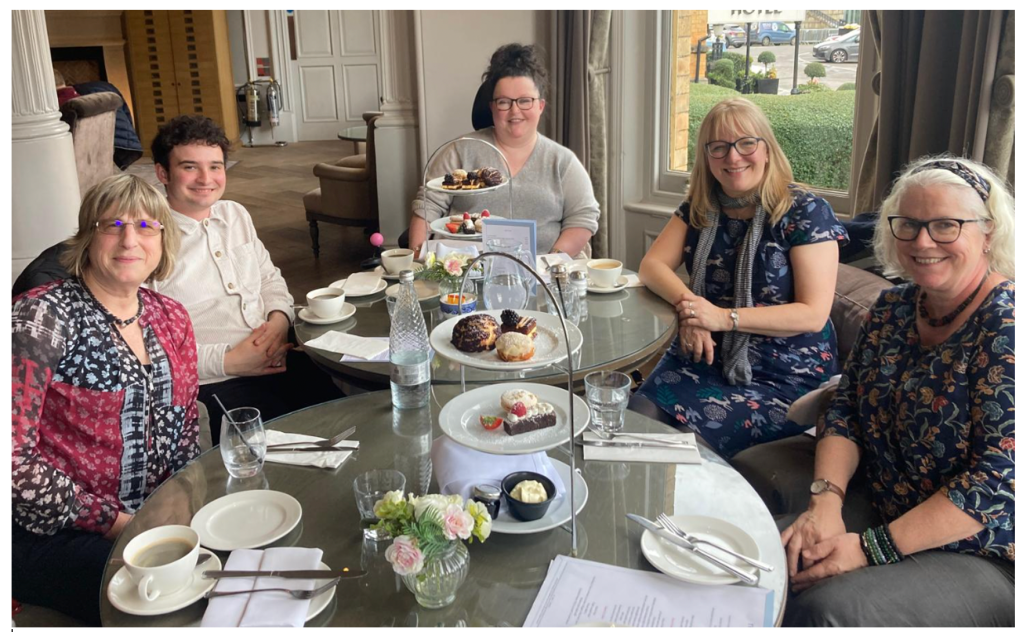
Urgent Serious Medical Treatment on Christmas Eve

By Celia Kitzinger, 7th January 2025

The protected party was in court from her hospital bed on Christmas Eve.  She’s been in hospital since 10th December 2024 with pneumonia and empyema.  She’s also HIV-positive and “significantly immunosuppressed” (she’s not been taking her anti-viral medications).  She’s inconsistent as to whether or not she agrees to accept investigations and treatment.

The case (COP 20008509) was before Mr Justice Cusworth, with Adam Fullwood as counsel for both the applicant and respondent Trusts (Barts Health NHS Trust and East London NHS Foundation Trust), and Ian Brownhill representing P via the Official Solicitor.  

The applicant Trust was asking for declarations that P lacks capacity to conduct proceedings and to make decisions about her medical treatment pursuant to s.15 Mental Capacity Act 2005.  She has a diagnosis of “active psychotic disorder” which manifests in “delusions, erratic thought processes and behaviours that have been challenging”,  for which she is detained under the Mental Health Act 1983 and receiving psychotropic medications.  The Trust also wants the judge to order that it is in P’s best interests to receive the medical treatment identified in a care plan made the day before the hearing, which includes intravenous antibiotics (which I think were already being administered when she agrees to them) and a chest drain to be inserted under general anaesthetic as she shows “resistance and non-compliance”: GA will also enable other investigations to take place.  Without the treatment, her doctors say there is a risk of life-threatening septicaemia.

This case was heard on 24th December 2024, four days after the end of the court term. It’s listed to return to court on 10th January 2025, three days before term starts. According to the judiciary.uk website, the legal year for the High Court (so COP cases at the Royal Courts of Justice) is divided into four terms: Hilary, Easter, Trinity and Michaelmas[1].  Last year’s Michaelmas term ran from Tuesday 1 October to Friday 20 December 2024.  The first new term of 2025 starts on 13th January 2025. The Court of Protection doesn’t really close over the “vacation” periods.  Certainly not for urgent medical cases in the High Court[2]

Counsel for the Trusts gave a helpful opening summary, as invited by the judge (who also authorised the release of Position Statements).  He described P as “a 31-year-old transgender woman from [a South East Asian country] who was trafficked in 2013 and has been forced into sex work”.  He said she’d been moved across different countries, and within England has been known to different local authorities. At some point she was moved to a place of safety and supported by the charity, Women’s Aid.  At some point there was apparently a husband in the picture but “they parted in 2021, he in effect kicked her out of their home and she became street-homeless”.  Counsel described her medical condition and the fact that oral antibiotics are not proving effective. Her inflammatory markers are worsening.  In pre-hearing discussion, it had been agreed that a s.48 (i.e. interim) declaration that P lacks capacity to make her own medical decisions was appropriate and that the treatment proposed by the Trust was in P’s best interests and ought to take place quickly.  It had already been organised that treatment could take place that afternoon if approved by the court.  Additionally, questions about an IMCA[3] report, locating P’s husband, and the need for a further roundtable meeting were all raised.

I was in little doubt, after hearing the summary and the outcome of the pre-hearing discussions, that the Trust’s medical treatment plan would be approved. The judge wanted to know P’s views.  He had already greeted P over the link and asked if she wanted to talk to him and learnt that her lawyer, Ian Brownhill, had never met her (he introduced himself to her at that point), nor had the OS agent, who had attempted to do so but P was asleep at the time.  The judge said it was “appropriate that she gets to talk to Mr Brownhill and expresses her views” and called a 15-minute adjournment so that could take place.

When the hearing re-started 20 minutes later, it turned out that both counsel and the judge had (separately) consulted with P about her wishes.  To Ian Brownhill she’d indicated support for the proposed treatment but said she wanted to go home, see her husband, and indicated that she doesn’t have access to her phone. The judge said “P was more limited in terms of what she said to me, which was she wanted to go home, and I didn’t hear from her that she was consenting to the proposed course of treatment.  If that’s what she told her advisers, and she is consenting to stay in hospital for the next few days while the treatment is undertaken, that is something I’m willing to sanction. I’m concerned though if the hospital is not proposing to let her go for two weeks or more”.

It turned out there had been at least two recent occasions on which P had expressed support for the treatment plan: to her IMCA yesterday, and to Ian Brownhill today.  As to “going home” and “seeing her husband” that may not be practicable if she doesn’t currently have any home, if in fact her relationship with her husband broke down three years ago (and/or may possibly raise safeguarding issues in this very complex situation). In any event going home is “outwith the court’s jurisdiction as she’s under the Mental Health Act and this is not an option available to her”. When her s.2 Mental Health Act detention comes to an end, either she will be detained under s.3 or it may be that she’s no longer under its remit “in which case everything goes back to the Mental Capacity Act at which stage, My Lord, you have the full jurisdiction to determine where she lives and receives care and support, depending on the situation with regard to mental capacity”. 

Counsel acknowledged there were gaps in the evidence, particularly since Tower Hamlets, the local authority and primary safeguarding authority, had not been involved in the case.  There’s an order against the local authority to provide information, a third-party disclosure order against the police, and an order to get information from the Home Office since P is a victim of human trafficking.  But what was needed today was an urgent medical decision dealing with P’s immediate needs now.  Other issues can be dealt with later when there is a better view of the bigger picture.  

The judge approved the medical treatment plan and closed the hearing by saying that he hoped progress could be made so that information is in place by the time of the next hearing to make decisions “with a deal more confidence that what we are doing is right by P”.  He ended by thanking P for her participation and saying, “I hope what we’ve done ultimately works out for the best for you”.

The next hearing is provisionally listed for two hours on 10th January 2025 before the same judge in the Royal Courts of Justice to cover welfare questions including ongoing HIV treatment and P’s care and support arrangements upon discharge.  It may be, though, that matters will be dealt with under the Mental Health Act rather than the Mental Capacity Act, or that proceedings will need to be adjourned depending on P’s medical condition and the availability of the requisite evidence. 

Celia Kitzinger is co-director of the Open Justice Court of Protection Project. She has observed more than 590 hearings since May 2020 and written more than 100 blog posts. She is on LinkedIn (here), and also on X (@KitzingerCelia) and Bluesky @kitzingercelia.bsky.social)


[1] “Michaelmas” is a Christian festival celebrating St Michael, observed in many Western Christian liturgical calendars on 29thSeptember (see: https://www.historic-uk.com/CultureUK/Michaelmas/)   It’s long been one of the four quarter days of the English, Welsh and Irish financial, judicial and academic year.  Because it falls near the equinox, it’s associated with the beginning of Autumn.   The  High Court term names parallel those of Oxford University, where students are taught in three eight-week terms: Michaelmas (October – December), Hilary (February – March) and Trinity  (May-June). At Cambridge, they’re called Michaelmas, Lent and Easter.  Durham has Michaelmas, Epiphany and Easter. Most English universities call similar blocks of time the Autumn, Spring and Summer terms, and many have now moved from “terms” to “semesters”.  It’s common, worldwide, to find blocks of teaching time organised with reference to religious festivals (e.g. Diwali in India, Sukkot, Hannukah and Passover in Israel, the Prophet Mohammed’s birthday in Oman, the Chuseok Festival in Korea and the Qingming Festival in Taiwan. The traditional divisions of the Scottish legal year are organised with reference to Candlemas, Whitsunday, Lammas Day and Martinmas (also used by St Andrew’s University).

[2] There was also an urgent medical treatment hearing on 23rd December 2024 (Daniel Clark will be blogging about it) – and I think it very likely that there are others over this period we won’t get to know about, because office staff are not available to put up listings and they are being organised at very short notice (within a matter of a few hours).

[3] An IMCA is an “Independent Mental Capacity Advocate”, a role created by the Mental Capacity Act 2005 (§§35-41).