By Amanda Hill, formerly known as Anna 8th March 2024
I had tried to observe a hearing before District Judge Bland a few days before this one, but due to problems with technology, I hadn’t been able to, as I wrote about here. I was pleased, therefore, that I was able to observe this hearing. This was a very short hearing, only about 20 minutes long, but it shed light on some of the issues impacting the Court of Protection today: open justice, the use of technology, a system under strain, and the voice of P.
The case, COP 14141370, on 19th February 2024 before District Judge Bland, sitting in Lancaster, was listed as follows:
As it was listed as a hybrid hearing, I knew that there would be a video link, as well as an in-person hearing. There were some problems with the listing though: two hearings were listed for 10am and the one hour hearing (the one I wanted to observe) didn’t have any descriptors to tell me what the hearing was about.
I emailed the Manchester hub, as instructed on the listing, a couple of hours before the hearing was due to start. I asked for the link to observe the hearing, the transparency order associated with it and what time the hearing would be starting. (Hearings can be deliberately listed for the same time, as Daniel Clark has written about here.) Unlike the previous time when I hadn’t had a reply, this time I received a reply from the Administration Officer, 45 minutes before the hearing, informing me that my request had been sent to the Judge and that both hearings were currently still listed for 10am. I was sent the Transparency Order (TO) 25 minutes before the hearing, which stated that the hearing would consider ‘where P (the protected party) should reside and their care arrangements’, and ‘whether to vary or terminate a standard authorisation’. The TO also said that the hearing should be listed as ‘where P should live’ and ‘authorising a deprivation of liberty’ but that judicial instruction had not been followed: there was nothing in the list to indicate what the hearing was about.. Fifteen minutes before the hearing was due to start, I was sent the link to join by Lancaster court staff.
I clicked to join the video-platform shortly before 11am and was held in the waiting room until just before 11.15. I was then admitted, and could see the coutroom, but almost immediately I received a message saying ‘removed from the meeting’. This gave me a dilemma – had I been removed deliberately? I wasn’t sure what to do. After a couple of minutes hesitation, I decided to rejoin and it was just as well I did – the hearing had not started as they were waiting for me to join. (After the hearing had ended, I looked at my emails and I found one from the Court Clerk asking me to rejoin as I had ‘dropped off’ the call).
I couldn’t see the judge, as the camera was pointing into the main courtroom but somebody started speaking to me directly, calling me by name, and I worked out it was the judge. He told me that there had been a delay letting me into the hearing so that he could ask the other attendees whether anyone objected to me observing the hearing. (I don’t quite understand why that was necessary as it was listed as a public hearing.) He asked me if I was with the ‘Transparency Project’ and I replied that I was with the Open Justice Court of Protection Project. He then asked counsel for P to provide a short summary, which is best practice in accordance with guidance from the former Vice-President of the Court of Protection, Mr Justice Hayden.
I must admit that I was a bit flustered at this point due to the glitch gaining access to the hearing and I wasn’t fully able to concentrate on the summary. I have observed a few hearings now but it can still be nerve-wracking. I felt bad for having held up the hearing, even unintentionally, as I’m aware of how busy everybody is. I tried to listen to what was being said, as well as trying to figure out who everybody was. It was a hybrid hearing, and it was quite difficult to hear what was said in the courtroom clearly[1].
I could tell Counsel for P was Mel Leeming, as she had a name board in front of her. She was in the physical court room, as was P, a man sitting next to her. I gathered that this was a s.21A appeal concerning P, who was objecting to his current care arrangements. There had been a hearing on 13th November 2023 but further evidence had been deemed necessary. The case was waiting for a report from an expert, Dr O’Donovan, which was expected by 4th March 2024. There would be a review meeting once this report was received, in time for the next hearing. It wasn’t clear to me what the report was for but I’m assuming it was to do an assessment of the capacity of P to make decisions about his care and residence, from the subject matter listed on the TO.
Ms Leeming also stated that P wanted to be able to manage his own finances, so there needed to be a capacity assessment for this as the current assessment was outdated. She stated that Dr O’Donovan would also be asked to assess that by May 2024. Ms Leeming stressed ‘P wishes to be more independent’. She mentioned a hearing on 4/6/24 and P was asking for all people to be there in person, although she recognised that this would be difficult for the local authority. The Local Authority (LA) was the London Borough of Haringey and of course the courtroom was in Lancaster, quite some distance away. I assumed that the two people I could see on camera were linked to the LA in some way. This hearing was a case management hearing.
Next to speak was Elizabeth Mottershaw, of Garden Court North Chambers, who I gathered was Counsel for the LA. She asked for the deadline for the 4th March report to be delayed by a week, although in doing so she acknowledged that she had not had an opportunity to clear this with P’s representatives. Evidence asked for had not been provided. P’s social worker had been on long term sick leave and was only returning to work gradually. The distance between London and Cumbria where P lived made maintaining contact with P difficult. The LA apologised for the delay in providing evidence. In terms of the next hearing being in person, Ms Mottershaw suggested that an afternoon hearing would make that easier, but she hadn’t had the opportunity to seek instructions.
Having listened to both counsel, the judge then spoke. He said that he had two concerns. He was concerned about an additional week being asked for the March report when the LA had known about the requirement for a considerable amount of time. The judge thought that the report could have been done and he was concerned that more time was being asked for. In terms of the staffing issues at the Local Authority, he said that the LA should make additional adjustments to deal with that. He had some sympathy but said that the organisation should resources to allocate a different social worker to ensure the order had been compled with. He wanted to ensure fairness and that meant the matter being dealt with expediently. He said that delays increase costs. Orders meant obligations according to Court of Protection rules, to ensure that matters are dealt with and orders complied with; it was a duty. He continued that if there were difficulties complying with the order, and those difficulties were left “to float” and the court not informed, then it complicated matters.
He said he was not singling out the social worker because social work was a “complicated job” but the court should have been informed and “should have known”. He cited a judgement by Sir James Munby (then President of the Family Division) in the Family Court – Re W, to do with non-compliance with orders in the Family Court that had been adopted in the Court of Protection. “Orders must be applied to the letter and on time”. The judge stated that the LA should be more proactive: “Court time is valuable as you know and I am very concerned about the slippage”. He went on to say that he expected the LA to let him know because if a hearing and court time was going to be lost, it was not acceptable. He said that if he hears that the report was slipping and putting in jeopardy the next hearing, he “may ask for a statement from a senior manager” (from the LA). He continued “I’m not criticising you or the social workers who are very busy and dealing with multiple issues but I need to know about issues sooner rather than later. It is not acceptable to ignore issues. You must keep me informed of issues.” He finished by saying “I’ve said my piece”. Ms Leeming then asked the judge whether the date in the order was to remain the same and the judge replied “ I’m not going to extend it further. The order must be complied with.” The judge then approved the draft order.
The final words of the judge were addressed to P: “Good to see you, ‘P’. I will see you next time”. After 20 minutes, the hearing was over.
Reflections
Open Justice
I was very pleased to be able to be able to observe this hearing and for a summary to be provided for me. It would have been helpful to have been told who all the people I could see either in the court room or on camera were, but at the same time the hearing had been delayed slightly for me so I can appreciate they wanted to get on with the hearing. I did try and obtain a copy of the position statements from both the OS and the LA, which would have helped my understanding. Unfortunately I couldn’t track down which chambers Mel Leeming worked for. I did send an email to ask for the LA position statement but I didn’t get a reply. Position statements really help open justice so it was a shame I was unsuccessful.
Use of technology
Hybrid hearings can be difficult as the sound can be unclear. They are practical, and indeed they provide more opportunity for observers than hearings that are only in-person, but they can lead to difficulties and I found it interesting that P had asked for an in-person hearing next time.
A system under strain
The difficulties facing local authorities, paticularly social workers, was highlighted by this hearing. I recognized this, as the social worker involved in my mum’s hearing had also gone on long term sick leave. The judge seemed particularly vexed by the lack of communication about the problems and one of the issues he raised was the increase in costs arising from delays. The judge was clearly concerned that the authority of the court was not being respected, whilst recognising how difficult things are on the ground for social workers. I wondered how the LA could have made ‘adjustments’ to cover for the sick social worker.
The voice of P
P had made the time and effort to be in court for this short hearing, but I didn’t hear him speak. It is P who is at the heart of this case and therefore he who is most impacted by any delays. I wonder if he will get his wish to have an in-person hearing next time.
Anna was the pseudonym of a woman whose mother was a P in a Court of Protection s.21A application. Since March 2025, Amanda Hill is allowed to reveal that she is Anna, because the Transparency Order covering her Mum’s case has been varied (changed). Amanda Hill is a PhD student at the School of Journalism, Media and Culture at Cardiff University. Her research focuses on the Court of Protection, exploring family experiences, media representations and social media activism. She is a core team member of OJCOP. She is also a daughter of a P in a Court of Protection case and has been a Litigant in Person. She is on LinkedIn (here), and also on X as (@AmandaAPHill) and on Bluesky (@AmandaAPHill.bsky.social).
[1]It is forbidden to record any part of a hearing and I don’t touch type so my notes will not be 100% accurate.
I am a solicitor with a background in commercial dispute resolution and inhouse advisory work. I have developed a strong interest in the field of health and social care law, mental capacity and mental health law.
My background in litigation is useful, but health and social care law, mental capacity and mental health law is very different to commercial law. My interest in these areas, which includes Court of Protection, was piqued due to my experiences, both professional and personal. Through personal reflection, I have realised that my deeper satisfaction comes from being involved in work that makes a difference to the more vulnerable in society, either through empowerment or securing their rights.
Many years ago, one of my roles involved supporting people with mental health issues to access social care support or treatment. I also had a family member who suffered a stroke and as a result lost capacity. This led to a direct and active involvement in the area – which has its own legal framework and is also a complex mix of public law principles, human rights, policy, medical law and ethics which makes the field both interesting and challenging.
Observing in the Court of Protection
I noticed a serious medical treatment case (COP 14199484 before Mr Justice Hayden) listed on the Open Justice Court of Protection (CoP) Project website on 25 January 2024.
The website said that thecase concerned a lady in her eighties who had had several strokes. The Trust had said that clinically assisted nutrition was not an available option (but were continuing to provide hydration). Her son (a litigant in person) had brought the case as he does not want his mother starved to death. The case had not been listed elsewhere on that day but we could email Open Justice CoP Project for access. It was the third and final day of an ‘urgent’ hearing and the judge delivered an extempore (oral) judgment.
Previously, in December 2023 I had requested to observe a serious medical treatment case, however I was not able to for reasons I do not know. (I received an email from a listing officer in the Royal Courts of Justice stating that my request had been sent, followed that up, but did not get a response). So, when I read that the Open Justice CoP project had permission from the judge to share a video link to this hearing, I quickly took the opportunity to request it, and received it (from Celia Kitzinger) in good time.
The hearing was hybrid (i.e. conducted in person and via MS Teams). I did not receive a transparency order (TO) however after the hearing, I received an email from the barrister representing the Trust, David Lawson informing observers that there was a TO in place and explaining the reporting restrictions. I did take the opportunity to request the TO and position statement but have not received either of these. I did not get the name of the barrister representing P (via the Official Solicitor) and as such have not requested their position statement, although I’ve subsequently been told by the Open Justice CoP Project team that this barrister was Bridget Dolan KC.
Joining the video-platform, I noticed about 14 people attending remotely (these were probably a mixture of public observers and people involved in or connected to the case). The lady at the centre of the case is referred to as EUP in the judgment, so that’s how I’ll refer to her here. Mr Justice Hayden started the hearing by asking both counsel if they wished to add to their submissions. He also addressed the son to say “I don’t think anyone could have advanced the contrary arguments to those proposed by the Trust any better than you did. Your mother would be proud of you.” He then delivered his judgment.
EUP’s background was summarised prior to her suffering a stroke and her current long stay in hospital. As an observer attending the last day of the hearing, this personal background helped in getting a sense of EUP.
Briefly, we learnt that EUP is a lady in her late 80s, who settled in the UK from India with her late husband, and is a mother to 5 children. She has been the primary carer for both her son (who suffers from mental health problems) and her late husband to varying degrees. Her late husband developed dementia and she cared for him for as long as she could, even in the later stages when he lost the ability to swallow. She was very hopeful for a grandchild and was delighted to have a grandson from her daughter in her mid-eighties. P was happily living with her elder son and daughter; she had mobility issues but remained cognitively strong and enjoyed gardening and cooking.
In October 2023, EUP was admitted to hospital following a stroke. During her stay in hospital, she suffered mini strokes and as a result has dysphagia, aphasia, weakness in both arms and legs, and complete weakness in the right arm. She underwent a stenting procedure of the internal carotid artery and while on ICU was intubated on a ventilator, and received medication and clinically assisted nutrition and hydration via a nasogastric tube (NGT). Unfortunately, she had also suffered further strokes. She was discharged to the stroke ward with the NGT in place. This was removed on 15 December as the tube had bent in the stomach. There were several failed attempts made (for around a week) to secure the NGT with a final attempt made again on 3 January 2024, but the tube stayed in position for only 24 hours. Hydration continued via an IV line.
Hayden J then summarised the medical evidence that had been submitted in writing and orally in court. In short this was: that there was a lack of change in neurological condition as EUP has suffered irrecoverable brain damage; the NGT could not be inserted reliably and repeated insertion was causing EUP distress; that there are no options for tube insertion in the stomach (a gastrostomy) because of extreme risks with insertion, risk of skin breakdown at the site, distress incurred during insertion and post insertion monitoring. These risks extend similarly to the provision of other methods of clinically assisted nutrition (PEG, RIG, total parenteral nutrition) and the assisted hydration was causing oedema.
Any signs of consciousness from EUP were contested, infrequent and not meaningful in terms of recovery. EUP’s daughter and son and a number of their friends had seen eye movements which were not observable before. Whilst Hayden J, accepted that the son had questioned himself properly as to whether these changes were significant in terms of signs of recovery, by asking his friends to note any changes as a means of further confirmation, he was only prepared to accept the son’s view to the extent that EUP opening her eyes must be infrequent otherwise the nurses would have noticed it.
EUP’s son had said in court that if EUP’s current condition is all that can be achieved, she would not wish to live this way, but he wanted treatment for some weeks or months longer to see how much she could recover. EUP’s daughter – who I have been informed by Celia Kitzinger, gave evidence in court the day before via telephone which Hayden J put on loudspeaker so everyone in court could hear it – would also wish for the CAHN to continue at least for a short time, to allow a chance of recovery.
Mr Justice Hayden made a declaration that delivering clinically assisted hydration and nutrition, delivering antibiotics, and CPR in the event of cardiac arrest were not in EUP’s best interests. Any such treatment currently being provided may be lawfully stopped. It was in EUP’s best interests for palliative and end of life care to be provided.
I observed towards the end of the hearing, after the judgment had been delivered, when matters pertaining to the transparency order were being discussed, My Justice Hayden, looked at P’s son and said:
“I cannot imagine how difficult this week has been for you, unbearable, and disappointed with my conclusion but I hope you will appreciate that I have listened to every piece of evidence and consider it to be the right decision for your mother.”
It was done rather spontaneously, and for me it showed real consideration for the son’s feelings.
Reflections
I’ve divided my reflections into three sections. First, I reflect on the difference between the adversarial court proceedings with which I’m more familiar, and the “inquisitorial” nature of the Court of Protection. Second, I consider the procedural point made by Hayden J as to who should properly have brought the application in this case. Thirdly, I have subsequently considered legal commentary about this procedural point, and summarise it in my final section. It’s all been quite an education!
1. Adversarial v Inquisitorial Court
I was surprised that the son had pursued and continued with the application despite not having legal representation, which I thought commendable given the complexity and his situation. I have not experienced this in high court commercial litigation, and it may to some extent reflect the difference between an adversarial and an inquisitorial approach in the court.
As I have learnt that Mr Justice Hayden asked the Trust to call evidence on the entirety of the care provided to EUP, and not just the nutrition, so in essence he decided what to investigate and how to do so. I believe in this case it did add a layer of protection for EUP in ensuring her best interests. For instance, he identified that delivering hydration was not in her best interests: rather it had been done, and was continuing, he said, as a compromise between the medical team and the family members’ wishes. In an adversarial court, lawyers are generally in control of the information presented under the civil procedure rules (CPR), as judges will not enquire beyond the identified issues, facts and evidence presented in court. Although under the same rules, judges do have case management powers to give directions on matters such as (but not limited to) setting deadlines and managing the parties’ costs to ensure cases are dealt with justly and at a propionate cost.
2. Legal Procedure
I gained knowledge and perspective beyond the case. It turned out to have a procedural point where there was some confusion as to who should have made the application. Hayden J, took the opportunity when delivering his judgment to confirm his previous guidance given in 2020 – which is that the burden of making an application is upon the healthcare provider to seek endorsement of their treatment plan, when there is a best interests conflict relating to the provision of life sustaining treatment between the doctors and family members.
8. If, at the conclusion of the medical decision-making process, there remain concerns that the way forward in any case is:
(a) finely balanced, or
(b) there is a difference of medical opinion, or
(c) a lack of agreement as to a proposed course of action from those with an interest in the person’s welfare, or
(d) there is a potential conflict of interest on the part of those involved in the decision-making process
(not an exhaustive list)
Then it is highly probable that an application to the Court of Protection is appropriate. In such an event consideration must always be given as to whether an application to the Court of Protection is required.
9. Where any of the matters at paragraph 8 arise and the decision relates to the provision of life-sustaining treatment an application to the Court of Protection must be made. This is to be regarded as an inalienable facet of the individual’s rights guaranteed by the European Convention on Human Rights (‘ECHR’). For the avoidance of any doubt, this specifically includes the withdrawal or withholding of clinically assisted nutrition and hydration.
Mr Justice Hayden pointed out that what he saw as the misconceived legal position in this case, left P’s son with no alternative but to pursue the application himself and to navigate the Court of Protection without experience or legal representation, causing great stress.
3. Jurisdiction of the Court of Protection – A contested opinion
Mr Justice Hayden’s opinion that the Trust should properly have brought this case to the Court of Protection is contested.
I am grateful to Celia Kitzinger who kindly sent me links to two blogs and a webinar in respect of this guidance. These are:
The two blogs take competing views on the guidance issued by Mr Justice Hayden. One accepts Hayden J’s position that the guidance should have been followed in Re GUP. But the other (the joint blog) indicates where the powers of the CoP are limited – in particular, where a treatment option is not on the table. The authors suggest that, if the Trust were to make an application in the sort of situation that applied in Re GUP, then the Kings Bench Division (under Part 8 of the CPR) would be the appropriate forum (rather than the Court of Protection) to seek a declaration of lawfulness that a course of treatment is not appropriate. This is on the basis that the CoP decides whether a treatment option that is available, or on the table, is in the best interests of the patient. In this case, clinically assisted nutrition was not available, or offered – so there was no ‘best interests’ decision to make.
In the webinar, Katherine Scott takes the view that the guidance should not have been relied upon on this case. This is because the guidance refers to disputes about best interest decisions and not to disputes about clinical appropriateness. Her analysis is that, the stage of clinical decision making involving what treatment options are clinically appropriate (i.e. does the option provide overall clinical benefit) for the patient, and only offering those that are, is a public law decision, and therefore reviewable by way of judicial review, in the AdministrativeCourt. When more than one appropriate treatment option has been identified, and patients can choose between the treatment options – and in the case of a patient without capacity, decide which options are in their best interests. It is at this stage, that the CoP has jurisdiction, and can consent or refuse on behalf of the patient. Therefore, in her view, there is no obligation on a Trust to bring a case before the CoP for a best interests evaluation when there is only one clinically appropriate treatment option indicated, because there are no available options for the court to choose between.
Furthermore, Katherine Scott states that the approach in this case appears in direct contradiction to that taken by the Court of Appeal in AVS v A NHS Foundation Trust & Anor [2011] EWCA Civ 7 and the Supreme Court in N v A CCG [2017] UKSC 22. Arianna Kelly, in the webinar provides more information about these cases and other relevant case law. Very briefly, in N v A CCG, the supreme court held that the CoP does not have quasi-judicial review powers and is limited to making decisions that P could have made for themselves if they had capacity. In AVS v A NHS the Court of Appeal made clear that the Court of Protection does not decide on hypothetical questions, and doctors cannot be forced to give treatment.
Hita Jadeja isa solicitor with a background in commercial dispute resolution and inhouse advisory work.
By Anonymous COP Lawyer, 3rd March 2024 (with commentary from barrister Pippa Pudney – keep scrolling down)
In a recent blog post, Dr Ty Glover described his experiences working with anorexia nervosa patients, including ‘E’, whose prominent Court of Protection case in 2012 resulted in involuntary treatment being found to be in her best interests.
This interested me because I knew E.
In fact, around 2014, I developed anorexia nervosa and I was treated alongside E in an inpatient ward for nine months.
I am now a young lawyer practicing in the Court of Protection. I am writing under a pseudonym because I worry that, if other legal professionals learned that I suffered acute mental illness ten years ago, they might doubt my judgment or reliability. Concerns like these partly motivated the creation of a group called ‘Barristers with Lived Experience of Mental Illness’ (BLEMI) in which barristers can discuss their symptoms without real or perceived professional risk.
I don’t know whether my fear is well-founded. However, in the circumstances, the Open Justice Court of Protection Project has kindly permitted me to write anonymously, in a rare exception to the principle of transparency that pervades the Project.
In this blog, I first describe my time with E, then describe how E has since affected my professional life.
Reader discretion is advised, especially for those suffering from an eating disorder, because the following contains my recollections from treatment. I have withheld all information capable of rendering any person identifiable, and have not disclosed anything that E would not condone. Her story is not mine to tell, and some memories should remain ours alone.
My time with E
I was admitted onto an inpatient eating disorders ward in January 2014. I was admitted as a ‘voluntary patient’, meaning that I was not receiving treatment compulsorily under the Mental Health Act 1983. However, I was only so classified because I was told that, if I did not consent to treatment voluntarily, it would be arranged compulsorily.
I met a range of patients. They came from all over the United Kingdom. Almost all were women. Their ages ranged from, approximately, twenty to fifty years. Many had been receiving treatment for several years. I sometimes felt a meritocracy on the ward, whereby defying treatment was honourable, and compliance was repellent.
E never held those views. I cannot remember when exactly I first met her, but I suspect it was in the ‘ward round’ meeting the morning after my admission. These meetings were held every weekday morning, in a large room containing all available patients and staff, and were used to discuss recent ward news.
I quickly felt that E had a benign authority on the ward. E smiled and, with kind, glittering eyes, asked each patient how they were, despite no doubt suffering the intensely negative feelings that treatment triggered in everyone. E cared visibly, sincerely and indiscriminately.
E also interrupted other patients’ pathological behaviours. For example, during communal mealtimes, patients might save the most calorific food items until last, store them in their cheeks without swallowing and then spit them away when out of staff view. I remember, once, E noticed this was happening, ushered the patient aside and gently encouraged them to fight against their illness, both for their own sake and the sakes of their co-patients who were triggered by the behaviour.
I keenly benefitted from E’s influence. I was the youngest patient on the ward and it was my first admission. E spent a lot of time with me, encouraging me to make this first admission my last. E explained her own clinical history as an example of what my illness could lead to if I did not resist it.
I clearly remember, one evening, sitting with E in the patient lounge and watching the sun set. That evening, E told me about her Court of Protection case and the events preceding it. E did not seem angry about the outcome – she seemed solemnly resigned to it. When I went back to my bedroom that evening, I read the Court of Protection judgment about her. It was the first I ever read.
As time went on, E became something between a big sister and a mother. I played my musical instrument and E would come to listen. I watched television in my bedroom and E came to join. I stood by the ward’s locked windows to watch the aeroplanes and E helped me guess where they were going.
My circumstances changed in summer 2014. I sought premature discharge from the ward, and was instead detained there under section 2 of the Mental Health Act 1983. This made me realise that unless I worked to recover my health, I would remain an inpatient for the foreseeable future. I spoke to E about this and, citing her own history, she agreed with my analysis.
By late summer 2014, an event happened that caused me to recover. I will not describe what it was here, save to say that I realised I could not tolerate inpatient life any longer, and certainly not indefinitely. The first person I told was my own mother, and the second person was E.
Afterward, I complied with treatment and restored the strength of my body. As I approached discharge, E told me to cut ties with all patients from the ward because – in her view – relapse would be more likely if I kept in touch with treatment-resistant anorexia nervosa patients.
After discharge, I tried many times to contact E, but she never replied. I don’t know why. Perhaps she was putting her advice above into practice. Perhaps she is not on that ward anymore.
How E has affected my professional life
After discharge, I returned to education. I retook A-Levels. I studied law because E’s Court of Protection case had interested me in it.
I did well, so continued studying law at undergraduate level. There, I took a module about medical law and ethics. E’s case was on my reading list. I sat in my professor’s study, and he wondered what E’s ‘autonomous’ wishes were (i.e. what E would want for her treatment, if we could silence the pathological desires of her anorexia nervosa). In this discussion I recited E’s judgment with emotion and detail. The professor looked at me strangely. I didn’t say any more. The ensuing exam went well.
I then undertook a Master’s degree in law. I studied human rights law, and again cited E’s case in my work, including the obligations that states have to save human life. Again, the ensuing exam went well. I then trained to become a barrister.
Today, I practice in the Court of Protection. This involves factual circumstances and best interests considerations analogous to E’s. I am sure that my inpatient admission and time with E determined my professional direction, as I was not interested in healthcare or law beforehand.
Perhaps more profoundly, my time with E affected how I interact with protected parties (Ps) in the Court of Protection today. E was a compassionate, tender and dignified person first, and an object of Court of Protection proceedings second. She had wishes, feelings and values that carried as much weight as yours or mine – even if, legally, they were overridden by other considerations.
With this knowledge, I pay attention to the wishes, feelings and values of the Ps I interact with day-to-day. This does not mean sugar-coating advice, especially when Ps’ wishes, feelings and values must, in the final analysis, be overridden. Rather, it means paying attention to P’s health circumstances, communicative preferences and other factors specific to them so that, when you are interacting with P, P feels like an informed, valued and dignified actor in their own life. Such treatment does not increase the cost of advice, and it is compatible with robustly discussing and determining the issues in a case.
Having described my time with E and how she has shaped my professional life, I close with a message to E, in case this blog finds its way to her.
If you are reading this, E, I hope you know who I am. I want you to see how you shaped my early adulthood. I promise to try my best to help people like us. I wonder whether we will meet again. If we do, perhaps we can watch the aeroplanes and guess where they are going.
The author is an anonymous Court of Protection lawyer.
I find that that watching hearings is a very different experience to reading a blog or a judgment after the event. When watching a hearing, you see how justice is done step by step, in real time.
Being able to observe hearings is a vital component of open justice and I appreciate the efforts of the judiciary, lawyers, and court staff to make this possible for ordinary members of the public like me.
This blog is about how on one particular day I tried and failed to observe a hearing and I am writing it because I think my experience highlights how open justice can fail, even though there is much goodwill to enable it.
I planned to devote some time to observing in the Court of Protection on the morning of Tuesday 13th February 2024, so I looked on the evening of 12th February to see what hearings had been listed. I sent an email early in the morning, asking to observe a hearing before DJ OmoRegie, but I heard back at 9am that the hearing had been vacated (it wasn’t happening). So I had a quick look for another one and chose this one: the screen shot shows the Courtel/CourtServe listing for a hearing before DJ Bland at Leyland Family Hearing Centre.
I liked the fact that it was remote, via MS Teams, and that it was listed for only an hour. So, I sent an email at 9.01am, asking to observe the hearing. I didn’t receive a reply, so at 9.41am I sent another email, marked “urgent”. I still didn’t hear anything so I decided to ring the number on the listing above, at 9.49am.
The phone rang and rang. Many people would have given up but I was curious about whether I would be able to observe. Eventually somebody answered but it wasn’t the Court of Protection: it was ‘adoptions’. Luckily, when I told her that I wanted the Court of Protection, that person was able to give me two other numbers to try.
Unfortunately, my calls were not answered on either of those numbers either, and I couldn’t leave a message.
So I didn’t manage to get the link to be able to observe the hearing. Meanwhile, the scheduled start time (10am) came and went.
Eventually, at 10.45am I received an email from an Administration Officer of the court (in Manchester), replying to my email, saying: “We have had internet problems this morning, the hearing has now concluded. Apologies for any inconvenience caused”.
I was rather surprised and disappointed to hear that. How could a hearing scheduled to take place by MS Teams be started – let alone concluded – if they had internet problems? I thought about it more and my best guess, because I have since learnt something about how requests to observe are dealt with, is the following: the email requesting to observe was sent to the Manchester hub email address, as per the listing. But the hearing was being held in Leyland, which is some distance away from Manchester. Manchester needed to send the request through to the Leyland court, so that the judge could agree to me observing and so I could be sent the transparency order, as well as the video link. My guess is that due to internet problems in Manchester, my email was not dealt with in time and that’s why I missed the hearing.
However, the internet problems highlight another issue with trying to gain access. If I’d been able to contact the court by phone in a timely manner, I might have been told about the internet problems and then the Manchester hub could have arranged for the Leyland court to send me the link direct since – if my guess is right about what went wrong here – the internet was working fine at the regional court where the hearing was taking place. So this is another example of the challenges that arise when would-be observers are told to email a regional hub, which then has to pass our emails requesting the link to a local court, which then has to arrange for someone else to send the link to us. George Palmer had a similar experience and wrote about it here. Under circumstances like these, it is even more important to be able to contact the court by telephone. Telephone numbers are (almost – see below) always included with email addresses on a listing. But I had not been successful by telephone either.
This hearing had become ‘private’ by default – that is not open justice.
I thought about the problems I had encountered trying to call and I sent the Manchester Administration Officer a follow up email, asking him to confirm which telephone number was the correct one and he replied saying that it was either of the two numbers I had been given by ‘adoptions’, and not the one shown in the Courtel/CourtServe listing. This is quite a serious problem with the listing.
It got me thinking and I wondered whether this was a one-off error, or whether other of the Manchester hub court hearings had also been listed with the wrong phone number. I checked back to previous listings around this date and I found it was a pervasive problem. I have listed below some of the examples I found of problems with the listing telephone number.
I do wonder whether there has been an internal reorganisation of telephone numbers at Manchester but updating the listings has been overlooked. With administration staff being so stretched, it seems to me to be a likely explanation. But it is so important that the public can contact the right people. And it is not efficient if the ‘adoptions’ staff have to answer calls that are not relevant to them. I have written to DJ Bland explaining what happened and asking him if he could investigate whether anything needs to be changed to improve the process in the future. Especially ensuring that the correct telephone numbers are listed.
This whole episode raises a number of concerns about access to hearings and the extent to which – despite the judicial aspiration for transparency – public observation of proceedings is actually feasible in practice. There have been difficulties for members of the public trying to access DJ Bland’s hearings before (Just another failure of open justice: DJ Bland in Lancaster County Court). The listing for DJ Bland’s hearing in Leyland expressly says: “Open justice is a fundamental principle in our courts” but my experience shows that principle doesn’t always translate into reality.
I appreciate that the Administrative Officer who responded to my failed attempt to access the hearing with “apologies for any inconvenience caused” was only trying to be helpful and to register my disappointment with a common phrase. But when members of the public can’t access public hearings, that’s much more than an “inconvenience”. It’s a blow against the fundamental democratic principle of open justice and it subverts the judicial aspiration to transparency. And not because of a lack of goodwill, but because of a malfunctioning internet and unanswered telephone calls.
As of yet, I haven’t received a reply to my email about this. And the wrong telephone number is still being included on listings (see Appendix).
But I am happy to say that when I requested the link for another hearing before District Judge Bland a few days later, on Monday 19th February 2024, I didn’t encounter any problems and was able to observe successfully.
Amanda Hill is a PhD student at the School of Journalism, Media and Culture at Cardiff University. Her research focuses on the Court of Protection, exploring family experiences, media representations and social media activism. She is on X as @AmandaAPHill
Appendix: Incorrect listings
A listing with the incorrect telephone number the day after the hearing I observed (14th February 2024)
I also came across a listing that didn’t have any telephone number:
And I found what is (now?) the wrong number as far back as 2022:
Munby J recognised that existing terms designed to “protect the anonymity of the person who is subject of the proceedings and members of their family” (§9) may not always be appropriate, “for example, where family members wish to discuss their experiences in public, identifying themselves and making use of the judgment” (§11).
This blog is about how it became possible for Carolyn Stephens, the daughter of a protected party, to tell her family’s story publicly, under her own name, first to the BBC and subsequently to the Daily Mail – and why it’s so important that she had the right to do so.
I begin by setting out the background to the case (“I. The background”), and then consider what’s at issue in seeking to discharge a transparency order (“2. Discharging a reporting restrictions order – what’s at issue”). In the third section, “Anna” describes the hearing which she attended as an observer (“3. The hearing”), relating it to her own experience of seeking to get the transparency order varied so that she can write and speak publicly about the COP hearing for which her mother was a protected party, and which she participated in as a litigant in person. Finally, there’s an appendix with initial letter to HHJ Hilder in support of Carolyn Stephens’ application for discharge of the transparency order.
1.The background (Celia)
Carolyn Stephens is a Professor at University College London. Her father, Vincent Stephens, was a protected party at the centre of a Court of Protection case when he died on 18th June 2023. He had end-stage dementia.
Neither Anna nor I observed any of the hearings concerning Vincent Stephens. The first I knew of the case was when Carolyn contacted me on 26th October 2023, some four months after his death. She used the contact form on the Open Justice Court of Protection Project website to ask if I could help her figure out what she was and wasn’t able to say about her family experience so long as a ‘transparency order’ remained in place. She had already submitted an application to discharge the transparency order (on 7th September 2023) but so far there had been no substantive response, and she was anxious about possible contempt of court in relation to interviews she was doing with the BBC.
So, for the background to the case more broadly, I draw on the only written judgment (which relates to the subsequent hearing I did attend) and on the media accounts.
The judgment is available by clicking on the link here: In the Matter of VS (deceased)[2024] EWCOP 6. It supplies only the following background facts.
9. By way of context, it is sufficient for present purposes to note the following matters:
Professor [Carolyn] Stephens is the only child of Vincent Stephens;
after her mother/his wife died, Mr. Stephens formed another companionship;
Dr [Penny] Sorensen is the daughter of that companion, who has herself now died;
Mr. Stephens appointed both of them (Dr Sorensen and her mother) as his attorneys for both property and affairs and for welfare.
10. I have not, at any stage, made any findings of fact at all about the companionship or what may or may not have happened since the death of Mr Stephens’ wife.
11. Professor Stephens wishes to air concerns that individuals and/or public bodies either actively prevented her from maintaining contact with her father or at least failed to facilitate ongoing relationships with a vulnerable person. Dr Sorensen maintains that Mr Stephens himself wanted to be left alone to pursue his chosen path in later years.
12. The substantive proceedings in this court focused on contact between Mr Stephens and his daughter and wider family and friends. Arrangements for such contact were achieved at the first hearing, and subsequently contact took place at the care home where Mr Stephens was then resident.
The story that Carolyn Stephens tells in the Daily Mail (27th January 2024), following HHJ Hilder’s decision to discharge the transparency order, is a desperately sad one. She says her father was lost to her for four years, during which she didn’t even know if he was still alive. She only found him because she embarked on an epic trawl through the electoral records at the British Library to try to find where he was living. She believes that her father was deliberately estranged from his family, ‘dumped’ in a care home, and duped into believing he had been abandoned. According to the Daily Mail, Carolyn traces the beginning of the problems to the arrival in her father’s life of a widow he’d met on a Saga holiday in 2021, the woman the judge refers to as his “companion”, Iris Keyes.
“She cites three events over the space of a week in 2018.
‘First, this woman [Iris Keyes] took my father to a register office and tried to marry him, but the registrar refused saying that he did not have the capacity. He couldn’t answer basic questions, like his own address.
But just a week later, a solicitor signed a piece of paper that gave [Iris Keyes] Lasting Power of Attorney, over not only finances and property but health and welfare. It gave her the power to remove me from his life’.
The third event? Carolyn was reported to the police, accused of abuse and harassment of her father. No charges were ever brought, and she has since had an apology from the Chief Constable of Norfolk Police.”
Daily Mail, 27 January 2024
The Mail reports that Carolyn and the wider family backed off for a while, and then Carolyn learnt (from public records) in May 2022 that Iris Keyes had died: “There was no mention of my father in her obituary. He had disappeared from the narrative.” With Iris dead, the Lasting Power of Attorney was in the hands of her daughter, Penny Sorensen – who is also an academic at the University of East Anglia with a special interest in elderly care. She declined to tell Carolyn where her father was now living.
When Carolyn eventually found her father, in a care home in Norfolk, “the visiting log showed that Dad was left alone for 346 days, without any visitors, in 2022 alone. He had no visits at all from January 1 to June 16. No one visited him on his birthday”. What’s more, Penny Sorensen, in her role as his attorney, then instructed the care home not to allow further visits from his family.
That’s when the Court of Protection became involved. Carolyn made an emergency application to the court which, two days later, led to immediate permission to Carolyn and her husband to visit Vincent in the care home. Permission for other family members to visit was granted shortly afterwards and then, all the family were able to spent time with Vincent for the last six months of his life.
The BBC published part of Carolyn’s story back in 2021, before she’d found her father: at that point, she told her story under a pseudonym. In December 2023, she went on record under her own name in a podcast, “Finding my father”, available on BBC Sounds Radio 4 but without mentioning the Court of Protection hearing. Since the handing down of HHJ Hilder’s written judgment lifting the reporting restrictions, she has been able to speak out about the court case too.
It’s been important for Carolyn to tell her story – and to tell it under her own name – because she wants to warn people about the potential for “dangerous abuse” of Lasting Power of Attorney legislation. She believes there should be more safeguards to protect vulnerable people.
She’s pleased with the way journalists have handled her story. As she said on X/Twitter“Just wanted to thank Daily Mail for highlighting Lasting Power of Attorney risks. And thanks to brilliant Judge in Court of Protection who let us see Dad.” (Carolyn)
There was a deluge of response to the Daily Mail story from people who said they had similar experience, referring to “coercive control”, “grooming” and “predatory marriage” as well as abuse of Lasting Power of Attorney: others emphasised the value of LPA in protecting their loved ones.
This is clearly an important conversation. Elder abuse – whether through marriage in later life or through LPAs – raises legitimate issues of public concern. As another journalist wrote:
“This troubling saga highlights a broader societal issue: the potential for elder abuse and the exploitation of individuals suffering from cognitive decline. The ordeal faced by Carolyn and her family raises serious questions about the safeguards in place to protect the vulnerable elderly population. It underscores the need for vigilance and stricter regulations to prevent such scenarios from occurring.”
Carolyn is especially concerned that new proposals to modernise the process of applying for LPAs could lead to further abuse, with less checking of the vulnerable person’s capacity to make the LPA. She’s tweeted: “Agree with Law Society “The consequence of an attorney making a poor decision could result in the donor losing all their assets, being admitted into a care home against their wishes or even premature death“.
You can read Carolyn’s earlier academic article in the British Medical Journal here: “Elder abuse in the UK: out of the shadows and on to the agenda”. She’s subsequently co-authored another article here: “Changing policy landscape around elder abuse in England and Wales“, in which she and her colleagues call for health professionals to “work with the legal profession to advocate that the strongest possible safeguards be incorporated into the Ministry of Justice regulations protecting older people from LPA abuse, and to support Law Commission proposals that may help protect older people from predatory marriage“.
2. Discharging a reporting restrictions order – what’s at issue? (Celia)
The Court of Protection frequently deals with fundamental issues of human rights, which are of legitimate public interest: deprivation of liberty, physical and chemical restraint, restrictions on contact with family members, surgery contrary to a person’s wishes, withdrawal of life-sustaining treatment, and the validity and proper use of Lasting Powers of Attorney.
Almost all Court of Protection hearings are open to the public (including journalists) – but it’s rare for anyone actually to attend. That’s why we started the Open Justice Court of Protection Project – to shine a spotlight onto the way these decisions are made and the power of the law to intervene into people’s lives.
Although we can almost always publicly report on hearings in the Court of Protection, there is generally a “transparency order” in place. This is a (somewhat Orwellian) name for an injunction imposing reporting restrictions. In its ‘standard form’ it prevents the publication of anything which could lead to the identification of the protected party and their family. Sometimes it goes further than this, preventing identification of experts, clinicians and even local authorities or Trusts and other public bodies involved in a case.
The key issue in discharging reporting restrictions in cases like these is the balance between two different rights in the European Convention on Human Rights: Article 8, the right to privacy of the vulnerable person at the centre of the case, and Article 10, the right to freedom of expression and freedom of information.
These rights are protected in the ‘standard’ transparency order by:
prohibiting publication in any form of information that identifies or is likely to identify the protected party as the subject of the proceedings, or that any person is a member of the family of the subject of the proceedings, or any information that identifies or is likely to identify where any of those persons lives, or is being cared for, or their contact details – thereby protecting Article 8 rights;
permitting publication of reports about and commentary on the proceedings, especially insofar as they relate to matters of public interest, including naming judges, lawyers, expert witnesses, public bodies (ICB, Trust, LA etc) – thereby protecting Article 10 rights.
This is, in essence, the effect of the transparency order of 30th January 2023 that applied to Vincent Stephens’ case.
The Article 8/Article 10 balance shifts significantly when family members assert their Article 10 rights to speak openly about the proceedings in which they are, or have been, involved. That is so in this case, as in an increasing number of other cases I’m aware of (see, for example, “Gagged – in whose best interests?”). Family members’ right to speak with other family members (not directly involved in the case) also engages their Article 8 rights to family life.
That is why, after Carolyn Stephens contacted me, I wrote to HHJ Hilder (see Appendix A) to support her application to discharge the transparency order.
In other cases where I’ve written to judges for discharge or variation of a transparency order, nobody has opposed my application and the matter has been dealt with – often quite swiftly – on the papers. In this case, however, Dr Penny Sorensen opposed discharge of the transparency order and so the matter moved to a contested hearing, and I was invited by the judge to become an Intervenor and to submit a full position statement.
My position statement (17 November 2023) addressed two additional issues.
First, Penny Sorensen argued that she was “family” and that the wording of the transparency order therefore also covered her (i.e. protected her identity from being publicly revealed): this was disputed by Carolyn Stephens for whom Penny Sorensen could not be considered a “family” member to Vincent Stephens. My submission was that the transparency order was poorly drafted in not listing the specific members of the “family” whose identity it was intended to protect. This should be remedied in future orders, especially in situations in which unmarried partners, step-families and “blended families” are involved.
Second, Penny Sorensen considered that the matter with which the proceedings were concerned should remain private because there was a risk that Carolyn Stephens would repeat unsubstantiated allegations against her as if they were fact, or even the outcome of judicial enquiry. My submission was that, given the importance of Article 10 as a fundamental right, it was neither necessary nor proportionate pre-emptively to limit Carolyn Stephens’ freedom of expression on the basis of unevidenced fears that it might be abused.
Additionally, I was concerned about the fact that the transparency order applying to this case was of indefinite duration (“until further order of the court“). Following Abbasi and Haastrup [2023] EWCA Civ 331, the granting of indefinite anonymity orders like this has been seen as representing a serious inroad into the principle of open justice – a matter that is currently under consideration by the COP Rules Committee, and will shortly be before the Supreme Court. HHJ Hilder referred to this matter in her judgment.
The hearing, COP 14044755, was held remotely at 10.30am on 19th December 2023, before HHJ Hilder, the Senior Judge of the Court of Protection.
3. The hearing (Anna)
This hearing was about a subject close to my heart – a transparency order restricting reporting of a Court of Protection case.
My mum was a protected party in a Court of Protection case due to a s.21A Deprivation of Liberty appeal, which I have written about here.
My family and I are prevented from talking about the case under our own names because this could lead people to identify my mother. In theory, anyone who knows my name might go to the trouble of trying to work out who my mother is, and might be able to do so. That’s why I am using a pseudonym – Anna is not my real name.
A transparency order is helpful for family members who don’t want to be identified, but in my family we all now want to be able to discuss our case both with wider family and with friends. And because I am now a member of the Open Justice Court of Protection Project core team, and planning research on the Court of Protection, I want to be able to write and speak about my mother’s case publicly. I have written about what it feels like to be unable to do that here. I have made an application for the transparency order in my mum’s case to be varied to permit us to do that. I’ve told my mum what I am doing and she said she was proud of me but I don’t think she really understood and she certainly won’t remember. But it was important for me to tell her and it meant a lot to me that she said she was proud!
I’d become aware of this case through Celia Kitzinger, co-director of the OJCOPP, as she had become an intervenor, i.e. someone who is joined to a case, as they can be materially impacted by it.
This application to discharge a transparency order has three key differences from my situation.
First, the protected party in this case had died. Therefore, according to the law, he has no best interests to protect. Because my mum (unlike Carolyn’s Dad) is still alive, she still has best interests and a right to privacy in the eyes of the law, according to Article 8 of the European Convention on Human Rights (ECHR). This means that the Official Solicitor, who represents Mum’s best interests, may be asked for her opinion about whether varying the Order is in Mum’s best interests (although the decision is not a best interests one – it’s about weighing up Mum’s Article 8 rights to privacy against our Article 10 rights to freedom of expression). This in turn has cost implications. My mum was covered by legal aid for the original hearing (as is normal practice for s.21A hearings), but her solicitor has told me that in the view of the legal aid agency, Mum would not get legal aid if the judge were to require a new hearing (as opposed to an on-the-papers decision) to deal with my application. It doesn’t feel right to me to expect my Mum to pay for this.
Second, this was a disputed application. The protected party’s daughter, was the applicant, and she wanted the transparency order to be discharged. The daughter of the person the judge described as P’s “companion” opposed that: she had also, crucially, held Lasting Power of Attorney for Carolyn’s dad. By contrast, my three siblings and I are in complete agreement. We would like the transparency order to be varied (changed) so that we can discuss the case, but without naming Mum. We do not yet know whether the Official Solicitor or the Local Authority will oppose my application.
Third, this was an application to completely discharge the transparency order, so that there would be no reporting restrictions at all (as far as the Court of Protection is concerned). My own application is more limited. I’ve applied not to discharge the Order but to vary it. My siblings and I want to be able to identify ourselves as the relatives (daughters and son) of a protected party, but not to name the protected party herself.
Our experience as a family is that it’s not been easy to apply to vary the Transparency Order. It feels as though once an Order is in place and a case is closed it’s a very challenging thing to do. I’m extremely fortunate in having recently been offered a pro bono (i.e. free) solicitor and barrister to help me with this, since (even with Celia’s help) I wasn’t making much progress without a lawyer.
Given this background experience, I was very interested to see how this hearing would go and what the judge would decide.
None of the people in this case was represented legally. I’m told by Celia that she never considered legal representation, since she has some experience of making submissions in court about open justice and felt reasonably confident to do so. In many cases (like my own), family members don’t have lawyers because of the cost involved. Unless family members are eligible for legal aid, we have to pay legal fees if we are acting as parties and want lawyers to represent us.
So, the only legal person at the hearing was the judge. I felt she made every effort to make sure that the parties were not disadvantaged by appearing as litigants in person – especially by the way in which she outlined the issues she was reminding herself of (in place of hearing legal submissions on those) and then asked for the parties’ comments. The way in which she did this is apparent from the judgment – see below.
Two issues struck me during the course of the hearing.
First, when Penny Sorensen was setting out orally why she opposed the application to discharge the TO, she stated that she had been given LPA by Vincent Stephens when he had capacity and that this had been “overturned” by the court. The judge questioned this and said that the LPA had not been overturned by the court. She replied that although the LPA was still in place (while he was still alive), his wishes were not upheld. The judge replied that the court is the final arbiter – “always”. My family shared the same misconception. My sister has LPA for my mum and we all assumed, simplistically, that this meant that when mum lost capacity my sister as her LPA could make decisions in her best interests, including where she lived. As I have blogged about before, we had no idea about the role that the COP has in representing somebody who has been deemed to have lost capacity, over and above any legal powers an LPA has. I agree with the judge that it is in the public interest to learn and understand more about this and the role that the COP has in an individual and their family’s lives.
Second, one important issue that was raised, and not resolved, was what constitutes a family member. Carolyn Stephens argued that Penny Sorensen was not covered by the transparency order as she was not “family”. Penny Sorensen argued that she was: ‘I lived with him ….we ate together, we celebrated together, he treated me like a daughter …… I think I am family and I don’t know who is going to decide whether I am or not.” Celia had raised this in both in her formal position statement and in her oral submission, stating that the order should have been more specific and stated who the family members were who were covered by it. From my limited experience it is easy and common for legal teams to use a standard transparency order without thinking whether they are appropriate. As the judge says, what constitutes family today is not always straightforward. And how wide is family? I notice that the transparency order in my Mum’s case just says ” family” with no initials (except my Mum’s) so could be widely interpreted.
This case gave me hope that our wish to have the transparency order in our case changed will be successful, even though there are crucial differences with our case, not least that Mum is still alive. Nobody wishes for a family member to have to die before they can talk about their case, even just with their wider family and friends.
I was pleased to see Judge Hilder being such a supporter of open justice in many ways during this hearing and for ensuring that the litigants in person in this case could participate in a fair way. The role of Celia as intervenor was also an interesting aspect of this case and helped to ensure that public interest and transparency were at the forefront of the hearing.
The judgment is available here: In the Matter of VS (deceased)[2024] EWCOP 6
Celia Kitzinger is co-director of the Open Justice Court of Protection Project. She has observed more than 500 hearings since May 2020 and written more than 100 blog posts.She is on LinkedIn (here), and tweets @KitzingerCelia
Anna was the pseudonym of a woman whose mother was a P in a Court of Protection s.21A application. Since March 2025, Amanda Hill is allowed to reveal that she is Anna, because the Transparency Order covering her Mum’s case has been varied (changed). Amanda Hill is a PhD student at the School of Journalism, Media and Culture at Cardiff University. Her research focuses on the Court of Protection, exploring family experiences, media representations and social media activism. She is a core team member of OJCOP. She is also a daughter of a P in a Court of Protection case and has been a Litigant in Person. She is on LinkedIn (here), and also on X as (@AmandaAPHill) and on Bluesky (@AmandaAPHill.bsky.social).
****
Appendix A: Celia Kitzinger’s initial letter to HHJ Hilder
Dear HHJ Hilder
Re: COP 14044755 Re VS: Discharge of Transparency Order
I am writing, in my role as co-director of the Open Justice Court of Protection Project, in support of Carolyn Stephens’ application to discharge the Transparency Order (made by HHJ Owens, dated 30 January 2023) which she sent to me – in confidence – for advice on its terms. I also want, via this email, to make my own application for discharge of this Order, for the reasons given below.
I understand that a key reason why Carolyn Stephens wants to discharge the Transparency Order is so that she can speak publicly about her experience in relation to Lasting Power of Attorney and the Court of Protection – following an invitation from BBC Radio 4 to contribute to a series of programmes commissioned by the BBC on what protection exists for older people (scheduled for transmission in November/December 2023).
The role of Lasting Powers of Attorney, the ‘modernising changes’ made to them, their risks and benefits, and the vital function of the Court of Protection when things go wrong are all areas of legitimate public interest. This is an area to which Carolyn Stephens has already made an important and very widely cited contribution in her professional capacity as an academic researcher in global health, in a piece which highlights the risks of “vulnerable individuals, particularly older people with failing capacity, being coerced into either marriage or powers of attorney” (Elder abuse in the UKBMJ 2021;375:n2828).
In terms of the Article 8/Article 10 balance to be struck here, I understand that VS has sadly died, such that he can no longer benefit from the Article 8 right to privacy explicitly afforded to him by the Transparency Order.
The only other people whose right to privacy is protected by the Order are VS’s family members (§6(1)(a)) – all of whom, Carolyn Stephens assures me, are willing to waive their right to privacy in order to ensure that their story can be told effectively and in a manner that engages public interest.
The effect of the Transparency Order currently in place is to curtail Carolyn Stephens’ Article 10 right to freedom of expression to speak and write about her experience of the Court of Protection, under her own name. This also, of course, engages the public’s Article 10 right to receive that information from her (as an identified person) and thereby to benefit from her experience.
I can’t see any Article 8 argument to balance against the Article 10 right of freedom of expression and freedom of information.
Under the terms of the current Transparency Order, it would be possible for Carolyn Stephens to tell the story of her experience of adult protection anonymously. But an anonymous account does not, in my view, fulfil the requirements of open justice for the following reasons:
As indicated above, there is no Article 8 argument to balance against this family’s (and the public’s) Article 10 rights – and therefore no justification for constraining Carolyn Stephens’ right to publish her story under her own name.
It is widely accepted that stories about identified persons are much more effective in the media. As was famously said by Lord Rodger in Re Guardian News and Media Ltd and Ors [2010] UKSC 1 “What’s in a name? ‘A lot’, the press would answer. This is because stories about particular individuals are simply much more attractive to readers than stories about unidentified people. It is just human nature. […] A requirement to report it in some austere, abstract form, devoid of much of its human interest, could well mean that the report would not be read and the information would not be passed on”. An abstract story about an unidentified family’s experience of Lasting Power of Attorney and the Court of Protection will simply have less impact and be far less effective as a vehicle for developing legal literacy – so the requirement to remain anonymous impedes both Carolyn Stephens’ own goals in telling her story, and the benefits of public education derived from it.
It perpetuates an uncomfortable and artificial separation between Carolyn-Stephens-as-health-researcher and Carolyn-Stephens-as-family-member in writing about the experience of elder abuse: her personal experience is alluded to in the footnote to her publication cited above, but obviously without elaboration.
Alternatively, under the terms of the current Transparency Order, Carolyn Stephens could speak in her own name about her experiences of elder abuse and adult protection, but without making any reference to the Court of Protection case. This would result in a partial and incomplete story, and miss out on an opportunity to develop public understanding of the role of the Court in dealing with these important issues of public concern. For some listeners, it would also beg the question of why the Court of Protection appears not to have been involved. Moreover, absent any competing Article 8 arguments, there is no legitimate reason to censor Carolyn Stephens in this way.
I would also draw your attention to the fact that this Transparency Order has been drawn up so as to have effect “until further order of the court” (§8). Following Abbasi and Haastrup [2023] EWCA Civ 331, the granting of indefinite anonymity orders like this has been seen as representing a serious inroad into the principle of open justice. In my experience, recent Transparency Orders (across a range of cases from s.21A through welfare and SMT cases) have specified endpoints (at least relating to the identification of clinicians) – sometimes tied to the death of P, sometimes to an apparently arbitrary date some months hence. This seems to me an appropriate acknowledgement of a family’s “desire to tell their story”, as noted by Lord Burnett, giving judgment in the Court of Appeal.
The difficulties experienced by Carolyn Stephens are very familiar to me from my work as co-director of the Open Justice Court of Protection Project. I am increasingly seeing families who want to be able to tell their stories, under their own names. I am currently supporting family members of four other protected parties (all from cases that are now closed). They want to speak out about their experience of the Court of Protection but are bound by Transparency Orders, the scope of which they did not fully appreciate at the time (e.g. for one such family member’s account see “Gagged – in whose best interests?”). When a case is ongoing, it is often possible to vary the Transparency Order quite quickly during the course of a hearing – but after a hearing is finished, and especially once a case is closed, it often becomes cumbersome, time-consuming and potentially quite expensive to do this. I am aware of the current review of Transparency Orders by the Rules Committee, and in addition to making a formal submission (see “Anxious scrutiny or boilerplate”), I have alerted them to my concern that family members (and indeed “P”) can find it difficult to understand, and frustrating to comply with, the anonymity requirements imposed on them by the Transparency Order – and also impossibly challenging to work out how to get the Transparency Order varied or discharged. I hope this is something that can be addressed at a policy and practice level for all families caught up in the Court of Protection.
Finally, I am also acutely aware that an ‘anonymised’ or ‘censored’ version of Carolyn Stephens’ story risks reputational damage to the Court of Protection – as yet another media account about the workings of a “secret” court imposing “gagging orders”.
So, for all these reasons, I am supporting Carolyn Stephens’ application and asking for a speedy decision to discharge the Transparency Order in this case – in time for Carolyn Stephens to speak publicly, and under her own name, to the BBC. Please join my application to discharge this Transparency Order to hers.
Thank you for considering this application and for your support of open justice.
Celia Kitzinger
Professor Celia Kitzinger, Co-director, Open Justice Court of Protection Project
Many people are unaware that you can appoint another person to make decisions on behalf of your health and welfare and/or your financial affairs if you ever lose the capacity to make these decisions for yourself. This involves appointing someone as your Lasting Power of Attorney (LPA). You can check this out on the government website.
Perhaps because people don’t know it’s possible to do this, or perhaps because they don’t think it’s necessary until the late stages of an illness, many people leave making their applications until their decision-making capacity to appoint an attorney is questionable. This can mean their application is rejected You can only appoint someone as your attorney when you have the mental capacity to decide to do so (and the fact that you do have such capacity has to be recorded in the application by a ‘certificate provider’). This case is about someone who may have left it too late to appoint an attorney. The Public Guardian took the view that she lacked capacity to make that decision at the point she completed the application forms.
The hearing I observed – with the support of Daniel Clark from the Open Justice Court of Protection Project core team – was held on 31st January, at 2:00p.m before District Judge Grosse. It was listed as concerning a Lasting Power of Attorney (LPA) – see the third case on the list below, taken from Courtel/CourtServe (COP 13627159).
I knew very little about Lasting Powers of Attorney and so had a huge interest in this hearing. I was fortunate enough that Daniel could provide me with previous blog posts published by the Open Justice Court of Protection Project and these helped me to gain an initial understanding of what a Lasting Power of Attorney is and how it works (e.g.The logic, law and language of Lasting Power of Attorney: A case before Hayden J).
After requesting the link, I received the Transparency Order (TO) for the hearing at 9:03 a.m. that morning, five hours before the hearing, allowing plenty of time to read its terms and restrictions. The TO was easy to understand, and set out in the usual terms, prohibiting the publication of any information that will identify (or is likely to identify) the protected party, her family, or where they live, or their contact details. It was sent to us prior to the hearing, which is quite unusual: as usually we have to ask counsel for them, if we ever receive one at all. However, this was the second time running where I had received the TO before the hearing, which is a great way of promoting open justice and ease of access for public observers.
Armed with my new insight into LPAs and the TO, I was confident that, with a brief summary by the court on the facts of this case, I would be able to keep up with the legal arguments being made by both parties. Sadly, however, there was no opening summary of the facts and background to the case – despite guidance from the previous Vice-President of the Court of Protection. Although DJ Grosse did ask all public observers whether they had read and understood the TO (to ensure none of us would act in contempt of court) and was highly welcoming and friendly, it’s unfortunate that the judge did not follow the guidance and ask counsel to provide an opening summary, since this would have made a real difference to my understanding of the case and supported the judicial aspiration for open justice.
Instead, we had to pick up the facts of the case as we went along as they were mentioned at various points throughout the hearing. From the perspective of an observer, this made it all a bit disjointed and difficult to follow.
Although we asked for the Public Guardian’s position statement, it was never received, so we weren’t able to fact-check after the hearing either. The failure to supply a position statement may be because I can’t be sure who the barrister was. The judge and counsel for the Public Guardian were in a physical courtroom, and the judge simply referred to Counsel as “Mr Francis” during the hearing. We deduced that he might be Thomas Francis of 45 Gray’s Inn Square based on the picture on his Chambers’ website – but we could be wrong about this. An email to the court sent shortly after the hearing, asking for counsel’s first name, went unanswered.
I learned that the case concerned the validity of an LPA that named the respondent, AF, as an attorney. Due to the lack of opening summary and position statement, I’m not sure whether both types of LPA (i.e. health and welfare and finance), or just one type, were being discussed.
AF’s mother, MI, had revoked an earlier LPA and then made two more of the same type, both appointing AF as her attorney. The Public Guardian, argued that MI lacked the relevant mental capacity to make the LPA (or one of them, if in fact there were two). Furthermore, it was the view of the Public Guardian that if the court found MI had in fact had the capacity to make her LPA at the time she made it, the LPA should nevertheless now be revoked.
I understand that a doctor’s witness report had been received which stated that the mother did NOT have capacity at the requisite time (when she purported to make the LPA).
AF argued against this, stating that MI’s lawyers, as well as her own treating doctors, had assessed MI as having the capacity to sign the LPA at the material time.
I was unable to ascertain from the short hearing whether the certificate provider (i.e. the person who fills in the form stating the individual has the capacity to make the LPA) had been the mother’s lawyer or her doctor, and I found it a highly worrying possibility that an individual such as MI can go through all the legal procedures correctly to have her past capacity rejected later down the line by another doctor.
In addition, AF was adamant that the care she had undertaken for her mother over the past four years, all – she claimed – with her mother’s consent, should enable her to be granted LPA on behalf of her mother, whom she clearly cares for and wishes to help. This highlights the disadvantage that some litigants in person may face: an argument that sounds perfectly reasonable may not be on strong legal ground.
In not wanting to prolong the case for any longer, DJ Grosse proposed two weeks for AF to respond to the doctor’s report, before issuing a final hearing, not seeing the benefit of any additional direction hearings.
In anticipation of this final hearing, DJ Grosse noted that AF was calling from a foreign jurisdiction: namely, America. Recalling a case in which there were issues with a party giving evidence remotely from Pakistan, and in which they had to give evidence in a UK Court, she proposed that AF would potentially need to seek permission from the UK consulate in the state in which she lives regarding giving evidence. Mr Francis was offered his support in advising the respondent on how to do this and the impact it would have on the proceedings.
Final thoughts
Cases such as these emphasise the importance of LPAs alongside other existing frameworks such as Advance Decisions to Refuse Treatment. Such devices allow individuals, particularly those who have strong desires about their future treatment, should they ever lack capacity, to make legally binding decisions on behalf of their future selves. Other kinds of Advance Care Planning (e.g. advance statements) can be equally important toolsm and have legal standing, though an advance statement is not legally binding.
While some may argue that no one can truly know what they will want until such a time comes, many feel that the ability to allow individuals who know and care about you to make decisions on your behalf, instead of, in this case, a public body, is a far more comforting and suitable solution. This is something that struck me enormously during this case, where a daughter, who loves her mother dearly, wishes to make decisions on her mother’s behalf that she is confident is what her mother would have wanted. Even more worrying, is the potential vulnerability we all face in having the state tear down the very protections we have tried to put in place to protect our incapacitated future selves.
I look forward to attending future hearings in this case, and continuing to learn more about LPAs and the issues individuals face in attempting to make them, and the challenges their families and would-be attorneys face in enforcing them.
It seems apparent that many individuals may not think about making such applications until their capacity to make such decisions has potentially been reduced, making such applications far more complex and open to challenge by public bodies.
While public bodies are required under the Mental Capacity Act 2005 to make decisions in the person’s best interests (which take into account the person’s own wishes, but are not determined by them), some people would prefer those decisions to be made by someone they know and trust. That’s why Lasting Power of Attorney is an important legal tool. I now believe that all of us , no matter our age, should seriously consider making an Lasting Power of Attorney and/or an advance decision or advance statement.
This case will return to court on Friday 26th April 2024, and will be listed for a full day (remote) hearing.
George Palmer is a third-year law student at the University of York and an aspiring clinical negligence barrister. He hopes that observing Court of Protection hearings will give him a greater knowledge and understanding of the legal system, as well as provide him with the foundational principles of a successful barrister, which he hopes to take into practice in future.
I’m a Consultant in Eating Disorders Psychiatry, an Independent Medicolegal Expert and a member of the Royal College of Psychiatrists for over 25 years.
My clinical career has been spent managing acutely unwell NHS patients in Independent Sector Hospitals, primarily patients suffering with severe Anorexia Nervosa but also those with acute forms of other mental health conditions. I have worked across the North of England and am currently providing Consultant input to Schoen Clinic’s acute Eating Disorders unit in York. I have 10 years prior experience of Acute Medicine, Anaesthesia and Intensive Care and am an ex-Fellow of the Royal College of Anaesthetists.
My medicolegal career has developed almost exclusively in relation to Court of Protection proceedings, mostly relating to Serious Medical Treatment, with only limited exposure to coronial work and civil litigation.
My medicolegal experience commenced, rather out of the blue, with a phone call one afternoon from a member of the Official Solicitor’s team, explaining the circumstances of an extremely unwell young woman in Wales, who needed an urgent independent opinion for a court hearing one week later.
That case turned out to be Re E (Re E (Medical treatment: Anorexia) EWHC 1639 (COP)) and led on to me receiving multiple instructions to act as an expert witness in relation, primarily, to capacity considerations in both severe eating disorders and other general mental health conditions.
I have since been instructed in Court of Protection proceedings on over 40 occasions and have given oral evidence in more than two dozen cases.
This blog post is organised as follow:
Re E and Re L: Two key cases
Rare personal tragedies
The Mental Capacity Act is a good teacher
The words matter
Everything changes
1. Re E and Re L: Two key cases
In the first case, Re E, the end result of that Friday afternoon phone call, once I had had time to consider E’s history and records, it became clear that she had received little intensive inpatient treatment, despite suffering from severe Anorexia Nervosa for many years. When she had received treatment, she had made significant, if not sustained, progress.
At the time of my assessment, E was on an “end of life care pathway” and the family seemed to have accepted that she was drawing towards the end of her life.
In my opinion, there was no doubt that E lacked capacity to make decisions about care and treatment, specifically nutrition, due to the overwhelming and intrusive nature of her anorexic cognitions, which impaired her ability to weigh matters in the balance. Given the relative paucity (in my opinion) of treatment, it did not seem appropriate for a woman in her late twenties to be on an end-of-life care pathway when intensive treatment in a specialist eating disorder unit may well produce significant improvement – though I and another independent colleague acknowledged that the chance of sustained recovery was less than 30%.
The second case in which I was appointed as an expert witness to the Court of Protection was Re L (The NHS Trust v L [2012] EWHC 2741 (COP)) and in that case the parameters were markedly different. L had been treated on numerous occasions in recognised centres of excellence with specialist eating disorder experience. Her resistance to treatment had been extreme and as difficult to manage as any case I have witnessed before or since. She had suffered numerous physical complications, often secondary to interfering with her feeding, including aspiration pneumonia, for which she had required intensive care treatment on several occasions.
At the time of my assessment L’s BMI was 7.7 and she was only prepared to accept 625 kcal per day, which was insufficient to sustain her life. Despite spending a significant period of time trying to persuade her that a slight increase (1 kcal per hr) in calorific intake would be beneficial, L continued to refuse.
Knowing that L had received extensive inpatient treatment (13 years out of the last 17 years of her life), there was no doubt in my mind that she both lacked capacity to make decisions about care and treatment, and also that it was no longer in her best interest to forcibly feed her against her will.
The judgment from Mrs Justice Eleanor King (as she then was) confirmed that feeding or treatment which was not in keeping with L’s wishes, was no longer in her best interests. Forcible or coercive feeding was then no longer an option and I understand that three months or so after that judgment, L sadly died. (This case was also reported in the media, e.g. “Anorexic woman not to be force-fed, judge rules”.)
2. Rare personal tragedies
The young women in Re E and Re L share the similarity of addressing the relentless and torturous nature of severe Anorexia and fortuitously differ in that they represent, to some extent, extremes of the intensity and duration of treatments required in patients with such severe Anorexia.
E had clearly suffered from Anorexia for many years, but had been inadequately treated. L had similarly suffered with an extremely severe form of Anorexia, but had been extensively treated with absolutely no evidence that she was likely to make a sustained recovery.
Both of these individuals had suffered severe and lengthy psychological trauma from their anorexic condition. The impact on them and those close to them had been extensive.
Most patients with Anorexia are treated in the community. Those with the most severe forms of Anorexia require treatment in inpatient units, and usually comply with treatment, even though, for some, detention under the Mental Health Act is required.
To have been treated over many years with no apparent progress, and with continued resistance to any form of intervention is extremely rare.
It is vital that we remember, as with all chronic severe illnesses, that these illnesses primarily represent a tragedy for the individual involved and their families. Their appearance before the Court of Protection allows for a compassionate yet forensic analysis of the facts and opinions of those involved. What has been of particular note to me in my experience of the court, has been the sensitive, yet searching questioning that has focussed unerringly on the individual and what could be deemed to be in their best interests, once lack of capacity has been established.
The court process has allowed thoughtful and considered weight to be placed on the views of family members whose lives have been deeply affected by their loved one’s illness, but who are also able to provide an intimate and often lovingly dispassionate view of the severity of the physical and psychological symptoms.
The Court of Protection has been, in my experience, both a challenging but also reassuring forum. No stone is left unturned and no possible or future treatment is beyond consideration. Only the best interests of an often vulnerable and traumatised individual matter.
3. The Mental Capacity Act is a good teacher
It would be reasonable to say that my medicolegal work has been the most rewarding aspect of a long and broadly enjoyable medical career. The work is fascinating, challenging and sometimes exhausting but has undoubtedly been deeply rewarding in many ways both personally and professionally.
It was initially difficult to accept the need to learn a new skill and read one’s own work critically but I have been very lucky to have been guided by very supportive legal colleagues, with a particular mention to the Official Solicitor’s team.
One of the key changes, which I refer to later, is the precision of language expected by lawyers, and the expectation that all questions will be answered. As an expert you need to quickly understand the parties involved in the proceedings and try to understand each of their positions. Whether (as is usual) you are jointly instructed or instructed by just one of the parties, your duty is to the court, and you must be honest, objective and impartial. (See GMC guidance for doctors acting as a witness in legal proceedings).
In terms of capacity, the starting point, if the presumption of capacity is to be rebutted, is whether there is evidence that a person cannot understand, retain, weigh and communicate the information relevant to making the decision under examination (e.g. to consent to or to refuse clinically assisted nutrition and hydration) and if not, whether their inability to do so is caused by their Anorexia (or other mental health) diagnosis.
Opinions regarding exact diagnosis, symptomatology and the impact of that symptomatology on the capacity process is the “core” of the case for an independent witness in the Court of Protection. It is my practice to use recognised classification texts (ICD, DSM) with reference to specific symptomatology, preferably verbatim or from direct medical observation to confirm diagnosis.
The information relevant to the decision that needs to be made (i.e., the information that an individual needs to be able to understand, retain and weight) is difficult to list in its entirety but the key components relevant to the decision in question should be identified.
It is reasonable, and probably advisable, to document one’s thought process taking one or other point of view or diagnosis and thinking through the impact on an individual’s decision-making in comparison with what their decision-making would have been without the impact of their mental disorder. It is sometimes, but not often, easy to make such determinations. The comments of P, others in their close circle including family, clinical staff etc can help illuminate dilemmas when they occur.
Before giving oral evidence, it is wise to fully reacquaint yourself with the key facts of the case and the key evidence on which you have based your opinion in relation to symptoms, diagnosis and capacity.
Although almost always asked for my opinion as to best interests, I believe that the role of the independent expert is less prominent in determining an individual’s best interests as their relationship with P is likely to be only recent and inevitably somewhat limited. My working rule is that best interests decisions are best left to those people closest to P personally and those clinicians closest to P professionally.
As well as being rewarding, my experience in the Court of Protection has changed my overall thinking in relation to mental disorders.
There is, perhaps, a tendency for those involved in treating mental illness, particularly those individuals who lack capacity to make decisions in some domains, to take a paternalistic approach to many aspects of a patient’s care and lifestyle. This can involve insisting on certain treatment pathways being followed whether or not, in all those decisions, the patient has capacity to decide for themselves or, if they do not, whether the proposed treatment is definitely in their best interests. Continued consideration of many aspects of treatment (clinical observations, medication, whether to go on a walk) in terms of capacity leads, I think, to a more respectful and less judgmental approach.
The challenging analysis of my reasoning in court has led to consideration of and changes to my own practice. Two examples:
While working on a general adult ward, the ward manager and I noted that only decaffeinated coffee was available to the patients. I pointed out that there was no reason that patients with any form of mental illness, perhaps except Anorexia, would lack capacity to make the determination as to whether to drink caffeine or not. We agreed that we should presume all patients retained capacity to make that decision given appropriate advice in relation to stimulant effects, insomnia etc. That practice was stopped and both caffeinated and decaffeinated coffee were made available to all patients with appropriate advice as to the potential health benefits and risks of both.
The specific area which has been most affected is in my practice in relation to medication. Although there are many conditions which fundamentally alter a patient’s ability to make decisions about medication when they are in the throes of a severe mental illness, there are also many conditions in which capacity in that domain is unaffected. Anorexia, in my opinion, is one of those conditions in which capacity in relation to medication is very often, though not always, retained. There is, as yet, hardly sufficient evidence, in my opinion, that any medication has sufficient impact on Anorexia to insist that the patient should take it and enforce treatment against the patient’s wishes, though that opinion would likely be extensively debated by a body of my peers.
I now employ an almost universally collaborative and consensual approach to medication wherever possible, explaining the benefits and side-effects of each medication and allowing the patient to make that decision when I am confident that they retain capacity to do so. This has led to a marked improvement in concordance with medication and much more informed and respectful discussions take place with no real and, as far as possible, no perceived pressure.
4. The words matter
As I pointed out during my talk at 39 Essex Chambers (on which this blog post is based), it is rather fatuous to attend a workshop primarily populated by lawyers, and make the point that words matter. This is a point primarily directed towards my medical colleagues, in relation to language, instructions, and the judgments passed down in cases of note.
Lawyers employ language much more carefully and precisely than we do as medics. We can all, in medicine, be somewhat haphazard and approximate in our language, as we are often working with people for whom shared jargon and shorthand language is a convenient and effective means of communication.
That mode of communication does not translate into the legal sphere. Careful and precise definition of terms, diagnostic criteria, symptomatology, and the impact of that symptomatology on an individual’s thinking are required to highlight the evidence for or against the continued presumption of capacity.
The most important domain in which I would emphasise my view that the words matter is in relation to the judgments.
As far as I am aware, almost all of the judgments, (with the notable exception of my first case, Re E) have been to the effect that P lacks capacity in the critical domains and that it is now deemed not to be in P’s best interests for treatment to be given with which P disagrees.
That allows access to all forms of treatment with which P is willing to engage and may even allow for an increase in some forms of, say, community treatment. The judgments have not been that any patient should enter terminal care. No judgment in a case of Anorexia, as far as I am aware, has suggested that the patient be placed on an end-of-life pathway. The judgments have been directed solely towards a person’s best interests with the recognition that, on some occasions, and in some very severe cases, further coercive treatment is no longer appropriate, and according to the careful consideration of the court, treatment contrary to the person’s wishes is no longer in that person’s best interests.
After hearing the evidence, Mrs Justice King ruled it would be in L’s best interests for medical staff to provide her with nutrition, hydration and medical treatment “in circumstances where she complies with that administration”.
She also declared medical staff should be permitted “not to provide L with nutrition and hydration” if she did not agree to it, and it was not possible to do “without the use of physical force”.
An order by the judge said “all reasonable steps” should be taken to help L, including the use of persuasion involving her parents and others “in whom she might have some trust”.
5. Everything changes
By ‘everything’, I refer to patients, clinicians, illnesses, and progress in relation to effective medications, therapies, and modalities of treatment.
As with all ‘best interests’ considerations, determinations are time specific and issue specific. Although it is reasonable to assume that patients with chronic Anorexia who lack capacity at one time are likely to lack capacity almost indefinitely, that is not always true. Also, a patient’s best interests are very likely to change over time.
Even chronic Anorexia waxes and wanes.
There may be periods when P is more amenable to intervention and those interventions might then be provided.
On other occasions, patients are often very resistive and forcible treatment may then continue to be deemed not in their best interests – with a watching brief and a minimisation of harm the only clear guidelines.
Further clinical models are likely to become available. Recent research suggests that with intensive psychological therapy and a bespoke program incorporating pre-admission and post discharge elements. recovery from Anorexia may reach 70%. The establishment and validation of these models warrants careful and ongoing consideration with the methods used analysed for their relevance in patients whose extremely severe anorexic conditions warrant consideration by the Court of Protection.
The other area which seems to be developing, most promisingly in my opinion, relates to what are commonly called psychedelic medications. Although still considered by some to be on the fringes of psychiatry, a recent presentation by Professor David Nutt at the Royal College of Psychiatrists’ Faculty of Eating Disorders Annual Conference suggests that the potential efficacy of these compounds is penetrating the mainstream. There may be transformative effects from psychedelic medication and this, as with many other aspects of treatment, bears ongoing assessment with continued potential for change.
As everything changes, so capacity assessments and best interests determinations must be dynamic and remain up-to-date, with careful attention being paid both to the changing individual and to the changing world in which they live.
Ty Glover is a Consultant in Eating Disorders Psychiatry and an Independent Medicolegal Expert, whose knowledge of this field draws from his experience over the last 12 years as an expert witness in numerous complex cases of serious medical treatment involving eating disorders in the broadest and narrowest sense of that term – as well as further experience as an expert witness in the Court of Protection in relation to mental health problems unrelated to disordered eating.
Note:This is both a summary and a development of a brief contribution I gave at a recent seminar entitled “Anorexia and the Court of Protection” held at 39 Essex Chambers, chaired by Ms Justice Henke. I am grateful for Celia Kitzinger’s invitation to reprise and develop the broad topics I covered in that forum. There is a link to the recording and materials from the workshop here: https://www.39essex.com/events/anorexia-and-court-protection
It’s not open justice if you can’t hear what is being said in the courtroom.
My experience is that this is a recurrent problem in magistrates’ courts – and now I’ve found the same problem in the Court of Protection as well.
My experiences in magistrates’ courts with Courtwatch London
Last year, after I noticed in a local newsletter that they were seeking volunteers, I became involved with the open justice project: Transform Justice – CourtWatch London
In all, from August to December I observed nearly 40 hearings (all in person) in a local magistrates’ court. A common theme that all volunteers expressed in our regular support meetings that they had experienced, across the three courthouses involved and in every courtroom and with every District Judge or panel of magistrates presiding, was the difficulty in hearing, and thereby being able to follow, the proceedings. In particular, the CPS and defence counsel were very hard to hear, but sometimes also too the magistrates/judges, witnesses, and other court participants.
The only occasion in all those hearings I observed when the microphones and speakers were switched on, came when an interpreter, standing in the dock with the defendant right at the back of a court, complained that she could not hear the legal submissions. Immediately the system was switched on, and the case proceeded without issue – but it left me wondering how many other defendants in the past have stood there wondering what those in front of them were saying about them.
I and other observers noticed in other courtrooms defendants in the dock and their family members and supporters sitting like us in the public gallery, also unsure and confused about what was being said.
I am hopeful that one of the recommendations to be included in the project’s Courtwatch report, due out this spring, will be that the sound systems in each court room are by default switched on, for every case and every hearing – not just when someone might be sufficiently assertive, in such an intimidating environment, to request that they are.
My experiences in the Court of Protection
So, I was interested to discover whether inaudibility would be a similar issue in COP hearings, especially those also held in-person – although I have since learnt that it is a particular problem for hybrid hearings (see “The silent courtroom”).
To date I have attended four in-person hearings:
Friday 9th February COP 13925655 HHJ Hilder sitting in court 24 at First Avenue House
Friday 9th February COP 13745918 HHJ Hilder sitting in court 24 at First Avenue House
Wednesday 14th February COP 14186802 HHJ Batten sitting in court 22 at First Avenue House
Monday 19th February COP 13059883 Judd J sitting in court 48 at the Royal Courts of Justice
As regards audibility at these hearings, it naturally helped that (at First Avenue House) they were held in smaller rooms than magistrates’ courts, with shorter distances between the sitting judge and the public gallery, so hearing what s/he says has not so far been, for me, a problem. The one hearing (COP 13059883) I attended at the Royal Courts of Justice was, by contrast, in a much larger room, and it was consequently harder to follow the discussion in any depth or detail, or to make out exactly what the presiding judge was saying at times.
However, even on the three occasions in the First Avenue House courtrooms, what counsel in the front row said was difficult to hear, adding to the other obstacles already present (having little or no background information on the case being heard, the use of legal terminology without explanation, etc). Too often, as had happened every time in the magistrates’ courts, it seemed to become simply a two-way conversation that counsel and the judge were having, with little consideration for the need for others in the room to be able to follow what they were saying.
These difficulties highlight once more (as I see has been mentioned in previous blogs) the vital importance of having – in line with the former Vice President’s Guidance – a clear and coherent opening summary at the commencement of every hearing. As regards the two hearings I observed on 9th February: in the first, one was given, but in the second, an hour later before the same judge, one was not. No reason for this inconsistency was apparent or was offered.
In one hearing (COP 13925655), one person (it was not explained who she was) had joined remotely, and she complained very early on about not being able to hear – at which the judge turned to the screen and explained what she had just said. Then, however, the hearing just continued without anyone checking (as far as I could tell) that the remote participant could hear and follow the discussion. I felt very tempted to pipe up and say “turn on the mikes!” – but didn’t of course.
But maybe it would be a good idea for the suggestion mentioned above regarding magistrates’ courts, that the microphones and speakers be automatically switched on, to also be considered for adoption in Court of Protection hearings, in all courtrooms at whichever venue. I cannot see an argument against doing so, and it would surely help facilitate the process of transparency and open justice, including for family members and others sitting behind the front row of counsel.
Tim Sugden retired in 2022, after a career in children’s services, to devote his time to providing accommodation and support to refugees from Ukraine.
The vast majority of hearings in the Court of Protection are open to the public – but almost every day there are also hearings listed as “PRIVATE”.
My decision to take a closer look at “PRIVATE” hearings was made one Autumn day last year when I checked the listings and found almost a third (30%) of the county court hearings in Courtel/CourtServe were labelled “PRIVATE”. Of the 20 hearings listed, there were six “PRIVATE” ones: COP 13367644 in Bristol; COP 13991646 in Chelmsford; COP 14059132 in Pontypridd; COP 13925969 in Southampton; COP 13636214 in Torquay; and COP 14124499 in Worcester.
This didn’t look at all like a court committed to transparency. Had the listings been made in error? What was going on?
I sent enquiries to the different courts concerning each of the six hearings, asking whether it had been correctly listed. I also sent the list of six hearings to a senior service manager in His Majesty’s Courts and Tribunal Service (HMCTS) and asked her: “Are you able to check please whether they really are all private. If so, we are seeing a worrying rise in private hearings. If not, we are seeing a worrying rise in listing errors“. I later heard back: “I have contacted the hubs and they have all confirmed that the 6 cases as mentioned were directed to be heard in private.“ (In fact, the information she received turned out to be wrong: as I explain below, there’s now judicial confirmation that one of the six should have been listed as public.)
I was alarmed to be told that 6/20 county court hearings on this single day (20th September 2023) had been directed to be heard in private. I wanted to find out more about “PRIVATE” hearings – like, how many are there, which judges are holding “PRIVATE” hearings, and why are hearings listed as “PRIVATE”?
I’m told there isn’t any internal audit or routine monitoring of private hearings. Nobody, it seems, can tell me how many hearings are held in private in a given month, or over the course of a year. Nobody can tell me definitively what percentage of hearings are held in private vs. public – or which judges are holding disproprortionately high (or low) numbers of private hearings, or the reasons judges decide to conduct proceedings in private. I am told HMCTS doesn’t have the resources – either in terms of staff or in terms of technology – to audit hearings in this way.
So, I’ve had a go at doing it myself – and I’m concerned about what I’ve discovered.
In summary:
About 10% of hearings are listed as “PRIVATE” – I’ve never again since that day in September 2023 seen as many as 30%.
Only about half of the “PRIVATE’ hearings turn out to have been correctly listed as such. The other half have been incorrectly listed, and should have said they were public (this is of course a concern in its own right). So only about 5% of the total number of hearings are really “PRIVATE” – a much lower percentage than the alarming 30% that prompted my audit, but it still feels like quite a lot of private hearings for a court committed to transparency.
I’ve some concerns that – despite the staff assurances that hearings have been correctly listed as PRIVATE – this might not actually be so. I don’t know how they check this. If all they’re doing is cross-checking an unpublished list against a published list incase there are discrepancies, the finding of no discrepancies doesn’t equate to evidence that a judge actually directed a private hearing. The error may go back further, only to have been reproduced in the unpublished list against which they are checking the information. Some of the responses do refer to judges’ orders – and even quote from them – but even that is open to question (see below).
And then there’s the question of whether the judges who have directed private hearings have done so correctly. I’ve not been able to locate any guidance for judges (or for the public) about the sorts of considerations judges should take into account when weighing up whether or not to make a hearing private. My own experience in the court leads me to think the following questions would be relevant. Has the judge balanced the relevant Article 8 (right to privacy) and Article 10 (right to freedom of information) considerations? Have they considered whether amendments to reporting restrictions (or even a reporting embargo or reporting ban) might enable the public to attend what would otherwise be a private hearing? Have they considered holding part of the hearing in private, but allowing the public to attend the rest – or if it’s necessary for a case to be heard in private for some hearings, could it be in public for others? These are all important questions for open justice.
Of course, it may be that the 5% of hearings I’m told were correctly listed as private have in fact been directed to be heard in private by judges who have anxiously considered the matters I’ve raised above. I just don’t have any evidence to support that.
There are four parts to the rest of this blog post. In Part 1 I’ll give a brief account of how I carried out my audit. Then, in Part 2, I’ll show some of the hearings court staff tell me are correctly listed as PRIVATE and explain my concerns about that. In Part 3, I discuss the hearings that have been incorrectly listed as private when they are actually intended to be public – illustrating with one detailed example some of the time and effort it can take to establish this. I end (Part 4) with some reflections about the way forward.
1.Auditing PRIVATE hearings
Every weekday, lists of Court of Protection hearings are published on public websites: Courtel/CourtServe, the First Avenue House daily hearing list, and the Royal Courts of Justice Daily Cause List. Ideally, to do a systematic audit I would have looked at all these lists every day for (say) a month, each day counting the total number of hearings, identifying those labelled “PRIVATE”, and then writing to the relevant court staff to cross-check with them that the hearing had been correctly so listed.
I didn’t manage anything this systematic, but I did find 30 days from mid-September 2023 onwards when I had time to go through the lists and perform this task. It was time-consuming for many reasons, including having to decide which hearings to exclude from the audit (see below), dealing with the fact that some hearings on the list did not indicate their public/private status at all, and some provided contradictory information (that they were both public and private!). Then HMCTS staff were often too busy to respond to my requests for clarification and I found myself repeatedly and apologetically chasing up my enquiries. So, this isn’t as systematic and definitive an audit as I would like – but I think it’s indicative of what’s going on. And in the absence of HMCTS or anyone else having conducted a better audit, that’s all we have to work with.
A note on the hearings I excluded from my survey. Some Court of Protection hearings are not included in ‘transparency’ guidance and are not intended ever to be heard in public: these are “Dispute Resolution Hearings” (DRH), cases about a person’s property and affairs where there is a dispute between the parties. A DRH is a chance to see whether the dispute can be resolved without needing to go any further. It’s a hearing entirely in private and before a different judge from the one who would hear the case in the future if the case cannot be resolved. There has never been any intention to allow these hearings to be public and the court rules don’t give us the right to observe these hearings. So I didn’t include DRH hearings in my analysis. I also didn’t include “closed” hearings – which are much rarer, and which exclude not only members of the public but also people who are parties to the case (and their legal representatives if they have them). These people (often family members) are generally alleged to have caused harm to P e.g. via abuse, forced marriage, or coercive control (e.g. “Emergency placement order in a closed hearing “; A ‘closed hearing’ to end a ‘closed material’ case). There is judicial guidance saying that “given the very limited circumstances in which a closed hearing can appropriately be ordered, it is very likely to be the case that enabling public access would defeat the purpose of the hearing” (§19). I understand why DRHs and closed hearings are not usually open to the public. It’s all the other “PRIVATE” hearings I’m concerned about – not these. And then there are also hearings in the lists that we can’t observe not because they’re “private” but because there’s nothing to see: e.g. when the judge is making a ruling “on the papers”, or when judgments are handed down in the form of formally releasing a public document. I’ve excluded those as well.
2. “Correctly listed” PRIVATE hearings
There are lots of hearings that appear marked as “PRIVATE” (and they’re not DRHs or closed hearings), and when I check with the court staff they confirm that yes, it’s been correctly listed. Like these in Bournemouth and Poole, and in Leicester, and the 9.30am hearing in Wakefield.
This one in Bournemouth and Poole says it is “TO BE HEARD IN PRIVATE”. I checked with an administrative officer in Bristol (the regional hub) who confirmed “It is a private hearing“.
This one in Leicester says “Private hearing – Not Open to Public”. I checked with an administrative officer in Birmingham (the Midlands region administrative hub) who confirmed “The matter was correctly listed in private“. There are two more of DJ Mason’s hearings in my data set: COP 13420797 on 13th December 2023, and COP 13783027 on 4th October 2023, both also confirmed as “PRIVATE’ by court staff: so DJ Mason is apparently directing quite a lot of cases to be heard in private.
The 9.30am Wakefield hearing just says “Private”. I checked with an administrative officer in Leeds who confirmed “The matter has been listed correctly as private“.
Sometimes, especially in the Royal Courts of Justice (RCJ), the words “in court as in chambers” are used to convey “this hearing is private”. This is pretty obscure, of course, to most members of the public – who don’t know that’s what this bit of legal jargon means. This RCJ hearing from 10th January 2024 is an example.
I checked this with the RCJ Listing Office, asking “Please can you confirm that this hearing is correctly listed as “in Court as in Chambers” (which I take to mean that it’s private and members of the public can’t observe)” and was told “This matter is to be heard in private“.
Usually the responses I get confirming the accuracy of the listings say nothing more than some variant of “yes it’s correct”. I don’t know what (if anything) the staff did to check that it was correct. A few refer to a judicial order or direction. For example:
COP 13726955 DJ Taylor (13 November 2023) The staff member quotes this: ““All hearings in this matter shall take place in private and by way of remote hearing pursuant to Court of Protection Rules 2017 r 3.1(2)(d) unless the court directs otherwise.”
COP 13990303 Rogers J (29 September 2023) “Regarding the listing of the hearing below, as per the Remote Order of District Judge MacCuish dated 14 September 2022, paragraph 1 states the following: ‘All hearings in this matter shall take place in private and by way of remote hearing pursuant to Court of Protection Rules 2017 r 3.1(2)(d) unless the court directs otherwise.’“
COP 13783027 DJ Mason (4 October 2023) “As per the Judge’s directions, all hearings for the above matter are to take place in private and by way of a remote hearing.”
COP 13939363 DJ Miles (14 November 2023) “I can confirm that the hearing has correctly been listed as private. The last directions order listing these proceedings reflects that.”
·COP 1406338T HHJ Marson (13 December 2023) “In response to your email sent to Leeds County Court of Protection this morning, the courtel list has been done following the direction of the Judge.”
I’m not 100% confident that these responses confirming that the hearings are private by direction of a judge really do reflect a judicial direction in all cases. The first two in particular sound like the standard wording used in transparency orders for private remote hearings introduced in response to the pandemic when courts first moved out of physical courtrooms and onto remote platforms. The proviso was that hearings were private “unless the court directs otherwise“ and the usual practice was that, if a member of the public asked to observe, then the judge would “direct otherwise” without demur. This wording was routinely used prior to statutory changes with the amendments to remote hearings under the Courts Act 2003 and the Remote Observation and Recording (Courts and Tribunals) Regs 2022. Subsequently, there’s been no issue with listing such hearings as PUBLIC, and maybe that’s what these judges should properly have done. But I have no way of knowing for sure without direct communication from the judge.
Even supposing that these judges have anxiously deliberated the Article 8 and Article 10 issues and made carefully considered declarations for private hearings (and the more I think about this the more unlikely I consider it to be), there is no indication of the reasons why these (or any other) hearings are being held in private. Nor is there any indication that if I’m concerned about proceedings being held in private I might have a right to ask for more information or to challenge this. I don’t think I’m entitled to the reasons – although on one occasion which I’ll describe later, they were offered (and proved in fact to be incorrect) – but without them I can’t really do much to challenge a judicial decision.
It also seems to me that some of the regional hubs are holding a great many more private hearings than others – amounting to a sort of “postcode lottery” as to whether your hearing will be held in private or in public. For example, I have logged more (confirmed) “PRIVATE” hearings for the Bristol hub than anywhere else – though Birmingham isn’t far behind. (There are also many more “incorrectly listed” private hearings for Bristol than for the other hubs.)
And some individual judges seem to hold more private hearings than others. In the Bristol region that’s HHJ Cronin, DJ Miles, and Recorder Roper KC. In Birmingham, HHJ Plunkett and DJ Mason lead the field. There might be good reasons for this. Maybe they are hearing more cases than anyone else, so have a higher number of “PRIVATE” hearings but the same proportion of them. Maybe these judges are hearing particularly challenging cases with sensitive fact patterns. Maybe they just happened to have hearings listed on days I happened to be checking the listings. I don’t know.
Really, we need someone in the justice system to collect this sort of data systematically and determine whether there’s in fact any inexplicable geographical disparity relating to private hearings and any disparity between judges. There shouldn’t be. That’s not how justice should work.
3. Incorrectly listed public hearings (appearing as PRIVATEwhen they should appear as PUBLIC)
On any given day, about half of the hearings listed as “PRIVATE” aren’t in fact intended to be private at all. The judge has (I’m told) made no such direction. In response to my enquiries I’m told that these apparently private hearings are actually listing errors.
Here are some examples.
It’s not just Bristol of course. The Birmingham hub has apologised for incorrectly listing hearings as PRIVATE (including COP 14059558, DJ England; COP 13809271, COP 13924116 + 12844123, all DJ Gibson; and COP 13180943, HHJ Clayton). The Manchester hub told me they’d incorrectly listed three hearings before DJ Gray (COP 14005566 + COP 13935068 + COP 13452391) as “PRIVATE” when they should have been public. From Leeds I got an explanation that COP 14125957 before DJ McLaughlin was actually supposed to be public not “PRIVATE” as listed. And First Avenue House incorrectly listed what should have been public hearings before DDJ Chahal (COP 12051835) and – on two separate occasions in December 2023 – before DDJ Atreya (COP 13979630 and COP 1199687).
Event in the (relatively) well-resourced Royal Courts of Justice, hearings are sometimes incorrectly listed – though this is much less common, and this example is from before I started my audit, in May 2023. This hearing before Mr Justice Hayden, which says “in Court as in Chambers” (meaning “PRIVATE”) should have been listed as “in Open Court”.
On enquiry about this hearing before Hayden J (early on the morning that the hearing was due to commence), I was told that it had been incorrectly listed, that actions were in train to correct this, and that I was welcome to join the hearing. The court clerk even sent me the video-link, and other observers also gained access and one of them blogged about the case (“”A lively personality” in a complex medical case“).
All these incorrectly listed apparently PRIVATE hearings are a public relations disaster for a court concerned to display itself as open and transparent. They double the number of hearings that appear to be private on the listings, and they have the practical effect of making public hearings into private one – because including the word “PRIVATE” on a court listing obviously dramatically reduces the likelihood of a member of the public asking to observe it.
Lawyers I’ve shared my data with have expressed surprise that so many hearings are listed as private. They tell me they’ve not been involved in private hearings very much at all, not for ages, not ever, they’re very rare. Presumably this is because they don’t know that the hearings they’re involved in, which they know to be “public” (because they have the transparency order in the bundle) are de facto actually “private” because that’s how they’ve been listed.
I don’t think the incorrect listings are part of a conspiracy to exclude us. They often have that effect of course, because we don’t find out they’ve been incorrectly listed until after they’re over. But I accept the explanations I’ve been given that these incorrect listings are as a result of “oversight“, “internalerror“, “confusion“, and (often) “identify a training need“. I have alerted my HMCTS contacts and they tell me they are now addressing this.
One example of how a public hearing came to be incorrectly listed– and the work it took to establish this
Here’s an example of how this “confusion” manifested itself in one case – and I’m very grateful to the judges concerned for taking the trouble to root out the problem. I suspect this sort of problem (and others like it) is far more common than is widely acknowledged, but it takes judicial commitment to open justice to track down the issues.
On 20th September 2023, the fateful day that launched my auditing exercise, one of the 6 “PRIVATE” hearings was COP 13991646 before DJ Molineaux, sitting in Chelmsford. On that day, staff from all six hearings got back to me – and to the HMCTS senior service manager I was in contact with – to say that all six hearings were correctly listed as PRIVATE. The hearing before DJ Molineaux was no exception. I logged it (as did the service manager) as a correctly listed PRIVATE hearing.
But things didn’t end there. The email I received confirming that the hearing was PRIVATE was unusual in giving a reason for this decision: “This matter was listed in private for all hearings as directed by the Judge as Protected Party is a minor.”
This surprised me because I’ve observed a lot of COP hearings before and since concerning protected parties who are minors, and we’ve blogged some of them (e.g. Moving towards transition from children’s to adult services” ). I checked with some lawyers and was told “there’s nothing in any of the transparency stuff which draws a differentiation between those below or above 18, which suggests that there has not intended to be any difference in such cases“. So I wrote to the judge (forwarding the email claiming that the hearing was private because the protected party was a minor) and pointing out that “I appreciate there may be other reasons for deciding to hear this case in private, but am concerned that the reason given … is not sufficient“.
My email was passed to the lead judge for the region, HHJ Owens, who took the time to relay a response back to me. She was clear that simply because a child was involved was not a reason for a decision to be taken that COP proceedings would be held in private, but that in this particular case that there had been an initial direction for the proceedings to be in private because it appeared that there were or had been linked Children Act proceedings, and Section 97 of the Children Act 1989 makes it a criminal offence to publish any details that would lead to the identification of a child involved in such proceedings. There were also concerns (she said) about abruptly removing the protection of privacy guaranteed in the previous jurisdiction as the child moves into the COP, such that time was needed to consider welfare matters related to this. This all sounded appropriate to me, and I was reassured to know that the declaration requiring a private hearing had been properly considered.
Then, about an hour later the same day, I got another message from HHJ Owens, who had now liaised with DJ Molineaux (so two judges were involved in sorting this out). She told me that “the proceedings were in fact directed to be in publicsubject to a transparency injunction following review by the allocated judge quite some time ago, but there seems to have been an uncorrected typo on an order issued in August this year which referred to the proceedings being in private because they were remote“. The advocates, she said, were using an old template.
So COP 13991646 turned out to be not – as I had previously been told (twice!) – a correctly listed private hearing, but an incorrectly listed public hearing.
Just a note for the conspiracy theorists out there – there was no cover-up! I believe that the court staff who told me (and their senior service manager) that the hearing was private were reporting accurately what they – falsely as it turned out – believed to be the case. I believe that in her first email to me, HHJ Owens also told me what she believed to be true. And if there had been any conspiracy to keep the hearing secret, she need never have sent me that second email, correcting her earlier statement that the hearing was private. The judicial candour, and the time and commitment it took to investigate this matter, is very reassuring. The error, of course, is not!
4.Reflections on the way forward
The judicial aspiration to transparency is obviously not met when there are private hearings. Of course sometimes transparency has to give way to other compelling human rights considerations. But that’s not what I’m seeing here. I’m seeing a mess – with lots of hearings wrongly listed as PRIVATE when they shouldn’t be.
I don’t want to deny or underestimate the huge progress the Court of Protection has made towards transparency in the last decade. Until the end of January 2016, all COP hearings (with very few exceptions – notably serious medical cases and committal hearings) were heard in private. That was the general rule, the default position. This was effectively reversed with the introduction of the Transparency Pilot (subsequently incorporated into normal COP procedure) in January 2016, which made the vast majority of hearings public with reporting restrictions – and this became the newly established default position. At the beginning of the pandemic, when hearings moved out of physical courtrooms to telephone and video hearings, the (then) Vice President, Mr Justice Hayden, made transparency one of his priorities. Unfortunately, the Coronavirus Act 2020 did not extend to the Court of Protection the broadcasting rights afforded to other courts. This meant that remote Court of Protection hearings had to be labelled PRIVATE, but the Vice President’s guidance said that this was with the proviso that if a member of the public (or journalist) asked to observe a hearing, then “active consideration” must be given as to how to acheive this. And in practice, we were regularly admitted to hearings labelled private: the Open Justice Court of Protection Project was set up towards the beginning of the pandemic (June 2020) and has published hundreds of blogs about the hearings we watched over the next two years. The frustration we faced, given that the public were regularly admitted to “private” hearings back then, was the deterrent effect the label had on members of the public who - perfectly reasonably! – didn’t understand that “PRIVATE” didn’t mean we couldn’t attend. (See my detailed discussion of the state of play regarding “private’ hearings up until June 2022 in my blog post for the Transparency Project here: “”Why are so many Court of Protection hearings labelled ‘Private’?”).
The situation now is different. Everything changed with the amendments to remote hearings under the Courts Act 2003 and the Remote Observation and Recording (Courts and Tribunals) Regs 2022. Court of Protection hearings can now be listed as PUBLIC without falling foul of any statutory provisions. So when they say PRIVATE, it’s reasonable to believe that private means private. Which is why it’s disturbing to find that at least 50% of the time, it doesn’t. And I really don’t know what’s going on the other 50% of the time, but I’m not fully convinced that private really means private then either – or that it should do. The one and only occasion that the judiciary launched (at my instigation) a proper investigation into why a hearing had been labelled private, eventually yielded the discomforting outcome that an “uncorrected typo” had resulted in a public hearing being incorrectly listed.
I’m only a public observer. I don’t have the powers to investigate the problems, or what is causing them, or how they might be sorted. What I can do is point out something of the extent of the problems and ask HMCTS, lawyers and judges to do something about them.
I’m sure there’s a training need (there always is) and I’m sure someone will tell me about a new system or snazzy computer fix which will make everything better. Maybe.
This really needs a systems-level solution. But one simple change you could all make right now is to check how your hearings are listed in CourtServe (or First Avenue House or on the RCJ website) the afternoon before the day of your hearing (and get them corrected if they’re wrong). Because that’s what we’re looking at when we’re thinking about observing a hearing, and what we see there will determine whether or not we believe your hearing to be open to us to observe. And if it says PRIVATE, we probably won’t try to come along and observe it.
Celia Kitzinger is co-director of the Open Justice Court of Protection Project. She has observed more than 500 hearings since May 2020 and written more than 100 blog posts.She is on LinkedIn (here), and tweets @KitzingerCelia
As two students studying the Bar Practice Course and Masters of Law in Liverpool, we were given the opportunity to attend remote hearings in the Court of Protection as part of our Masters. Neither of us had previously attended or known a lot of information regarding the Court of Protection. This experience allowed us to gain further insight into not only the court but also as to how it operates.
The hearing we observed (COP 14116349) was in the Royal Courts of Justice, via MS Teams, in front of Mr Justice Keehan at 2pm on 17th of January 2024.
Mr Sebastian Elgueta of Garden Court Chambers, represented the applicant Local Authority. The respondent, P was represented – via her Litigation Friend, the Official Solicitor – by Ms Olivia Kirkbride, of Serjeants’ Inn Chambers.
Aside from them, there were other people present in the hearing, namely, the instructing solicitors, P’s mum (who is also a party to proceedings), P’s social worker, the social workers’ manager and another public observer.
In a previous instance, we found ourselves in a situation where we were not provided with the link to access a hearing we had requested to observe. Per the instructions on the website, at approximately 6pm on the 16th of January 2024, we had both emailed the correct email address asking for the link to the 10:30am hearing the following morning. At 10:00am on the 17th of January 2024 we were sent an email saying we would receive the link shortly, but this did not happen. As a result, we called and sent further emails in an attempt to receive the link. Ultimately, we received the link after speaking with several people, at 10:55am. We felt that we would have missed too much of the case, and therefore requested the link for the hearing at 2pm instead. Fast forward to our recent request, and we were pleased to receive the link for this hearing promptly. While we appreciate the opportunity to witness legal proceedings, we believe there is room for improvement in the communication process surrounding access to hearings.
In this hearing, we were not given an opening summary, contrary to the guidance from the former Vice-President of the Court of Protection. The absence of an opening summary in this hearing raised concerns, as it left us without a foundational understanding of the case, making it challenging to navigate the case and hindering our ability to fully grasp the implications of the hearing. We believe the opening summary is not merely a procedural formality but a fundamental pillar of open justice. It serves as a crucial guide and assists public observers in the hearing in understanding the intricacies of the matter; an integral element to promote transparency and accessibility within the legal system.
The order that the Local Authority seeking was to transport P from her current residence (at her grandmother’s house) to a care facility where she had previously resided for a period of respite. Prior to this period of respite, P had lived with her mother. This decision was agreed upon by the local authority and the Official Solicitor at a pre-hearing meeting. Earlier in the week, P met with a representative of the Official Solicitor, and she expressed her excitement about moving back to the care facility where she lived before.
Although P is ‘non-verbal’, the Local Authority mentioned that from P’s facial expressions, they were certain that P was looking forward to moving back to the care facility. However, there was no evidence called before the court to assist the court with this decision making. The court merely relied upon the statement provided by the Local Authority. This led to P’s mother showing strong objections to this order. She expressed that this was not her daughter’s, P’s, wishes or feelings. P’s mother further argued that P would not have reasonably understood what the situation was and begged the court not to make the order.
We found that there were potential issues with access to justice in this case. The mother of P stated that she had a solicitor, but was still waiting on legal aid, thus leaving her with no representation. She explained that she felt as if she had not been given a chance to defend herself, saying that “I haven’t gotten a chance to speak for myself”. The setting of the court and the use of legal jargon, put P’s mum, a litigant in person in a disadvantageous position. This left an impact on both of us, as we naturally felt sorry for a mother who was facing being further separated from her child.
Another issue raised by the mother was that it was her opinion that the Local Authority had been lying and misleading the court. Specifically, there was a suggestion she may have breached a previous injunction, made by Mrs Justice Arbuthnot, which prohibited her from seeing P. The mother insisted she had not breached this order and was therefore confused. Further, the mother stated that her daughter was not in danger and that the Local Authority were also lying about this.
It was an extremely emotional case, with the mother crying and pleading with the judge not to make this order. However, we thought that the judge, Mr Justice Keehan, handled this situation very well. Mr Justice Keehan was empathetic, stating that he understood how she felt, and took his time explaining certain points which the mother did not understand. The judge emphasised that he was making this order as it was in the best interest of P’s welfare, and that it aligned with P’s own wishes and feelings. Mr Justice Keehan further explained to the mother that she would be able to object to his decision, through an application to re-list the case which he would be willing to consider at a later date. This would allow him to evaluate the situation once P had been moved to the care facility.
Finally, Mr Justice Keehan stated that the updated care plan should be sent to all parties by 4 pm on the 17th of January 2024 (same day as the hearing) and asked for the Local Authority to clarify the plan for P’s move. Local Authority representatives confirmed that the move would occur on 18th January 2024 at 11am and that a vehicle suitable for a wheelchair had been organised.
After this hearing concluded, we reflected upon the decision, as to whether we thought it was the correct decision, within the eyes of justice. Although we would require more information regarding the background of the case, and why P was specifically being transferred, we formed the view that it was the correct decision. Mr Justice Keehan took P’s welfare into account as well as considered that P had made it clear that she was excited and happy to move. Although it must have been a tough choice to make, we believe it was the correct one.
Overall, despite the issues with the link and the lack of an opening summary, we both found the experience of being a public observer within the Court of Protection to be a positive one. Being able to gain insight into how such a court operates was an interesting change from our experiences attending the Liverpool Crown Court. Further, as this was our first time attending a court hearing remotely, it was interesting to see how technology has developed within the legal world.
Kei Yong is an international student from Malaysia, currently pursuing the Bar Course and LLM at the University of Law and aspiring to become a barrister. Isabella Treston is a BPC LLM student, studying in Liverpool. As an aspiring criminal barrister, she has an interest within access to justice and the Court of Protection.







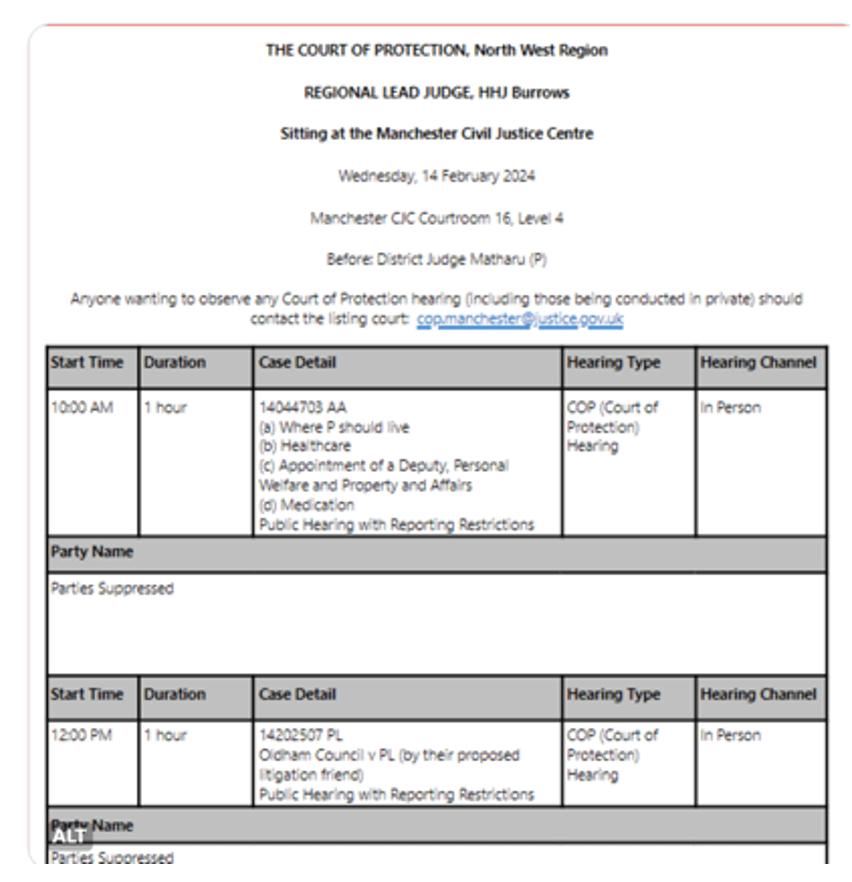
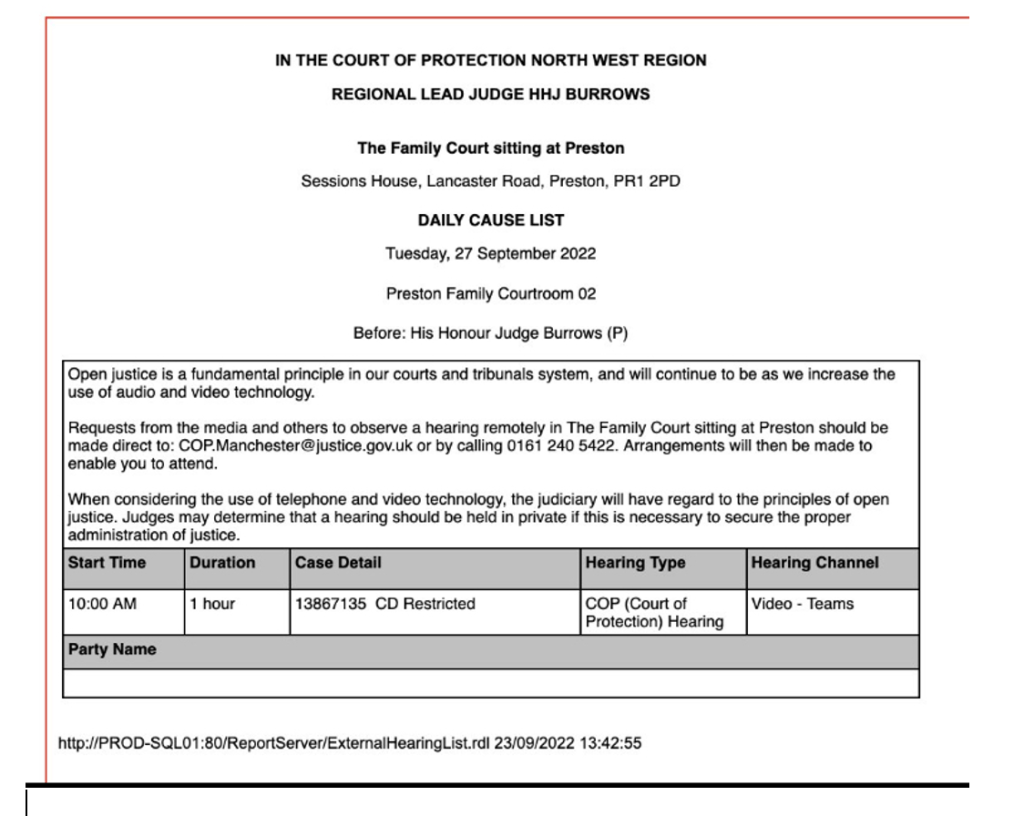

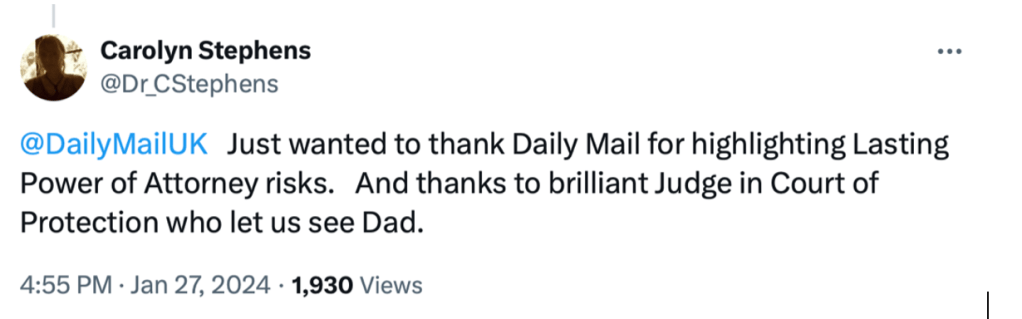
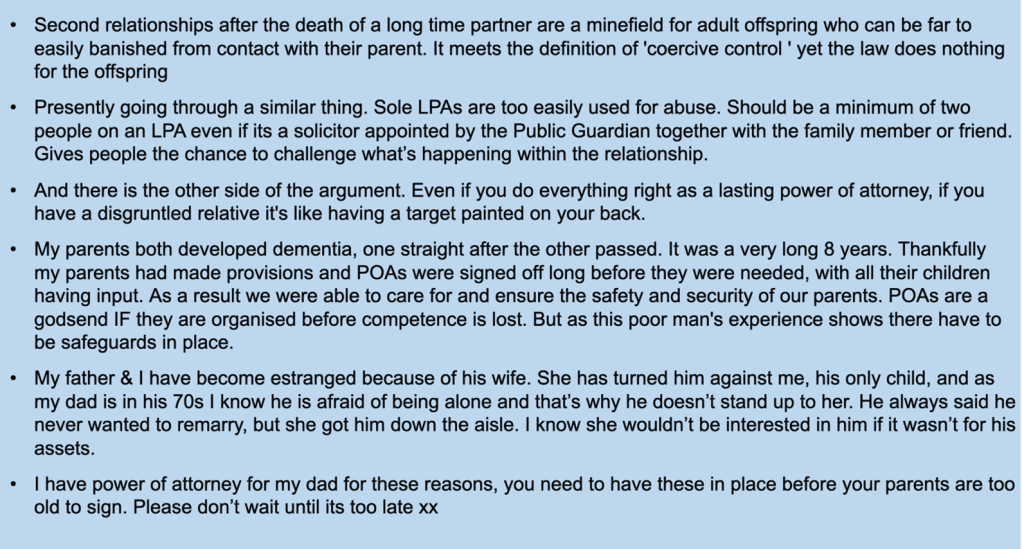
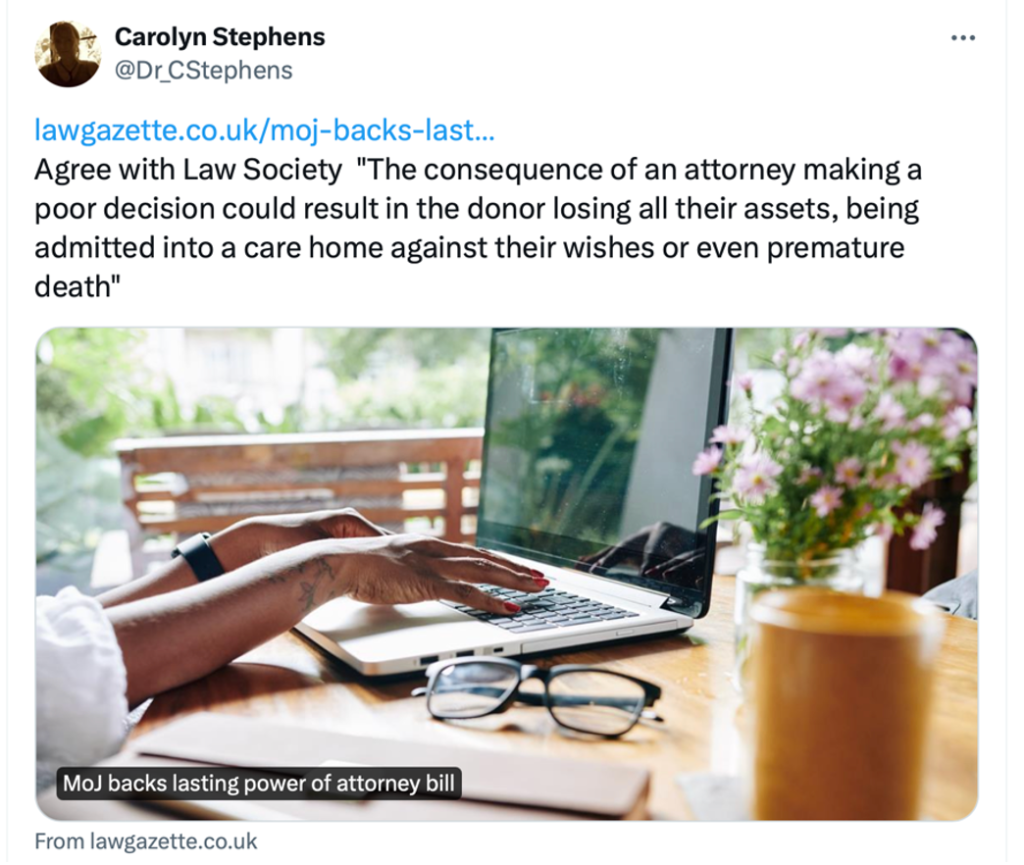

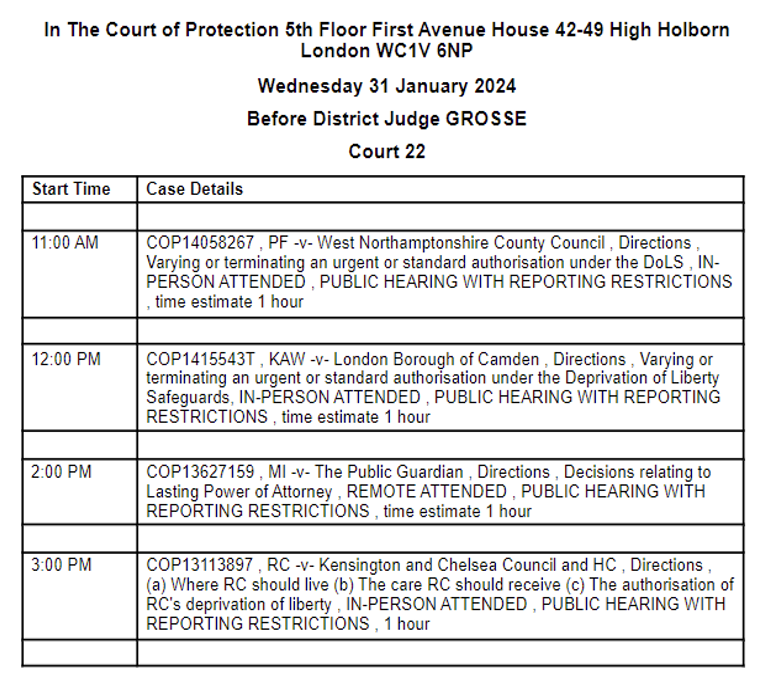





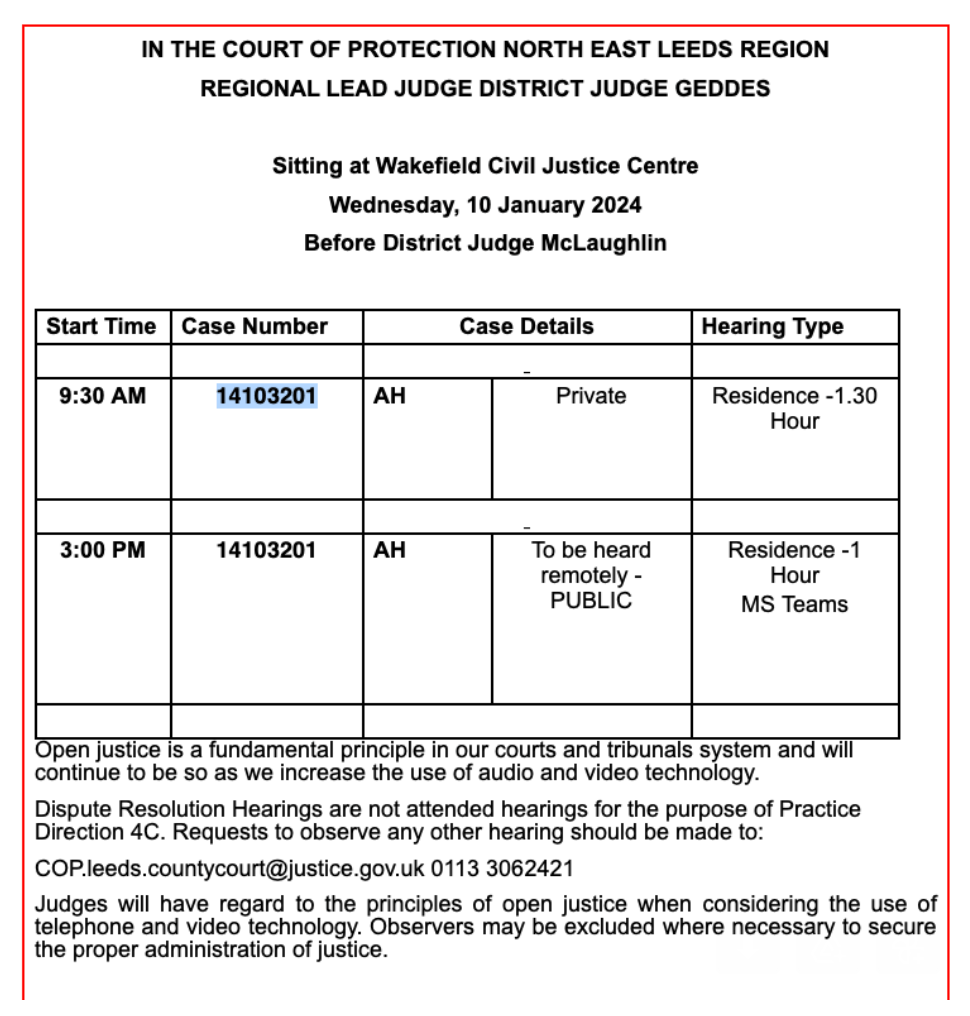

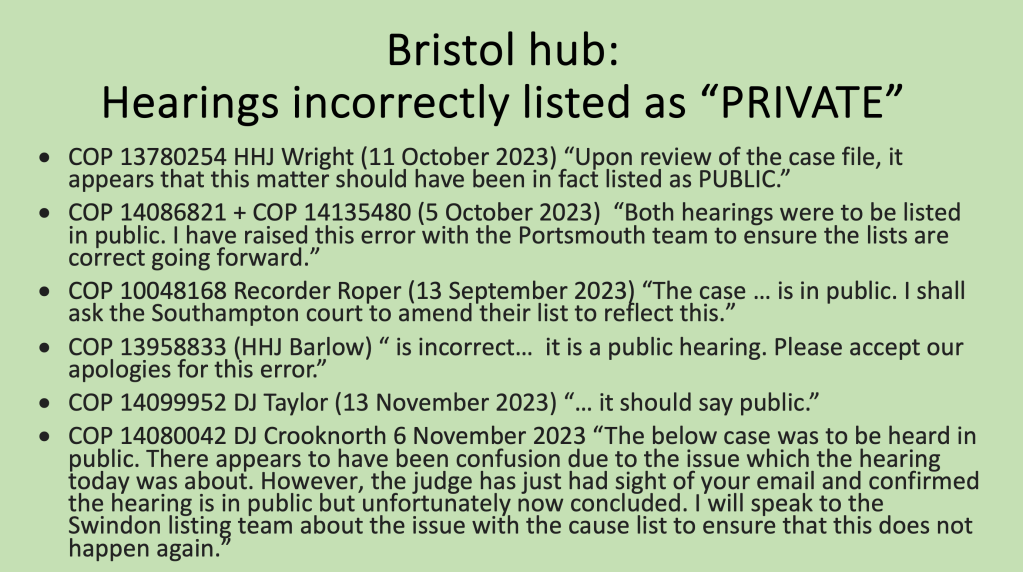


 Promoting Open Justice in the Court of Protection