The right of a competent adult to refuse medical intervention – even when that refusal will be followed by death – is accepted as a fundamental principle in England and Wales (and in many other jurisdictions).
In theory, this principle applies equally to pregnant women.
When pregnant women’s wishes have been over-ruled in the Court of Protection, it’s been because they have been deemed not competent to make their own decisions, i.e. to lack the capacity to understand, retain, or (most often) weigh up information relevant to the decision that needs to be made.
We’ve published blogs about such cases before. In a case this year before Mr Justice Holman (back in May 2021), a woman with agoraphobia who wanted a home birth was deemed not to have capacity to make decisions about the location of the delivery of her baby. The court ordered that it was in her best interests to be conveyed to hospital (with restraint if necessary) before her due date and to be induced or to have a caesarean section. This led to some criticism in the media as well as from birth rights activists and some midwives, amongst others. (See also this blog about a court-authorised caesarean section for a woman with schizophrenia.)
Criticism of these decisions often comes from a suspicion that when pregnant women make “unwise” choices about their pregnancies, or their mode or place of delivery – especially choices that might risk the health or life of their foetus – the finding that they “lack capacity” is a ruse to enable clinicians to override their autonomous choices.
So the case I observed – an urgent application before Mr Justice Moor in the Royal Courts of Justice (via MS Teams) – was interesting since it also concerned court-ordered obstetric intervention, contrary to the stated wishes of a pregnant woman, but in this case she was (eventually) found to have the capacity to make the relevant decisions for herself.
The issues
At the time of the hearing I observed, a woman in her 30s (P) is 37-weeks pregnant and already has two young children, both born in hospital after “normal deliveries”.
Both her previous labours were induced at 39 weeks following diagnoses of obstetric cholestasis which was confirmed by blood tests during both pregnancies. It’s pretty likely that she will have this condition again, but she’s refusing to allow health care professionals to take blood samples for testing as this would go against her newly-acquired religious beliefs.
Another reason why health care professionals want to do blood tests is that P has a rhesus negative blood type. If the baby is rhesus positive, antibodies could pass to the baby and cause Fetal Rhesus disease. The treatment for this condition is Anti-D (a blood product) which she has also declined.
Doctors are also concerned about the clinical need for administration of blood or blood products during or after labour in the event of a major obstetric haemorrhage.
Although P has consented to a number of obstetric interventions, and the Trust considers that she has capacity to do so, she’s refusing all interventions involving blood products.
The Trust was applying to court for:
declarations that P lacks capacity to consent to medical investigation by blood tests and treatment by means of a blood transfusion and/or use of blood products.
declarations and orders that it is lawful and in P’s best interests, if necessary, that she undergoes blood tests and that she is administered a blood transfusion and/or blood products if clinically indicated.
Counsel for the applicant Trust was Francesca Gardner. Counsel for P, via the Official Solicitor, was Sophia Roper – and the pregnant woman at the centre of the case also joined the hearing in person from her hospital ward.
It was clear from the position statements issued by the Trust and by the Official Solicitor before the hearing started that they disagreed on key issues.
The position of the Trust
According to the Trust, P is exhibiting various symptoms of mental disorder, and is diagnosed with “a manic episode with psychotic features”, “hypomania” or “persistent delusional disorder” (although I understand that no supporting evidence of P’s diagnosis was included in the bundle). She’s currently detained in hospital under the Mental Health Act 1983 and prescribed 12.5 mg of Olanzapine, an antipsychotic medication.
The treating clinicians considered that P lacks capacity to make decisions about these medical interventions on the grounds that she has “delusional beliefs” that render her “unable to weigh up the risks and benefits of refusing blood tests and blood products because her decision making around this is driven by a delusional belief system and new intense religious beliefs in the context of her mental illness”.
The Trust added:
“During her previous two pregnancies (when capacitous), P consented to the interventions and may well consent in the event that her medication starts taking effect prior to delivery. However, in the event that P was to go into labour whilst still holding delusion (sic) beliefs, the clinicians are of the strong view that it is in her best interests for the necessary medical investigations and interventions relating to the taking of blood and administration of a blood transfusion and/or blood products to take place to ensure the safety of her and her baby.”
The position of the Official Solicitor
The Official Solicitor’s position was that there’s no evidence that P lacks capacity to conduct the proceedings, nor is there sufficient evidence about her capacity to make medical decisions to rebut the presumption of capacity.
The Official Solicitor accepted appointment as P’s litigation friend on a provisional basis (pending assessment of P’s capacity to conduct her own litigation).
She described P as:
“… a deeply religious woman who is currently refusing to follow a small number of medical recommendations (she is otherwise accepting of all proposed treatment) because of her religious beliefs; her interpretation of the Bible is that she is not permitted to either accept or give blood; she therefore declines either to have blood tests (should they be required) to accept a blood transfusion or any other blood product. P’s Article 9 rights under the E[uropean C[onvention] on H[uman] R[ights] are engaged, since the Trust seeks to force treatment on her which is contrary to her religious beliefs.”
Crucially:
“The Official Solicitor observes that P is considered capacitous [by her treating clinicians] in all the areas in which she is willing to take that [medical] advice; it is only where she is not willing to follow medical advice that she is considered to lack capacity”.
And the Official Solicitor quoted from a previous judgment by Peter Jackson J:
This is also P’s own point of view. She appeared in court and said she does not have a mental illness and that she has capacity to instruct her own legal team and does not need the involvement of the Official Solicitor. Her beliefs concerning blood are, she says, valid interpretations of the Bible, and she is fully able to understand the decisions she is making.
A solicitor, an agent for the Official Solicitor, had met with P two days before the hearing and submitted a witness statement suggesting that P has both litigation and subject-matter capacity.
The Official Solicitor was therefore asking the court to direct that an independent expert should be instructed to determine whether or not P has capacity to conduct this litigation and to make her own decisions about blood products (and – if not – where her best interests might lie). She had urgently enquired as to the availability of a psychiatrist able to carry out a assessment and found one able to do and provide a report within a week.
The Official Solicitor considered it would be “premature and potentially cause significant injustice to proceed with a final hearing” on that day – more than two weeks before P’s due date and that the final hearing should be deferred until the independent report was ready.
The hearing
The hearing started almost half an hour late because, with the judge’s permission, the parties had engaged in “productive discussions” about the way forward, and had drafted an agreed order. It was also a very short hearing – just 40 minutes.
Instead of a final hearing today, an independent expert would be appointed to assess P’s capacity in two areas: (1) her capacity to conduct this litigation, instructing her own solicitor rather than relying on the Official Solicitor (as she said in court she wanted to do); and (2) her capacity to make her own decisions about interventions involving blood products.
If P has capacity to make her own decisions about blood products, then the court has no jurisdiction.
The judge agreed that there was “insufficient evidence before the court today” to make the declarations and orders requested by the applicant and arranged for another (final) hearing 10 days later.
There was some discussion about what would happen if P went into labour in the next 10 days – but she hadn’t had early labours with the two previous children and there was no reason to think that she would on this occasion either. If that were to happen, the Trust could make an urgent application to the court. The judge declined to make the interim declaration the Trust seemed to hope for, to the effect that if P were to go into labour before the final hearing then blood products could be given in her best interests: “the point about the jurisdiction of the court really trumps everything, doesn’t it”, he said.
I delayed writing about this hearing, hoping to be able to attend the final hearing and report on the outcome of the case. But that never happened.
The next hearing was vacated.
On enquiry, I was told that this was because the proceedings concluded by consent on the basis that P was found to have capacity to make the relevant decisions.
I don’t know what decisions P made – but clearly, they were hers to make. The Trust had speculated that P might regain capacity to make the relevant decisions before going into labour as she was “fully compliant with her prescribed antipsychotic medication”. Perhaps by the time she was assessed by the psychiatrist she had agreed to administration of a blood transfusion or blood products if they were medically necessary. Or perhaps, she continued to refuse blood products and was deemed capacitous nonetheless. Either way, I hope the labour went well and that mother and baby are flourishing.
Comment
This hearing showed the importance the Official Solicitor attaches to the presumption of capacity, and the danger of treating “unwise” decisions as evidence that a person may lack capacity. That’s reassuring.
It was also reassuring to see the Official Solicitor’s commitment to protecting religious freedom.
But it’s quite frightening to see how clinicians can so readily treat someone refusing treatment as lacking capacity – in the absence of any convincing evidence they were able to present to the court.
Obviously it’s hugely distressing to medical practitioners when a capacitous pregnant patient refuses medical treatment that aims to support her own or her foetus’s well-being – as in this harrowing description of the avoidable death of a pregnant Jehovah’s Witness and her baby.
But compelling treatment of pregnant women and overriding women’s rights is not an option.
Pregnancy does not constitute an exception to the principle that a capacitous adult has the right to refuse medical treatment.
Celia Kitzinger is co-director (with Gill Loomes-Quinn) of the Open Justice Court of Protection Project. She tweets as @KitzingerCelia
Editorial note: We have watched several hearings concerning forced marriages in the Court of Protection. Here is some expert commentary to provide some background on how these cases are investigated. Anyone affected by the issues raised here can contact the UK Government Forced Marriage Unit – call 0207 008 0151 for advice and support for those facing forced marriage & practitioners in this field.
My background
I served as a Police Officer with West Midlands Police for 30 years and retired in 2019. I was a detective for 20 years working in local CID, counter terrorism unit and then for my final four years with the Public Protection Unit.
I am a recognised expert in forced marriage and regularly advise Police Forces nationally on cases and provide expert evidence. I also work as an associate providing training to Police Forces and partner agencies. I am an Ambassador for the ‘Sharan Project’ which is a forced marriage charity who assist South Asian victims. I have contributed to an academic book titled ‘men masculinities and honour based abuse’ and also featured on a BBC crime series titled ‘the moment of proof’ which featured the first forced marriage conviction in England.
I am from an Indian Sikh background and class myself as second generation Indian in the UK. I was born and raised in Walsall, West Midlands which was an ethnically diverse community. I put my language and cultural skills to good use when I joined the Police by regularly translating for my colleagues.
My language and cultural knowledge have definitely helped me throughout my career and never more than when I started working within a public protection unit dealing with domestic violence cases.
Forced marriage when the victim can and does refuse consent
In 2017 I was working in the PPU when I was asked to take on a case of forced marriage. The victim in this case was a British born Pakistani female. The victim had many complex needs and had had a very troubled upbringing. She was especially guarded of Asian men. I used my experience dealing with victims and also the experience of being a father to two girls to gain her trust and confidence.
It was important for me to understand the laws in the UK for forced marriage because I had never investigated this offence before. The key aspect of the offence is related to consent: if one or both parties don’t consent then it is forced. The offence is also committed if the victim cannot consent due to lack of capacity.
The victim in the 2017 had full capacity to make her own decisions but required an advocate to assist her in providing her evidential account and also her evidence at court. She was initially taken to Pakistan by her mother at the age of 11 and from the investigation I believe she went through some kind of wedding ceremony. She returned to the UK pregnant after her 12th birthday. She then spent many years in care and when she was reaching 18 her mother took her out of care and took her to Pakistan. She turned 18 in Pakistan and was then told she was marrying a man much older than her, she refused this but was unfortunately in a country she was not familiar with and had threats made to her, however she did manage to alert family members in the UK but by the time action could be taken she had been married to the same man that she went through a ceremony with when she was 11. (For a journalist’s report of the case click here.)
One of the main issues that arose during this investigation was proving that a marriage ceremony had taken place and having the evidence. This offence occurred in Pakistan and I found it extremely difficult to get evidence from a country we have no jurisdiction over. We had to piece evidence from different sources and witnesses. Another huge issue was keeping the victim on side, she had been so damaged over the years.
Because this was the first case of its type being prepared for trial in England I did feel under pressure to get a positive result. A case of this magnitude cannot be investigated by one person and I was fortunate to have a small team working with me. I also worked very closely with CPS and our barrister. I think the most difficult aspect of this case was her safeguarding because she was at very high risk of harm from family members who felt she had brought shame on her family by reporting it.
This case literally took over my life, I was conducting safeguarding of her every day including days off and even calling her from holiday. The trial lasted 3 weeks and the victim gave evidence without special measures. Her mother initially denyied that any marriage had taken place in Pakistan – however once she was shown evidence of the wedding (the wedding DVDs and some photographs) she changed her defence. She then maintained that it was the victim’s idea to marry. aWe had managed to obtain the wedding DVD’s and some photographs.
The mother was convicted of forced marriage and received a 3.5 year custodial sentence, the maximum sentence being 7 years. Because this was the first case in England the judge did not have any sentencing guidelines and although I was hoping for a longer sentence overall it was an extremely satisfying result.
This case was the start of a journey I had never had expected to go through in my career. Because of the experience I gained in this case I started to then take on more cases of honour based abuse. To date I have applied for more than 20 forced marriage protection orders and repatriated victim from Pakistan, Bangladesh, Dubai, Iraq, Afghanistan, Somalia and Sudan. In all of the cases the victims have been young girls aged from 17 – 23.
A Forced Marriage Protection Order (FMPO) is a civil order that is granted by a senior family court judge. If the victim is out of the jurisdiction of the UK then the case has to be heard at the Royal Courts of Justice (RCJ) in London. If the victim is in the UK then the case can be transferred to a local family court however this decision will be made by the RCJ, some serious cases will still only be heard at the RCJ. Nearly all of the FMPO orders I have dealt with none of the victims have supported a criminal case of forced marriage. Many victims still love their families and do not want to criminalise them. Many of the victims have endured horrendous ordeals and as an investigator I need to respect their wishes and not push them into making a criminal complaint. One of the biggest challenges I face time and time again with the repatriation of victims from abroad is if they do not have British citizenship.
We have many communities in the UK who hold EU country passports but have lived here for many years under the EU citizen program, some are even born here but hold passports from other countries. Once the victim travels abroad for example on a Dutch passport and they require assistance because of a forced marriage I would then need assistance of the Dutch government because the British Government would not have any jurisdiction. I do find this very frustrating because even though the victim has habitually lived in the UK they are not treated as UK citizens and it becomes a very beaucratic process.
I took on another case of forced marriage in 2018. The victim in this case was a British Pakistani girl. Her parents live in Pakistan and she was raised in the UK by her uncle and aunt. She was raised by them but not treated the same as their own children. When she was 19 she went to visit her parents in Pakistan after being told her mother was ill. Once there she was held captive by her uncle who had raised her, he attempted to force her to marry. The victim managed to alert the authorities in the UK and she was eventually repatriated using a forced marriage protection order. Once back in the UK she made a complaint of forced marriage against her uncle and aunt.
Again this case proved difficult to investigate because the offence occurred in Pakistan and much of the evidence was there. What also made this case difficult was that no actual wedding took place. It is important to understand that an offence can be committed if there has been a real threat of forced marriage. I did manage to secure some evidence in Pakistan and even had witness testimony from there, this did prove difficult due to having to use technology over the internet. I had problems with Internet access and the time difference between the two countries. This case took two trials before a jury reached a guilty verdict. I was now the first officer to secure two convictions for forced marriage in England.
I think keeping the same team from the first case was definitely a winning formula but in these cases there are no actual winners, victims can suffer years of abuse and their safeguarding is more important than getting convictions. Some of the toughest honour based abuse cases I have investigated have not resulted in a criminal case. The majority of victims do not want to criminalise their families and I have found that many of the perpetrators in honour based cases are not criminally known to the Police.
Forced marriage without capacity to consent or refuse
I have also investigated cases where the victim has reduced capacity. These cases are particularly difficult to investigate because many of the victims cannot speak for themselves and evidence is generally provided by partner agencies. Because of my own Asian background I know that many families want their children who have capacity issues to be looked after once they have passed away and they do not want the burden of them being looked after by their siblings. For this reason they are taken ‘back home’ and married. In many communities this is not looked upon as ‘wrong’ and is accepted that the family have done this in the best interests of their child. It can be said that some families do not even know that it is ‘forced marriage’ and a criminal offence.
A capacity case of forced marriage is extremely difficult to investigate because the threshold test for Criminal Prosecution Service is very high. In a recent case that I investigated all of the professionals involved with the victim stated that the victim lacked capacity to marry. However after several Family Court proceedings, an expert judged the victim to have enough capacity to consent to marriage – which conflicted with every assessment that had been done previously. (There is no published judgment.)
Some cases come to police attention once the marriage has taken place – but if the police are informed in advance of a marriage taking place then they can apply for a FMPO which will prevent the marriage going ahead, giving the police time to investigate and provide evidence to a family court judge.
Understanding the problem
I have now been investigating forced marriage and honour based abuse/violence for over five years and get asked all the time how it can be best investigated. In my opinion it is important to understand the community first.
I will use Birmingham as an example. Birmingham has a large south Asian community and is heavily represented by India, Pakistan and Bangladesh. There are certain areas of Birmingham where a whole street literally mirrors a village in Pakistan and what I mean by this is that entire families in that street originate from the same place back home. I grew up in a very similar street and know that my parents wanted to be around their own community because they felt more comfortable and safer. The communities also surround themselves with creature comforts from back home which results in vibrant High Streets where they can buy everything they need that reminds them of back home. I find that many Asians will try to hang on to as many traditions and cultures from back home, although they have come to the UK for a better life they are still very proud of their roots.
A trip back home is a very important time and many families will see off their relatives and even go to the Airport in large numbers to see them off. When the first generation of Asians came to the UK families had to make a choice of who from the family came to England. Many families were from a farming background so somebody had to stay back to look after the farm. Fast forward to now and those that were left behind have an expectation that their siblings who came to the UK will return with their children who will marry relatives from back home so they can now come to the UK for a better life. In many South Asian cultures marrying first cousins in not uncommon.
In cases I have dealt with, victims have told me they had been promised from a young age to their first cousins, so growing up they knew that they did not have a choice of who they married. However after growing and being educated in the UK, they have nothing in common with their family members back home and feel that marrying them would not be compatible.
Many victims of forced marriage are tricked in going back home because they have either told their parents that they will not marry there, or it’s what their parents suspect. In many cases victims end up in remote regions where they do not understand the local area and sometimes even struggle with the language. Victims get trapped abroad and have limited options of getting help.
In the UK it is not difficult to get help from the Police or partner agencies, almost every adult has a mobile phone and Wi-Fi is freely available, however is some regions of South Asia having constant electricity and water can be struggle let alone WIFI. In many of the cases of I dealt with the victim have managed to either email an educational establishment or contacted a friend when they have had the opportunity. I have now repatriated victims of forced marriage from South Asia, the Middle East and Africa and each case comes with different problems and sometimes very little solutions.
I have recently dealt with victims who have come to the UK from various European countries so hold passports from those countries. When they travel abroad they are not ‘British citizens’ even if they have habitually lived in the UK so if they get into difficulty they have to get assistance from the country they hold the passport for. If it is a case of forced marriage and the victim and suspect live in the UK then it is generally reported here and not in the country they hold the passport for. Some victims born in the UK will hold passports from countries their parents have nationality for example Holland.
In a recent case I had to liaise with the Dutch Embassy in London to assist a family trapped in Sudan. This case involved young children some of which were born in the UK, however they held Dutch passports. The family no longer had any ties to Holland and had lived in the UK for many years but unfortunately they were deemed to be Dutch national so could not be assisted by the British consulate in Sudan. This case was very challenging because I had no jurisdiction in Sudan and the victims needed to be repatriated back to the UK. I worked with the Dutch consulates in London and Sudan to eventually repatriate the victims.
Investigating forced marriage and HBA/HBV is very challenging but also extremely rewarding, preventing victims from going through forced marriage and honour based abuse from their families is something I am passionate about.
Mindy Mahil was the officer in charge for the first forced marriage conviction in England. Since this case, he has worked with partner agencies in the UK and abroad in repatriating victims who have been subject to forced marriages. He is nationally recognised as a forced marriage expert and provides expert evidence to the courts.
I recently attended most of a 3-day Court of Protection hearing (reported in a blog post by Prof. Celia Kitzinger) concerning alleged coercive and controlling behaviour and undue influence by a man (NC) in relation to an older woman (BU). BU had stated that she wished to marry (or form a civil partnership) with the man. BU’s daughter had applied for a declaration that BU lacks capacity to make decisions about contact and decisions about entering into marriage or civil partnership: she was also seeking an order to prevent NC from having contact with her mother – or, alternatively, a Forced Marriage Protection Order.
There were two expert witnesses engaged by the Court to undertake assessments of the woman. The first, a Consultant in Old Age Psychiatry, provided evidence about BU’s cognitive functioning and capacity. The second, a psychologist, provided evidence about coercive and controlling behaviour and undue influence in the relationship between the woman and her partner.
Although judgment has not yet been handed down, the hearing led me to reflect on several issues in relation to aspects of violence, abuse and safeguarding, and their intersection with capacity related issues.
One of the areas that interested me was the position taken by the Local Authority in relation to safeguarding BU.
One of the issues that was discussed in the hearing was whether some form of supervised contact between the partners in the relationship might be possible and if this could be provided by the Local Authority.
The barrister (Laura Twist) appearing for the Local Authority indicated that the Local Authority would not be able to assist with any proposed supervised contact between BU and NC as they did not have the necessary expertise to provide effective supervision. Further, the Local Authority did not have any required specialist in-house services in this specific area.
As a former social worker and social work manager, as well as an academic, the Local Authority position on supervised contact was somewhat surprising to me.
Social workers may not routinely provide supervision for contact arrangements in adult social care, but as a result of their training, most social workers have well-developed assessment skills, particularly in relation to observation and analysis of situations.
Social workers also develop experience in handling potential distress or even conflict during assessments (or reviews) of family members.
In addition, social workers in Children and Families Social Care may well be involved in supervising contact visits between parents/carers who are separated from their children, so might be able to assist their counterparts and colleagues in Adult Social Care to provide such a service, or to provide some guidance about this.
Such provision would not necessarily be seen as a ‘specialist service’ or one that requires either specific expertise or specialised training.
The Local Authority could also consider commissioning such a service from a provider (if use of social work time to carry out this task was seen as an expensive use of resource).
The second expert witness (Prof. Dubrow-Marshall) had proposed a specialised psycho-therapeutic intervention to address the coercive and controlling behaviour in the relationship. He had described this as particularly in the interests of the woman to help her to re-establish her self-identity. He had also said that the intervention should ideally also be provided to the man – suggesting that therapy would be offered both individually and possibly also together in due course.
The Local Authority’s position was that this was a health-related need and the Local Authority did not provide psychological services. This intervention would therefore need to be sought either through the NHS, or privately.
Although technically it would be possible for the Local Authority to commission such an intervention, the stated position was that the Local Authority would/could not commission such an intervention as it was related to a health need. The dividing line between health and social care need is a fine one in situations such as these – but given the expressed view that this was clearly a health need, it was an understandable outcome, particularly as Local Authorities do not generally have responsibility for providing psychological interventions.
In relation to whether the Local Authority would have any ongoing involvement with the individual, it appeared that much depended on the situation as it might develop, and which might arise from the final orders issued and the possibility of further arrangements that might be needed.
For example, if BU was deemed to have capacity to decide about marriage or civil partnership and was not prevented from entering into one (e.g. via a Forced Marriage Protection Order), then concerns about management of her financial affairs would be likely to occur, irrespective of the existence of the Financial Deputyship. Although she might have capacity to consent to marriage, she might not have capacity to make decisions about her financial affairs (and this latter point had been established at an earlier hearing in late 2020). Moreover, if the individuals were married or cohabiting it was considered that it would be extremely difficult for such a Deputyship in relation to financial affairs to operate effectively.
However, as it stood, at the time of the hearing, the Local Authority did not consider that there were any outstanding/unresolved needs relating to safeguarding and there was no open safeguarding matter, as the individual did not appear to have ongoing needs in relation to care and support that might require assistance from adult safeguarding. The previous safeguarding matter in relation to alleged/potential financial abuse had been resolved in November 2020 with the Court appointment of a Financial Deputy and no additional needs had been identified since then. At that point in time, it would seem likely that needs for care and support had been identified, as safeguarding duties only apply if the individual has care and support needs (irrespective of whether the Local Authority is meeting those needs at that time).
The Care Act 2014 criteria relating to adults in need of care and support are:
Needs which meet the eligibility criteria: adults who need care and support
2.—(1) An adult’s needs meet the eligibility criteria if—
(a) the adult’s needs arise from or are related to a physical or mental impairment or illness;
(b) as a result of the adult’s needs the adult is unable to achieve two or more of the outcomes specified in paragraph (2); and
(c) as a consequence there is, or is likely to be, a significant impact on the adult’s well-being.
(2) The specified outcomes are—
(a) managing and maintaining nutrition;
(b) maintaining personal hygiene;
(c) managing toilet needs;
(d) being appropriately clothed;
(e) being able to make use of the adult’s home safely;
(f) maintaining a habitable home environment;
(g) developing and maintaining family or other personal relationships;
(h) accessing and engaging in work, training, education or volunteering;
(i) making use of necessary facilities or services in the local community including public transport, and recreational facilities or services; and
(j) carrying out any caring responsibilities the adult has for a child.
(3) For the purposes of this regulation an adult is to be regarded as being unable to achieve an outcome if the adult—
(a) is unable to achieve it without assistance;
(b) is able to achieve it without assistance but doing so causes the adult significant pain, distress or anxiety;
(c )is able to achieve it without assistance but doing so endangers or is likely to endanger the health or safety of the adult, or of others; or
(d) is able to achieve it without assistance but takes significantly longer than would normally be expected.
(4) Where the level of an adult’s needs fluctuates, in determining whether the adult’s needs meet the eligibility criteria, the local authority must take into account the adult’s circumstances over such period as it considers necessary to establish accurately the adult’s level of need.
(NB: The items that I have highlighted in Bold font in 2) above, namely points g) and i), would appear the needs most likely to have applied in this situation).
Although the first expert witness, with a background in old age psychiatry, stated that from his assessment, the woman did not have capacity in relation to decisions about contact, and a previous lack of capacity concerning financial decisions had been established at the previous hearing (in November 2020) and was not re-visited here, it was not clear from the discussions in the hearing what the precise nature of the ‘disorder of mind or brain’ was, as the first witness in this hearing indicated that he did not consider that the impairment was wholly related to a dementia-type illness – and the second expert witness had restricted his assessment to coercive control and undue influence and had not been commissioned to undertake any assessment of capacity.
Equally it was not clear what needs for care and support might have previously been identified during consideration of capacity concerning financial affairs (see point above re: safeguarding duties), or indeed when, or if a Care Act assessment might have happened, which would have considered possible needs more fully, especially relating to the specific eligibility criteria under which an assessment would take place.
As an expert in safeguarding and particularly abuse of older people, the Local Authority position on safeguarding was intriguing. The sub-text of the statement that was made appeared to be that since the concerns about potential financial abuse of the woman had been dealt with some months previously at the previous hearing, there were not any ongoing safeguarding concerns that required attention – albeit in part due to existing restrictions on contact between BU and NC. Yet, this seemed to be a rather narrow conceptualisation of needs relating to abuse, neglect and safeguarding for the following reasons.
The parties in the hearing (apart from NC, who appeared as a litigant in person) appeared to be wholly in agreement that the woman had been subjected to coercive and controlling behaviour and undue influence.
In effect (as per the evidence from the second expert witness), her experience was of a totalising nature and essentially her identity had been subsumed into the man’s identity – and this was considered to still be the case even after some months of restricted contact between them.
Moreover, the man had previously breached the existing ‘No contact’ order/injunction on a substantial number of occasions (an example was given during the hearing of some 40 times in a two-month period) and had stated that he had done this as he believed it was in the woman’s best interests to have contact with him. The risks of experiencing continuing coercive control and undue influence (irrespective whether this was due to any malign intent or not) therefore appeared to remain high – and such experiences could result in care and support needs, including those resulting in an inability to protect herself from abuse and harm. A further social care assessment would be needed to determine if this was the case or not (this would be the situation whether those needs were being met by the Local Authority or not).
Coercion and control can occur without the emergence of any needs for care and support, but there could nonetheless be a significant impact on individual capacity, for example if decisions were being made under duress or intimidation, and a thorough assessment would help to establish the likelihood (or not) of this being the case. In this instance, the stance taken by the Local Authority seemed, principally to revolve around financial concerns, rather than a more holistic conceptualisation of safeguarding and consideration of violence, abuse, neglect and/or exploitation, including coercion, control and undue influence.
The Care and Support Statutory guidance (latest edition April 2021) which was developed to accompany the Care Act 2014 (and first issued in 2015) contains clear statements that when considering needs for safeguarding of adults at risk, definitions of abuse and neglect should not be drawn too narrowly. Although coercive and controlling behaviour and undue influence were not specifically originally included within the Care Act but appeared subsequent to the Act’s implementation within the Serious Crime Act 2015, understanding of the nature of such acts, perhaps particularly as they might relate to adults with likely needs for care and support have been developing in recent years, since the implementation of the latter Act. The statutory guidance framework on Coercive and Controlling Behaviour produced by the Home Office in December 2015 states clearly in the Introduction, at point 4:
Controlling or coercive behaviour should be dealt with as part of adult and/or child safeguarding and public protection procedures.
In any case, since in overall terms the Care Act is premised on a clearly stated principle of promoting and maximising individual well-being, it seems reasonably apparent that such behaviours, especially in the long-term are likely to have very negative impacts on an individual’s well-being, so should be particularly considered in relation to this aspect of the legislation. Understanding the well-being principle in relation to abuse and harm (and ultimately safeguarding) is thus clearly needed. Well-being appears to include the ability of individuals to live their lives free from abuse and/or harm and to be protected from these, if they should occur, or if there is risk of them happening. Risk to individual well-being and safety may therefore also require some consideration of safeguarding matters.
In the Care and Support Statutory guidance (updated 21 April 2021), the following statement appears in Chapter 14, which deals specifically with Safeguarding:
14.17 Local authorities should not limit their view of what constitutes abuse or neglect, as they can take many forms and the circumstances of the individual case should always be considered, although the criteria at paragraph 14.2 will need to be met before the issue is considered as a safeguarding concern.
Exploitation, in particular, is a common theme in the following list[1] of the types of abuse and neglect.
The criteria set out at 14.2 of the Guidance document are:
14.2 The safeguarding duties apply to an adult who:
has needs for care and support (whether or not the local authority is meeting any of those needs)
is experiencing, or at risk of, abuse or neglect
as a result of those care and support needs is unable to protect themselves from either the risk of, or the experience of abuse or neglect.
A further document issued by the Local Government Association, reminds local authorities about their responsibilities relating to safeguarding and also indicates that it is important not to take too narrow a perspective on abuse and harm (and associated risks of these happening) and the relevant links to the wellbeing principle (LGA 2020). Taking into account the potential effects of (different forms of) abuse and harm on individual wellbeing also requires consideration of the ways in which risk to an individual could be mitigated. This may well also include the need to use legislative powers, on occasion.
Safeguarding and consideration of apparent needs for care and support (and responding to them, if/as necessary) very much appear, therefore, to be central to situations of coercive and controlling behaviour. This seems to be particularly relevant if an individual lacks capacity to decide for themselves about key issues such as contact or marriage/civil partnership. If the lack of decisional capacity falls within the remit of the Mental Capacity Act 2005 (Section 2 (1)) then the Court of Protection is likely to need to be involved in such decisions and there is perhaps an imperative for the Local Authority to also be concerned about, if not involved in, the way that such issues might relate to safeguarding concerns (real/actual or potential and the associated risk of harm). As the Local Authority has a ‘lead agency’ role in adult social care, including safeguarding, there might be an expectation of involvement, nevertheless.
If however the lack of capacity is not due to any ‘impairment of, or disturbance in the functioning of the mind or brain’ but due to the existence of the coercive or controlling behaviour and undue influence from another person, then there may still be a need for the COP to be involved in determining matters of inherent jurisdiction – so the Local Authority could still have some interest in such aspects as they might relate to safeguarding, particularly as this would be likely to concern individual well-being.
A briefing by the Social Care Institute for Excellence (2014) provides further detail of the circumstances in which inherent jurisdiction might be accessed. The briefing emphasises an important and key point: that the purpose of the inherent jurisdiction is not to overrule the wishes of an adult with capacity, but to ensure that decisions are being made freely. In situations of coercion and control, however it may be very likely that the person cannot make decisions of their own volition.
Of note in s2(2) of the MCA is the point: “It does not matter if the impairment or disturbance is permanent or temporary“.
Given this statement, it could be possible to develop an argument that coercive or controlling behaviour from another person might render another individual incapable of taking their own decisions and thus constitute a disturbance in functioning of the mind or brain, even if of a temporary nature.
This could perhaps be especially likely if there were some degree of intimidation (even if not overt) experienced by the person involved, so that they were fearful of taking or expressing any decision that could be perceived as contrary to the view of the other person, or a perception that this would be going against the rules that they need to follow, that have been developed by the perpetrator (Pike, 2016). This could apply even if the total immersion of individual identity into another’s identity does not take place.
In any case, the impact of coercive and controlling behaviour on an individual’s capacity to take decisions needs to be considered as far as possible. Coercive power has been explained as being used to inflict unpleasant or painful consequences on someone acting on their own choices, so that the individual therefore chooses instead to follow the decisions or choices made by the person controlling them (Gilbraith 1982). The range of tactics used by perpetrators of such control includes isolation, intimidation, and threats, as well as control over aspects of daily life – in effect such people seem to work to ‘limit space for action’ (Home Office 2015: 4) by the individual who is subject to such control. Further, if there are additional factors that influence decisional capacity, such as a cognitive impairment or learning disability, then there could be a cumulative and significant effect on decision-making ability.
My recommendation is, then, that local authorities should therefore consider needs for safeguarding, in a broad sense, in situations of coercive and controlling behaviour and undue influence of adults with likely needs for care and support. This may include making the situation as safe as possible for the person and provision of ongoing monitoring and review of the circumstances, perhaps via a duty of care, even if not directly by those with safeguarding responsibilities.
Bridget Penhale is Reader Emerita at the University of East Anglia, Norwich and also an independent consultant on elder abuse, adult safeguarding and adult social care. She tweets as: @bpenhale
Thanks are due to current experienced practitioners in Adult Safeguarding, including the Norfolk Safeguarding Adults Board (SAB) Board Manager, for their comments and expertise in safeguarding and coercive control and to the Open Justice Court of Protection Project for discussion about the COP hearing.
[1] The list of types of abuse is provided in the statutory guidance document
UPDATE: After I corresponded with counsel in this case, the Transparency Order was varied. The original transparency order that was sent to me prohibited publication of any material or info that could identify P including her age, ethnicity/national origin, and the identity of the clinicians or any other witnesses in the case. As I pointed out to counsel, the earlier judgment already published by Mr Justice Mostyn on BAILLI states: “This case concerns P, a 60-year old woman” (para. 1) “of Ugandan origin” (para. 2) and also names P’s consultant psychiatrist and care-coordinator. As a result of my intervention, the court subsequently determined “that it was necessary and appropriate to vary the terms of the order made on 1 February 2021 because the publicly available April 2021 judgment in this matter conflicted with the terms of the order and the terms of the order were unduly restrictive“. The court has varied the previous order “so that the only publishing restriction relates to any material or any information that identifies or is likely to identify P.“
For more than three years, P’s HIV infection has been left uncontrolled because she has refused to take her antiretroviral medication.
According to an earlier published judgment in this case, P believes, as a consequence of her schizophrenia, that God is telling her not to take the medication.
In this previous judgment, published on BAILII, the judge found P to lack capacity to make her own decisions about HIV medication and ordered that she should take it in the form it was then prescribed (orally, once a day).
When that had no effect (i.e. she still refused), the same judge then authorised blood tests to establish P’s eligibility for treatment by injection. He also authorised the use of restraint, if necessary, to enable the necessary blood samples to be taken.
I would normally quote from this earlier judgment and include a link to it, so that readers can understand how this case has developed.
I have not done so here because the Transparency Order prohibits me from (amongst other things) publishing “any material or any information that identifies or is likely to identify” (a) “[P’s] age” and (b) “her ethnicity or original national origin”.
Information about P’s age and national origin is provided in this earlier (approved, published) judgment, which is publicly available on BAILII. In that judgment, P is described as “a XX year old woman … of XXXXX origin”.
If I were to link to the judgment, or provide quotes from it such that it could readily be located via google, I would be publishing material “likely to identify” P’s age and national origin. Doing so would also be likely to mean that readers could identify other information prohibited in the Transparency Order, including the name of the Trust.
I consider it completely out of kilter with the court’s commitment to open justice for the public to be denied information that would allow them to read the earlier judgment in this case. Because I am not able to link to that judgment, readers are denied background context for this blog post reporting on later developments.
I plan to appeal against the terms of the Transparency Order, but meanwhile here is what I can say about this case.
The hearing
The hearing was before Mr Justice Williams, the “urgent hearings” judge on 8th September 2021. (He was not the judge who’d previously heard this case.)
Because he’d been in other hearings all morning, he hadn’t had the opportunity to read the position statements from the two barristers (Jack Anderson for the applicant Trust and Katie Gollop QC for the Official Solicitor) which had been submitted that morning, and nor had he received their agreed draft order.
The order they were asking him to approve was that it was in P’s best interests to receive HIV medication via injection once every 2 months for the rest of her life, and that this could be administered with restraint or via force if necessary (i.e. as Jack Anderson put it, on the same terms that the previous judge had authorised the taking of blood samples).
It was an “urgent” application because without treatment she would die within a year. The treatment was described as having minimal side effects and as being “life-saving” – even “miraculous”.
Mr Justice Williams said he was “hesitant in the extreme to make an order that results in her being restrained or deprived of her liberty or taken to hospital against her will without having had the opportunity to read the position statements [and the medical reports]”[1].
The judge indicated early on that he might “adjourn the deprivation of liberty aspects of the order”. He said “I’m slightly- well, no, I’m more than slightly troubled at making such orders without having a grasp of the full information available.”
Jack Anderson suggested that one way forward might be that the judge might decide today that treatment was in P’s best interests, and then decide about the use of force/restraint “on the papers” (i.e. without a hearing) later, because “it’s an agreed position”.
The judge resisted this course of action, saying “the court has an obligation to scrutinise even agreed orders, even with applicants and respondents as expert as you both are”. He called a short adjournment of around 20 minutes so that he could read the relevant papers.
On return the judge said that, having read the documentation:
“… it seems fairly clear that it is in P’s best interests for the HIV medication to be administered, and that’s an order I’m content to make today. There is a residual question in terms of authorisation of the use of force. Is there any material that sheds light on the possible effect on her schizophrenia – or other mental presentation – of force being used on her to administer HIV medication, and if it became necessary whether there would be a risk of deterioration in her psychiatric condition?”
Katie Gollop said that she was not aware of any evidence that would answer those questions. “I am not aware that force has ever been used, so the answer may not be known.”
Mr Justice Williams said that evidence about the possible psychological effect of the use of force on P “should form part of the final decision about whether force should be used”.
He said he would make an order “that P should have injections to avert the risk of death within the next 12 months…. Her best interests are overwhelmingly in favour of authorising medication – especially given that when she wasn’t suffering a loss of capacity she consented to HIV medication, and so absent the schizophrenia would probably consent to it now.”
He said that if she was reluctant to accept the injections then “a degree of, uhm, ‘pressure’ is legitimate in terms of administration of medication that perhaps goes beyond pure encouragement, for example telling her the court says she has to have it. But if despite that – if I can call it – ‘gentle pressure’, she continues to refuse, I think the issue of the use of force should be adjourned to another hearing with a psychiatrist who can give evidence to shed light on the impact of the use of force on her psychiatric condition. I am not content to make that order today. That part of the case will have to go off for further consideration.”
There was some discussion about how full the Court of Protection lists are (“my availability before December is almost non-existent for anything more than a half-hour hearing” said the judge). Consequently the hearing concerning the use of force/restraint could be before Mr Justice Williams or the previous judge, or someone else entirely – and that would depend in part on how long the hearing would be likely to require.
And then the hearing ended – after a little less than an hour.
The Transparency Order
The Transparency Order wasn’t mentioned either before or during the hearing.
When I asked the two barristers for it after the hearing, I was given what to me appeared to be contradictory information about its contents, but I was not actually sent it. When I asked again – for a third time – I received the Transparency Order. That was at 10.45pm on the day of the hearing, and that’s when it became clear that I was being prevented from publishing anything “likely to identify” P’s age or national origins, information that was already in the published judgment on BAILII.
I don’t know why it has been decided that information about P’s age and ethnicity cannot be reported except, apparently, in a published judgment. I haven’t heard any arguments about how the Article 8 right to privacy has been weighed in the balance against the Article 10 right to freedom of information. I don’t know why it’s been deemed acceptable for information about P’s age and ethnicity to appear in a public judgment but not in my blog post. I had no opportunity to address the judge about these reporting restrictions because I did not learn about them until 10 hours after the hearing finished. This doesn’t seem like transparency to me.
I understand that journalist Louise Tickle has previously appealed against an unlawful reporting restriction order from the Family Court which, as here, restricted her from being able to report facts that had previously been published in a Court of Appeal judgment about the same case. It’s disappointing to find the same problem arising again.
Celia Kitzinger is co-director (with Gill Loomes-Quinn) of the Open Justice Court of Protection Project. She tweets @KitzingerCelia
[1] Quotations are based on notes made at the time and are as close to verbatim as I can make them, but as we are prohibited from audio-recording hearings they are unlikely to be word perfect.
On 14th July I observed my third and final hearing about how to make a best interests decision that balances effective monitoring of David’s night-time seizures with his right to privacy.
The case was heard by HHJ Howells (who has presided over David’s case since 5th March 2020, when the case first came to court) at Wrexham County and Family Court (COP 13575520 Re: B). I’ve previously blogged about the case here and here.
Background to the Case
David (not his real name) is 39 and has a severe learning disability, poorly controlled epilepsy and congenital cerebral palsy with right-sided hemiplegia. David’s consultant neurologist describes his epilepsy as ‘very poorly controlled’ with ‘daily unpredictable seizures’ of ‘multiple different types’. He lives in a care home and receives mixed 1:1 and shared care throughout the week. David enjoys life; he likes cars, going on trains and visiting caravan sites. His parent (her choice of descriptor), a party to the proceedings, lives abroad but has regular contact with him and has always been a part of decisions about his care.
The key issue for this hearing is how to effectively monitor David’s night-time seizures while also respecting his right to privacy.
In April 2019, a Visual Monitoring System (VMS) was installed for the purpose of night-time monitoring. Other, less restrictive, means of monitoring seizures were not explored. The VMS was also installed without following a statutory best interests process and David’s parent was not consulted on its installation.
At the end of the last two-day hearing, on 7th May 2021, Emma Sutton, counsel for David, summarised the parties’ positions and plans before this final hearing.
Final Hearing – ‘There Remains a Dispute Between Parties’
HHJ Howells summarised each parties’ position:
David’s parent maintained the view that the VMS should be removed immediately and that an ‘appropriate balance’ (of safety and privacy) would be that he can be observed visually every 30-40 minutes throughout the night.
The position of Counsel for David was that the VMS can, and should, be removed, and that ‘not less than 30-minute’ observations throughout the night should be instated instead.
Counsel for the Local Authority, Pembrokeshire County Council, (Robert Goodwin) remained neutral regarding the VMS and recommended the safeguarding needs of David are a matter for the court.
The position of Hywel Dda University Health Board (counsel Anna Tcazynska) was that the VMS is a necessary intrusion and in David’s best interests to ensure his safety and wellbeing, and, on a balancing exercise, is an appropriate interference with his right to privacy.
A lot of work had clearly been done between the May 2021 and July 2021 hearings. The lead nurse for the Health Board had compiled a costed, comprehensive and realistic options appraisal for the court to consider. HHJ Howells checked that the parties were satisfied that this evidence was factually correct, and that the lead nurse did not (as a consequence) need to be cross-examined. Each party then had the opportunity to provide their closing submissions to the court.
I wrote thirty-four A4 pages of notes during this hearing. The attention to detail at this hearing was, I thought, an exemplar of meticulous consideration in relation to David’s care, from all parties:
what was the risk of SUDEP (Sudden Unexplained Death in Epilepsy) for David?
would an increase in the number of physical checks, in the absence of a VMS, disrupt his sleep?
what other technological monitoring devices might be considered?
is there evidence that the VMS decreases the likelihood of SUDEP?
what is the right balance of safety and privacy for David, given the accepted risks?
It is tempting to write a very detailed blog, moment-by-moment, to illustrate the care taken with this case. I have now observed over twenty cases in the Court of Protection in the past year – the level of consideration in this case was no different really, though the presence of David’s parent as a party (and, though not an expert witness, as a trained medic herself) added depth and insight to proceedings, that might otherwise have been absent.
Suffice to say, there was scrupulous exploration of the statistical and individual risk for David of SUDEP (including the commissioning, by David’s litigation friend of a further independent report (accepted by all parties) from SUDEP Action). Recognition was made of the failure to follow a statutory best interests process, and as part of that recognition a full appraisal of options for monitoring seizures was carried out and provided as evidence for this final hearing.
Instead of a detailed consideration of all aspects of this hearing, I’m going to focus on two key aspects of the case that I think are pertinent for practitioners in the field (1) Balancing Safety and Privacy, and (2) Risk Averse Practice, and then I’ll summarise in detail HHJ Howell’s judgment.
Balancing Safety and Privacy
This judge frequently referred to the idea that medicine prioritises ‘safety’ and ‘keeping people alive’. The implication (and stated suggestion) was that this can sometimes be to the exclusion of other factors.
David is enjoying life and has thus far been provided with care and treatment to maximise the chance of his remaining alive. As with any care and treatment, though, their costs and benefits need to be subject to a best interests balancing exercise. In this case, a proper best interests evaluation involves balancing the protection of David’s health and life, with the protection of his other rights. This should have been carried out by the Health Board before introducing the VMS.
The importance and efficacy of the VMS requires careful consideration – since the more likely it is to protect David against sudden death, the more heavily it will weigh against other considerations.
So, what is the clinical risk of death from Sudden Unexplained Death from Epilepsy [SUDEP] for David, and how efficacious is VMS likely to be in preventing that?
Counsel for David summarised evidence that:
“on a general basis, 0.182% of the UK epilepsy population (meaning that 99.8% of the UK epilepsy population will not)suffer SUDEP.”
“on a specific basis, there is a 99.5%+ chance that [David] will not suffer SUDEP in any year (evidence of treating clinician and Dr McCorry, expert witness).”
and that “… the visual monitoring system is unable to prevent SUDEP as it is not constantly monitored by a member of staff (David currently sharing night time staff on a 2:8 basis) and the Health Board accept that ‘for complete accuracy it will rely on a staff member looking at the monitor continuously’) … and even if it was constantly monitored, the statistics from SUDEP Action highlight that only 50% of deaths (from SUDEP) are potentially avoidable.”
I was left wondering about the consternation and conflicts that providing good care would provoke in those looking after him. The risk of SUDEP for David understandably causes alarm, for all involved in his life. The evidence presented led one to question whether the VMS, as a response to such alarm, was, in reality effective in reducing his risk of SUDEP. Perhaps the balance, on the ground, involved professionals feeling that they had done everything that they conceivably could have, should David have died, instead of objectively increased safety. A different balance: instead of safety vs privacy, feared blame (of professionals) vs privacy?
HHJ Howells: Health professionals are risk-averse – I don’t criticise, their obligation is to keep people alive. My obligation is to look at P in the round’
We learned that David had lived in the same care home for the previous 16 years without a VMS to monitor his seizures. It remained unresolved, even at the conclusion to the case, why his treating clinician had installed a VMS when he did. He suggested that it was due to a letter from David’s GP outlining concerns about increased tonic-clonic seizures (the type of seizure that is linked to increased risk of SUDEP). However, this reasoning was disputed by David’s parent and David’s counsel – and in any event, since the VMS had been installed in April 2019, David had only had one of these types of seizure at night, and it was not clear whether the VMS (or another means) had identified that one seizure.
David’s parent’s view was clear on the balancing of his safety and privacy:
“I’ve known and loved [David] for 40 years. He’s a remarkable human being. He’s become medicalised – he’s become a medical ‘problem’. … The system looks for the easiest way – especially when costs are a factor. Up until now, the Health Board – even in their recent statement – hasn’t addressed my concerns about SUDEP, at all. I’ve had hours of meetings – in none has there been a discussion of my interpretation of the risk. I find that interesting.” [Parent’s emphasis]
She went on to say that in all the years under his treating clinician’s care, there has ‘never been a mention of a camera’ and that ‘over his life, the seizures were far, far worse than currently – at one point 100 a day’. Her exasperation at the reason for the sudden intrusion into her son’s life – given her analysis of the clinical risk – was evident:
“[David] has always had unobserved fits. During the day no camera is used – he is in his room for significant periods of time, playing with his stuff, no staff to observe. I’ve been there when some of the more able clients have alerted staff to his fits. It’s a gross medicalisation of [David] – a frantic desire to protect him at all costs.
SUDEP is a risk for all people with epilepsy, including others in the home, they are not monitored in this way. The camera has led to people being locked into their views. To backtrack is to compromise what they’ve said. I feel in this case [treating clinician] has allowed himself to be trapped into his view – his professional reputation is on the line. …. [There is] no evidence that the camera has done anythinghere – except court procedures – no evidence it has stopped dangerous seizures or an event leading to a greater risk.
Intuitivelyone feels it helps – but there’s no evidence base it reduces risk of SUDEP. I honestly don’t know why [treating clinician] came to that decision – it’s not the GP letter, over the years there’s been many GP letters. It’s not a satisfactory answer. My suggestion – I think he went to a conference and heard a presentation and thought ‘That might be something we could use in this case’. I am very critical of him that he didn’t discuss it with me – he has done in the past. I think there’s a backstory that we will never know. I’m a doctor – I know how hard it is for people to stand back and say ‘no evidence’. I’d ask the court to make a brave decision”. [Parent’s emphases]
Emma Sutton on behalf of David extended the analysis of the balancing of safety and privacy for David, in particular referring to the Health Board’s submission regarding engagement of Article 8 of the European Convention of Human Rights (respect for your private and family life). At the start of the hearing, counsel for the Health Board had described her client’s position on this point:
Anna Tcazynska: ….. a 39 year-old man not wanting to be observed. The Health Board acknowledge this. But this is a person who doesn’t have the ordinary experience with privacy. [He’s attended] 1:1 day-to-day – he has drop seizures – so the VMS continues this. He can’t express his views because of his learning disabilities – and because of his significant learning disabilities, would he experience the same level of intrusion?
Judge: You’re saying he’s not disturbed or upset by what, in other circumstances, would be an intrusion…..
Anna Tcazynska: He’s not distressed by the presence of the camera in his room. He’s been shown it and he’s been talked to about it. He doesn’t know what it’s used for. He is given private time during the day. The VMS Is only when he’s asleep.
Emma Sutton, in her submissions as counsel for David, picked apart the Health Board’s reasoning and practice in relation David’s right to privacy:
“What would be reasonable for a 39 year-old man every night in his bedroom? … The litigation friend, on behalf of [David], has struggled with this – it’s not a situation where [David’s] wishes and feelings can be ascertained as he is non-verbal – it’s the obvious issue of an individual’s privacy, every night. Masturbation is raised as a ‘privacy issue’ – the Health Board raises privacy but the lead nurse’s last statement is troubling, she says: ‘[David] doesn’t seem to be embarrassed at all if walked in on whilst masturbating’. He can’t express a problem because of his conditions – his inability to provide such an expression does not mean that he is not still entitled to the same protection of his human rights.”
She went on to reference Mr Justice Jackson’s judgment – in Wye Valley NHS Trust v Mr B [2015] EWCOP 60 ( there’s a helpful summary here, by Alex Ruck-Keene), quoting a key line in that judgment:
“11. This is not an academic issue, but a necessary protection for the rights of people with disabilities. As the Act and the European Convention make clear, a conclusion that a person lacks decision-making capacity is not an ‘off-switch’ for his rights and freedoms. To state the obvious, the wishes and feelings, beliefs and values of people with a mental disability are as important to them as they are to anyone else, and may even be more important. It would therefore be wrong in principle to apply any automatic discount to their point of view.”
Emma Sutton: [It is] a fundamentally flawed Health Board view that because he does not (as he cannot) voice an objection, that his privacy is not to be treated with the same degree of importance.
This argument seemed, to me, pivotal, when considering the balance for David of his safety (bearing in mind all evidence for clinical risk and the evidence for effectiveness of the VMS of mitigating that risk) and his right to privacy.
‘Risk-Averse’ Practice
HHJ Howells, referring to the expert witness and evidence from the treating clinician, said:
“His [expert witness] position is to avert death at all costs. That is understandable from a medical practitioner – to prevent death and not to harm. …. I recognise why health professionals are risk-averse – I don’t criticise – their obligation is to keep people alive. My obligation is to look at P in the round. … My analysis – and I don’t criticise medics for their approach – they talk about ‘gold standard’ being constant observation. This has an impact on the rights and privacy of P”
I work in health care. The possibility of being blamed for (or worse – engaging in) poor practice – especially when this might involve the death of a person in your care – stalks us all. This is why multi-disciplinary/agency teams and collective thinking are key. When the presumption that P has a subject-matter capacity is rebutted, this must lead to a best interests decision on that matter involving consultation (s. 4(7), Mental Capacity Act 2005).
This is not to render responsibility diffuse, but to consider the range of views and come to a balanced, proportionate decision – ‘in the round’ as HHJ Howells suggested. A ‘decision maker’ (as David’s treating clinician was described in this case) or a ‘responsible clinician’ (most often, though not always, a medical practitioner) might feel especially vulnerable, and therefore prone to making risk-aversive decisions. Support and training from employing Trusts/bodies needs to be forthcoming to enable a fluid and responsive system of care where practitioners feel, and are able to make ‘brave decisions’ (in David’s parent’s words).
It feels as if we are moving further and further away from this kind of deliberative, considered, ‘in the round’ care for each other. I did a quick search for ‘risk-averse practice NHS UK’ and found some interesting papers. This, from 2019, looked at A&E decision-making, comparing junior and senior clinicians. There was some evidence for experience leading to increased ‘tolerance of uncertainty’ and less risk-averse practice. ‘Learning to Live with Risk’, from 2011, in relation to social care, is a helpful document about risk aversion.
So, I have a lot of sympathy and understanding for a drive to focus on safety – or (what might morph into) apparent safety and risk management. The details of this case seem to suggest something other than risk-averse actions, however.
The VMS was installed, apparently within the day, in April 2019. We heard that a Best Interests process was not followed for the installation of that VMS, and the lead nurse explained that she and others did not feel able to question or explore the decision, and viewed the decision solely as belonging to David’s treating clinician. At this final hearing, however, it was reported that the lead nurse had submitted, in her written evidence to the court: ‘In future I will ensure that before any decision is made that there is full consultation’.
There was a suggestion of increased concern from David’s GP – though this evidence did not transpire to be persuasive as the lever for the VMS, given his seizure history.
Emma Sutton submitted:
“It has been suggested that [treating clinician] responded to a question from [David’s] GP. We are now two years down the line – there is no evidence that the VMS has been of benefit. …. We have two years of the monitor being used with questionable efficacy versus sixteen years with no VMS used within the same care home. The VMS is not fit for purpose. The Health Board suggests the VMS needs to be monitored continuously – this hasn’t happened over two years – [David] is safe and well. [Treating clinician] acknowledged it wasn’t being used as he thought it was. ”
Judgment
HHJ Howells asked all parties whether they would prefer a ‘brief ex tempore judgment’ at the hearing, or a full, written judgment that would likely take ‘a matter of weeks’. There was disagreement: Counsel for David and David’s parent preferred ex tempore, counsel for the Health Board and Local Authority a written judgment. I understand that some judges do give ex tempore judgments that are then published later, and I thought it was a shame that this case will not have this public record, given the learning available for health and social care practice.
HHJ Howells said, “I understand the decision’s importance to all parties. This matter should have been determined in May [2021]. I am going to give a decision today. I consider ex tempore to be necessary”.
The court rose and reconvened a short while later. The judge spent a long time (around 40 minutes) giving her judgment and explaining her reasoning. It felt fitting in its detail given the complexity, and longevity, of the court case.
Given that there will not be a published judgment on this case, I will summarise HHJ Howells’ judgment in some detail. It is not an account of the full judgement. I wrote as fast as I could and I report the judgment as close to her words as possible (but given that we are not allowed to record hearings, it is unlikely to be word perfect).
The judgment addressed, explicitly, not whether David needing monitoring, but the ‘type and level of monitoring that is necessary and proportionate’. The judge noted that it is not possible to know David’s wishes and feelings about the monitoring of his epilepsy – save that his litigation friend submits that he would ‘wish to be cared for by skilled carers [who] promote his autonomy and independence and privacy’.
HHJ Howells said:
“The position of the litigation friend is that there is no need for a camera. [David] has lived without one for 16 years. That it is too great an interference with his privacy and personal life. That it should be removed – and the fall-back position is that the visual element should be removed.”
“The position of the Local Authority is neutral. They fund support and submit no particular views on monitoring.”
“The Health Board has strong views that the VMS must remain. They rely on medical evidence for this position and submit that the risk is so significant that to remove the VMS is not justified.”
“[David’s parent’s] position is that the VMS is a gross invasion of his privacy. That there is no efficacy of the monitoring system. She does not object to audio monitoring and 30 minute checks.”
“There is significant evidence in this case – both oral and on paper. Expert evidence for Health Board goes only one way. I have considered all the evidence.” [Judge’s emphasis]
HHJ Howells then described the legal framework, referring to the position statement from Emma Sutton, and noting that all parties accepted the accuracy of this document:
Section 4 (6) of the Mental Capacity Act 2005 regarding making decisions for an incapacitated person:
HHJ Howells stated that she must consider “the best interests of this P, at this time – his welfare in the widersense, not just medical, but social and psychological”.
In relation to applying the s4 MCA 2005 checklist – regarding the best interests of an incapacitated adult. Is there a violation of his Article 8 rights? Is it necessary and proportionate?
HHJ Howells said:
“[David] wants to be alive – against that background I look at the evidence. That [David] lacks capacity is not in dispute. These proceedings have looked at residence, care and treatment, video monitoring and wearing a helmet.
I have considered all witness evidence in this case. Oral and written. I read it all last night.”
Expert Evidence
“I need to address the expert evidence. The Health Board relies on this. Dr McCorry confirms all diagnoses and the unpredictability of seizures. He confirms the need for care. … [David] is ‘at significant risk’ of SUDEP – one to two in a hundred. There is a degree of uncertainty – can it be prevented by provision of care? People are often found dead in bed, unwitnessed. His view, it is in [David’s] best interests to have the seizures attended. On balance that this reduces the risk of dying.
There is no question of [David] being attended – the issue is how?
Dr McCorry confirmed that only a few patients have VMS – that there is no one method or system that provides good care. There is other technology. … The most effective is visual – not necessarily VMS. Regarding VMS being intrusive – it is only used short-term in hospital, often with consent. Some are in care homes, and need to be observed at all times. Non-visual systems (e.g. seizure detection) are less effective. On cross-examination Dr McCorry confirmed that all seizures carry risk of injury and SUDEP. There is no safe seizure type. I found Dr McCorry a straightforward witness, a professional gentleman. He did not want people to think that [David] was not at risk – it is better for him to be observed. How that can be done is in a number of ways. He accepted that assistive technology may help. His position is to avert death at all costs. This is understandable from a medical practitioner, to prevent death and not to harm.
He said – ‘a video monitor in itself does not provide good care. People do.’ It is appropriate to look at less intrusive means. They remain untested. In caring for a person what is needed is a person and care”. Dr McCorry’s evidence was of considerable assistance to me.
Treating Clinician Evidence
“[XX] has been [David’s] treating clinician since 2003. He is a specialist in epilepsy and learning disabilities. Prior to 2019 there was good communication between [treating clinician] and [David’s parent].
Firstly he discussed the risk of SUDEP. [He thought there was] a clear need to put in a plan for medical care of cluster seizures. The aim was to reduce the number of seizures. Not all seizures can be picked up – a need for a video monitor at night-time was identified.
It seems that within the day in April 2019 a VMS was purchased and since then [David] has been monitored every night in his room with a hand held device. [Treating clinician] indicated that he’d expected a process – nevertheless that didn’t happen. At no stage was an application made to ensure this was brought before the court, or a best interests meeting arranged expeditiously, to include [David’s parent] – she would never have agreed to it. … Excluding her from this process caused significant upset to a caring and committed parent.
In his second statement [treating clinician] said that initially no data was kept by the care home to enable analysis. This has improved recently. [Treating clinician] says it has identified night-time seizures – though none has been tonic-clonic. He suggests the VMS is still needed because they do pick up seizures. His view remains unchanged.
In his oral evidence he was challenged by [David’s parent] and Counsel for [David]. He stood by his evidence – he said ‘how it is delivered [the VMS]’ is not his area of expertise. He placed the risk at 1/300 for SUDEP. He said of course he was biased and that a small percentage risk of death is not meaningless in the round.”
Lead Nurse Evidence
“[Lead nurse] does not have Court of Protection experience. She cannot be criticised for that. At the previous hearing she was professionally criticised for how she had managed matters – not including the RPR and not following this up; the options considered were not complete and there were limitations in what she had prepared. That is why the hearing came to an end. Since then, and to [lead nurse’s] credit, she has put considerable effort into looking at all available options. The initial position was from inexperience. A nurse relies heavily on evidence from [treating clinician]. She has now done an options appraisal.”
Other Evidence
“The SUDEP Action report. The litigation friend obtained this report to assist the court – all parties agree the content. The team included 13 professionals in epilepsy mortality and risk, including safety tools. A world leader in their field. The report deals with mortality risk – 21 people die weekly in the UK [from SUDEP}. 50% are unavoidable. People with learning disabilities and epilepsy have a worse outcome than the general population. People aged 20-40 have elevated risk. The main risk factor is tonic-clonic seizures. The report deals with devices for monitoring and identifying seizures – their effectiveness, limits etc. It is based on data available. There are hundreds of different monitors available on the market. Most do not use a TV monitor.”
David’s Parent’s Evidence
“Finally, [David’s parent]. Her own experience of [David], but also a medical professional herself. Her points are clearly made. Numbers of people with SUDEP are low. The efficacy of the evidence was questioned. She believes the utility and evidence for the VMS is unproven. That it was a grave error not to include the family in the decision and a failure to convene a best interests meeting. She submitted that in a Skype call with her, [treating clinician] indicated that he would not have installed the VMS if he’d known she’d been opposed. In cross-questioning he did not say this. I note the evidence about the Skype call. It is clear there was some discussion previously – [David’s parent] reached the conclusion that he would not have installed the VMS if he’d known her position.
Evidence from the RPR
“ The RPR is at a loss as to why the VMS had to be installed with such urgency. His parent has been involved in all of [David’s] care. She had no knowledge of the VMS and was not invited to the meeting in 2019. This is a breach of [David’s] rights. [David] has been in the home since 2003 with no camera. The RPR has difficulty obtaining [David’s] wishes and feelings. She believes we have a viable option for the removal of the VMS – possibly to use audio, which she considers is still intrusive, but less restrictive.”
“That is all of the evidence. I will now address the pros and cons of the VMS and other options.”
The Pros and Cons of the VMS
“It is right to say there is a risk of SUDEP. On the evidence there is a small percentage risk. Less than 1%. [David] will live with this for the rest of his life. I recognise what the experts say – they wish to be risk-averse. I recognise the strong presumption that [David] would wish to stay alive.
In analysing the risk of SUDEP – we cannot take risk at face value. The rationale for the VMS was tonic-clonic seizures. What has happened since is that [David] has had one of these at night-time in two years. The VMS has shown other seizures through the night. Many are picked up auditorily, some are picked up by people in the room.
SUDEP is a diagnosis of exclusion. The statistics from SUDEP Action say that only 50% are picked up in any event, on any monitor.
The OTs say that checking can be disturbing to sleep. I don’t accept this evidence. There is no evidence that checks are having this effect on [David].
Dr McCorry, [David’s] sister and other treating clinicians think it’s in his best interests to keep the VMS. However, they are approaching matters from a risk averse position, not a holistic position in relation to [David].
I’m not satisfied [treating clinician] has analysed the data as closely as he might have done, for example whether [David’s] seizures could be picked up by sound as opposed to visual. In my analysis, I don’t criticise the medics for their approach – they talk about ‘gold standard’ being constant observation – this has an impact on the rights and privacy of [David].
Factors against the continued use of the VMS. The Health Board suggests [David] copes OK and has not shown disquiet. I don’t find this a persuasive argument. [David] is a young man with significant difficulties. The fact that he doesn’t show embarrassment at his personal time being interrupted doesn’t mean that he should have it interrupted.
If safe, anyone should have privacy in their room at night. The RPR cannot obtain his views – private acts would not be something anyone would normally want to be observed. The fact he cannot express his opinion because of his disabilities does not mean this fundamental right should be interfered with. [David] is entitled to privacy if this can be done safely. SUDEP is a significant risk – but a small proportionate risk.
[David] has lived with epilepsy since a babe in arms. For sixteen years in the home there has been no VMS. There were 30-minute checks. What changed I’m still not entirely clear. Some concern about tonic-clonic seizures and the mechanism of these. This has not come to fruition. I am not satisfied that, since the VMS has been in place, it has made any significant or material difference to the care of [David’s] epilepsy. Monitoring has made no difference to the seizures over those two years.
Dr McCorry said that the VMS is ‘very unusual indeed’. Particularly when I take into account [David’s parent’s] evidence – her views are careful, well thought through, from a position of love and clear thinking.”
Final Judgment
“The conclusion I reach is that it is not in [David’s] best interests to have a VMS in place. It is not proportionate, or efficacious. It is not a proportionate response to a fundamental right he has. In balancing the evidence, I need to consider how best to protect [David].
Checks every 30 minutes, staff going into his room, and an audio monitor in place. A lot of his seizures have a sound element. We are not relying on sound only – there will be 30 minute checks as well and due to the layout of the home there will be others around in close proximity. Audio is an infringement – but in my judgment it is proportionate. This is not challenged by the litigation friend.
My judgment is that – if funded – a mattress alarm can be explored. The same is said in relation to an enuresis mattress cover. Pillows – no [referring to anti-suffocation pillows]. The relevant parties will look at the use of a wrist monitor.
[David] has had excellent care – everyone is delighted in his care at the home. Something went very awry in 2019. The upset it has caused has been the result.”
At the end of the delivery of the judgment Emma Sutton returned to the issue of costs. HHJ Howells stated that, due to the process of the installation of the VMS ‘costs should flow’. This was dealt with as a separate issue (following written submissions) and a costs judgment will be published in due course.
Reflections
When someone is at risk of sudden death, it seems common-sense to do everything possible to mitigate that risk. Why would the court not authorise all potential measures of risk reduction? As David’s parent said, it seems ‘intuitive’ to do more to monitor people’s safety. However, if we interrogate that position, it becomes clear that all potential measures of risk reduction are not authorised when those measures might be burdensome to P (in excess of the potential benefits) or infringe fundamental human rights. Furthermore, capacitous people regularly make decisions against intervention (e.g. chemotherapy, amputations) even if it means that they might be at increased ‘risk’.
The evidence here though was such that the effectiveness of the VMS in identifying (and thus preventing harm from) seizures, was not proven. What struck me most bluntly was that the VMS was hastily installed and there was no process to evaluate its effectiveness – the treating clinician said ‘how [the VMS] is delivered is not my area of expertise’. I found this a startling statement – the person charged as the ‘decision maker’ has no subsequent input into how and whether a monitoring system is working, despite remaining David’s treating clinician. How can anyone know if it is helping to identify more seizures and be worth the intrusion? What happened was that the VMS was simply installed – and that was that. Everyone involved in David’s care must have simply gone along with this, I assume because they just accepted the idea that the presence of a VMS increased David’s safety.
Creeping surveillance does give the impression of increased safety – perhaps not just in care settings. We have all come to expect CCTV monitoring in our daily lives, in public spheres. This is very different from a CCTV in one’s bedroom at night.
HHJ Howells mentioned a few times that the medical approach was understandable – and that it was her (and by extension the Court’s) job to look at P ‘in the round: medically, socially, psychologically’. A question kept nagging at my mind throughout this hearing: How, then, can those Ps, whose care is not brought before a judge, be seen ‘in the round’? This issue has vexed me throughout this case. If the message is that only the Court of Protection needs to do this, where does that leave all the other Ps deemed to lack capacity to make decisions about care, medical treatment and so on?
I might have interpreted HHJ Howells’ statements incorrectly – in that I understood her to be suggesting that she understands and does not question the medics’ approach as singular in nature: to be risk-averse and preserve life at all costs. Rather, it could have been that HHJ Howells was being conciliatory and at pains not to blame – whilst at the same time in her judgment apportioning fair blame: for not holding a best interests meeting and not informing or consulting David’s parent throughout.
If a best interests’ process had been followed and it had been decided that monitoring was not in David’s best interests, then no court hearing would have been needed and P would not have had his Article 8 right violated for a long time. If there had been disagreement (e.g. between parent and clinician) after a best interests process, then an application to the Court of Protection might have led to a case process similar to this, but without delay. The issue in this case is that there was no best interests’ process at all!
All decisions made on behalf of a P who is not able to make those decisions for themselves must be made in P’s best interests – which means a proper best interests process should be followed, balancing all the issues involved, including P’s human rights.
The cost is an additionally important element of that failure (others are unnecessarily taking up court time when it is already overburdened with cases, taking busy clinicians out of work to give evidence, not to mention the stress and angst of a court process for those involved).
A previous hearing I attended (and blogged about here) heard Mrs Justice Lieven lamenting:
“I would so much rather the money the Local Authorities spend on barristers and solicitors in cases like this, got spent on the care of elderly people! Think how many care workers could be paid with what a half-day hearing in the High Court costs!”
I don’t have a calculator for court costs – David’s case, over several hearings, must have cost a significant amount of public money. As a simple result of one dominant voice and not following the legal best interests process due to the presumption that a risk-averse ‘medical’ decision trumped David’s other interests and rights. It caused a lot of distress to David’s parent, who at this hearing stated that she ‘was not used to gladiatorial locking of horns’. Fortunately, David was not distressed, or aware, of the disputes. It all seemed so unnecessary.
Claire Martin is Consultant Clinical Psychologist, Cumbria, Northumberland, Tyne and Wear NHS Foundation Trust, Older People’s Clinical Psychology Department, Gateshead. She is a member of the core group of the Open Justice Court of Protection Project and has published dozens of blog posts for the Project about hearings she’s observed (e.g. here and here). She tweets @DocCMartin
By Celia Kitzinger with Claire Martin, 6th September 2021
The case before Mr Justice Hayden (COP 13783897, 17th-19th August 2021) concerned “AH”, a woman in her fifties who is emerging into consciousness following brain injury caused by Covid 19.
The question the court had to decide was whether she should continue to receive ventilation.
She is currently in a minimally conscious state in Addenbrookes Hospital in Cambridge.
Everyone agrees that AH lacks the capacity to give or withhold consent for medical treatment. This means that the decision needs to be made for her.
The treating doctors and the family were not able to agree the best course of action, which is why the case was in court.
Mr Justice Hayden’s decision was that ventilation should be discontinued by the end of October 2021, but should be continued as long as necessary up to that date to allow the opportunity for this close and loving family to be together at the end.
The judgment was published on Friday 3rd September 2021 and has since been widely reported in the media[1].
Press reports seem to be based on a press release from PA Media (what used to be called the “Press Association”) by Brian Farmer, although other bylines are sometimes used instead or in addition. Some incorporate a short statement put out by the Communications Department at Cambridge University Hospitals NHS Foundation Trust. The stories I have seen are accurate, as far as they go, but they focus – perhaps inevitably – on the outcome (what the judge decided) rather than the process (i.e. how the judge went about considering the evidence and arriving at a decision).
This post focuses on the reasoning behind Mr Justice Hayden’s decision.
The decision-making process
If doctors consider a treatment to be wrong clinically – i.e. it will not ‘work’ – they cannot be compelled to give it: not by a patient, not by family, not by the court.
But the ventilator ‘works’ in the sense that it is keeping AH alive while she cannot breathe for herself.
The question, then, is whether continuing ventilation, which is keeping AH alive, is in AH’s best interests. If it is, ventilation should be continued. If it is not, it should be stopped. This is what the judge had to decide.
The starting point is always strongly in favour of prolonging life where possible (in accordance with Article 2 of the Human Rights Act). As Lady Black, giving the judgment of the court in An NHS Trust v Y [2018] UKSC, said, there must be “a full recognition of the value of human life, and of the respect in which it must be held. No life is to be relinquished easily” [92]. In law, however, the strong presumption that it is in a person’s best interests to stay alive is not an absolute principle, but “must yield to the principle of self-determination” (Bland at 864D).
Some people believe that if a treatment is keeping someone alive then it is always, by definition, in a patient’s best interests – because life is sacred, or because we should never ‘give up’ on life, however tenuous our hold on it, until death is inevitable. They may see stopping treatment as tantamount to suicide or euthanasia. They say they would want all possible treatments to the end.
Other people say that if they can only be kept alive “with machines and tubes”, they’d rather be “let go”. I’ve heard many stories from people who’ve witnessed “bad deaths” of loved ones who received invasive medical treatments up until they died, and that’s not what they want for themselves.
Doctors, family members – even the judge – may have strong views about what they would want if they were in the patient’s situation.
But what matters here is: what does AH want? What would she decide if she could? How best can the judge promote AH’s autonomy and self-determination?
The Mental Capacity Act 2005 (MCA) lays out what the person making the decision about best interests (in this case Mr Justice Hayden) must “consider” and “take into account”:
So the task before Mr Justice Hayden was to establish (as s.6 MCA specifies) what AH’s past and present wishes and feelings are, the beliefs and values that she would take into account if she could, and the other factors she would think relevant if she were able to decide for herself. This means considering questions like: What sort of person was AH? How do her character and personality and the way she chose to live her life – her commitment to her family and to her faith – shed light on the choice she would make now?
In considering these questions, the judge must consult the people listed in s.7 MCA. AH had not named anyone to be consulted, nor appointed anyone with Lasting Power of Attorney, so, for her, the people to be consulted were those “engaged in caring for [AH] or interested in [her] welfare”: the treating team in the hospital, and AH’s family.
In the final hearing, spread over three days (Celia was only able to observe the first day; Claire was only able to observe the second), the judge heard from the treating team and from the family to establish, as best he could, what AH would want for herself in this situation.
This was a challenging task.
Assessing AH’s best interests
The parties in court were:
the applicant, Cambridge University Hospitals NHS Foundation Trustrepresented by Katie Gollop QC);
and four members of AH’s family, as litigants in person: her two sons (A and K) and two daughters (S and M). (One of her sisters also gave evidence, but was not a party.)
The applicant Trust took the position that continuing ventilation was not in AH’s best interests. Some members of the family (especially A and M) took the position that ventilation should be continued. The Official Solicitor reserved her position at the start of the hearing, wanting to hear further evidence before expressing a view on behalf of AH.
At the time of the hearing AH had been treated in the intensive care unit at Addenbrooke’s for more than 230 days.
Evidence from the clinicians
Mr Justice Hayden heard evidence from three members of the treating team: a Consultant in Neuroscience and Trauma Intensive Care Medicine (Dr A); a Consultant Neurologist (Dr B); and the Matron in Adult Critical Care (Ms C).
The clinicians were in agreement that AW had suffered “devastating injuries” as a result of covid infection including:
A necrotising myopathy that has killed and scarred muscle tissue, leaving her with profound muscle weakness.
A motor neuropathy such that the nerve cells supplying muscles have died (similar to motor neuron disease): this has affected 90% of her nerve cells. There is no possibility of regeneration or recovery of function – she won’t be able ever to walk again, or to use her hands. Sensory nerve activity is preserved, so it is likely that she experiences pain (and can receive comfort from touch).
A brainstem encephalopathy, which affects eye movement, facial movement, swallowing and the Reticular Activating System (RAS, the nerves that awaken the rest of the brain). There has been some partial recovery of the RAS, which is why AH is more aware and conscious now than she was a few months ago. According to one of the treating doctors: “As AH has become more awake and intermittently aware of her extreme disabilities she has predictably become more distressed. AH frequently cries and has a distressed countenance.” (Dr. A)
Cerebral encephalopathy, which has caused damage to the cerebral cortex (which provides memory, speech, experience, planning and thought) and to the basal ganglia (meaning that the brainstem RAS ability to wake the cortex is impaired).
In the professional opinion of the doctors treating her:
“She will be almost totally paralysed for the rest of her life. It is likely that she will be dependent on mechanical ventilation via a tracheostomy. She will be unable to move, talk, wash herself, adjust her position if she is uncomfortable, get up in the morning, put herself to bed. Furthermore, she will develop the complications of immobility which will include pressure sores, recurrent pneumonia and other infections, and painful joint subluxations and contractures.” (Dr. B)
The court had also received written reports from two independent experts who had examined AH: Professor Derick Wade, a Consultant in Neurorehabilitation (instructed by the Trust) and Dr Chris Danbury, a Consultant Intensive Care Physician (instructed by the Official Solicitor) – although only Dr Danbury was in court to give oral evidence. The expert reports substantially endorsed the Trust’s diagnoses and prognosis. Dr Danbury stated that AH has a “less than 1% chance of long-term liberation from mechanical ventilation”.
The Trust position is that “those caring for AH have come to the unanimous view that of the limited options available to her, no longer receiving ventilatory treatment is her best way forward”.
This was also the professional opinion of both the independent experts. According to Dr Danbury, AH’s experience is “slanted towards pain and discomfort” and sooner or later she will “inevitably” develop an untreatable infection “which will be fatal”. He concluded in his report that “the current situation … revolves around slowing the inevitable process of her death rather than giving meaning to her life”.
The treating team has come to believe that AH is often in pain, and frequently feels “anguish” “fear” and “distress”. She often cries. They say there is nothing they can do to alleviate her suffering. It’s impossible to reverse her brain damage or the damage she has suffered to her peripheral nervous system.
Although, as the Matron said, “we all agree she takes comfort when her family are there and she’s calmer and more relaxed” (Ms C), this is a small part of her experience.
One of the treating doctors, Dr A, is “now deeply worried that her awareness has reached a point where all she is able to focus on is fear, anxiety, and hopelessness”. He concludes: ““I cannot reasonably believe that she would choose to live in this way, unless there was a clear signal from prior discussions with her family, or evidence of any previous statements she may have made or written”. They fear that the treatment they are giving amounts to “daily torture” and that it is “morally and ethically wrong” to continue treatment.
According to Dr A, AH’s situation is:
“… associated with a loss of dignity and a total loss of autonomy – she is unable to provide consent and cannot participate in any meaningful choice about how she is treated. This extends from decisions of the utmost gravity, such as withdrawal of treatment, to very modest choices like whether her head faces the window so that the sun warms her, or whether her head does not face that way because the light hurts her eyes.” (para 69 (iii)).
There is a great deal more detail in the judgment about the course of AH’s illness, and the nature of her brain damage. In court, the doctors were asked a lot of questions about details of diagnosis and prognosis, the detailed answers to which were sometimes quite difficult for a non-medic to follow. One daughter asked about whether AH’s nerves could regrow so that her arms and legs could work again (the answer was no). Another issue was whether she would ever be able to communicate beyond indicating “yes” and “no”. Clinicians agreed that it was highly unlikely that she would ever be able to speak again, because she is unable to exert sufficient control over her mouth and tongue, but pointed out that there are many technologies available that could offer the possibility of communicating in ways other than via speech – if only she were cognitively able to do so.
“She has more than enough motor control to establish a much more sophisticated communication system than just ‘yes’ or ‘no’. If you can move just a single muscle you can do that. What she doesn’t have is a long enough period of attention and a long enough period of capacity to get beyond ‘yes’ and ‘no’. The speech and language therapists have worked for hours to try to get her to spell out words… I don’t think she will ever get to that level of consciousness.”
One of the daughters pointed to the (generally accepted) fact that AH had become more conscious recently and asked if this didn’t suggest the possibility of further recovery. She pointed to the fact that Covid-19 is a very new illness and there’s lots that isn’t known about it. But AH no longer has COVID and the neurological damage she has (as a result of COVID) is very familiar to clinicians.
Dr B replied using an analogy borrowed from one of the expert reports before the court.
“She’s had an upward trajectory, but Professor Wade’s analogy was very helpful. If the floor is zero (completely unconscious) and the ceiling is 100, she was at 2 or 3 and now she’s at 5. This is really, really hard for a layperson to grasp. I fully agree there has been an improvement, but the significance of the improvement and the extent of the improvement are not agreed amongst us. The doctors see it in a particular way from our experience of brain injury. There is no sign of Covid in AH now. This is the consequence of brain injury. We are drawing on our experience as doctors of people who’ve had brain injuries for other reasons”.
Mr Justice Hayden addressed the crux of the matter:
Hayden: “It isn’t a question of will she ever be what she was, or will she walk and talk again. It’s a question of whether she might ever have restored to her a quality of life that you or I might reject, but she would want – because it reflects the way she lived her life and the values she has. She will never get to 90 but will she get from 2 or 3 to 5 or 10, and 10 – if it enables her to absorb the presence of and enjoy her grandchildren, might be something that would be good enough for her. Are we in that territory?”
Dr B: “In my view, no, My Lord”.
At another point, the judge and Dr B had this exchange:
Dr B: I would not be able to live that life. But that doesn’t matter.
Judge: If you felt that God makes that decision and not you or the doctor, then whether you can live that life or not wouldn’t be the point, would it. It would be the will of Allah.
Dr B: [Son A] has pointed that out to me.
Later Dr B said:
“We doctors who are looking after her, who started this ventilation, feel increasingly that it’s ethically and morally difficult to continue this treatment. How long does she have to suffer like this for the prospect that she might get to 10? … We feel desperate for the court to confirm that we are doing something that is lawful.”
This is how Mr Justice Hayden summarised his thinking during the course of the medical evidence:
“Putting it bluntly, she’s never going to change dramatically from the way she is now. She may have slightly more awareness than she has now and a greater understanding of what is going on around her, and a greater receptivity to pain. So the doctors say that, medically, this points to discontinuing ventilation. But factored into that has to be what I think she wants, based on the code by which she lived her life. I have to ask what are her values and beliefs and how do I most effectively respect her autonomy, which I don’t regard as having been extinguished. […] The doctors describe psychic distress, mental anguish, distress of the soul, however one might put it – but they recognise, in all humility, the limitations of their interpretation of how they find her.” (Hayden J)
Evidence from the family
At the earlier ‘directions’ hearing (14th July 2021), blogged here, AH’s family seemed to be (as Mr Justice Hayden put it) “unified around the same position” – that treatment should be continued. At that hearing, the judge asked them to prepare written statements for this final hearing and he spent all of the second day listening to their evidence.
The judge’s description of the oral evidence is “AH’s family members have exhibited a wide spectrum of views whilst endeavouring to advance a collective and unified response. In truth, each family member has, both knowingly and otherwise, vacillated as to the best way forward” (para. 3). The diversity of views and “vacillation” emerged largely as a consequence of skilled probing by the judge. In the judgment, Hayden J observes that “there is at the very least one family member who unambiguously supports the professional consensus” (para. 68).
This second day was a ‘hybrid’ hearing, i.e. some participants were in the physical courtroom, while others (including observers) joined remotely. This was at the request of some of AH’s adult children who wanted to meet the judge face-to-face. All but one – S, who lives in Australia – were in the courtroom.
In questioning the family, Mr Justice Hayden wanted to understand who AH was as an individual and to identify the “code by which [AH] lived her life so as to understand what decision AH would make for herself in this situation if she were able to do so”.
The family described AH as a strong and independent woman who had overcome considerable adversity in life – including leaving a violent and abusive husband, fleeing to a women’s refuge when the youngest child was five years old. It was suggested by some of the doctors, and by Mr Justice Hayden, that AH would find her current state of complete dependency and lack of privacy entirely unacceptable
She is an observant Muslim (listening to Islamic prayers, eating only Halal food) but “though it has been raised, the family has not emphasised an objection to withdrawal of ventilation on the grounds of Islamic belief” (para. 67).
Family members described some moments of pleasure and comfort that they had observed in AH while they were present, leading Mr Justice Hayden to reflect on the “delicate balance” between the small pleasures AH is said still to enjoy – the comfort she finds in the presence of her family, listening to religious recordings, watching Mr. Bean. On the other hand lies“the unimaginable burden of living for months subject to the rigors of ICU care, and suffering an unplanned death from infection.”
This exchange took place on the first day of the hearing:
Judge: The irony of it is that if I accede to what I might call ‘the family’s case’, it might be that I deliver a degree of misery to their mother.
Son (A) : I think she’s well aware of her existence now and has accepted it. You say that it would be for her best interest and for our interest to bury her. We would rather have a mum we can look after than one that we can visit at a grave.
***
By Claire Martin
Mr Justice Hayden’s approach is to help family members and witnesses to feel valued and as comfortable as possible. It is an approach that seems to enable people to speak with candour, having a sense that the judge is genuinely interested in them as a person and in what they have to say.
I remember wondering what it might be like for AH’s family to speak in court at such a difficult and upsetting time for them all. I felt admiring of their fortitude, and grateful that Mr Justice Hayden worked hard to put them at ease.
For example, at some point in the hearing, Hayden J interrupted Nageena Khalique (when she was questioning one member of the family in a direct way) to say ‘You know I like to take a long run at the wicket….’. He then proceeded to ask (I think it was A, AH’s youngest son) about what he did for a job and other more general questions. My sense is that, given that a judge has to make a decision one way or another in a contested case and at least one party will be disappointed, he wants to ensure that all parties feel, and are, genuinely heard and seen.
I have recorded here my recollection of what each family member said, with the exception of K – who must have given evidence, since he is quoted in the judgment (e.g. saying that he thinks his mother is in pain) but unfortunately I have no record of this.
Daughter [S]
AH’s daughter in Australia (S) was the first family member to give evidence. She looked very nervous initially, understandably.
In her written evidence, S said that her mother would “want us to do everything possible…to exhaust every possible avenue to get better”. In court, S was at first cautious in her responses to Mr Justice Hayden. He referred a few times to his understanding that she did not want to cause conflict within her family and that he would still like to hear her honest view of her mother’s values and expressed views before she was unwell, and what she thought her mother would want for herself in her current situation.
I don’t have notes of S’s evidence, so I am relying on my memory and impression of her – she was articulate, calm and composed. It must have been very hard for her. She said that she did not think her mother would want to ‘suffer’. Mr Justice Hayden asked S what her mother would define as ‘suffering’. I can’t recall the detail of her answer, but remember that her response was remarkably considered and empathic. She clearly outlined four different experiences that she thought her mother would define as ‘suffering’ – and they included specific descriptions of physical discomfort and emotional distress. They clearly encapsulated what AH is currently enduring.
It became evident to me, as the hearing continued, that the family members were not all of one mind in relation to AH’s best interests – and this itself was a difficult and upsetting situation for them all. I very much felt for them – AH’s situation was devastating, having contracted COVID less than a year ago and its impact being so severe, and irreversible, neurologically.
AH had started working at Cambridge University not long before the pandemic started; she was enjoying life with her family and her new job. All of the family accepted that AH would not ever be able to return to that life. There was less agreement about whether AH might improve in her functioning and subjective experience – and even if she did not, whether or not her current condition would be, to her, intolerable.
Sister (T)
AH’s sister (T) was the second family member to give evidence, via remote link. She talked about her sister with love, about happy times they’d spent together and about her sister’s faith. She described how AH’s children were central to her life and happiness.
She came across as very concerned about her nieces’ and nephews’ wellbeing – I saw her communicating with them with body language throughout the hearing and she clearly wanted to convey warmth, support and encouragement to them all. T really struggled, I thought, to reach a view about what AH herself would want in her current situation. She said that she knew her sister was in pain because she had asked her, to which AH had nodded a ‘Yes’.
Daughter [M]
AH’s youngest child, her daughter M, then came to speak to Mr Justice Hayden from the witness box.
As I’d been observing the hearing, M (and her brother A) were generally visible on screen too. Their emotional responses were plain to see at times – nodding or shaking their heads, especially A, AH’s son. My observation was that the energy in the room, embodied by M and A, was notable – they were a physical presence in the court. I had a sense that they were fully ready to speak up and wanted a voice.
M’s evidence was extremely affecting. She, too, was articulate. She was vibrant and engaged. Mr Justice Hayden had clearly worked hard to develop a trusting relationship with her – this felt very important, given what I witnessed during her evidence.
A consistent message that Mr Justice Hayden gave to the family, and most starkly to M and A, was (something like) this: ‘Your mother is dying. The question before us is not whether she is dying, but when and how she might die.’
At times, the judge was blunt and forthright with this message – though it was always infused with kindness and compassion for the impact such a statement might have.
When Mr Justice Hayden said this at one point during M’s evidence, she stopped dead. She looked at him square in the eye and said ‘She’s NOT dying’. She described how, in her view, AH had changed over the months and become more able to communicate, respond, react and understand what is going on around her. She viewed this as evidence for gradual recovery. She did not accept the expert evidence of Professor Wade and the other medical evidence, and stated that she believes ‘doctors do not know everything’.
I saw how M could not reconcile what she sees with her own eyes – that her mother’s situation had changed from no consciousness several months ago to some consciousness and communication now – with the idea that her mother is ‘dying’. As a daughter who desperately wishes her mother to come back to her, this is clear evidence of things moving in that direction.
M struggled to hear and absorb the medical opinions (all of one voice) that her mother’s life, in any event, would end within a year, at the outside. The question of whether it remained in AH’s best interests to continue with the life-sustaining treatment, given her pain and distress, felt too much for M to consider, given her own position that her mother was not dying, and in fact that she was improving.
Mr Justice Hayden encouraged M to describe her relationship with AH. M talked about a close, caring and fun relationship. She described looking after her mother (before she was unwell following COVID, as well as during her time in hospital this year). M would go to spas with her mum, take her on holiday and enjoyed pampering sessions at home together.
She (and her siblings) showed the judge videos of AH before her illness and also of her in the hospital – and Mr Justice Hayden expressed pleasure in being able to see those precious family memories and the court could also hear the sound of AH’s laboured breathing that the ventilator creates. He said he would ‘watch anything you want to show me’. I was moved by that – the judge was open to anything the family wanted to share with him. AH’s children left their seats to show him as many videos as they could locate on their phones. Hayden J at one point commented that they were competing to show them to him. The courtroom at this point felt less formal, as the siblings approached the bench and handed their phones back and forth to allow Mr Justice Hayden to watch family videos.
M was ‘very critical’ of the nursing care that her mother had received. She thought that some nurses did the ‘bare minimum’. She talked about when she was first able to visit her after the restrictions were reduced. She said that she was upset to find her mother ‘unrecognisable’ and that she herself set about tending to her mother’s personal care needs. She described bed sores that AH had developed and was clearly horrified that this had been allowed to happen. She said she looked up how to heal them, got some lotion herself and let the sores air dry, to bring some relief. She said that within two weeks, the sores had healed, and knew that her mother was much more comfortable. She also tended to her mother’s appearance and ensured that she would present herself to the world as she would have wanted to – Hayden J made reference to this in the judgement, when he went to visit AH himself in hospital:
M was forthright and assertive with the judge, and only towards the end of her evidence did she break down. Mr Justice Hayden apologised for making her cry. I recall him offering an explanation of why he was pushing her: to try to help her see that, for her, it was important to be able to take a step towards accepting that her mother was dying, and, that if she were able to do this, she might be better able to assist him to understand what AH’s wishes would be. Mr Justice Hayden expressed heartfelt understanding for M’s own wishes: that she loved her mother and wanted her to live. He voiced the clear message that M must consider whether there might be a difference between what she herself wishes, and what AH would wish for herself, in her current circumstances.
I started to form the idea that an additional function of court cases such as this – and certainly this court case – was to offer the family an opportunity to begin to accept the inevitable death of the person they love and to start to grieve for them. I have witnessed this before from Mr Justice Williams in this very upsetting hearing about a young woman who had tried to take her own life. I am sure something like this must have been in Mr Justice Hayden’s mind as he spoke compassionately to each family member.
His clear judicial task of reaching a best interests decision for AH was primary, and at the same time he regularly made reference to the opportunity for the family to make a consensus decision with him, rather than putting him in the position of making a singular judicial decision.
Son [A]
Mr Justice Hayden’s attempt to reach a consensus decision was clearest in his interaction with A, AH’s son. A conveyed a confident, almost bullish, attitude at the start of his evidence. I thought this covered a fragility that was not far from the surface. Like M, A also desperately wanted his mother to live and found it extremely hard to even begin to think about whether his mother would want anything different from what he wants for her.
Mr Justice Hayden (expertly and kindly, I thought) enabled A to describe his relationship with his mother and guided A to acknowledge that he was the ‘golden boy’ (judge’s words) of the family. It seemed that, over the years, A had come to see his own thoughts and feelings as indistinguishable from his mother’s. He spoke of interactions he had had with his mother in hospital, where he asked her questions, the answers to which he had interpreted as her conveying a wish to stay alive. Hayden J was able to help A think about why he might have received that communication from his mother. I recall Hayden J saying something to A along the lines of: perhaps the last person your mother would tell, if she felt she did not want to carry on, is you. At this moment, you could hear a pin drop in the courtroom. I thought this was a pivotal moment for A: he seemed to start to consider the possibility that he, specifically he, might not be able to ascertain, from asking her, what his mother’s wishes were. She would not want to distress him if her wishes did not accord with his own.
A described a relationship where he would do anything for his mother, and indicated that her needs were always paramount in his mind. Like M, A was sceptical of the medical evidence and, like M, he was critical of some of the care that AH had received (a view with which Mr Justice Hayden vehemently did not agree).
A also began to point out that his sister, S, was in Australia and was not around to see how his mother is progressing. At this point, it was clear that there had been, and probably was ongoing, discord within the family regarding AH’s likely wishes for herself. Mr Justice Hayden intervened – I had the sense that he saw no benefit in airing a family dispute, He noted that he found S’s evidence ‘very impressive’ and that she had attempted to consider what their mother would want for herself.
Mr Justice Hayden asked A to try to suspend his own wishes and consider, knowing his mother as he did, what she would want for herself. It was at this point that A became upset. The situation facing A felt impossible for him to countenance: that his mother was dying. I could see the conflict he was going through – it was palpable. How could he consider when and how his mother might die if he did not accept that she was dying?
Mr Justice Hayden allowed time (especially for M and A, who struggled the most to accept what their mother was facing) for what he was proposing to the family to be digested. Each time he made a statement that was hard to hear, to compute, he allowed some silence. I thought this was very therapeutic – it enabled space, to think, to feel, around the message that was being delivered.
At the end of the hearing, the most resounding thought in my mind was that, even if Mr Justice Hayden did not make a judgment concordant with some of the family members’ wishes, they would all have felt valued, honoured and heard.
*****
Although I (Celia) didn’t observe the second day of the hearing on which the family gave evidence about AH, I have watched Mr Justice Hayden question family members many times before and admire the skill with which he persistently maintains a focus on the person at the centre of the case. It is that person’s values, wishes, feelings and beliefs that are key to the best interests decision – and teasing these out from what family members want for the patient, or for themselves, is not always straightforward. These extracts from the judgment indicate some of the difficulties.
“A desperately wants his mother to live. Though he has the intelligence to absorb the impact of the medical evidence, his love for his mother causes him to retreat from the force of it. He devises questions to put to his mother in which he hopes to find evidence to support his own desire that she may continue to be ventilated.” (para 75)
“I formed the impression that [K] struggled to find the right words to express himself, in part because the ethical issues are complex but also because he did not want to offend his siblings, especially A. He struck me as bowed down by the weight of having to take a proactive decision one way or another about his mother.” (para. 87)
“ M had been absolutely clear to Professor Wade, when he interviewed her, that “if she had asked her mother what she would want in this situation before the illness struck, she (her mother) would not wish to continue”. This is no longer M’s explicit position, though her conflict about her mother’s welfare is almost palpable. She states that her mother’s improvement in consciousness causes her to hope that she might continue to improve to a degree which makes her life (i.e. her mother’s life), tolerable. She recognises that this optimism cannot be founded in the medical evidence but contends that doctors do not know everything and that her mother may yet confound them.” (para. 88)
The decision
As Mr Justice Hayden made clear, “An assessment of ‘best interests’ must, ultimately, survey the whole landscape of a patient’s medical, welfare and emotional needs” (para. 66). The goal of the hearing was to elicit the information required and then consider the options available.
The applicant Trust considered that AH had two choices, and Mr Justice Hayden believed that they had correctly identified the options.
“There are two choices for [AH]. One is continued treatment on ITU until she succumbs to a fatal infection, on the ward, at an unpredictable time, when there may be no family in attendance. The other is that she moves to a calm, quiet and private place, where the close of her life in this world can come to pass when she is back where she has always wanted to be – at the heart of her family – surrounded by their love, in an atmosphere of prayerful peace and togetherness.” (para. 102)
The judge rejected an alternative suggestion, from the Official Solicitor, that AH should continue to be ventilated outside the hospital – because this is not medically safe and risks “an avoidable, painful, unexpected death, with no family in attendance” (para. 77).
The judge recognised that “however depleted and compromised her life may have become, AH retains the capacity to feel and receive love”. Hesaw thecomfort she receives from her family (and her faith) as offering “shafts of sunlight” penetrating her overarching misery or “moments of pleasure in the scorched landscape of her present existence” (para. 104). He also recognised that AH would have taken into account the comfort her family gained from seeing her – and this recognition is not (as one of the clinicians implied) about putting the family wishes ahead of the patient’s, but is rather “reflective of the central importance of family in AH’s hierarchy of values and beliefs”.
He concluded:
“I do not consider that AH’s best interests are presently met by ventilatory treatment in the ICU; ventilation is now both burdensome and medically futile; it is protracting avoidable physical and emotional pain. It is not in AH’s best interests that ventilation be continued indefinitely. It is however in her interests that ventilation remains in place until such point as all her four children and family members can be with her. This, I am satisfied, is what she would want and be prepared to endure further pain to achieve. I am also clear that it is in her best interests to be moved to a place which protects her privacy and affords her greater rest. The details of these arrangements can be worked out between the family and the treating team. One of the children is presently outside the United Kingdom and will have to make arrangements to travel. I hope this is possible, but I make it clear that ventilation should be discontinued by the end of October 2021. Though there is an inevitable artificiality to this, it reflects the delicate balance that has been identified. It provides an important opportunity for this close and loving family to be together at the end. The treating clinicians feel able to work with and perfect this plan and recognise that it is consistent with their own professional conclusions and reflective of the central importance of family in AH’s hierarchy of values and beliefs.” (para. 108)
Understanding the process of best interests decision-making
I don’t know whether or not Mr Justice Hayden has made the right decision in this case.
But a decision had to be made one way or another. I am glad the Court of Protection is there to do this, and I’m glad it wasn’t me who had to make the decision.
I don’t know for sure that AH would want ventilation withdrawn, given the tenets of her faith – but as Mr Justice Hayden points out (paras. 93 and 94 of the judgment), “on these difficult end of life issues there are differing views within each of the major faiths, including within Islam”.
I don’t know for sure that AH would want to continue to suffer pain and distress for up to an additional two months (so that all of her family members can be with her), while being given treatment that the judge describes as “burdensome” and “futile”.
I wish she could tell us herself what her views are, and what she wants.
But as the Official Solicitor noted: “There is no direct record of AH’s wishes as to what she would want to happen in this situation; she did not make an advance decision for herself”.
I’m not really sure that her family members know for certain what she would want in this situation either.
Any of us could suddenly lose capacity to make our own decisions about life-sustaining treatment – it might be a stroke or cardiac arrest, illness, or accident. Any of us could be in the position where others are having to make decisions on our behalf.
Family members (and doctors and judges) could really use support in understanding what we would want in this situation.
What Claire and I witnessed in the Court of Protection was a determined, serious, and lengthy attempt on the part of the judge to determine what AH would want, in the absence of any direct record to help him. Mr Justice Hayden tried very hard to find out what her wishes would be, and to respect them – giving effect to her autonomy and self-determination.
It’s common for people to make passing remarks along the lines of “if I’m ever like that, just let me go” or (conversely) “I’d want everything possible done to keep me alive”. But few people engage with possible future scenarios in any detail – preferring not to think about it, hoping it will never happen to them.
Only a tiny minority of us write down guidance for those who might in future need to make life-and-death decisions on our behalf. These ‘advance statements’ can be enormously helpful to decision-makers. They set out our values, feelings, wishes and beliefs (both the things we are certain of and those we are unsure about). We can explain what makes life worth living for us, the role of our religion (if any) in our decision-making, and the extent to which we’d want family views taken into account.
Written statements from the person at the centre of the case carry particular weight in Court of Protection hearings. In part this is because the law says that the judge “must consider… in particular any relevant written statement” (s4(6)(a) MCA) made by the person at a time when they had capacity.
Suppose that AH had written any of the following statements (based loosely on actual statements I’ve seen written by others), then how differently the hearing might have gone.
These sorts of ‘advance statements’ carry great weight in best interests decision-making.
We can also avoid ‘best interests’ decision-making altogether by making a legally-binding refusal of treatment. With a formal ‘advance decision’ (signed, witnessed and with some specified wording, see ss. 24-26, MCA), we can make our refusals known (e.g. “I refuse a feeding tube if I have advanced dementia”, “I refuse a ventilator if I’ll never be able to live independently again”). These are legally binding – doctors cannot lawfully administer the treatments refused in a valid and applicable advance decision.
Many people believe that ‘next of kin’ are decision-makers in situations like this but in fact, although family and others close to the patient must be consulted, it is the doctor providing treatment who must be satisfied that it is in the patient’s best interests – or where (as here) there is disagreement, a judge. Even if doctors believe a treatment is in the patient’s best interests, they cannot lawfully administer it if it’s been refused in advance.
Second-guessing what someone would want in a complicated medical scenario can be hard. Even if you are sure, convincing a doctor and/or a judge that you know the person’s wishes and that those wishes should prevail can be challenging. As I know from my own family experience, it can fail – even when the whole family is in agreement about what the person would want.
For myself, I have an advance statement laying out my values and beliefs to assist anyone charged with best interests decision-making on my behalf in the future. And I have also completed an Advance Decision to Refuse Treatment, since I know that I would never want to receive any life-sustaining treatment if I were in AH’s situation or anything like it. (Information about how to complete these documents is available from the charity, Compassion in Dying.). If I were ever the person that Mr Justice Hayden had to make a decision about, he’d have a lot more information to go on, and I’m confident that he’d find it a lot easier to make a decision in line with my own wishes.
It’s important for members of the public to understand the process of best interests decision making, as mandated by the Mental Capacity Act 2005, and as exemplified in Mr Justice Hayden’s judgment. Understanding the process enables us to decide for ourselves whether and how to contribute to it by making our own values and beliefs clear in advance, and stating that we would want, or that we refuse, certain treatments.
Understanding best interests decision-making also means we are better able to evaluate – and, if necessary, to challenge – decisions in the courts.
Browsing the comments on social media concerning this case (all of which draw on media reports, and not on the published judgment), I am saddened but not surprised by demonising references to Mr Justice Hayden as “condemning a patient to death” when only God should do so, and protesting against his judgment as authorising “euthanasia”.
In a democratic society, it’s important to be able to criticise the best interests decisions of individual judges, and to feel able to challenge the statutory basis (the Mental Capacity Act 2005) in relation to which their decisions must be reached. But without understanding the process of best interests decision making – and how to intervene effectively into that process – these protests are often wide of the mark.
Through the Open Justice Court of Protection Project we hope more people will be exposed to the realities of best interests decision-making in practice. We hope they will use what they learn to improve their own lives (and deaths) and those of their family, as well as to campaign for the medico-legal and social changes they believe are needed.
Claire MartinisConsultant Clinical Psychologist, Cumbria, Northumberland, Tyne and Wear NHS Foundation Trust, Older People’s Clinical Psychology Department, Gateshead. She is a member of the core group of the Open Justice Court of Protection Project and has published several blog posts for the Project about hearings she’s observed (e.g. here and here). She tweets @DocCMartin
An earlier blog post reports on a COP case in which a 17-year-old girl (anonymised as “N”) endured numerous placement breakdowns and found herself repeatedly detained in Emergency Department and in police stations for her own protection and for the protection of others.
N has been diagnosed with autism, mild learning disability and ‘emotional dysregulation’. She has been subject to detention under Mental Health Act but this has been quickly rescinded before transfer from acute hospital to a psychiatric unit took place.
Due to the complex nature of N’s presentation, the Local Authority struggled to find a suitable long-term placement that can meet her needs despite a nationwide search.
At the time of the last report, N was in a temporary accommodation in an annex of a care home while the search continued for a provider that can offer her a home and the long-term support she requires.
The scale of the problem
This is not an unusual case. The Children’s Commissioner recently explored this problem in detail producing a report, which highlighted that over the last three years close to 1,500 children have experienced sustained placement breakdown defined as 2 or more placement moves. It has been identified that some groups of children are at particularly high risk of placement breakdown:
Older children who have recently entered care – 6.6% of children aged 12-15 who also entered care age 12-15 experienced 2+ placement moves in both 2018 and 2019, more than double the average rate.
Children with social emotional, mental health (SEMH) and special educational needs (SEN) with 2.8% of this group experienced 2+ placement moves in both 2017/18 and 2018/19 compared to 1.4% of those with no identified SEN.
Children whose first placement during 2018/19 was in a secure/specialist residential placement or children’s home – 7.5% of this group experienced 2+ placement moves in both 2017/18 and 2018/19 (349 children).
My experience
As a Named Doctor for Child Protection in a large mental health Trust, which puts me in frequent contact with Local Authorities, I frequently face dilemmas relating to placement search or devising additional supportive resources to try to prevent placement breakdown for children and young people with complex social, emotional and mental health needs.
I also work in forensic Child and Adolescent Mental Health Services (CAMHS)where we support young people who are particularly challenging to place because of their convictions and the risks they pose to others. Those young people might have spent a period in secure care but on discharge can often find themselves in unregulated post-16 placements with minimal support – such as B&Bs or in a flat of their own visited by ever-changing care agency staff who have good intentions but little specialist training. The scale of the problem has been examined by the Children’s commissioner in a 2020 report, bringing into the spotlight both the poor quality and spiralling costs of unregulated placements provided by a wide range of private companies.
The focus of discussion surrounding those complex cases often relates to the question of whether the young person can be legally detained under one of the sections of the Mental Health Act. There is less attention paid to exploring if they should be so detained and if it is truly in their best interest.
There is an assumption that inpatient psychiatric units (where a young person would go if detained under the MHA) will provide access to therapeutic interventions and create a safe environment that will help the young person to heal from their underlying trauma and to develop coping strategies that will allow them to manage in less restrictive environments in the future. It less commonly recognised that whilst an admission to a psychiatric hospital offers an immediate solution to management of short-term risks but it does often come with unintended long-term consequences.
Admission is an appealing solution and those working with young persons in the community hope that the hospital will be able to ensure their safety and help the person to cope better in future. Unfortunately, while the environmental restrictions of the hospital environment can reduce risk short term, in the long run we tend to see an escalation in self-harm, which creates a barrier to discharge. A knee jerk reaction to admit can have profound consequences for the young person, particularly if they find themselves admitted to an out-of-area psychiatric unit, 100s of miles away from home and familiar support networks formed by family, friends, school community, their social worker and many other potentially supportive peers and adults.
Admission to a restrictive hospital environment does not resolve the underlying reasons as to why young people self-harm and may paradoxically increase risk by encouraging young people to move to new and often more lethal ways of harming themselves once access to their usual means is removed.
Hospital environments place together many young people with severe difficulties. Although this can facilitate the ,creation of new supportive peer networks it also generates possibilities for young people to become aware of self-harm methods that they were not previously exposed to.
Caretakers within hospital environments often respond to episodes of self-harm by placing more and more restrictions on the young person and further diminishing their access to ways of coping. Everyday items and creature comforts, which we all enjoy and take for granted start to be scrutinized through the prism of risk and one by one make their way to a list of things that young person can no longer access. The situation continues to escalate exponentially, sometimes to the point when young people are nursed in a completely bare environment of long-term seclusion, where they continue to self-harm out of boredom, desperation and hopelessness. This creates a life that is hardly worth living and powerfully reinforces suicidal ideations. Any prospects of discharge back to the community move further and further away.
This bleak scenario is particularly relevant to young people with autism and learning disabilities. Frequently admitted in crisis, for what is supposed to be short-term care, they find themselves without a clear pathway back to the community and languish in hospital for months and in some cases years. There is no treatment for their core conditions and restrictive regimens of inpatient units combined with overwhelming sensory environments often make their presentation worse. Those issues have been highlighted in multitude of reports, most recently by the Care Quality Commission (CQC) report with a very fitting title: Out of sight, who cares?
The way forward
All children and young people need a home to call their own and psychiatric hospitals do not create environments that are helpful to long term recovery. The key element of an effective strategy to address the current issue of looked-after young people facing prolonged admissions to adolescent psychiatric units and delayed discharges is to look upstream and to try to prevent those admissions from happening in the first place. In order to achieve that, there needs to be a substantial investment in specialist community mental health services for this group of young people based around the principles of trauma-informed care and offering specialised evidence-based intervention to address complex post-traumatic stress disorder that often arises from the developmental trauma and the difficult, abusive, and neglectful experiences faced by looked-after children early in life.
Those include provision of trauma-informed care and evidence-based interventions such as Dialectical Behavioural Therapy (DBT) proven to effectively reduce one of the key reasons why admission is seen as required, which is immediate threat to safety of the young person resulting from deliberate self-harm. The other key area is centred around improving understanding of self-harm among care staff working directly with the young people on day-to-day basis, who do not normally have mental health training. Finally, the need to create lives that are worth living through focus on things that are important to the young people, empowering and handing back control in an age- and developmentally appropriate way.
The problem that we face is complex and there may well be competing goals between different stakeholders. From the child psychiatry perspective, as well as NHS England and CCG perspective reduction of the length of stay in inpatient psychiatric beds for both adults and young people has always been seen as a positive and has been a long-term strategic goal. Adopting alternative perspectives brought to the forefront of my mind the possible unintended consequences and impact that this approach may have on other systems such as paediatric wards in acute hospitals and social care networks run by local authorities. It explains why attempts at early discharge or strategies designed to reduce the number of admissions can be met with so much resistance from other agencies involved.
Unfortunately, at the present moment many healthcare and social care leaders seem to be taking steps backward. The specialist Looked After Child CAMHS teams are increasingly decommissioned with an expectation that the complex needs of this group of children will be met within existing pathways of mainstream CAMHS services. Local Authorities have closed many children’s homes, which resulted in increasing number of young people being placed out of area in placements run by private for-profit providers, severing existing ties with their communities. The waits faced by young people requiring a diagnostic assessment for possible underlying neurodevelopmental difficulties extend, in many areas, to months or years creating barriers to effective support in education and beyond.
Although the challenges are substantial there is some hope that efforts are being made to tackle them in a systemic way. A once in a lifetime review of children’s social care is currently ongoing and I would like to encourage anyone with experience and interest in this area to contribute to it so that the lens of the review can be as broad as possible and the most thorny and pressing issues brought to the forefront. There is definitely a case for change to be made. The challenge is ensuring that change moves us in the right direction.
Anna Rebowska graduated from Manchester University Medical School in 2010. She works as consultant child and adolescent psychiatrist with both inpatient and outpatient experience. She tweets @Belis8686
A recent blog post by Celia Kitzinger is a great review of a court hearing and the problems lying behind it, and it’s made me reflect on our attention biases.
It is, of course, a breach of guidelines if review dates for treatments and/or decisions pass without the required review taking place.
Technically, a decision might be supposed to have lapsed if it exceeds its ‘review-by’ date, but because cessation of treatments (or safeguards) should not take place without a review, the effect of a missed review is usually, simply, to carry on as before. It is commission by default.
What of missing the review of a ReSPECT form or a Do Not Attempt Resuscitation (DNACPR) decision? The vulnerability here is that, if the decision is deemed to have lapsed, then CPR might now be administered should the person collapse, not because the grounds for not proceeding have changed, but simply because of the failure to review the decision. Conversely, if the response to a missed review date is to carry on with the same decision, then if circumstances have changed that make CPR a desirable intervention when before it was not, carrying on beyond the review date risks omission by default of a now desirable treatment.
I wonder what checks and balances we can put in place to ensure that the case managers, care home managers, District Nurses, GPs, ward managers, or consultants nominally ‘in charge’ of a patient’s care do carry out reviews of these decisions using a best interests approach if P lacks capacity.
How can we enable people with Power of Attorney to receive a list of all decisions applying to P, with their review dates, so they can advocate for review and participate in the best interests process, especially as, in some cases, the person with Power of Attorney is (or should be) the Decision Maker?
Listing and reviewing treatments, decisions and prescriptions
In fact, simply making that list with dates of all the decisions needed for all patients would be a great start.
These things pass hidden in plain sight: care handovers and discharge summaries should include a list of all decisions and prescriptions in place, with their individual review dates.
After many years as a hospital doctor in palliative care, I understand how this gets missed.
After and during the course of an initial acute event, life-saving treatments are given (if not forbidden by an advance decision to refuse treatment) while the team assesses the impact of the illness or trauma, in the hope of good recovery. The best interests decision is often invisible at this stage: trying to save a life is assumed to be the right thing to do and nobody notices that, in effect, one or several best interests decisions have been made.
So now P has perhaps a naso-gastric tube or PEG; a central iv feeding line; a tracheostomy tube attached to a ventilator. These become ‘the new normal’ and there is an attention bias that assumes continuation of that norm.
Because withdrawal of a ventilator is so obviously potentially life-threatening, discussions of withdrawal usually trigger an appropriate best interests process. But it’s possible to move P’s care from ICU to ward, from ward to rehab, from rehab to long-term care or home, without re-examining clinically assisted nutrition or hydration, and so P’s treatment continues without re-examination. There is an attention bias that goes unnoticed and unchallenged.
I’ve often thought that clinically assisted nutrition and hydration should be subject to far more frequent review over its first few months, before it becomes accepted as ‘the new normal’ with associated attention bias towards continuing: at 48h; 1 week; 4 weeks; 3 months; 6 months. Each is an opportunity to review progress and to help loved ones to consider P’s known wishes and discuss them with the clinical team. At each best interests-based review point, the whole team and P’s loved ones can consider P’s quality of life as improvement/rehabilitation progresses or fails to progress.
An expectation of regular review and best interests discussions between care team and P’s advocates, attorney(s) or family would prompt examination of all aspects of the decision, and so reduce susceptibility to an invisible attention bias. Those discussions would also encourage the question that P’s father finally raised in this case: is clinically assisted nutrition and hydration in P’s best interests – allowing it to arise in a far more natural way, without seeming to be nihilistic or death-seeking, and without relying on family to raise it.
The Big Picture
Judges in the Court of Protection need to be aware of the Big Picture, both legally and medically, for the people who come before them. The Big Picture includes knowledge and understanding of guidelines for medico-legal decisions that require the attention of a higher court, lest those issues are overlooked when they should be noted and referred upwards. An attention bias towards ‘what we deal with here’ can overlook other aspects of a patient’s situation. That seems to have happened in this case.
The Big Picture a judge must be aware of also includes an understanding of medical decision-making that takes place not in the contemplative atmosphere of a courtroom but in the urgent hubbub of an Emergency Department, a Stroke Unit or other place of urgent care.
Urgent life-preserving decisions merit reconsideration as time passes, and judges need to understand how medical attention bias arises not as a personal failure of individual clinicians but rather as a human systems error.
Perhaps, as part of their training for their role, judges might benefit from joining us on ward rounds and spending shifts with us in the Emergency Department. It would be a fascinating exchange of insights to have a judge join us during best interests meetings when we are grasping for the most suitable decision for a person lacking capacity to decide for themselves, and whose loved ones may be engaged in the process or, alternatively, may be struggling to allow a decision to be made in a manner compliant with the Mental Capacity Act.
Joining us in the world of medical decision-making might be of huge benefit to judges who need to understand the process P and family, and clinical teams, have been through. It would help them to help us all, as we seek to maintain an overview of the care, protection, freedoms and treatments of people whose rights require our protection and diligence.
Kathryn Mannix is a retired palliative care physician. She campaigns to raise public understanding of the process of human dying and to encourage people to plan ahead, with their loved ones and medical advisers, to ensure their care and treatment aligns with their values and wishes. Her book about the way people live while they are dying, With the End in Mind, is a Sunday Times best-seller and was short-listed for the Wellcome Book Prize. Her book about navigating important conversations, Listen, will be published in mid-September 2021. She tweets as @drkathrynmannix
On 12th August 2021, I attended a hearing (COP 1324896T) with District Judge Beckley at First Avenue House, London. It started at 10.39am. The case has been before the court since 9th May 2018, initially with District Judge Mort. The applicant is P (via her litigation friend the Official Solicitor) and the respondents are (1) the Local Authority, (2) P’s daughter, (3) P’s granddaughter and (4) P’s financial deputy.
P is an 87 year-old woman, currently (and for the past 50 years) living in the UK. She – and her family – wish her to return to her country of birth to be with, and be (partly) cared for by, them. During the hearing we heard (from P) that her husband has died, she misses him very much and she absolutely does not wish to live in a care home. She is currently living in her own flat, with carers attending (though I am not sure about the frequency of attendance or the type of care they provide, it is clear she has a substantial package of 1:1 care).
As I sat waiting for the hearing to start, the number of those joining the MS Teams call rose and rose. In the end, there were 14 people in attendance, plus DJ Beckley and me. I am still not clear who everyone was, but this was my list:
P herself (assisted by her carer).
Counsel for P, instructed by the Official Solicitor – Sophy Miles.
Someone who is helping to find out about safe, escorted air travel
P’s daughter (connecting from abroad)
P’s granddaughter (also connecting from abroad, and with P’s daughter)
?
?
Interpreter
A Hearing Crossing Continents and Languages
DJ Beckley introduced the hearing and, I thought, showed a clear eye to ensuring all people felt, and were, included in proceedings. It was a difficult job for him; and it was a difficult hearing for others to be part of – P herself, her family abroad and the other participants too. The remote connection worked well from a technology perspective, though as always, it is very difficult for people not to speak over one another.
DJ Beckley first thanked the interpreter for attending and agreed the process for interpretation – that each section of dialogue would then be interpreted, in real-time. He introduced me, as the sole observer, and I needed to unmute myself and confirm that I had received and understood the Transparency Order (which I had received prior to the hearing – not always the case). DJ Beckley then asked Sophy Miles, counsel for P, to summarise the case so far.
P originally came to court in 2018 as part of a s21a Mental Capacity Act application – this is when a deprivation of liberty authorisation is challenged. P was in a care home and did not want to be there. P was deemed to lack capacity to make decisions regarding her residence and care, as well as her property and affairs. The court subsequently declared that P did indeed lack capacity for these decisions, as well as lacking capacity to litigate, hence her representation by the official solicitor. At some point, however, she moved from the care home to her current home, which is her own flat, supported by a package of care.
P is a vivacious and accomplished woman – and, though she was often upset throughout this hearing, she knew her own mind and expressed her views throughout. P speaks four languages, is a fantastic cook, an excellent knitter, reads the newspaper from her country of birth regularly and, when in better health, travelled between the UK and her country of birth to visit family.
She has many physical health conditions to deal with – diabetes, osteoarthritis, osteoporosis, ischaemic heart disease, hypertension and asthma. She is also reported to have ‘cognitive impairment’. Though a causal diagnosis for this was not discussed, P takes Memantine which is a medication for people with a diagnosis of Alzheimer’s type dementia. It will be the cognitive impairment that brings her capacity to make certain decisions under scrutiny, and it is likely to have been discussed in more detail at a previous hearing.
In June 2020 P’s daughter and granddaughter were added as parties and the issue for the court has since focused on P’s best interests regarding whether or not to move to her country of birth. Sophy Miles explained that this was a final management hearing, to decide on the next steps required, before a final hearing can take place.
Meaningfully Involving an ‘Incapacitous’ P in Proceedings
It quickly became clear that P wished to make the judge aware of her thoughts and feelings. DJ Beckley took time to assure P that he was interested in her views and would make time for her to be heard.
Early on, Sophy Miles noted that P’s deputy had concerns about her money ‘expiring within two years’ if P moved to her country of birth, necessitating a move to a care home there. P immediately interjected, very upset: “No, No! I don’t go nowhere”.
DJ Beckley replied: Can I try to reassure you? We are not suggesting you should move now into a care home. We all understand that you wish to live in your own home and – if we can work out the practicalities – in [your country of birth].
P (via the interpreter): I’m not stupid. I speak four languages. I know how to keep a home. You’ll never see me dirty.
P was crying at this point and the judge attended to her distress, saying he was sorry she was upset and that these hearings can be difficult, especially when remote. It was very hard for P to calm down and listen to what others were saying and she repeatedly interrupted proceedings, in an upset and agitated state. I felt for her, and for everyone at the hearing. It seemed that all parties were trying to do their best and a lot of work had happened in the background. For example, exploring possible escort services for air travel for P, should it be decided to be in her best interests to return to her country of birth; making contact with the equivalent of a social worker in that country to discuss handover of care needs; identification of potential independent guardians for P’s finances if she moves. The Local Authority and the Official Solicitor (and others) had clearly worked together productively and in the service of trying to progress the issues at hand.
DJ Beckley explained (several times) to P that he needed to hear from everyone in turn, and that he would come to her for her views. Her family, carer and the interpreter sought to reassure her that she would be listened to.
Respondents’ Positions
The Local Authority (and the Official Solicitor and P’s financial deputy) has concerns about the sustainability of P’s finances and suitability of the home environment if she were to move, whilst acknowledging the potential emotional benefits for P of being close to her family. P’s deputy had calculated that her money would last 2-3 years at most, on the costings he had available for living near her family. A key consideration is that, were she to remain in the UK, the CCG (which currently funds 25% of P’s care) has confirmed that it would fund 100% of her care when her funds expire.
There remained uncertainty about the care and accommodation proposed for P, were she to move abroad. There has also been some disquiet expressed by another family member regarding P’s daughter’s motives for bringing her to where she lives and overseeing her care, and potentially finances. Her daughter and granddaughter have agreed to make a witness statement detailing the proposed provision for P, including how her finances will be able to support her sustainably:
Judge: I hope you understand how important it is for me to ensure she will be provided for if she moves – including her funds. I’m not seeking this information to be awkward – I want to ensure she will be OK. I also need to ensure she’ll be looked after if she flies home, that it’s in her best interests.
Daughter (via interpreter): I haven’t spoken much. She will be well looked after – she wouldn’t have to wait months and months for her teeth or a wheelchair. It doesn’t work like that in [country of birth]. …. I promised her I would bring her over. I beg you to bring joy back. My daughter and I will take care of her – we don’t need a guardian, we can look after her. Just give this back to her.
Obviously P heard all of the conversations, and each exchange renewed her distress and her urge to interject and express how upset she felt. She was crying for much of the hearing and, throughout, the judge sought to help her understand what steps he was following to enable him to understand how best to help her. I thought he was kind and compassionate, didn’t seek to stop her being upset, and rather offered a narrative that she might better understand the process and feel some reassurance from that knowledge.
At the same time, since June 2020, so over a year, this issue of whether it is in P’s best interests to return to her home of birth has rumbled on. I could relate to her and her family’s frustration at the slow pace of things – even though this might not be anyone’s fault per se, it reveals a system that is slow to resolve important life issues when capacity to make those decisions oneself is lost; and P in this case is 87 years old.
P speaks for herself
When it was P’s turn to speak, she said the following:
“From what I understand – I haven’t eaten well here, I live on dry bread, [shouting at this point] they don’t feed me here properly. My house was an open home – people came to eat my food. Here I have suffered. If my husband was alive this wouldn’t have happened. [at this point P’s daughter was in tears]. I can’t go anywhere.
I do want to move, but I don’t want my UK citizenship to be taken away.”
It transpired that P was used to going out, with cash in her purse, getting the food she needed, cooking it (for many people) with a feeling of purpose. Since moving into the flat, with carers, (I think) she has been unable to do this. There was some discussion about not wanting to use a card, only cash, and the judge talked about some shops only taking card payments now. I felt so sad for her that this, one of life’s daily pleasures for her, had not been made possible (though of course I do not have any detail of her abilities to do the things she was missing).
Judge: I understand you’d like your own flat and to be looked after by your family and people like [carer] who is with you now?
P: Of course! Yes I want my own apartment.
Judge: Can I check some other things? I understand your false teeth are not comfortable.
P: [gesturing to her teeth] The person making the teeth was useless – they’re not a full set, just the middle. I can’t eat like that! I need a full set of teeth. How do you expect me to eat?!
DJ Beckley also addressed delays with a new wheelchair. The Social Worker informed that an independent dentist has been secured for a second opinion and the correct wheelchair is ‘on schedule’ and due to arrive in the next week or two. P’s granddaughter explained that ‘food is a big trigger. She needs a cook from (country of origin) community – ‘just one meal a day that’s appropriate to bring’. The judge affirmed ‘clearly food is important. The carer and deputy have heard this – I understand how important food is for people to feel well. I hope people have heard that’.
This was a brief respite in an otherwise distressing hearing – P’s face relaxed and she smiled, speaking in her first language. Her granddaughter said that P ‘made an invite for all of you to eat her food’ and DJ Beckley asked P to send him a recipe. Everyone was smiling at that point – and it brought some relief to the proceedings.
The judge then expeditiously moved the hearing along to determining a final hearing date. This will be on Wednesday 13th October at 2pm. I don’t think I will be able to attend. I do hope that P can find comfort and purpose wherever she lives – it seems as if everyone is keen for her to live where she wishes, which is in her country of birth, alongside her daughter and granddaughter. The best interests process in the UK needs to satisfy itself that this is, indeed, the right place for her to be.
Brief Reflections
I haven’t attended a hearing before where P has been as vocal, or as distressed (as far as I am aware), by the proceedings. I felt quite distressed myself throughout the hearing, even when P wasn’t speaking, because I could see the pain in her facial expressions and that she was crying for much of the hearing.
DJ Beckley’s approach was compassionate. He handled the frequent disruptions to the process with humanity and a lightness of touch. In particular, I noticed that at no point did he ask P to stop crying or to calm down – instead he validated her feelings and tried to explain to her, in understandable language, what was happening, what he needed to know and what he was going to do next. I thought this was exemplary practice – trying to stop people from expressing their feelings can often be about our own discomfort, rather than about what might be best or most helpful for them. I did wonder whether P might have been offered the opportunity to go first in expressing her views – it was hard for her to listen to others’ views without having had a chance to speak. This might have been difficult for her even if she had gone first, since certain topics (such as whether a care home would need to be considered) were very upsetting for her, understandably.
P was certainly able to convey her determination, the sense of herself as a woman who knows how she likes to live her life, and her absolute horror at the thought of living in a care home. Her voice came across very powerfully – and I came away thinking that, even though it was clearly a distressing experience for her, it might also have been very important for her to know that those charged with making decisions for her, had witnessed her views directly.
Claire Martin is Consultant Clinical Psychologist, Cumbria, Northumberland, Tyne and Wear NHS Foundation Trust, Older People’s Clinical Psychology Department, Gateshead. She is a member of the core group of the Open Justice Court of Protection Project and has published several blog posts for the Project about hearings she’s observed (e.g. here and here). She tweets @DocCMartin
I’m profoundly disturbed by this case (COP 12913981) before District Judge Beckley, which has been slowly progressing though the Court of Protection for more than two years[1].
It represents a missed opportunity for the court to engage with a vulnerable person’s best interests in a holistic way. I want to understand how this happened and what can be done to ensure that it doesn’t happen again.
One benefit of the court’s commitment to transparency (especially in a hearing like this which is unlikely to lead to a published judgment) is that it creates the opportunity for public observers who are concerned by what they’ve heard in court to offer constructive feedback, and hence contribute to the possibility of change.
The case
The question before the court was where the protected party (P) should live and receive care.
She’s a woman in her 40s, described as being in a minimally conscious state (MCS) following acute demyelinating encephalomyelitis in 2016. Since being discharged from a world-famous neuro-disability hospital with an MCS diagnosis (from a consultant who said to her father, “this is as good as it gets“), she’s been living in a specialist neurological centre for the last five years. There are some indications that she may have in fact regained consciousness (albeit with severe brain damage) and have ’emerged’ from MCS, although this cannot be known for sure one way or the other without further medical evidence.
Proceedings were issued on 17th July 2019. They concern a difference of opinion between the applicant (P’s mother) and the other parties (including P’s father who was divorced from P’s mother decades ago), as to whether P should relocate to live in her mother’s home. It has now been agreed that she should remain in the care home, with a few outstanding issues still to be resolved about various investigations and treatments[2].
In focussing solely on the issue of where P should live, the court omitted to consider a key welfare issue.
Eventually, this was raised by P’s father (who, like P’s mother, was a litigant in person). He “found the courage to broach this” in an advocates’ meeting shortly before the hearing on 30th July 2021. He believes that continuing clinically assisted nutrition and hydration (CANH) is not in his daughter’s best interests.
This has been, for him, the “elephant in the room” – the huge, uncomfortable, challenging concern that has remained unspoken throughout the last two years of protracted courtroom discussions about where his daughter should live.
He says he has never been asked for his views about what his daughter might have wanted in relation to life-sustaining treatment in her current situation.
“Nobody has ever asked me about the treatments she’s getting. It’s taken me to say to those involved, ‘why hasn’t this been done?’ It’s a very long time that [my daughter] has been in this condition.”
It doesn’t surprise me that health care professionals failed to carry out proper best interests assessments as to whether or not CANH was in their patient’s best interests and simply provided it by default, without consulting about the patient’s values, feelings, wishes and beliefs. That happens frequently. The ethos that supports treatment by default is pervasive. It was robustly challenged recently – in relation to just one particular hospital – in a supplementary hearing before Mr Justice Hayden (blogged here), but the problem is pervasive. To see yet another patient with a prolonged disorder of consciousness being treated with CANH without any apparent best interests consultation in relation to this treatment feels like déjà vu.
What makes this case different, though, is that lawyers allowed this situation to continue unchecked for two years, while questions about residence were addressed.
The Court of Protection is famously “inquisitorial”. That means that the court is actively involved in investigating the facts of the case and is not confined to dealing solely with the issues put before it. Its job is to look at the protected party’s best interests ‘in the round’.
The two barristers in the hearing I observed were Mungo Wenban-Smith of 39 Essex Chambers (instructed by Lauren Anderson of Irwin Mitchell) for the Official Solicitor and Nageena Khalique QC of Serjeants Inn Chambers, for the Clinical Commissioning Group (instructed by Munpreet Hundle of Capsticks). For both, this was the first time they had been instructed on this case, having replaced previous barristers, who had been involved over the previous two years. The failure to raise best interests in relation to CANH cannot therefore be attributed to either of them as individuals. Both are experienced Court of Protection barristers and have been advocates in several hearings I’ve observed recently concerning CANH and best interests for patients in prolonged disorders of consciousness.
So, prior to the involvement of these two experienced barristers, two (unknown to me) Court of Protection legal teams – one for the OS, one for the CCG – allowed a case about care and residence to continue for two years, without checking that the care being provided in the form of CANH was in P’s best interests – when at least one family member has been sure throughout that period that it is not what she would want for herself, although he has until very recently felt unable to say so.
For P’s father, it’s “cruel” to continue to give treatment to keep P alive in a state she would find intolerable, and any improvement in her level of consciousness would only serve to make her “more aware of her plight”. And P’s brother, also in court, expressed concern about continuing CANH without a full assessment of “what P herself would see as an acceptable quality of life”. In his view that would involve “at the very least, being able to feed herself, attend to basic toilet needs and a means of effective communication”. It is unclear to him whether or not these are achievable goals.
I don’t know whose responsibility it is to raise questions about P’s medical treatments in a Court of Protection case focussed on a dispute about care and residence. One problem may be that in fact there is nobody who can be clearly identified as having such a responsibility. Here are my reflections.
The Judge
The District Judge who heard this case, DJ Beckley, said explicitly that a decision about withdrawing CANH was “outside my scope”[3]. If a judicial decision was needed it must go before a more senior judge.
He explained to P’s father that a court hearing may not be needed. The responsible decision-maker (I think it’s probably the GP in this case, although there is also a treating neurologist who may have overall responsibility for P’s care) can make the decision that CANH is not in P’s best interests, and stop treatment, following a proper best interests consultation process – so long as everyone agrees (and – my addition – if the decision is not “finely balanced”). There would then be no need for a judge to be involved. But if there is disagreement (or if the decision is finely balanced), then the case must be heard by a Tier 3 judge and “the High Court judge would take over from me in relation to current proceedings too”.
District Judge Beckley was kind and courteous to P’s father and made a point of saying that he recognised how “courageous” P’s father had been in raising the issue of CANH-withdrawal: “I understand why this must have been a difficult statement for you to make”. It seemed to me that (within the limits of his remit as a district judge) he wanted to support matters going forward.
He said he was not aware of the national guidance about CANH and seemed to think it was not necessary that he should be, given that – as a district judge – he would not ever be in a position to make a withdrawal decision. (“This for judges more senior than me.”)
I understand his position. But if he had been aware of the guidance – and, importantly, aware of the fact that the guidance is often not followed – he could have intervened at an early stage in this case to ask for evidence from the Clinical Commissioning Group (CCG) that they had complied with it. There should have been minutes of a best interests discussion, including evidence of consultation with family members, showing their agreement that CANH was in P’s best interests and what P would want for herself in this situation. It seems there is no such documentation. The failure of the CCG to produce it as requested would have uncovered the problem. The CCG could then have been instructed back in July 2019 to carry out a proper best interests assessment (as they have now finally been required to do).
Routinely requesting evidence that best interests decision-making has been carried out in relation to CANH, as required by law, could provide an extra layer of protection for P, whether or not anyone is contesting it. This layer of extra protection is particularly important given evidence that there are often gaps in this aspect of care[4].
I hope that one outcome of publicising this case might be that Tier 1 and Tier 2 judges could be advised in future to be aware of the national guidance and to be alert to cases like these where CANH (or any other active intervention) is provided to a patient who cannot consent to it. It could be made explicit that they can use the inquisitorial nature of the court to inquire as to whether the proper processes have been followed to ensure that continuing CANH is in the patient’s best interests.
Legal team for the Clinical CommissioningGroup
The legal team representing the Clinical Commissioning Group– or alternatively, in other cases, the Trust or Health Board – might perhaps be expected to want to know that their client is acting in accordance with law and professional guidance. The national guidance is clear as to the responsibilities of CCGs (and Trusts/Boards): they should ensure that regular best interests reviews of CANH are taking place (Box 5.3) and that these are a standard part of the patient’s annual review (Box 5.4).
Counsel for the CCG could have raised the matter of CANH with their client (even though it was a section 21A case) to check that annual reviews of best interests decision-making about CANH had been carried out as required. If there are systemic problems with doing this, they should be addressed.
In fact, just a few months before legal proceedings began, on 26th March 2019, there was a Continuing Health Care review. It was noted that “there has been little change since last review… She is PEG fed and the focus of her care is maintenance and to prevent deterioration”. If the legal team for the CCG received this review (as surely they must have), and if there was no indication that there had been any best interests discussion about whether “maintenance” via PEG feeding was in the patient’s best interests, they should surely have raised this with their client. The question of best interests and CANH was hiding in plain sight. The problem may be that a lot of section 21A cases are dealt with by junior barristers who may have no experience in CANH at all.
In the hearing I observed, I was concerned to hear how counsel for the CCG responded to P’s father when he raised concerns with current or possible future treatments other than CANH that might be life-sustaining for his daughter. These also should have been the focus of best interests decision-making. But he explained that he didn’t know whether or not his daughter would be resuscitated if her heart stopped. He remembered years ago, when she was in a world-famous rehabilitation hospital, that a consultant had shown him a Do Not Resuscitate Order but he realised that this might not apply now that she had moved from the hospital to the care home. He knew that she had already been double-vaccinated against covid, but didn’t want her vaccinated against influenza: “If it comes along and takes her away, that would be a blessing”. And he asked: “Any treatments that P gets in the future, could those responsible inform me what those are before they carry them out?”
This seems to me a reasonable request. All the treatments P receives require best interests decisions. As such, P’s father can and should be offered the opportunity to contribute to them as someone who cares for P and is interested in her welfare (Mental Capacity Act 2005, 4(7)(b)). He is an entirely appropriate person to consult.
Counsel for the CCG responded by saying: “it is too broad an ambit to suggest a need to discuss all her medical treatment. She is receiving medical treatment every day. It’s not appropriate to micro-manage the day-to-day treatment required. If we’re now throwing open this wider question of medical treatments – whether that needs to be the subject of litigation or argument is questionable”.
Nothing in P’s father’s question suggested to me that he wanted to “micro-manage” his daughter’s care. The two issues he specifically raised – CPR and flu vaccination – are appropriate topics for his input. They will also be issues addressed as part of the broader medical context within which any decision about CANH will be made.
I felt very sad for P’s father. He had finally got up the courage to express his long-standing concern that his daughter would never recover to a quality of life that she would value. He was asking whether – in that case – continuing PEG feeding was actually in her best interests. It shouldn’t have been his job to raise the question: he had been pushed into a situation in which he’d had to, because those with formal responsibility for best interests assessments (including the CCG) had failed to do so.
Legal team for the Official Solicitor
The Official Solicitor is charged with representing P’s best interests. In a case focusing on a dispute about where P should live, it is inevitable that best interests in relation to residence take precedence. But in this case, the Official Solicitor’s focus on the section 21A proceedings seems to have eclipsed other issues entirely. Should it have done? Is there a role for the Official Solicitor to consider P’s best interests ‘in the round’? Is there a way around the funding issues (e.g. with legal aid and OS representation) to enable P’s bests interests to be fully addressed?
I got the impression that the Official Solicitor felt ambushed by the new issue concerning CANH. Addressing the judge, counsel said: “I take very seriously the points [Father] has raised but my instructions for today’s purposes are focused on enquiries directed by you in this case to the more straightforward issues, frankly, as to what care and accommodation is in her best interests”.
He recognised, however, that the issue of whether CANH is in P’s best interests now needs to be properly addressed in accordance with the Guidance and “may well overwhelm these proceedings”.
Insofar as the Official Solicitor is supposed to be alert to P’s best interests, to assess them and promote them in the round, it seems that didn’t happen over the course of the last two years. I hope for a more holistic and proactive approach from the Official Solicitor in future cases.
The way forward?
In other courts (and tribunals) all sorts of decisions are made about people in prolonged disorders of consciousness – including where they should live and the kind of care they will receive – without any consideration of whether or not CANH is in their best interests[5]. But I didn’t expect the Court of Protection to go down this route. It’s extremely disappointing to see what’s happened in this case.
Section 21A hearings are very common. I am now worrying that there may have been other cases like this one, i.e. disputes about residence for patients in prolonged disorders of consciousness in which nobody raised the question of whether continuing CANH was in the person’s best interests.
People who are being provided with CANH who don’t have capacity to consent to it can potentially be at the centre of a wide range of Court of Protection hearings – concerning (for example) Section 21A, DOLS, or s.16 health and welfare cases, to list just the most common. If judges in these cases are not alert to CANH as a best interests issue, and if neither the Official Solicitor nor counsel for the CCG, Trust, or Health Board raises the issue, then health professionals’ (frequent) failures in CANH best interests decision-making are not being picked up or challenged. Patients can become the subjects of extensive and long-running Court of Protection cases in which the absence of robust best interests decision-making about CANH passes below the court’s radar. That’s what would have been the outcome in this case, had P’s father not intervened.
If in fact nobody – not the judge, not counsel for any party – can be held responsible for raising a question about CANH in court cases like these, there will be many cases where the “elephant in the room” remains unaddressed. This leaves the court dealing with matters of secondary importance, deflecting it from engaging with a fundamental ethical question that should be at the heart of the case. What can be done?
It is desperately sad to find that a vulnerable adult has been given medical treatment that may be contrary to her best interests over the last two years, in part because neither the judge, nor any of the solicitors and barristers involved in this case over the previous two years, thought to raise the matter.
The plan in this case, as outlined by Nageena Khalique QC, is that the CCG will instruct an independent expert and set up a best interests meeting within a matter of weeks to consider the issue of clinically assisted nutrition and hydration. If all parties agree as to a clear way forward in P’s best interests there will be no further court hearings on this matter. Alternatively, the matter will come before a Tier 3 judge as soon as possible[6].
Best interests meetings about the PEG should have been routine for this patient. This course of action should have been taken years ago.
The GP, the treating neurologist, the care home, and the CCG bear a heavy responsibility for not having ensured that the decision to prescribe clinically assisted nutrition and hydration was kept under review.
The Court of Protection bears a heavy responsibility for allowing the question of where P should live to eclipse her wider best interests for so long.
I have learnt to expect more of the Court of Protection.
I hope some consideration can be given to what has gone wrong in this case, and how the court can ensure that nothing like this happens again.
[1] I chose to observe this hearing (via MS Teams on 30th July 2021) because P’s father had contacted me a few days earlier for support with ensuring that his daughter’s best interests were addressed. I explained this in my letter to the court asking to observe the hearing. In reporting on this hearing, I have drawn only on the position statements and hearing itself as I would normally do as a public observer blogging from the Court of Protection – with one exception. The phrase “the elephant in the room” is one P’s father used both in an email and in later conversation with me via Zoom. He did not use this phrase in court, but gave me permission to use it in this piece. (I also spoke with P’s brother before the hearing, but again have drawn only on what he said – or was publicly quoted as having said – in court.)
[2] The fact that it has taken in excess of two years since proceedings were issued on 17th July 2019 to come to a decision about P’s residence is also concerning. There were 8 months between issuing proceedings and inviting the Official Solicitor to act as litigation friend. The first hearing at which P was represented was 11 months after proceedings were issued (proceedings having been reconstituted as s.21A). At that hearing, a report was requested about P’s diagnosis and rehabilitation potential. The treating neurologist declined to provide one, so 2 months later a neuro-rehabilitation consultant was asked to provide a s. 49 report. She requested further medical records, requiring an additional third party disclosure order – and then went on sick leave, eventually providing the report 7 months after having been instructed. While waiting for the report from the consultant, three hearings were vacated – in January, March and May 2021. The hearing I observed on 30th July 2021 was two months after the report had been received – and it was 2 years and 13 days since proceedings were issued.
[3] We are not allowed to audio-record court hearings so where I’ve quoted what was said in court I have relied on notes made at the time. They are as accurate as I can make them, but are unlikely to be word-perfect.
[5] See for example this case before an immigration tribunal, and the numerous cases heard on the Queens Bench involving financial settlements and calculation of life expectancy (e.g. the case of the young man catastrophically injured by a negligent driver here or the 18-year-old injured as a passenger in a car driven by her boyfriend here). I have been told by two members of different families previously involved in cases involving financial settlements that when they raised the question of whether CANH was in their relative’s best interests, they were advised by lawyers to wait until the financial issues had been agreed (in both cases, this meant several years) before raising the matter with treating clinicians. And although treating clinicians should have raised the matter with the families concerned, they did not.
[6] In explaining the future course of action to P’s father, DJ Beckley said (twice) that if it was not possible to reach agreement in a best interests meeting, then “it is open to any of the parties to make an application for withdrawal of CANH”. This is factually correct, but the national guidance states: “Where an application to court is needed, proceedings should be initiated and funded by the relevant NHS body responsible for commissioning or providing the patient’s treatment. In Wales this will be the Health Board. In England it will be either the CCG or the NHS Trust depending on where the patient is being treated. This is particularly important given the high cost of legal proceedings and the lack of legal aid available for families to take such cases” (p.40, section 2.9). It would have been helpful if the judge had made clear that it was the responsibility of the CCG to make the application in this case (although I suspect the current counsel for the CCG already knows this). It’s also important to note that the application does not have to be “for withdrawal of CANH” (as the judge put it), but rather for a determination of P’s best interests in relation to CANH – which means that an NHS body wishing to continue CANH, or taking a neutral position, is equally responsible for making an application to the court where there is a disagreement about best interests. This may seem a small point and the all counsel in this case may well already have known the proper procedure to follow, but I’m concerned that judges should understand and communicate the recommendations in the guidelines accurately to family members, who may well be daunted and deterred by the prospect of having to make an application to court.





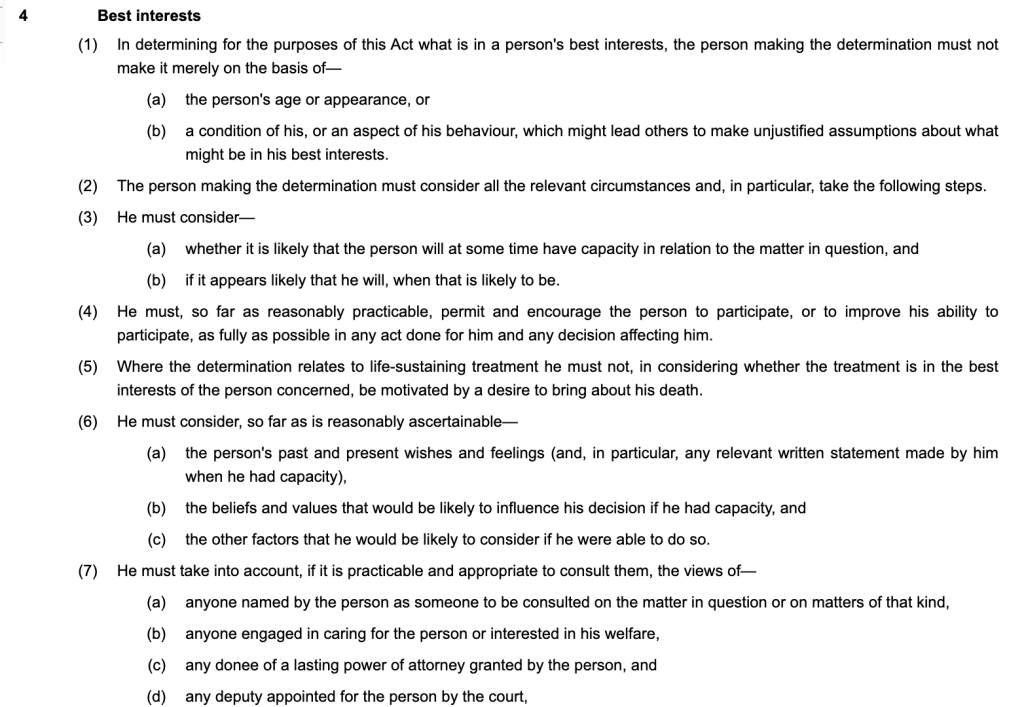




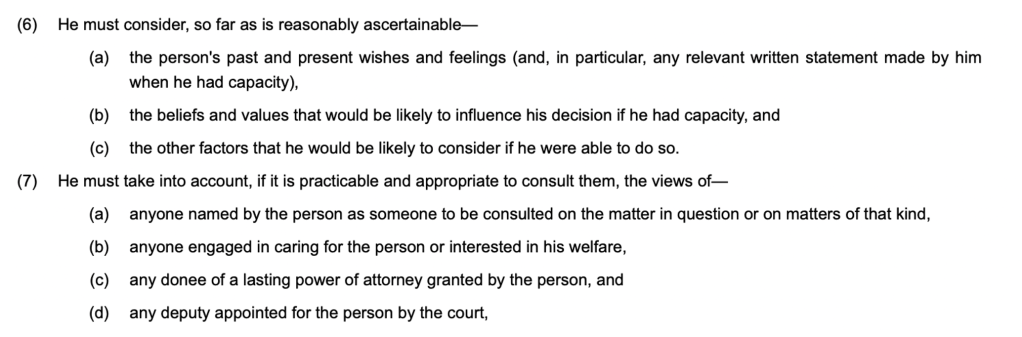
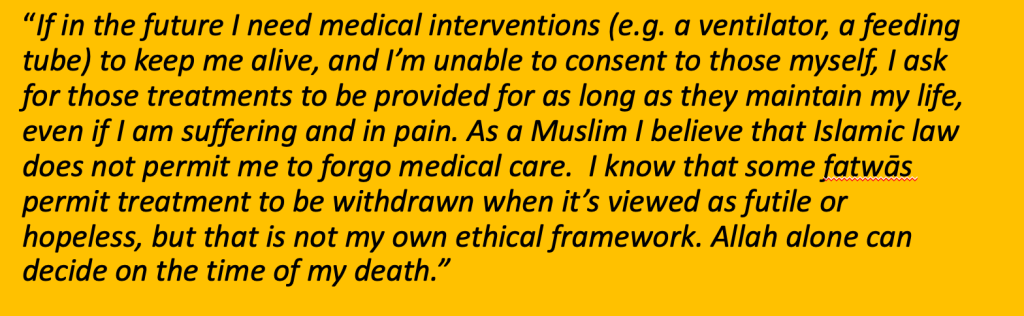
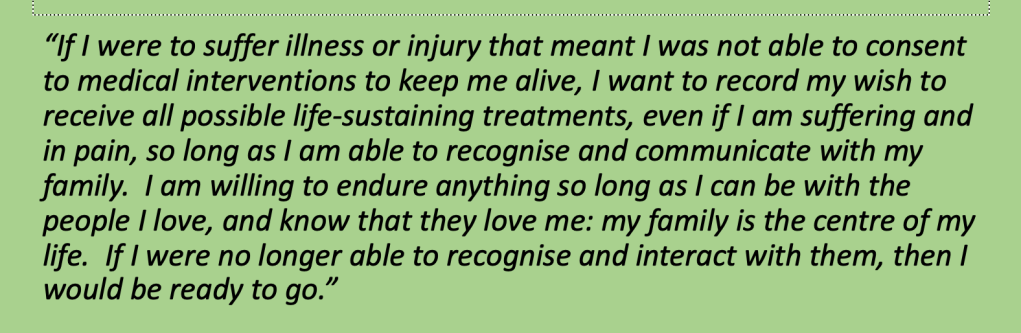
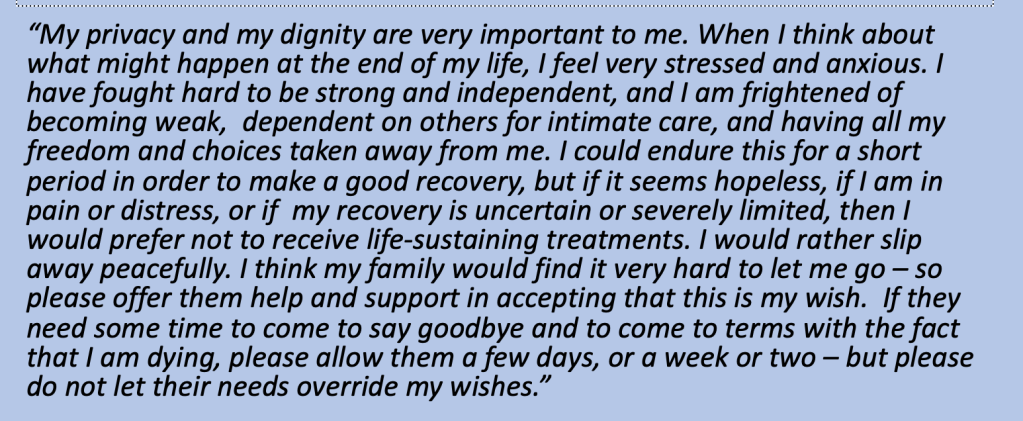





 Promoting Open Justice in the Court of Protection