

I don’t understand what was decided at the hearing. I did not get anything like a bit of paper saying “This is what was decided at your court hearing”. I don’t understand why there is another hearing planned for next year. Throughout these months between now and the next hearing my belief is that Lillian is not being given the care that she needs and is not being protected. I just want my daughter to come home.
Tag Archives: Best Interests
My midwife heart weeps: Opinion on a court-ordered hospital birth

What the judge has done here is to create a precedent that any woman who has an anxiety disorder and requests birth outside of the regular menu of choice may be subjected to strong-arm maternity care – or may fear it, even if in fact the legal process is never instituted. For many women the impact of these experiences during their pregnancy care and birth will cause deep and long-standing trauma.
“Not nothing”? The Late Term Foetus in the Court of Protection

The right of a capacitous pregnant person to make their own medical decisions unfettered by any consideration for the life or health of the foetus they carry has been enshrined unequivocally in UK law. As Judge LJ emphasised in the Court of Appeal in St George’s NHS Trust v S, pregnancy does not reduce a competent patient’s right to make decisions about their medical treatment, and a capacitous pregnant patient therefore has the right to make a medical decision that might cause death or serious injury to the foetus, however repugnant such a decision might seem to onlookers.
Re: An Expectant Mother [2021] EWCOP 33: A lawyer’s perspective
There was no evidence before the court about the extent to which mothers with agoraphobia (or other conditions) are in fact resistant to obtaining medical intervention in the midst of labour if advised that it is necessary to ensure the safety of themselves or their baby. In so many of the cases about mode of delivery that come before the court, the concern of the health professionals is that there will be lack of compliance in labour. Yet in most cases, the babies are born without resort to force or the authority of the court order.
Human rights in maternity and the Court of Protection

Specialist perinatal mental health midwives (as well as consultant midwives who have a remit for perinatal mental health) are frequently involved in complex birth planning for women with significant mental health disorders. We have experience of creating individualised birth plans for women with severe anxiety, obsessive-compulsive disorder, post-traumatic stress disorder and psychotic illness, as well as agoraphobia. Our experience is that in all these cases, there were safe and happy outcomes – without recourse to court orders or forced hospital transfer.
Phobias, paternalism and the prevention of home birth

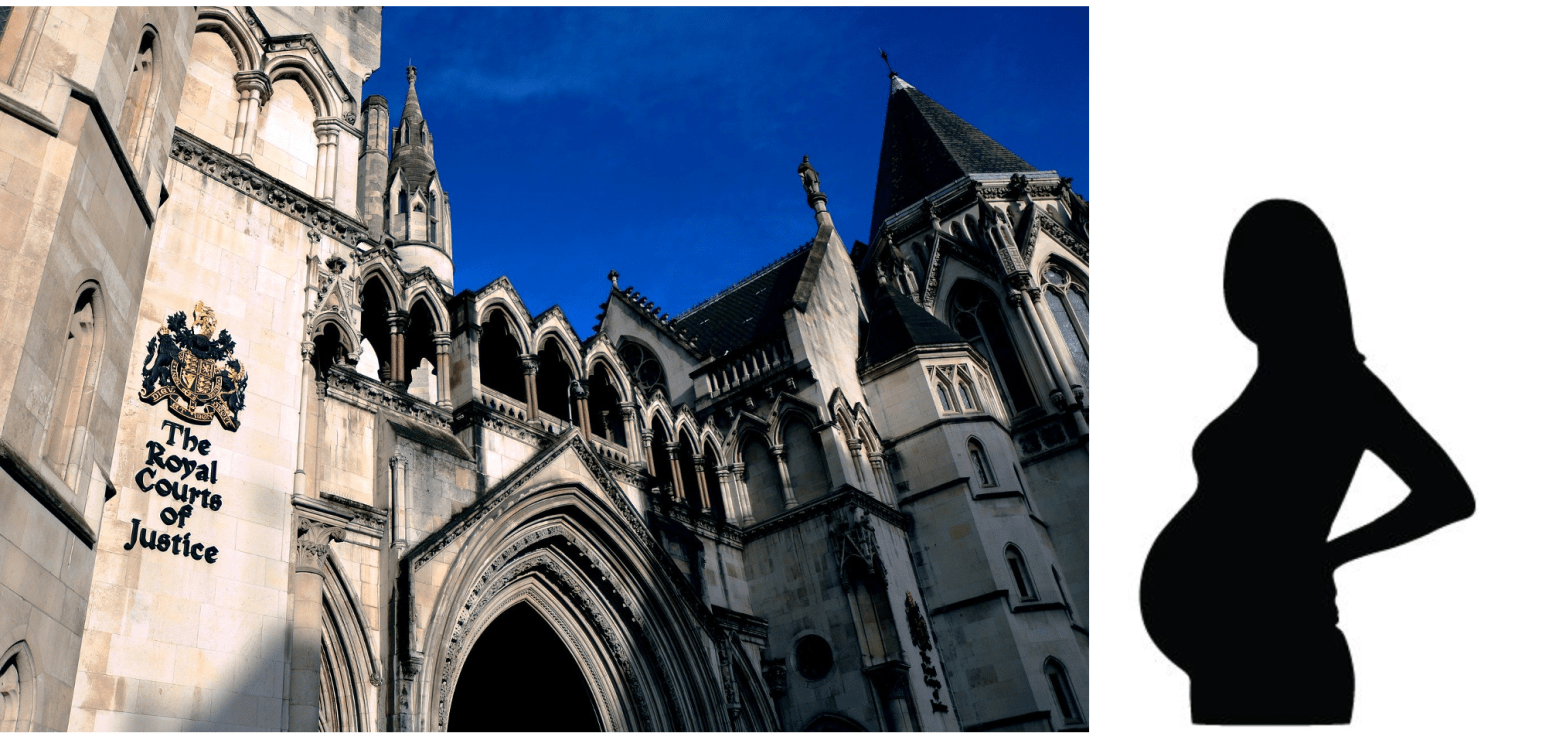
At the conclusion of a three-day hearing, Mr Justice Holman declared that P lacked capacity to make the relevant decisions and ordered that it was lawful and in her best interests for medical staff to transfer her to hospital a few days before her estimated due date, and for medical professionals to offer her a choice of induction of labour or Caesarean Section in hospital.
Dignity and its uses

“The qualification of dignity in relation to living independently from one’s parents normalises white, Western households. What does that principle say about people from communities who live in multi-generational households as a norm, both in the UK and around the world? Or people who (with capacity) choose to live with their parents, for whatever reason? How has the human need for care and community with other people become a criterion for assessing dignity?”
First Impressions of Hayden J in the Court of Protection

Emma Heron and Olwen Cockell, 21st May 2021 Editorial Introduction (Celia Kitzinger) Two relative novices to the Court of Protection had their first experience of a hearing before Mr Justice Hayden on 20thMay 2021. They record their impressions here. I also observed this hearing (COP 1275114): a s.21A challenge on behalf of a man in his 40s withContinue reading “First Impressions of Hayden J in the Court of Protection”
Agoraphobia, pregnancy and forced hospital admission: Public responses to media reports

On 14th May 2021, BBC News and two national newspapers ran a story about a Court of Protection hearing concerning a 21-year-old woman with agoraphobia who is pregnant and wants to give birth at home. There is no published judgment available yet so these media reports are the only publicly available sources of information.
Inspired by Bournewood: A s.21A challenge and delay in the court

By Evie Robson and Celia Kitzinger, 10th May 2021 On the morning of Tuesday 13th April 2021, we both logged on to MS Teams to observe a hearing before District Judge Ellington (COP 13715986). The listing information on the First Avenue House website – which helpfully provides advance information about the issues to be addressed in court – informedContinue reading “Inspired by Bournewood: A s.21A challenge and delay in the court”
 Promoting Open Justice in the Court of Protection