My experience of this hearing (COP 1354439T) on 7th February 2022 could not be more different from my previous attempts to observe a public Court of Protection hearing (which I blogged earlier).
Not only was it straightforward to gain access to the hearing itself, but also I was able to observe a clear and compelling exemplar of the functions and influence of the Court of Protection and see how legal scrutiny can accelerate and steer the delivery of services to its optimum.
The hearing was about Mr PH. The ‘cliff-hanger’ ending of the last blog post about this case (from the hearing a few days earlier) was that arrangements had been made for PH to be taken, as he requested, to view a care setting he could move into. If he liked it, he would hopefully decide to resume taking nutrition – after having refused it for the previous 10 days. So I wanted to know whether the visit had been successful. Had he liked the property? Was he accepting food again?
Background
PH is a 41-year-old male affected by a brain injury (acquired after a fit). He has ‘emotionally unstable personality disorder’ and several complex physical conditions.
PH has been living in a side room on a hospital ward for over 18 months, although (with the exception of a couple of acute medical incidents) he has been ready for discharge throughout. Court applications were initially focused on finding him a suitable placement outside of hospital, in rehabilitation or other care settings, though this has been amidst a difficult landscape of resource constraints and the impact of COVID. Moreover, various emergencies have intervened and preoccupied the court.
Over this time, several decisions have been needed about PH’s care and treatment. For some of these decisions, PH was assessed as lacking capacity, and best interests decisions were taken.
For other decisions (such as the decision to refuse to go to the Intensive Care Unit), PH was deemed by Mr Justice Hayden to have the capacity – and PH’s capacitous decisions have been respected – thus eloquently demonstrating principle 5 of the Mental Capacity Act 2005; that a person shouldn’t be seen as lacking capacity simply because their decision appears to be unwise.
Mr Justice Hayden has made very public criticism of the Health Board responsible for PH’s care because of the lack appropriate rehabilitation support and because PH has remained in unsuitable accommodation, on a hospital ward. The effect of this seems to have been that meetings were set up, and the issues escalated in a more timely fashion.
In last week’s hearing, the Health Board presented a concrete interim plan: a bespoke care placement in a purpose-built house at the edge of a village. The house more closely resemble a ‘home’, in that PH will have his own private living space complete with a bedroom, kitchen, lounge and bathroom all upstairs, with 2 bedrooms (for ‘live- in’ carers) and an office downstairs (it sounds similar to a supported living ‘home’, though presumably would still be classed as a residential home in terms of the CQC registration).
Today we learnt that PH had very recently visited the home and he says he likes it.
The proposed placement is envisaged to last a maximum of 6 months, and is located near to PH’s home town with options for visits to family and places of interests.
The long-term plan is for PH to return to live in the community, with his own tenancy (ideally in his home town) having regained some self-care skills in the interim (e.g. “attempts to improve his manual dexterity – impaired by brain damage – so that he can meet some of his own care needs”).
This seems to reflect Mr Justice Hayden’s words back in October when he stated he felt “considerable optimism that his needs would be better met in future”. The fruition of a better outcome (albeit short term) seems to have been due to enhanced proactivity from the Health Board in identifying suitable resources, as well as an alternative lead psychiatrist to treat PH.
Could it be there was more robust action due to media coverage and the spotlighted glare of accountability which follows high profile court proceedings? In any event, the progress was welcomed by all.
The hearing on 7th February 2022 before Mr Justice Hayden
The two barristers in court for this hearing were Ms Victoria Butler-Cole (as counsel for PH via his litigation friend the Official Solicitor) and Mr Roger Hillman (counsel for the Health Board). Mr Hillman was asked to provide a summary and update of events so far.
Judge: We had a busy and stressful week last week: it is helpful to have that update. And we have members of the public on the platform who would like to know what happened.
Hillman: Your Lordship will recall that an urgent treatment application was applied for on 31st January and we came back again at the beginning of February. The reason for the urgent application was because PH had decided to refuse to allow himself to be fed.
Mr Justice Hayden intervened at this point in response to counsel having used initials (rather than PH’s full name) and instructed that ‘in this court we call him Mr H (full name used).” He reminded everyone that the Transparency Order prevents use of his full name in any publication about the case, and that means that his name can be used in court without risk of compromising his privacy.
From this point on, I felt a sense of the highly respectful, professional value base with which Mr Justice Hayden conducts himself in relation to others. I admire his intervention. I find it so depersonalising, for example when individuals are referred to simply as ‘the husband’ or ‘the daughter’, and I’m sure that Mr Justice Hayden is expressing the same value base when he clarifies how PH is to be referred to in this hearing.
Hillman: Mr H decided to refuse to allow himself to be fed (he is PEJ fed) for a period of 9 days. He became very emaciated and lacking in energy due to a sustained period of fasting. He has a background of occasionally refusing to allow himself to be fed and making a stand if he is unhappy about what is being proposed. He is in the circumstances of a man with very little control, trying to draw attention to the fact that he’s unhappy about a problem. By day 10 the Board became very worried.
Judge: Mr Hillman, denial of nutrition as an exercise of personal autonomy is part of the history of this case. But this time the motivation was different. (PH) wasn’t trying to achieve anything, he had simply ‘run out of steam’, lost his will, having lost a close friend in a road traffic accident.
Mr Hillman corrected himself in light of the judge’s observation. He went on to clarify that at times PH took stands and at that stage PH had said he did not want to die and that he was unhappy and was making it clear that he did not want to go to the placement that was proposed for him, a rehabilitation unit.
Judge: To place this in context, there is a strong body of professional belief that the arrangements [in the proposed rehabilitation unit] fell considerably short of what was needed
Hillman: We thought something rather good had been put together, with therapies that would meet his needs.
Judge: That wasn’t intended as a criticism. I don’t doubt the energy or sincerity of the effort but nonetheless it fell far short of the ideal and (PH’s) resistance to it is not entirely unreasonable.
Hillman: The desire of all staff is to discharge him from the surgical ward where he’s now been for a year and a half and not to have him remain there on an ongoing basis, with the risk of infections. The general wish was to have a step-down scheme, first at [Rehab Placement] with therapies provided, and then in due course a move thereafter to a community placement in his home town. On the 31st January Your Lordship strongly pressed (the Health Board) to revisit the options available and examine alternatives to [Rehab Placement] given that PH was so opposed to it. There were two interdisciplinary meetings on Tuesday [i.e. the day after the hearing on 31st January] following that regarding accommodation. On 2nd February, the Court was told that the Health Board had identified a placement for up to a maximum of 6 months – not a hospital in the ordinary sense but a residential home, a four-bedroom house which is suitable in terms of the lay out and his needs regarding treatment and care. Accordingly, the Health Board proposed that if it could be agreed and if PH were happy to move there and receive 24-hour care – there will be a full team and care provided – he would have dignity and privacy akin to living in a private home.
Mr Hillman went on to describe the living arrangements and how staff could be ‘out of his way’ and the judge interposed, “giving this man his first opportunity for privacy for a year and a half”.
Counsel for the Health Board recounted how PH went to see the premises in person (following the s.48 order made by the court) – despite some reluctance initially from the Health Board due to the identified risks to his health after not eating for a period of 10 days, and being extremely emaciated and tired. There was a risk mitigation plan in place; ‘special care’, a wheelchair, and ambulance transport was arranged.
Hillman: It was agreed by Your Lordship that it was in (PH’s) best interests to see it.
Judge: Put like that it sounds like rather a reckless plan approved by me, but the reality is (PH) was dying. That has to be balanced with the paucity of the alternatives.
Hillman: The balance of risks dictated that he was approved to see the premises. He was taken in a wheelchair by the psychiatric nurse and she prepared a report for Your Lordship.
Mr Justice Hayden then enquired whether Nurse D was present at the hearing. At this point both Nurse D and PH appeared together on screen (turning their camera on after having it switched off). It was reassuring to see that PH seemed bright and alert and seemed to be intently following the discourse.
Nurse D then confirmed that PH had taken a feed following his visit to the care setting – and that he had actually agreed to have a feed prior to the visit but he did not want his stoma to leak during the ambulance journey, so had decided to wait for his feed until his return from the viewing.
At this point, it was announced by Mr Hillman that PH was in full agreement with the plan.
Hillman: (PH) was pleased to tell everyone that he was happy with the house. The important thing is it felt like a house – it’s not like a hospital and more like a home. That’s what he told everybody after viewing the premises on Thursday, and after that he continued to go ahead with the refeeding programme, which has continued to date, I’m pleased to say.
Mr Hillman explained that a memorandum would be drawn up on what the Health Board are going to provide and this will be in simple language so that PH can understand. A care plan and transition plan will be confirmed by way of an advocates meeting on 14th February with a view for the move to take place on 25th February or thereabouts.
It was reiterated this was, in essence, a half-way house pending a permanent home nearer to or in his home town. It was discussed that the council (of his home town) would also be involved and would need to provide an update at the end of March as to progress made in relation to obtaining a tenancy for PH and what part they are taking in working with the health board to meet his health and social care needs.
Reflections on Mr Justice Hayden
Mr Justice Hayden executes his role as judge flawlessly, and further to this he serves as a role model for how practitioners should approach their work within services for people.
There is a very vivid imprint of person-centred practice. He has clearly built rapport through his direct engagement with PH, and he made comments which reveal this. For example, Mr Justice Hayden alluded to PH’s wish to get ‘a Mohican haircut’. He also playfully remarked, after learning that it had been PH’s birthday a few days earlier, that PH is ‘looking good for 41’ (and PH responded with a smile and a self-deprecating shake of his head ).
Furthermore, Mr Justice Hayden’s compassionate closing statement directed towards PH, almost moved me to tears. It came across as so authentic and empathetic.
Judge: Mr H, if all goes well this may be the last time we meet. You’ve made a very significant impression upon me. I hope it won’t come as a surprise to you that when I was told that you’d started to take nutrition again, I couldn’t have been more delighted. In a challenging week, it was a real ray of sunshine and I was hugely pleased to hear it. There may be a slightly easier period coming up in terms of the pandemic and better weather, and moving to the new house and re-emergence with your family. So 2022 could be a good year for you, I hope that it is. If I don’t see you again, I wish you the best for the future and for (your partner) who has been a great support for you, and I’m sure will continue to be. So from me, the very best of luck for the future.
PH:(Gives a thumbs up and his facial expression appears sanguine)
Judge: I also want to thank Nurse D for playing an invaluable part in this case. And a debt of gratitude is owed to Dr R for his discrete and major personal input. I’m extremely grateful.PH turned a corner last week and Dr R and Nurse D were very much instrumental in that.
Nurse D: Thank you, My Lord.
Dr R: Thank you, My Lord.
Judge: Thank you all very much and good luck.
Reflections from the perspective of a Best Interests Assessor
As a Best Interests Assessor (within the remit of Deprivation of Liberty Safeguards), I too have followed cases over prolonged periods of time.
These have included s 21A appeals, and also cases where a ‘part 8’ review is required (which is when an unplanned reassessment of the DOLS authorisation is needed due to major change such as a significant increase in restrictions). There is also case continuity in situations where I have recommended that specific conditions are added to the authorisation, which have been approved by the supervisory body (the local authority) as a requirement for the care provider to meet, and I have needed to monitor these conditions repeatedly.
I can certainly relate to situations in which I have developed empathy and felt frustrations for the individual I have assessed, especially when they are faced with a lack of alternative options (due to limited resources).
Clearly Mr Justice Hayden has much more persuasive power than a Best Interests Assessor, but I can reflect on how having some level of oversight from a professional who is somewhat independent, and who can initiate communication with separate bodies (i.e. care home management, local authority, health commissioning) can be pivotal in ‘making things happen’ for P, that wouldn’t have necessarily happened without such intervention.
This is why I believe that the Court of Protection is so vital in promoting and protecting the rights of those who cannot always get their voices heard.
Ultimately, every person is an individual with their own story, their own belief system and their own balance sheet as to what is in their best interests. Yet we have a system where often outcomes depend on what services / funds are available to a person, rather than what would actually be best for them. In deciding best interests, we should always be focused on what they want (within a reachable distance), and balance that with a holistic assessment of their strengths and the challenges they face.
PH seems to be a spirited man, who values his autonomy so vehemently that he was almost willing to give up on life itself, rather than live a life without having any control over what was happening to him.
It seems that he has had an arduous and abhorrent experience within hospital (and possibly other institutions of care), and his clear wish is to live in his own domain and be sovereign over it; to have his own privacy and to guard his freedom as far as possible.
Surely this must be what many of us would fight for, if it were taken away from us? Particularly as there is a consensus that these are basic human rights (the rights to liberty and privacy are ratified under Article 5 and Article 8 of ECHR, which is the foundation for the legal framework of the Deprivation of Liberty Safeguards).
Dr Lucy Series reflects (here) that the experience of living in an institution can be crushing to a person’s sense of autonomy and self-identity. How would we feel if we were faced with a plethora of rules and regulations over all our daily routines, and there was an omnipresent authority which influenced every part of our lives, from goals we should achieve down to how our ‘home’ is decorated.
With his solid strength of will (and the impeccable governance of Mr Justice Hayden), PH was able to overcome some of the barriers faced by many people who find themselves in health or social care institutions, and there is an optimistic ending to this chapter.
However this is not typical (in my experience) of the majority of cases, and it seems there is no easy answer within the climate of austerity and scarcity of provision, particularly in relation to specialist mental health provision(see Oliver Lewis’ blog here).
I am hopeful that the actions taken in this case (as in others) builds on the recognised need to push forward the agenda to have bespoke person-centred care and to facilitate a person’s wishes as much as possible, regardless of whether or not they have capacity to make their own decisions about residence and care.
Eleanor Tallon is a Best Interests Assessor and Specialist Practitioner in MCA and DOLS with a background in Social Work. She tweets @Eleanor_Tallon
Judges have suggested repeatedly over the last 18 months – to me, and to other observers – that we should ask to observe hearings in a timely fashion, giving judges (and advocates and court staff) more warning that we want to be there in court.
It happened again last week, during a remote hearing (COP 13607901) before HHJ Thomas in Birmingham on Thursday 27th January 2022.
As I joined the hearing at 10.30am, the judge was talking to counsel, one of whom then observed that I had joined the platform. The judge said to me: ‘because you only applied last night at 5.30[1] when all of the staff had gone home, I haven’t had time to consider your request’. She asked me to leave and said I would be contacted if I were to be allowed access.
I was permitted to re-join after some portion of the hearing (I think a costs hearing) had been completed, at 11.29am (so an hour later).
At that point the judge addressed me again, saying that I was “welcome, of course” but explaining that “the court office is only open from 9-5”, so communications received outside of those hours aren’t processed. When the office opens the next morning, she said, there is “a lot for staff to do”. Her suggestion for my future requests to observe hearings followed: “So, Dr Martin, if you would be kind enough, the earlier you can give notice the easier it will be“.
This blog post is a response to that suggestion – which I’m sure was intended to be helpful. It must be especially frustrating for judges who fully support open justice and want to ensure a positive experience for public observers, to be unable to provide smooth and timely access to hearings because they have received the request too late for them to engage with the issues.
The problem of late requests to observe hearings
It’s very inconvenient for judges to receive messages from members of the public asking to join remote hearings just minutes before (or sometimes minutes after) those hearings are due to start.
In fact, it’s more than inconvenient. It distracts their attention from the substantive business of the hearing.
Partly it’s the technology. District judges doing telephone hearings, already exhausted by the task of calling out to 8 or 12 different people on a conference call, are now facing the task of adding yet more numbers to call. Court staff setting up video-hearings who may well be preoccupied with helping P or P’s family with dodgy connections from borrowed iPads, or doctors in hospitals with unhelpful firewalls, now have members of the public needing to be sent links, and possibly also struggling with connections. These problems are exacerbated when requests are last-minute.
Partly it’s sorting out issues of transparency and reporting restrictions. When advocates learn there will be observers – this still seems to come as a surprise to some! – there’s often a sudden flurry of concern about whether the hearing is actually “private” or “public”. And why (they sometimes ask) if COP hearings are supposed to be public, is there a Remote Hearings Order saying that the hearing is “private” and that Practice Direction 4C has been disapplied – and what needs to be done about that? There’s a Transparency Order to locate, or create. Sometimes there’s anxiety about informing Litigants in Person, P and P’s family about our unexpected (and possibly unsettling) presence, hurriedly, at the last minute, as the hearing is about to begin. The start of the hearing “proper” can be delayed while transparency matters are sorted out.
Sometimes this all seems too difficult, too late in the day, and judges decline to admit us.
Why don’t we ask sooner?
Quite simply, I couldn’t have asked for this hearing sooner than I did, because I didn’t know it was happening.
We can’t apply to observe hearings unless we know about them – and that usually means we can’t apply until they appear in the daily cause listings. Those are overwhelmingly our source of information about hearings in the Court of Protection. Mostly, that means (as in this case) that we learn about the hearings late afternoon or early evening the day before a hearing.
This hearing before HHJ Thomas was posted on Courtserve[2] the afternoon of the day before the hearing, sometime between 4-5pm Wednesday 26th January 2022. I emailed the Court of Protection hub (in Birmingham) at 5.30pm that day, as soon as I saw the listing after I had finished work.
Many observers (like me) will not finish work until at least 5pm, when – as the judge informed me – court staff have then clocked off. And that’s the soonest we can check the listings for the following day and request a hearing.
I wasn’t the only one who tried to observe this hearing. Eleanor Tallon (a Best Interests Assessor and Specialist Practitioner in MCA and DOLS) also tried to observe this hearing and blogged about the experience here. Like me, she was admitted to the hearing, but the Judge then said “that as I had only requested access at 10.50pm the evening before, she had not had time to go through formalities. She then referred to Claire Martin, another public observer (and core member of the Open Justice Court of Protection Project) who was also observing the proceedings and requested that we ‘kindly leave’. So that was that. Abrupt as it was, I duly obliged, and felt slightly down beaten at this point.”
In a personal communication (with permission to quote), Eleanor Tallon said: “It did feel like I was being told off and sent on my way. It was quite abrupt.” In fact, she understood the request to leave to mean she was excluded from this hearing altogether, and she did not return.
It seems that the experience of trying to ensure open justice for this hearing was an unhappy one for the court and for observers alike.
The systemic problem
My experience of courts, the legal system and attending hearings is limited to being a COP observer during the pandemic. I have had the privilege of observing over 30 hearings and my impression is that most judges are supportive of open justice (including the judge at this hearing). So, it is not that open justice isn’t supported, in theory, by people in the system, but that open justice, in practice, is hard to achieve, systemically.
Observers are frequently excluded from allegedly “public” hearings – often because nobody replies to our emails – or does so after the hearing is over, apologising for not responding sooner due to pressures of work, or computer problems, or the relevant person being on sick leave. But I don’t think it’s part of a nefarious plot to keep hearings secret and stop us observing them.
And when judges tell us they only received our request to observe a hearing 10 minutes before the hearing was due to begin, or 10 minutes afterwards, or after the hearing was finished, it’s not that we’re deliberately sending in late requests to annoy the judges or disrupt the court process. We probably asked the evening before, or first thing that morning, and either there was a delay in busy court staff forwarding our request, or the judge was in an earlier hearing, or otherwise engaged, and not able to check their emails.
Unfortunately it doesn’t help to advise us to put in our requests sooner.
At present, with the system as it is, it is rarely possible for observers to request to observe a hearing until the evening before. We depend on the listings, which don’t appear until around 4.30pm. Occasionally CourtServe does list hearings for a few days in advance, but this is relatively unusual, and our experience is that very often these ‘advance’ notifications don’t yield observations, because the hearings are subsequently vacated. Our best chance of getting a hearing that isn’t vacated is to apply to observe one that is on the list the day before the hearing is supposed to happen (and even then, a large number are vacated on the day).
Sometimes we’ve observed an earlier hearing in an ongoing case and know when the next hearing is likely to be (because the listing date was discussed in court at the end of the earlier hearing), so we can make a request well in advance. We’ve seen, though, that this runs the risk of our email requesting access being buried in court staff inboxes, necessitating a further email nearer the time.
Very occasionally, we’re informed of cases by P, by people connected with P, by Litigants in Person, or by counsel for one of the parties. This assists us with making timely requests – although the vagaries of court listings mean that even parties don’t necessarily know much in advance when a case is to be heard, before which judge, or (now) whether it will be remote, hybrid, or attended, all of which affect our ability to observe and hence whether or not we can make a request.. Moreover, open justice should not, of course, have to rely on ‘inside’ (privately communicated) information about upcoming cases.
What to do about it
The judiciary has stated its commitment to open justice over and over again and we have no reason to doubt that the Court of Protection aspires to transparency and seeks to support public observation of hearings.
The problem is the gap between aspiration and reality.
For most members of the public, their observation is the first time they’ve ever been in court. It can feel daunting, nerve-racking, anxiety-provoking, stressful. If people feel chastised by judges for late applications, if they’re “told off”, “down beaten” and “sent on [their] way”, it may be the last time they try. Even for me, as a seasoned court observer, it feels upsetting to be advised (albeit, I accept, with the best of intentions) to make my requests to observe “earlier”, by a judge who seemed simply not to realise the practical impossibility of doing so. I would if I could!
This is a matter we will be raising at Court of Protection User Group meetings. We’d love suggestions as to how best to manage the situation going forward.
Claire Martin is a Consultant Clinical Psychologist, Cumbria, Northumberland, Tyne and Wear NHS Foundation Trust, Older People’s Clinical Psychology Department, Gateshead. She is a member of the core group of the Open Justice Court of Protection Project and has published several blog posts for the Project about hearings she’s observed (e.g. here and here). She tweets @DocCMartin
[1] This judge correctly identified the date and time at which I had made my request. Sometimes judges have claimed that we asked (for example) “five minutes ago” – based on when the judge received the request, as (belatedly) forwarded to them by court staff, without reference to the date and time at which we sent the email to court staff (usually after office hours the night before).
[2] For an explainer blog on how to use Courtserve click here. The other court listings are similarly not available before around 4.30pm the afternoon before they are due to take place. First Avenue House listings usually go up between 4.30 and 5pm. The Royal Courts of Justice cause list is often available somewhat earlier (around 4pm) and asks: “Please can requests be emailed the day before the hearing or, if possible, no later than 9:30am on the day of the hearing.”
This is the first hearing in more than two years that I’ve observed in a physical courtroom, rather than remotely via phone or video-platform.
It’s a case (COP 1354439T Re: PH) that’s been before Mr Justice Hayden repeatedly over a long period, and I’ve watched several previous hearings over MS Teams. But this time I was there in person, sitting in a physical courtroom in Newcastle County Court on 2nd February 2022.
It turned out to be a ‘hybrid’ hearing.
Along with the judge and court staff, counsel for the protected party (Ian Brownhill of 39 Essex Chambers) also attended in person.
Counsel for the Health Board (Roger Hillman of Exchange Chambers) attended remotely, as did the protected party himself, a nurse who acted as his advocate, his consultant psychiatrist, and the instructing solicitors. (I think there may also have been others whose roles I missed.)
In summary, the protected party, PH, is a man in his 40s who drank highly corrosive hydrogen peroxide in 2016, resulting in oesophagectomy (removal of part of his oesophagus), splenectomy (remove of his spleen), a tracheostomy and a colostomy and the insertion of a PEJ, a percutaneous feeding tube, into his small intestine.
He’s been assessed as having an “Emotionally Unstable Personality Disorder, Impulsive Type”, exacerbated by an acquired brain injury, following a fit in 2019. Capacity assessments have determined that he does not have litigation capacity, nor does he have capacity to make decisions about his residence and care, or (at the end of last year) to make decisions about treatment for his broken hip.
There is however some disagreement between the Official Solicitor and the Health Board as to whether or not PH has capacity to make his own decisions about clinically assisted nutrition and hydration. (A consultant psychiatrist says that he does.)
PH is currently refusing nutrition (but not hydration) not because he wants to die but because – as Hayden J put it – “he’s had enough, and this situation is compromising his dignity”.
The situation is that he’s still in hospital, despite having initially been ready for discharge (with intermittent medical emergencies) since the end of 2019. Previous hearings before the court have been concerned (first, and ongoingly) with finding him a suitable place to live, and also with his refusal of medical treatments (intensive care, and clinically assisted nutrition).
Following a hearing I did not attend on 13th October 2021, it was reported in the media that Mr Justice Hayden “slammed” the Health Board and spoke of “substantial and alarming failures” in PH’s treatment. But at that time, the response of the Health Board, and of the new psychiatrist treating PH, led Mr Justice Hayden to feel “considerable optimism that [PH’s] needs would be better met in future” and that this marked “a new beginning”. At the end of October 2021, it had been agreed that PH was due to transfer from the general surgical ward at the Hospital to a mental health rehabilitation unit run by the Health Board.
The move was delayed by an accidental fall in early November 2021 when PH fractured the neck of his femur, which required hip replacement surgery. It had been hoped that PH would have recovered sufficiently to move to the rehabilitation unit in early February 2022 but he was unhappy with the proposed placement and had stopped eating.
So, some 18 months after the case first came before Hayden J, the Health Board is seeking a declaration from the court either:
that PH does have capacity to refuse nutrition and that his wishes not to continue to be fed should continue to be respected, even if this means his death; OR
that PH lacks capacity to refuse nutrition and that it is not in his best interests to attempt to feed him nutrition against his wishes and so he should be allowed to die. This is on the basis of advice from a consultant respiratory specialist who gave evidence that any attempts at sedation to overcome PH’s resistance to being fed nutrition itself runs a high risk that it will so suppress his respiratory function that it may well prove fatal in any event. Physical restraint to force-feed PH would be “demeaning and traumatic” for PH and “should not be contemplated as it would be destructive of his dignity and self-respect”.
This Health Board had initially sought this declaration at an “emergency” hearing a few days before (on 31st January 2022). That hearing (which I’m told continued until 7pm) was adjourned after Hayden J spoke privately with PH who told him that he wanted an agreement in writing with the Health Board about leaving the hospital to go to a home for him to live where he could have privacy. If such an agreement were possible, it was suggested that PH might agree to resume accepting nutrition. The case had been adjourned for these possibilities to be explored.
Hayden J had not at that point made either of the two alternative possible declarations sought by the Health Board.
A “secret” hearing
I’m describing it as a “secret” hearing because (despite apparently having been arranged two days earlier, at the hearing on 31st January 2022), this hearing didn’t appear on any of the daily court lists for Wednesday 2ndFebruary 2022 – not on the Royal Courts of Justice list where Hayden J’s hearings normally appear, and not on the County Court Civil and Family Courts “Court of Protection” list in CourtServe under the “Newcastle” tab, which was where I expected to find it.
If a hearing doesn’t appear on the court lists, there’s usually no way for anyone not involved in the case to even know that it’s happening, let alone ask to observe it[1].
I was in Newcastle in person for a different hearing (attended, in-person) before Mr Justice Hayden – one that was (more-or-less) correctly[2] listed on the Newcastle County Court COP list, for 2pm that day. I’d known about that one for a while because arrangements for it were made at the conclusion of an earlier hearing, back in November 2021, in the same case.
Newcastle is one of the courts closest to where I live, and as ‘attended’ in-person hearings are slowly replacing the remote online hearings we’ve become accustomed to during the pandemic, I was keen to observe a hearing in a physical courtroom.
After arriving (early) in Newcastle, I heard from Ian Brownhill, one of the barristers involved in the 2pm hearing, that there was an 11am hearing before Mr Justice Hayden in which he was also involved.
I checked the listings again. Nothing.
I emailed the judge’s clerk asking whether or not there was an 11am hearing and requesting that, if there was, it be publicly listed. I knew people in Newcastle who’d read blogs about this case would be interested in observing the hearing.
Although she confirmed that the hearing was happening, and indicated that she would endeavour to ensure it was listed, I don’t think it ever appeared in the lists.
It wasn’t there when I walked into Newcastle County Court at around 10.30am and checked the lists pinned up on the boards after passing through the airport-style security scanners.
The court staff on the ground floor couldn’t find it on any lists when I asked about an 11am hearing before Hayden J. They directed me up to the second floor to the waiting area outside the courtroom where Hayden J’s 2pm hearing was listed as taking place. They suggested I ask the staff there.
The staff on the second floor didn’t know of any such hearing either – and were also anxious that I’d turned up without (in their words) “asking permission” since (under COVID restrictions in place in the court) the courtroom only holds six people plus the judge and court staff.
Then Ian Brownhill emerged from one of the small ‘consultation rooms’ around the perimeter of the waiting area. Yes, the hearing was going ahead at 11.am in the same courtroom as Hayden J’s 2pm hearing. He emailed the judge’s clerk (copying in me and the other barrister in the case, Roger Hillman) asking for permission for me to enter the courtroom. Permission was immediately granted (and I was also sent the MS Teams link, since it turned out that the hearing was hybrid).
Once I knew the hearing was happening, and was able to get my request to observe it before the court, everything went smoothly. I absolutely don’t believe that the court was trying to prevent me from observing this hearing.
This case has been heard in ‘secret’ before on at least one other occasion – in November 2021. Back then, the judge’s clerk sent me an email (unprompted) at about the time it was due to start, alerting me to the hearing which, she said, had erroneously not appeared on the lists. I was otherwise engaged and didn’t read the email until hours later, so didn’t watch that hearing, but it was clear to me then that despite the hearing having been unlisted, I was welcome to attend.
Once the hearing got underway, I learnt that this case had also been heard a few days earlier in the Royal Courts of Justice on Monday 31st January 2022 as an ‘emergency’ hearing. Had I known about it, I would have observed it then. I didn’t because it wasn’t on the lists when I checked on the previous Friday (which is when Monday’s cases usually appear), nor on the Monday morning. I didn’t check again on Monday afternoon, but the judge said that the RCJ cause list had been amended at some point in the afternoon shortly before the hearing started – presumably as soon as was reasonably practicable under the circumstances. I understand there were no public observers, but given that it actually appeared on the lists, I don’t characterise the Monday 31st January hearing as “secret”.
But it does concern me that there are hearings taking place which are never listed (anywhere) and so without any possibility of members of the public observing them – except under very peculiar circumstances such as led me into this hearing.
This isn’t a one-off experience. I’ve encountered unlisted hearings before. On a couple of occasions family members contacted me, asking me to observe their hearings, giving me COP case numbers, judge names and dates/times for the hearings, and – despite attending them after family members negotiated access for me – I was unable to find these hearings listed anywhere on CourtServe.
Of course, given that I succeeded in attending this “secret” hearing and am blogging about it now, there’s an argument to be made that it wasn’t “secret” at all. I want to distinguish between “secret” (unlisted) hearings and “private” ones. It’s the absence of information that the hearing was even happening in the first place that renders it “secret” – in the sense of not known by the public, and not available on the lists for them (us) to know. Knowing that a hearing is happening and that it is “private” is very different. Even “private” hearings – from which members of the public are excluded – are nonetheless listed on public websites; they’re not “secret”.
I should add that there was in fact a “private” part to this hearing when the protected party was offered, and accepted, the opportunity to address the court without being observed by members of the public. I was entirely content with being asked to leave the courtroom for this “private” exchange.
“Secret” hearings seem often to be, as in this case, a consequence of administrative error. When the error is discovered, I have seen the courts act rapidly (if not always effectively) to try to ensure that it’s rectified and that the public is alerted. I’ve been sent (unsolicited) links to unlisted hearings I haven’t been able to ask to observe. I’ve never been refused entry to an unlisted hearing. I’ve never felt, when observing an unlisted hearing “ah hah! I can see why they didn’t want to let us know about this one!”.
Secret hearings are not part of a sinister conspiracy to evade transparency, and conduct justice behind closed doors – but of course the effect (excluding the public) is just the same as if they were.
To my Newcastle colleagues who would have liked to observe this hearing and who saw in it a unique opportunity to observe the Vice President of the Court of Protection hearing a serious medical treatment case, in person, just down the road from where they work, a case they’d read about over several blogs…. I’m sorry it didn’t work out.
I’d imagine the court is too.
What happened at the hearing on 2nd February 2022?
The hearing opened with the information that there is now a skeleton plan in place for a home that PH can move to – and a video of the property was available, although due to encryption problems nobody seemed able to send it to the judge. This would be a temporary home for PH for maybe 6 months, while something more permanent was organised for the long term in the geographical area where he wishes to reside.
Judge: Has the plan been put before PH?
Hillman: No.
(c. 20 second silence)
Hillman: Your Lordship is asking me why not?
Judge: No. I’m letting the question float through the ether. Why is it that everyone
knows the plan except the person it most affects?
Hillman: The plan has only been finalised in the last few hours. We have wanted to
avoid putting down things we would later need to resile from.
The psychiatrist (Dr R) was called as a witness and reported that he’d met with PH the day before and updated him. They’d talked at length about the new property and Dr R had shown him pictures from Google maps. “PH replied he’d like to visit. It was explained to him that he’d need to be somewhat heavier in weight.”
Shortly after this the judge addressed PH, saying: “PH, you can hear that. Until you’ve put some more weight on, you’re not going anywhere.”
There was some discussion of the property. It’s a two-story house, with four bedrooms, one with en suite facilities to a good-sized wet-room. On the ground floor there are 2 bedrooms and an office. Staff caring for PH (it’s a condition of the use of the premises that he continues to receive 24/7 care) would be downstairs “out of his hair so to speak” and “not in his living apartment”.
Ian Brownhill (cross-examining Dr R) asked how much weight PH would need to put on before the visit could be accomplished. “That’s difficult because we don’t know what weight he is today… If he were to eat or accept feeds over a period of five days, a visit would be possible” (Dr R).
Ian Brownhill suggested it might be possible to “do a deal” with PH – to which the judge took exception: “I don’t like that term. He can if he wants accept nutrition. What I am trying to do is not negotiate, but let him have options to choose between” (judge).
On (not) making the declarations sought
The ongoing dispute about whether or not PH has capacity to make his own decision about nutrition (the Official Solicitor thinks not; the Health Board thinks he does) was not explicitly addressed in the hearing, but caused problems in making the declarations sought.
Mr Justice Hayden asked counsel for the Health Board: “Are you asking me to resolve the issues in paragraph 6 [of your position statement]. It seems rather difficult to do so in time.”
Paragraph 6 was the paragraph seeking a declaration from the court either
that PH does have capacity to refuse nutrition and that his wishes not to continue to be fed should continue to be respected, even if this means his death; OR
that PH lacks capacity to refuse nutrition and that it is not in his best interests to attempt to feed him nutrition against his wishes and so he should be allowed to die.
“I am not instructed to abandon that point”, said counsel for the Health Board, “and I understand My Learned Friend [Ian Brownhill, for the Official Solicitor] opposes it. Starkly, what should we do if PH decides not to eat and not to accept nutrition and hydration. We would ask the court to give a declaration so the Board knows what to do.”
Counsel for the Health Board outlined the two alternative possible declarations he was seeking.
Hillman:Your Lordship on Monday made the comment that in effect either he has capacity and should say what should happen to him and not be made to be fed, or if he doesn’t have capacity, I suggest it’s not in his best interests to compel him to have food – partly for medical reasons, partly because of his respect and dignity. Considering the use of force to compel him to be fed would be appalling.
Judge:I don’t think anyone is suggesting that sedating him and forcing him to be fed is in his best interests. I think I was pretty clear about that on Monday.
Hillman:With the greatest respect, My Lord, I don’t believe you were. The issue was parked rather than being dismissed out of hand, and hence I feel a need to raise this matter now, as the clinicians could use some guidance. It’s the belief of Dr R that PH has capacity to decide on accepting nutrition and hydration or not. In the event that you are not so persuaded and it becomes a best interests decision, sedation is medically counter-indicated. And the use of physical force is such an appalling prospect in terms of trauma, loss of dignity, and humiliation of PH that we don’t wish to go down that road at all.
Judge:What is ambiguous is why such a declaration is necessary. I am trying to empower PH to have the maximum options to assert his own autonomy. When he started refusing food, it was not as a bargaining tool at all. Dr R said it was simply that he’d had enough – as he put it, that his dignity was being compromised. It came off the back of a series of issues in his own life when he’d become upset, not least because a close friend had died. It wasn’t a device to get his own way. It wasn’t an attempt to compel the Trust. If he is able to agree the way forward today- Not ‘agree’. If he decides to go to the proposed placement, does the declaration achieve anything other than to undermine PH’s autonomy?
Hillman: All I’m asking is that the Health Board be empowered to continue to respect the autonomy of PH. That is in effect the outcome of the declaration we are asking you to make.
Judge:When you say the Health Board needs to be empowered, what greater empowerment could it have other than the consent of the patient, freely given. Why does it need a court declaration?
Hillman:Because there is still a view that this man may not have capacity to make this decision, and I wish it beyond doubt that a failure to compel this man to accept nutrition is lawful, and that the Health Board would be doing the right thing by not compelling this man to be doing something he doesn’t want to be doing. If we are not able to move forward in a consensual way, which is absolutely the wish of the Board.
Ian Brownhill (for PH via the Official Solicitor) said “the OS agrees with Your Lordship’s decision not to make the declarations sought” because she was “uncomfortable with the declaration that PH has capacity to refuse nutrition”. He suggested that “What’s happening here is that Mr Hillman’s submissions are designed to protect the Health Board, not to protect PH”.
The judge demurred, rejecting the proposition that the Health Board was “cynically protecting themselves”, and pointing out their reliance on psychiatric opinion. He asked what was required to assess whether PH had capacity to make his own decisions about nutrition – what matters PH would have to be able to weigh and balance. The resulting to-and-fro touched on a lot of issues (involving comparisons with political hunger strikers and anorexics, and touching on capacity to choose an assisted death in Switzerland) without resolving anything.
Judge: Let’s assume for the sake of argument that the presumption of capacity is rebutted. What declaration do you want then?
Brownhill: I don’t seek a declaration. There is no available option for treatment to put before the court.
Judge: Given it’s clearly his expressed wishes to refuse food, you would not wish to impose force-feeding upon him?
Brownhill: If someone said they wanted PH to be held down and force-fed, I would take instruction from the Official Solicitor. But it’s not an available option.
Judge: I don’t think it’s an ethical option. He feels he has been a creature of the state, and there could be no more graphic example of that than being held down and force fed.
Brownhill: What was disturbing to us on Monday was the switch to a palliative care plan.
Judge: The word ‘palliative’ sometimes generates more heat than light. What it means is ‘pain relief’. If he’s going day after day after day without food, he’s going to need pain relief. So where, at what point then, are you separating from the Board in terms of a plan for PH?
Brownhill: One, we don’t think there should be a positive declaration that he has capacity. Two, we don’t think the Board should stop offering him the opportunity for re-feeding and continued nutrition and hydration.
Judge: I don’t think that’s a difficulty.
Brownhill: To put it in the vernacular, we don’t want people to give up on him.
Judge: I’m sorry to be pedantic, but recognising his wishes is not ‘giving up on him’.
The judge then turned to PH and his advocate-nurse, Nurse D, (who were together in the same room, and visible via video-link). Nurse D said that PH did want to visit the proposed new home, but disagrees with the view that he should gain weight before doing so. He wanted (she said) to reassure Ian Brownhill that he is being offered food, but he doesn’t believe it’s necessary for him to accept nutrition at the moment.
The judge then offered PH a “private session with no members of the public present” which he accepted, and I left the courtroom, re-joining after the lunch break.
Viewing the property
After the lunch break, Nurse D, who’d not been able to send the video of the house over to Hayden J, played it to us on her mobile phone, holding it up to the screen and walking us through the outside parking space, the ramp to the front door, through to the kitchen, the bedrooms, the wet room, the rural view from the window. After she’d shown it to the court, PH asked to see it as well.
Dr R then updated the court about his conversation with PH in the lunch break. PH, he said, “refuses to eat before visiting the placement. He’s agreed he will eat after seeing it, if he likes it. He walked the length of the corridor and back to prove his fitness: he believes he can survive for a further week without eating. He asked to go to the property this afternoon – which is difficult because of organising the ambulance and so on. I imagine he’s quite tired, although he says he’s not, and he’s becoming increasingly angry.”
The judge asked for confirmation on the last point: “Did you say increasingly angry?” “Correct, My Lord”.
The judge then said that, although he didn’t want to find himself in a position where PH was “manipulating the situation”, he could understand why he would want to “flex his muscles”. “If the reality is that, come what may, if he doesn’t go to [the new property] that he will risk his health and ultimately his life, then the risk of taking him there has to be evaluated against the alternative even worse option”. He asked Dr R, “Is it more reckless to take him to view the property, or to leave him in the hospital?” Dr R said, “We can’t guarantee that it’s safe [to take him], but I did think last week we could persuade him to eat before taking him there, but that’s becoming less and less likely.”
Ian Brownhill then suggested consulting the Official Solicitor, Sarah Castle, about making a s. 48 order allowing PH to make the visit on the following day, and the court adjourned to allow this consultation to take place.
“Mr H,” said the judge, “you are making us all work very hard today, but I’m going to see if I can grant your wish to go tomorrow”.
PH did a thumbs up.
When we reconvened at 16.10 (having been in a different in-person hearing in the same courtroom in the interim), Ian Brownhill reported back: “Considering what PH has said, and that he wants to visit the property and doesn’t want to die”, Sarah Castle as Official Solicitor supported the making of a s.48 order today, “allowing for him to visit as soon as is reasonably practical”. “I don’t suppose anyone would disagree with that,” said the judge. The order, said the judge, should say something like “it shall be lawful and in PH’s best interests, having regard to all the circumstances of the present situation and identifying and balancing the competing risks, for PH to be taken to view the property at….”. It will have immediate effect, without endorsement.
The judge then said he was not going to make any determination of the capacity issue today – not least because the case would be heard again in just five days time, but also because “it would not be right for me to determine that today, given what’s going to happen tomorrow. It would undermine PH’s sense of his own autonomy, without impacting on anything”.
The judge closed the hearing by addressing PH: “Tomorrow they are going to take you to [new property] to see if you like it. I hope the message will come back to me that you like it, that you see it as a good stepping stone back to [where you want to live long-term] and that you decide to take some nutrition. It is your decision, in your hands. It is your life and I’m letting you be in the driving seat. I hope you’re a good driver. We’re all rooting for you.”
Postscript on observing in-person in a hybrid hearing
As soon as the hearing opened, I realised that my view of the judge and the various parties was compromised in this in-person hearing compared with watching hearings remotely.
The judge was a long way away even in this small courtroom, and my view of him was impeded both by the barrister seated in front of me (especially when he stood up to address the judge) and also by the judge’s own computer. The judge spoke quietly and I often had to strain to hear him – if I’d been watching at home, I’d simply have turned up the volume on my laptop.
Since I was seated behind him, I only had a back view of the barrister in court. I couldn’t see his face when he was speaking.
My view of the people attending remotely was also much less satisfactory than at home. There were two screens on the right-hand side of the courtroom on which they appeared via video-link, but I had to rotate 90 degrees in my seat to see them, and it was challenging to watch them as well as simultaneously typing notes on what they were saying. At home I have one laptop with the video-link open directly in front of me on a shelf raised about a foot above my desk and another laptop on my desk beneath it for typing my notes, so both the court participants and my own notes are easily visible.
I found a solution which I’m sharing here because it might help others. Since I’d also been sent the link to watch the hearing remotely, I experimented with opening that on my laptop with the sound turned off. Then I had a much better (close-up) view of the judge, and could see the faces of both counsel (instead of merely the back of the co-present barrister). It didn’t solve the problem of lack of volume control for the judge, but was otherwise fairly satisfactory. Unlike at home, though, it meant having two windows open on the same (small) screen, which isn’t ideal.
One more point for court observers: the desks were all supplied with sockets for plugging in laptops. Mine didn’t work. Nor did the sockets at the adjoining desk, as I discovered in the afternoon hearing, when the instructing solicitor for one of the parties attempted to charge up her laptop. Fortuitously, I had an extension lead with me, and she and I both plugged our laptops into that, and ran it to a socket in the wall. I recommend coming to court prepared!
Finally, the court staff in the waiting area told me I should in future phone in advance to check whether or not there’s room in the court if I hope to observe in person. The Newcastle courtroom Hayden J sat in was suitable (under COVID measures) for only six people in addition to the judge and the court staff. I was lucky with the hybrid hearing described here, since it was just Ian Brownhill and me in the physical courtroom, but the afternoon hearing on the same day didn’t have space for everyone, and some participants (including solicitors) took part via a video-link from an adjacent consultation room. I don’t actually know whether court staff would be in a position to tell someone about seating availability (or ‘book’ them a seat) in advance of a hearing: if you try it, please send me some feedback on what happened!
Celia Kitzinger is co-director (with Gill Loomes-Quinn) of the Open Justice Court of Protection Project. She tweets @KitzingerCelia
[1] There are also what I call ‘semi-secret’ COP hearings. These are actually listed in CourtServe, but not under the Court of Protection tab, so it’s not apparent to anyone looking for COP hearings that they’re happening. I find them by trawling through the lists of towns and cities, and then through sub-tabs which are usually lists of judges. It takes me more than an hour to do this each day, so it’s not something I do regularly – meaning that if hearings are not listed under the COP tab, we’re unlikely to publicise them via the Open Justice Court of Protection Project, and they’re highly unlikely to attract observers from amongst members of the public. To give a sense of the scale of the problem, I’m writing this on Sunday 6th February 2022, and there are no COP hearings listed under the Court of Protection tab for Chester, Mold, or Medway. I have just spent an hour scouring the listings and I found a COP hearing listed before The Honourable Sir Jonathan Cohen (no less!) not under the COP heading, but as as the fourth hearing if you scroll down under the “Daily Family” tab embedded beneath the “Chester’ tab. There’s also a COP hearings before HHJ Howells under the “Mold” tab, and before HHJ Cove under the “Medway” tab – neither of which is reproduced under the COP tab. Three ‘semi-secret’ hearings!
[2] Only “more-or-less” because it omitted any information about whether the hearing was remote (e.g. via MS Teams), or hybrid, or whether the public could only observe if they attended in person.
The parents of a 20-year-old profoundly learning-disabled man (DC) asked the judge not to make the declaration sought by the Clinical Commissioning Group (CCG) that it was in their son’s best interests to receive COVID-19 vaccination. They believe there is insufficient medical evidence to justify vaccinating him.
The advice to vaccinate DC came from a GP, Dr H, who is also employed by the CCG in a management role with responsibility for vaccine roll-out in his area. This GP had first made contact with the parents in February 2021. He discussed their concerns about COVID vaccination, and they were “unconvinced” that vaccination was in their son’s best interests.
There was then a substantial delay before the matter reached court. This is a common feature of the COVID vaccination cases I have watched.
The matter came up again in July 2021 as part of a routine review, and led to a best interests meeting involving DC’s parents, his continuing healthcare case manager, representatives from his care home, and Dr H.
The parents oppose vaccination on the basis of its potential risks and what they consider to be an insufficiently individualised risk assessment. They’re concerned about myocarditis as a side-effect of the vaccine (especially given their son’s family history of heart disease). Because of their son’s very low body weight, they believe that – if he has to be vaccinated – a ‘child’ dose (i.e., a third of the adult dose) would be safer. They also want their son to have a blood test to establish whether he has natural immunity: he may not need the vaccination after all. The CCG has refused both a ‘child’ dose of the vaccine, and a blood test to check for antibodies[1].
Since it had not proved possible to resolve the issue, the CCG applied to the court in early December 2021 and the hearing was initially listed for 17th December 2021. Due to funding difficulties, the Official Solicitor was unable to instruct solicitors or counsel to attend the hearing, so it had been relisted for January 2022.
The case (COP 13860597) was heard remotely before His Honour Judge Burrows, sitting at Manchester Civil Justice Centre on Monday 17th January 2022.
There were a lot of things happening in this hearing that I found of interest (listed below), but I’m only going to write about the first of them in this blog post:
Cross-examination of the GP by counsel for DC’s parents – the focus of this blog post
Cross-examination of DC’s father by the other parties – with counsel for the parents raising “objections” to several questions (for another blog)
Contradictory claims from different advocates as to whether DC (who has never had capacity to make medical decisions) would decide to be vaccinated if he were able to do so. In this hearing, as in others I’ve observed, counsel made efforts to ventriloquise an imaginary capacitous DC – sometimes literally putting words into his mouth, eg. “As his Dad, can you not see some circumstances in which DC might say ‘actually I don’t want to risk being one of those people who succumbs to this and dies of it’?” or “Would DC have decided ‘actually I would quite like to know if I have natural immunity?’” and “Would DC have said, ‘I want to examine why people of my weight mostly have a lower dose’ – my submission is he’d be concerned about that”. It was hypothesised that a counter-factually capacitous DC would be strongly influenced by his parents (and sister), none of whom had been vaccinated, and would, like them, decide against vaccination – especially as “he’s only alive now, at the age of 20, because of his parents’ care, so he would give a greatly enhanced weight to their views” (counsel for the parents). Alternatively, it was suggested that, at 20, he is at the age at which children tend to rebel against the position taken by their parents, or simply form different views. Or that he’d altruistically decide to be vaccinated from “community spirit” to prevent transmitting the virus to others in his care home. Or that he’d choose to be vaccinated so as to be permitted to engage in community activities and avoid being isolated. I notice that some of these speculations made their way into the judgment.
Lack of clarity concerning substituted judgment vs. best interests. Counsel for DC’s parents proposed that the weight that DC (if he were capacitous) would give to any given argument for or against vaccination “is the weight Your Honour should give it, because Your Honour is stepping into DC’s shoes”. In his closing submission, counsel informed the judge that he should “stand in DC’s shoes” and make the decision that DC would make, drawing on Montgomery as evidence that “individuals have a number of different reasons for making decisions”. In his closing summary he referred the judge to §20 of his position statement: “the substituted judgement that must be made on behalf of the patient is one in which the court seeks to put itself in the shoes of the patient and make the judgement he would be likely to make even if, as in DC, he has never had the capacity to make those judgements before. This is not the same as the court substituting its own view of what is in DC’s best interests”. Counsel for the Official Solicitor said, in her closing statement, that although counsel for the family “repeatedly refers to the court putting itself into DC’s shoes, of course that’s not the test for best interests” – and followed this up with a long extract from Lady Hale in the case of Aintree v James [2014] AC 591 (also picked up in §26 of the published judgment).
A proper expert?
Dr H is a General Practitioner and adult safeguarding lead at his practice. He is also the Medical Director at the CCG and responsible for the roll-out of the vaccine in the CCG’s area.
The parents’ view is that the GP, Dr H, the only medical expert involved in making the best interests decision, and the only medical expert before the court[2], does not have sufficient expertise or detailed knowledge of their son. They asked for adjournment so that that an appropriate expert could be appointed.
They described Dr H’s best interests assessment as “formulaic”. The nineteen questions they had submitted to him “have largely been unanswered at the best interests meeting and since” – possibly because Dr H is unable to answer due to “his lack of involvement in DC’s care”. In their view, Dr H “does no more than repeat government guidance which is directed at the generality of individuals of DC’s age and which cannot bear on the individual question of DC’s best interests”.
They had hoped to find independent experts: a paediatric respiratory physician to report on the particular effects of DC’s medical conditions in considering the risk/benefit analysis of vaccination; and a toxicologist to report to the court as to the relevance of DC’s low body weight to the dose he should receive (if the judge were to decide on vaccination). They have not been able to locate relevant experts for their case.
Having failed to find experts themselves, they were now seeking a s.49 report instead, because (as their counsel put it) “if Your Honour makes an order, they don’t have a choice. They have to identify someone”. The judge pointed out that this begs the question as to whether there is an appropriate expert and could lead to “awild goose chase by proxy”.
The CCG saw no need for additional expertise. They took the position that the treating GP was “precisely the right level of person” to make a judgement about whether or not vaccination is in DC’s best interests and that “only when relevant counter-indications are identified” should a different expert be involved: in this case there are no “relevant counter-indications”.
Counsel for the parents had also filed statements relating to other cases, some of which they wanted to be admitted as evidence. These statements appeared to the Official Solicitor “be to fulfilling the function of expert evidence despite which none of the various statements has been filed with the court’s permission or in the prescribed form…”. Two were statements from Clare Craig and Dr Peter McCullough filed in entirely separate judicial review proceedings (R (AB) v Secretary of State for Health) which challenged the authorisation of COVID-vaccines on people under the age of 18. (Permission for judicial review had been already refused on the papers). Another was a statement from Marek Pawlewski in an injunction application in the High Court matter of Dr Sam White v Stephen Lightfoot, on data about the risk of certain batches of the vaccine appearing to cause a greatly elevated risk of death. The Official Solicitor did not see the relevance of these statements, one of which is “more on the broad issue of government roll-out to adolescents and is not concerned with adults like OB”, and another of which is “of unknown provenance” from someone who “prefers not to say where he works” and describes himself as “a data scientist”. She did not want to “allow collateral challenges in ongoing JR proceedings to colour decisions about what is in DC’s best interests”. Additionally, the CCG was concerned that this evidence could not be tested in court via cross-examination.
The outcome was that the judge did not agree to adjourn the hearing – not least because the case had taken so long to reach court in the first place, and was now urgent (he said), given the risk of serious illness or death to DC. He also decided that the additional material submitted by the family was not admissible as evidence. He left open the question of whether or not he would make a s.49 order (i.e. ask the CCG to locate a relevant independent expert), but ultimately concluded that this was not necessary.
The question of whether or not Dr H was an appropriate expert in this case was – as will be shown below – an issue the parties tackled in oral examination.
Position of the Parties
The three parties in the case were the applicant CCG, the protected party DC via his litigation friend the Official Solicitor, and DC’s parents.
There was no dispute that DC lacks capacity to make decisions about his care and treatment, including COVID vaccination: final declarations regarding DCs lack of capacity had already been made following the December hearing.
The sole focus in this hearing was on whether or not vaccination was in DC’s best interests.
The CCG’s position
The CCG (represented by Philip De Berry) believes DC is at risk of becoming very ill if he contracts COVID and so it’s in his best interest to be vaccinated with an adult dose of the Pfizer vaccine in line with the professional opinion of Dr H, following government guidance.
Counsel referred to Hayden J’s judgment in SD v Royal Borough of Kensington and Chelsea[2021] EWCOP 14 and said it was “not the court’s role to arbitrate between different medical opinions”[3] (e.g. concerning vaccine dosage). The applicant’s submission was straightforward, he said:
“DC fits clearly within the parameters of public health guidance. He is plainly clinically vulnerable – by reference to three separate factors: respiratory illness, neurological impairment, and learning disability. There is no dispute that he is vulnerable to COVID because of these three features. The clear public health advice is that he should be vaccinated in the absence of any contraindications, as set out clearly in the Green Book. The contraindications don’t apply to DC. So, the case is clear and straightforward that vaccination is recommended based on public health advice and the court doesn’t need to look beyond that.”[4]
The Official Solicitor’s position
Counsel appointed by the Official Solicitor to represent DC’s best interests, Nicola Kohn, also took the position that he should be vaccinated against COVID-19 as soon as possible to protect him against serious illness or death.
She pointed out (in response to Philip De Berry) that the court does adjudicate between competing medical views – in serious medical treatment cases, for example. But it is somewhat different to ask to the court to adjudicate between competing theories that are (a) not presented via live evidence (and so cannot be cross-examined) and (b) not presented by clinicians who are proposing to give such treatment. She referred to the case of Re AVS, in which the judge had considered the matter of receiving evidence on a treatment (in that case, Pentosan Polysulphate [PPS]) that no one was actually proposing to offer:
“… it strikes me as unlikely in the extreme that the court would order a clinician to undertake a medical intervention which he, the clinician, did not believe to be in the best interests of the patient. Absent a clinical opinion that the continued administration of PPS would be in the best interests of the patient, therefore, it seems to me that the current proceedings would be doomed to failure.” (§24 Re AVS)
The point, she said, was that it may be appropriate for the court to adjudicate between competing clinical options proffered to the court, but it is “trite law” (that’s the lawyerly way of saying everyone already knows this!) that the court can only decide between available options, and cannot adjudicate between competing theories.
“The competing options, for me, are either that DC has or doesn’t have the vaccination?”, asked the judge.
The Official Solicitor confirmed that was the case. “There is a suggestion in the parents’ evidence that there should be a consideration of Ivermectin, notwithstanding that it is not an authorised treatment in the UK. And a re-evaluation of the vaccination based on DC’s weight and an adaptation of the dosage. With respect, the court is quite right. The only options are authorisation of the vaccine as offered, or not.”
The parents’ position
The parents were represented pro bono (i.e., without having to pay for their legal team) by Francis Hoar of Field Court Chambers.
Francis Hoar has made quite a name for himself in relation to COVID-19, not just as a barrister representing the views of his clients, but also in publicly articulating his own views (e.g. in an article and a blog post challenging the legality of lockdown restrictions). He has acted in a range of COVID-related cases in other courts including R (Dolan) v Secretary of State, in which the Court of Appeal decided in December 2020 that lockdown regulations were within the government’s statutory powers and did not breach the European Convention on Human Rights. According to his website, he “is currently acting in a Judicial Review of the original ‘quarantine’ regulations (now before the Court of Appeal), a claim against a school trust’s mask policy and an impending claim against a care-home’s vaccination policy” (accessed 29thJanuary 2022).
He’s not a barrister I’ve seen before in the Court of Protection, and (as I’ll illustrate in this report) his style of advocacy was considerably less “inquisitorial” and more “adversarial” than is usual in this jurisdiction.
The parents’ position as expressed in their position statement, and as it emerged over the course of the hearing, was that their son should not be vaccinated against COVID because DC is not at any great risk either of contracting COVID, or of becoming seriously ill if he does, and that the risks of vaccination for someone with their son’s complex medical conditions outweigh the risks of contracting COVID. They made the following claims:
DC is unlikely to contract the virus because he’s unable to move without assistance, which means that (unlike people in other vaccinations cases before the court) there is no risk of his being unable to be distanced from people known to be infected or who appear to have symptoms.
DC is unlikely to become seriously ill if he does contract COVID because of his age cohort: the government’s Green Book estimate of the infection fatality rate for young persons between the age of 15 and 44 – including those with pre-existing conditions – was one death for every 2,932 young people infected.
DC is at risk of side-effects from vaccination, especially of myocarditis and blood clots (there’s a family history of heart problems and strokes), and there may be other medium- and long-term side-effects that aren’t yet known because the vaccines are still in an “experimental” phase.
The CCG proposes administration of the adult dose of vaccine, but DC (despite being 20 years old) weighs only the same as an average 10-year-old child (around 31 kilos). His parents consider the adult dose of the vaccine to be potentially dangerous (but the CCG refuses to vary the dose).
Proper analysis of the risks and benefits of vaccination for DC requires a blood test to establish whether he has natural immunity. (The CCG has refused this.)
In addition, they had apparently raised the possibility of alternative treatments (Ivermectin was mentioned) although this was not before the court.
Counsel “accepted fully” that there were only two options before the court: [1] To vaccinate DC (with the dose proposed by the GP) and [2] not to vaccinate him.
“Insofar as Your Honour will be satisfied that there is not sufficient evidence that it’s in DC’s best interests to make the order requested – which is for two adult doses, plus booster, plus further doses in line with government policy – there is no middle ground to administer a child dose. The only option would be not to vaccinate if Your Honour decides it’s not in DC’s best interests to receive all the standard doses. Insofar as Ivermectin is concerned, there is no application from the family for alternative treatments, but it may be that Your Honour considers the treating physicians to have not sufficiently considered alternative treatments, and that it’s therefore not in DC’s best interests to vaccinate him. There is no competing medical evidence before the court. What we have here is simply an assertion of government guidance by doctors, and on the other hand scientific evidence of the risks of myocarditis, yellow card effects and so on. That’s not competing medical evidence. It’s simply evidence that’s not refuted by other evidence before you. I accept that as you don’t have experts before Your Honour, you can’t make determinations about natural immunity. I invite the court to note that one of our points is that it is not in DC’s best interests to give the vaccine without testing for natural immunity because if he does have natural immunity then vaccination would not give a benefit. We invite the court to make an order not for vaccination or to make an order for vaccination conditional upon DC not having natural immunity.”
Evidence from the GP
I am writing this blog report having just attended a weekend workshop organised by Inner Temple on advocacy training for Bar students. I was there to talk about open justice, but one of the things attendees were learning – and I was learning alongside them – was how to cross-examine witnesses. Consequently, I am looking at my record of this cross-examination in a new light[5].
The aim of cross-examination is to elicit information that can later be used in closing submissions. Successful cross-examination is often said to include:
Ask only questions to which you already know the answers.
Don’t ask the witness to report again on material covered in their written witness statement (there’s a risk of them saying something different!) but you can ask them to confirm parts of their written statements.
Only ask about one fact per question.
Keep questions short and to the point.
Ask only questions that lead to information you want to use in your closing submission.
Ask only ‘leading’ (yes/no) questions. (Apparently some law schools are requiring tag questions – “isn’t it?”, “aren’t they?” etc – in all cross-examination, though this practice was not endorsed by the barristers present at the weekend event.)
Keep control of your witness: don’t let them make speeches or ramble (obviously yes/no questions help with this).
Use plain English (avoid Latin and fancy legal terminology).
Know your way about the bundle so that you can quickly take a witness to relevant statements.
Begin and end your examination on a ‘winning note’.
The cross-examination of the GP in this case seems in many ways to exemplify the principles students were taught at the Inner Temple advocacy weekend, and it was exciting to see ‘real life’ examples, to flesh out the role-play.
Cross examination by Francis Hoar (for DC’s parents)
The cross-examination by Francis Hoar was notably less “inquisitorial” and much more “adversarial” than is commonly the case in the Court of Protection.
Here’s how the cross-examination began. I’m guessing that the ‘winning note’ is to discredit the GP’s knowledge of his patient.
FH:Your involvement with DC started in early 2021.
GP: Yes
FH: And you have confirmed that you have not seen DC.
GP: Yes.
FH: And you haven’t treated DC for anything, is that right?
GP: No. I have treated him for a number of minor issues, but I haven’t seen him face-to-face.
FH: And your colleague, Dr Y, has also treated him, also remotely, for skin issues.
GP: Yes.
FH: But neither of you has treated him for anything related to his chest or neurological issues.
GP: Correct.
This interaction casts doubt on how well the GP knows the protected party at the centre of the case, thereby undermining his expertise and damaging his credibility: he’s never seen DC face-to-face, and neither he nor his GP colleague have ever treated DC for the medical problems that may have the potential to cause difficulties with the vaccine (or serious illness with COVID infection).
According to the parents’ position statement: “the only clinician who was present [at the best interests meeting] was Dr H, who does not appear even to have met DC before the meeting… It does not appear that the specialist Consultants who lead the delivery of DC’s care were consulted and they did not attend the meeting”.
Cross-examination seems designed to underscore that point. Here’s how it continued:
FH: Turning to the best interests meeting notes [of 24th September 2021]. You see the list of participants. You were the only medical practitioner there.
GP: Yes.
FH: You said to the parents that you had no doubts that the potential benefits outweigh the risks of vaccination.
GP: Yes
FH: You said that 9 out of a million had a risk of serious thrombo-embolic events.
GP: Yes.
FH: When you said that, what information did you use to make that statement?
GP:The Joint Committee on Vaccination and Immunization guidance. As a GP, I work to the guidance I’m given. The reading I’ve done supports that that’s correct, but I’m not going to pretend I’m an expert.
[…]
FH:Did you mention at the meeting the elevated risk of myocarditis?
GP: No. At the time we had that meeting the risk of myocarditis was unclear and unquantified. It has come to prominence since that meeting.
FH: That’s not correct, is it. Elevated risk of myocarditis was specifically mentioned by the JCVI on 3rd September and it was one reason why the JCVI said that although there was a marginal benefit, the risks were not quantified and so they couldn’t recommend the vaccine for 12-15-year-old children[6]. Is that fair?
GP: I don’t see how that’s relevant since OB is not 12-15.
So, now it appears that not only does Dr H not know his patient very well, but also he doesn’t regard himself as an expert on the side-effects of vaccination. Counsel goes on to cast doubt on his understanding of the evidence behind the JCVI guidance which Dr H is charged with implementing. According to Francis Hoar (although he didn’t provide the source of this information), at the time of the best interests meeting at which the GP has said he did not mention the elevated risk of myocarditis, there was evidence in the public domain of myocarditis in young men of DC’s age, and this evidence had been “relied on” by the JCVI.
FH: Were you aware that the evidence on which the JCVI relied was extended to ‘young men’ including those over 20 years old?[7]
GP:No. I wasn’t following information about younger people, because it wasn’t relevant to my practice. I was not undertaking vaccination of that age group at that time.
FH: So it’s right then, isn’t it, then, at that meeting, when you were discussing DC, his weight is the median weight of a 10-year-old boy. Do you agree?
GP: I was treating a man of 20.
FH: I wasn’t asking you that Doctor. I am asking you about his weight.
GP:I don’t have that data to hand. I don’t doubt it, but I don’t know.
FH: Let me take you that [in the bundle]. This is taken from public domain sources and shows that 30kg is the median weight of a nine-and-a-half-year-old boy.
GP:That is the correct reading of that graph.
FH:So, we have a 20-year-old with the weight of a 10-year-old. You did not inform yourself of this prior to the meeting.
The GP is beginning to sound somewhat truculent and defensive by this point and the judge intervenes.
Judge: Can I stop you there Mr Hoar. This doctor has been very candid. His role is to roll out the vaccine. He bases his decision-making and the information he gives to those who would be receiving the vaccine on the JCVI guidance. You said that in relation to 12-15 year old children, on 3rd September, the JCVI had indicated there might be a problem of myocarditis and the evidence relied on by the JCVI indicated that it might also be the case for young men. Was the JCVI guidance also warning that young men might be at risk of myocarditis?
FH: As far as I know there wasn’t JCVI guidance relating to 18-plus young men, no. But on the other hand, it was in the public domain, and recognised by the JCVI that the risk pertained to young men and not just boys. I agree that no criticism can be made that he wasn’t aware of that. But what I’m suggesting to you, Dr H, given that we have a particularly vulnerable young male and his parents are not thinking it was in his particular best interests, is that it was up to you to be up-to-date with the evidence for him.
GP: My responsibility as DC’s GP is to try to find what it in his best interests. As it clearly says in my statement, I balanced the risks of the vaccination and the benefits of the vaccine and they very much stand in favour of vaccination. I acknowledge I was not aware of the specific risk of myocarditis. It was not raised in that meeting, as I recall it.
FH: It was raised at that meeting. Please turn to the second page of those minutes. [DC’s father] explained his thinking and had looked at the safety trials and asked about myocarditis.
GP: I apologise. It was mentioned but it didn’t really register with me. I do apologise.
The effect of this series of question is to suggest that the GP took what could potentially be characterised as a rather cursory approach to establishing his patient’s best interests. The father’s concern with myocarditis, specifically raised at the meeting, “didn’t really register” with him, and he’s found himself having to apologise for having forgotten about this. He did not follow up on the father’s concerns by reading up-to-date evidence on myocarditis.
In the following exchange, counsel for the parents adds to this implied criticism the fact that the GP did not report age- and disability- stratified risks for myocarditis, but rather relied on a population-wide statistic.
FH: Dr H, your recommendation was ‘it’s obviously in his best interests on a risks-benefits analysis’? I put it to you that the only way you can arrive at that conclusion is to put on the one hand his risk of being infected and becoming very ill versus on the other hand the risks of the injection.
GP: Yes.
FH: So you have to take into account the age- and disability- stratified risks.
GP: Yes.
FH:So it’s not appropriate, I suggest, to say “a nine in one million” chance of myocarditis, which is across the whole population, when the risk may be very different for different stratifications.Do you agree?
GP: Yes, but that stratification wasn’t available at that time. I have to be pragmatic. I have to manage my time. I have to share the guidance shared with me. When JCVI think the risks are of sufficient importance to be part of my consideration or informed to my patients, I do my best to do that.
At this point, it seemed to me as an observer that counsel for the parents abruptly changed direction and asked a question that (to me) seemed to come out of the blue.
FH:Are you aware of the Montgomery and Lanarkshire Health Board[8] case on informed consent, which meant a less paternalistic approach to patients?
GP: I am aware of my responsibilities around informed consent.
FH: Are you aware of the Supreme Court case?
GP: It was not in my mind at the time butI was aware that there had been a Supreme Court case.
FH: And that this means that the Bolam test would no longer apply.
GP: Yes, because the guidance changed.
FH: So you have a responsibility to provide – absent informed consent from the patient – information to the people who would decide, namely his parents[9].
I was rather thrown by these questions about informed consent, since there was nobody to “consent” in this case (certainly not the parents), but rather a best interests decision to be made. Unless I have misunderstood, the point seemed to be that the GP had not provided sufficient information about the medical risks of vaccination to the parents. But they are not proxy decision-makers for DC. I was puzzled by the relevance of Montgomery in this context and posted a question on Twitter about this: “It’s not really relevant as it is about consent from people with capacity”, responded Victoria Butler Cole QC (@TorButlerCole): “There is a more obvious point which is that to contribute an informed view to a best interests process you need to know the relevant risks and benefits of the treatment in question to the person concerned.”
The overall direction of questioning aimed at demonstrating the GP’s lack of “expertise” when it came to deciding whether or not DC should be vaccinated concluded like this:
FH: We are talking about an extremely complex patient. Not an average 20-year-old man, or someone with one or two conditions, but a multiplicity of conditions. Do you agree?
GP: Absolutely.
FH: You said the aim is to vaccinate all adults in the population – again you generalise.
GP: Yes.
FH: You can only give the generality of the advice. What you couldn’t do is give an evaluation based on DC because you hadn’t seen him. It was based on your experience as lead clinician in the roll out of vaccination for adults.
GP: Yes.
FH: You’re not an expert paediatric physician or paediatric neurologist. Is that right?
GP: Yes.
Counsel for the family then asked a series of questions that seemed directed to specific concerns the parents had raised.
The parents took the view that DC was not at risk of becoming seriously ill because he is so young. Counsel asked the GP whether “the age curve applies” whether or not there are other medical conditions – “so someone like DC, with his conditions, but older, would be at greater risk” (“yes”).
The parents wanted DC to be tested for natural immunity. Counsel asked the GP about the general principle relating to natural immunity and vaccination, referring to the Heaf test: “daisy pricks to ascertain natural immunity so you wouldn’t need the BCG injection – it’s not a novel position, is it” (“not at all”). Have you evaluated the evidence about natural immunity and vaccination? (“I didn’t have any evidence: we were on a learning curve”).
The parents believe that DC is not at risk of contracting COVID because he can readily be “socially distanced” from others (also meaning that he is unlikely to infect others). Counsel questioned the GP about the safety of other residents in DC’s care home, stating that this should not be part of a best interests consideration.
GP: Well, there are multiple consequences for him of not being vaccinated. His ability to socialise with other residents is impacted upon by his vaccination status.
FH: That’s a decision of the care home though, isn’t it.
GP: Yes, I’m not passing judgment. I just stated in the meeting that it might impact on other aspects of his care.
FH: DC is immobile. Given that he cannot move around save with the help of others, there can’t be any concern about social distancing.
GP: I don’t know enough about the movement of people into the communal areas and the movement of people around the building, so I don’t know enough about how it might impact on his quality of life. His interaction with others may be less.
FH: Given that he cannot move save with the help of others, and given that we know that vaccinated people in the care home have had COVID over the Christmas break, why – looking at it from a medical view – why should DC have to be isolated when he returns from visiting family, when others would not.
GP: That’s the JCVI guidance.
FH: Do you agree with it?
GP: It’s not my job to agree or disagree with it. The guidance is written by people who are better educated than I am.
Later questioning moved to point out an error in the GP’s witness statement, and to explore the consequences of the way that COVID vaccination is currently licensed for use.
FH: You said the vaccines are lawful but that clinical trials will end in 2022. It’s 2023.
GP: I don’t doubt your information.
FH: As a result of the authorisation, it’s not possible to sue the manufacturer if there are adverse consequences, except under very special circumstances. And government compensation is limited to £120,000[10].
GP: Yes, the only person you can sue is the government.
Judge: There were two questions. The question was whether the fact that this vaccination has been brought in under circumstances where is there a special exemption from civil liability – whether someone is consenting or not – is that something a reasonable person would take into account in deciding about vaccination?
GP: A reasonable person should be thinking about their health, not about financial consequences if they sue someone subsequently.
FH: The 2015 Supreme Court decision in Montgomery means that it is not for you to decide what a reasonable person should or does take into account, or what they may think when making a decision. You need to give them all the information. While your view is that they shouldn’t take into account that they wouldn’t’ be able to get compensation from the manufacturers, some people may disagree. So it’s important to inform people of their very limited right to sue.
GP: It’s not in the guidance that I should inform people of this.
Judge: The vast majority of people don’t sit down with a GP and discuss the risks and benefits of vaccination. They attend a vaccination centre and are provided with a sheet of information[11].
GP: Yes, there’s always a clinical supervisor available. Within that sheet, there’s nothing saying you’d not be able to sue the manufacturer if there were adverse effects.
Judge: So, if someone says “I’m happy to have this vaccine, but what I’m worried about is not being able to sue”, would you be able to explain?
GP: Yes. I’d say there is a very limited amount of government compensation and you can’t sue the manufacturer.
And the parents are of the view that their son should not receive the full adult dose of the vaccine due to his low weight. The GP pointed out that there is no lower weight restriction for administration of Pfizer in the official guidance: “I am there to apply the guidance, not to challenge it”. If the guidance were to change, then he would do “whatever JCBI is saying is most appropriate”.
The final line of questioning from Francis Hoar – and the ‘winning note’ to end on – related to the failure of Dr H to consult with experts involved in DC’s care.
FH: It’s right to say that when DC was last seen by his respiratory consultant, neurologist, and physiotherapist – you didn’t speak to any of those before the best interests meeting.
GP: No.
FH: Or subsequently.
GP: No.
FH: And I’m going to suggest that you should have done, given the complexity of this patient and the fact that the vaccine is new.
GP: The experience of hospital specialists in relation to COVID vaccination is very low and the conversations I have had have been with my clinical colleagues in the vaccination service who have the experience of giving the vaccine.
FH: They don’t have specific experience of DC or his diagnoses. You and your colleagues in the vaccination service are simply going by government guidance, which is what you’ve being going by throughout.
GP: Yes. I’m a GP. I’m not an expert on everything.
One feature of Francis Hoar’s cross-examination is that at no point did he treat the GP as an expert – for example, by asking him questions about whether he’d expect DC to become seriously ill if he were to contract COVID, or what the likelihood is that DC already has natural immunity and the implications of that for decision-making about vaccination. Instead, Francis Hoar focused on how Dr H himself had behaved in the past – what he had (and hadn’t) said in the best interests meeting, who he had and hadn’t consulted – and asked about his knowledge of medico-legal matters (including correcting a factual error in his statement).
Watching this cross-examination it seemed that the goal was very clearly to discredit Dr H as an expert. It did not seem that counsel intended to use anything Dr H might say in evidence as contributing to consideration of DC’s best interests.
Correcting witnesses, telling them what they “should” have done, and phrases like “I put it to you…” are rarely deployed in the Court of Protection. There’s another example of robust cross-examination (from Joseph O’Brien) in our blog post on “When expert evidence fails” which is worth reading for comparison. It was an effective demolition of expert evidence and led to a new independent expert being appointed by the court (who as it turned out came to the opposite conclusion about the protected party’s capacity).
In the current case, Francis Hoar’s cross-examination laid the groundwork for a significant part of his closing submission (the other significant part related to what DC would decide for himself in relation to vaccination if he had capacity to make that decision).
In his closing submission, Francis Hoar said that the court “cannot put a great deal of weight on Dr H’s evidence”. The reasons he gave derived in large part from this cross-examination.
“He did not consult with DC’s multi-disciplinary team. What he exhibited in evidence is that he is very familiar with giving normal guidance on vaccination regarding risks that are known, but not in giving specific advice to individuals he hasn’t seen and hasn’t treated, except for online in relation to minor issues.”
Cross-examination by Nicola Kohn (for DC via the Official Solicitor)
The Official Solicitor did some work to ‘rehabilitate’ Dr H as an “expert”.
Unlike counsel for the parents, counsel for the Official Solicitor treated Dr H as an expert able to answer questions about the risks and benefits of vaccination for DC. For example:
NK: In your evidence this morning you said DC is ‘extremely vulnerable’ and quoted from the Green Book which shows he falls into three of the clinical risk groups: he has a respiratory condition, a neurological condition, and he’s in long-term residential care. Can you elucidate for the court what are the risks to DC if he contracts COVID.
GP:That’s why I’m so categorical that the balance of is in favour of vaccination. Each of those vulnerabilities increases the risk of serious illness for him if he contracted COVID. The risks of vaccination that have been raised – they do exist but are tiny in comparison.
NK: I don’t want to overplay it, and I know this is upsetting for the parents, but is there a risk of death?
GP: Yes. We’ve had a patient with less vulnerability than P in our practice die.
At one point she said he’d been “self-effacing in [his] evidence” – to Francis Hoar – in having said “I’m just a GP”. She asked: “For how long?” “Thirty years”, he replied.
She also addressed the issue of whether he had consulted other ‘experts’ by asking him whether the members of the vaccination team (with whom he’d discussed this case) were – “civil servants or doctors?”. The answer was that they were mostly doctors, plus some public health consultants.
So, on the basis of the Official Solicitor’s cross-examination, Dr H is an experienced GP who has consulted relevant medical colleagues about the case.
When asked about the absence of evidence from any specialists, Dr H said, “the questions being asked are effectively challenging the scientists in the JCVI, rather than specialist doctors’ knowledge. No other expert, unless they have a specific agenda would offer any other advice.”
In her final submission, the Official Solicitor accepted the CCG’s submission that “the GP is the correct discipline to assess whether DC should have the vaccine. There is no justification for any further medical advice. It is not at all clear who to ask, what to ask, how it would help, or how long it would take” (Philip de Berry). She said likewise: “this is not a case where we can say ‘oh, if only we had the evidence of X person’ – someone named and identified. I would submit that the court should make a final decision now, and not seek more evidence”.
How did the cross-examination influence the judgment?
The judge decided there was no need to involve any further experts in the case, and that he had enough evidence to decide that vaccination (with the full adult Pfizer dose) plus boosters in line with government guidance was in DC’s best interests.
He made this decision despite, in large part, accepting the information derived from Francis Hoar’s cross-examination of Dr H, the GP.
It seems to me that Francis Hoar’s cross-examination was “successful” to the extent that it revealed the limits of Dr H’s expertise and exposed the extent to which Dr H was essentially toeing the official government line put out by the Joint Committee on Vaccination and Immunization.
The cross examination succeeded in this goal by using the standard methods identified above: i.e., by asking closed questions to which counsel already knew the answers, deriving information for subsequently use in a closing statement, and so on.
In his judgment, HHJ Burrows shows that he saw and accepted what Francis Hoar wanted him to understand concerning the limits of Dr H’s expertise:
The problem (for Francis Hoar and for the parents) is that the court routinely makes decisions based on the official guidance and expects no more of a GP except that he applies it faithfully.
This position was laid out originally by Mr Justice Hayden:
“My task is to evaluate [P’s] situation in light of authorised, peer reviewed research and public health guidelines and to set those in the context of the wider picture of [P’s] best interests“. (SD v Royal Borough of Kensington & Chelsea [2021] EWCOP 14)
In this case, HHJ Burrows also drew on a decision in the Court of Appeal (albeit obiter) as to the approach the Court should take on vaccination cases involving children: “It favours the Court being guided by Public Health England and the Green Book: see Re H (a child) (Parental Responsibility: Vaccination) [2020] EWCA Civ 664 Eleanor King, LJ” (§33, Re DC[2022] EWCOP 2).
So Dr H, who relies on public health guidelines and the Green Book, and applies official guidance “faithfully”, is in fact – as counsel for the CCG claimed from the outset – an entirely appropriate expert in a case of this kind.
A cross-examination can be technically flawless in its execution, in the sense of eliciting the information (and creating an impression of the witness) that counsel wishes subsequently to use in closing submissions. But it can ultimately fail because those submissions are simply not compelling for the judge.
POSTSCRIPT
Mr Justice Hayden heard the parents’ appeal against this decision on 3rd May 2022 (MC & Anor v A CCG & Anor [2022] EWCOP 20). A few days before this appeal, DC contracted COVID-19 and was quite ill. In light of this development Hayden J reviewed the framework put in place for vaccination. In his judgment (§28) he comments that the original decision was “unimpeachable” and “but for the intervening Covid-19 infection, the appeal would have been dismissed.” Given the “parents’ almost palpable anxiety” about vaccination, which Hayden J considered would lead to DC becoming distressed in turn, making this a factor in DC’s best interests, Hayden J took the rare course of ordering further evidence about the nature of the vaccinations required and the effect of post viral natural protection before reaching a final conclusion. The appeal was adjourned to permit this. I don’t know the subsequent outcome.
Celia Kitzinger is co-director of the Open Justice Court of Protection Project. She tweets @KitzingerCelia
[1] Family concerns to establish whether their loved one might have ‘natural immunity’ are common to several of the cases I’ve observed, with the implied or explicit expectation that evidence of natural immunity would obviate the need for vaccination. The parents’ position in this case was characterised by the Official Solicitor as “one of scepticism regarding the efficacy and risk of the currently licenced COVID-19 vaccination programme adopted in this country” – although they “do not profess themselves to be anti-vaccination per se and in fact protest the opposite”. This seems to be a recurring pattern across several COVID-related hearings I’ve observed – with family members seeking to refuse vaccination characterised by the court as “anti-vaxxers”, a label that they themselves reject (e.g. Part 3: “Is P’s sister an ‘anti-vaxxer’, in this blog post: “The politics of the pandemic in the Court of Protection”).
[2] Another GP from the same surgery (Dr Y) had been asked by the CCG to give a written ‘second opinion’ and that document was also before the court.
[3] What Hayden J actually said in SD v Royal Borough of Kensington and Chelsea [2021] EWCOP 14 was: ““it is not the function of the Court of Protection to arbitrate medical controversy or to provide a forum for ventilating speculative theories. My task is to evaluate V’s situation in light of the authorised, peer-reviewed research and public health guidelines, and to set those in the context of the wider picture of V’s best interests.” (§31, my emphasis)
[4] I’m grateful to Claire Martin who also observed this hearing and shared with me her detailed and comprehensive notes of what was said in court. I have benefited enormously from the opportunity to compare my record of the spoken word against hers, but accept ultimate responsibility for the quoted material in this blog post. It is as accurate as I can get it, given that we are not allowed to record hearings. There are many extracts quoted in which Claire and I had identical word-for-word records of what was said. There are others where one of other of us missed a word or phrase, or recorded something with slightly different phrasing and I have had to select one or the other. For example (to show the extent of divergence where we differed): Claire’s notes read: “FH: It’s right to say that when P was last seen by neurologist and physio – you did not speak to any of them prior to BI meeting. (GP: No). FH: Nor since. (GP: No). FH: I’m going to suggest you should have done.” My version of the same exchange goes like this: “FH: “When P was last seen by his respiratory consultant, [missed one consultant] and physiotherapy consultant, you didn’t speak to any of those before the BI meeting. (GP: No.) FH: Or subsequently. (GP: No.) FH: And I’m going to suggest that you should have done, given the complexity of this patient and the fact that the vaccine is new.”).
[5] I am enormously grateful to Oliver Lewis and Leonie Hirst for inviting me to participate in the Inner Temple Advocacy Weekend.
[7]I’ve had a search for this evidence and can’t find it. There are only 3 research references cited in the JCVI statement of 3rd September 2021 and I can’t see evidence in any of them relating to myocarditis in young men post-vaccination. There’s a note at the bottom of the statement saying “Some of the data considered by JCVI were unpublished analyses from the studies cited above” – but I would not know how to obtain this data and wouldn’t expect a GP to do so. There are certainly publications post-dating the Best Interests meeting of 24th September 2021 (e.g. “COVID-19 Vaccination–Associated Myocarditis in Adolescents” which finds post-vaccine myocarditis with “quick clinical recovery and excellent short-term outcomes” in males aged 12-20; published in November 2021). A study of the entire Israeli population found that “definite or probable cases of myocarditis among persons between the ages of 16 and 19 years within 21 days after the second vaccine dose occurred in approximately 1 of 6637 male recipients and in 1 of 99,853 female recipients” (“Myocarditis after BNT162b2 mRNA vaccine against COVID-19 in Israel”, published 2nd December 2021).
[11] The current version of the Information for UK Recipients of the Pfizer vaccine is available online (click here). It does not include the information that you cannot sue the manufacturer or that government compensation is limited to £120,000.
It could be said that my ‘Open Justice’ observer experience didn’t get off to a very good start.
I tried from 8.20am on the 26th January 2022 to access a hearing before Mr Justice Hayden, which was at 10.30am. I had no response and continued to contact the court by phone, but to no avail, until Celia Kitzinger came to my aid and emailed the judge’s clerk directly on my behalf. Following that, I was sent login details to a viewing via ‘Cloud Video Platform’ at 11am, though there was no access to this, and it turned out the hearing had been mistakenly listed on the RCJ website as ‘hybrid’ (meaning both remote and in person access), when it was actually only open to observation in person.
I had some free time the next day so I tried again.
On the evening on 26th January, as soon as I spotted a case listed on the Open Justice Court of Protection Project Twitter feed, I emailed the Birmingham Court, as instructed, to request access to a hearing the following day (27th September 2022, COP 13607901, before Judge Thomas). I then followed up the request the next morning with a reminder, and received an email to say that the Judge would consider my request.
Further to this I received access and log in details and whilst frantically trying to gain entry, I had a very helpful phone call from (an administrator possibly?) from the Birmingham Court who helped me to navigate the technology and I successfully gained access (this seemed like an achievement in itself!).
The hearing was already underway, and the respondent’s counsel was in full flow, going through the details of various complaints made against the Local Authority. Mid -way through her delivery, the Judge stopped her and highlighted that ‘Ms Tallon has joined the proceedings’.
The Judge then went on to say that as I had only requested access at 10.50pm the evening before, she had not had time to go through formalities. She then referred to Claire Martin, another public observer (and core member of the Open Justice Court of Protection Project) who was also observing the proceedings and requested that we ‘kindly leave’. So that was that.
Abrupt as it was, I duly obliged, and felt slightly down beaten at this point.
The advice from Celia had been that it was typical to request access on the morning of the hearing (as listings aren’t usually available until the evening before then) and I thought I had been one step ahead of the game by sending in my request the evening before. Clearly not – for this judge, anyway.
Thankfully I had already created a Plan B and had received access details for an 11.30am telephone conference hearing before Judge Hilder, so I swiftly moved onto finding out about the etiquette for phone hearings (seeking further advice from Celia, again gratefully received) and writing up my experience thus far.
I was just about to dial in to the phone conference to observe the hearing before Hilder J when I saw an email to say I could re-join the Birmingham hearing – I hadn’t realised I was going to be allowed back in!
At that point I felt it was worth committing to the phone hearing, and it turned out that it was in relation to a DOLS application (which I was pleased to hear as it felt like familiar territory). I was quickly admitted to the call, and as Celia had explained, the transparency order was explained to me by Judge Hilder. I asked if I could have a copy of the transparency order sent to me via email (as advised by Celia, who prefers to see transparency orders before publishing blogs about hearings). Judge Hilder politely declined to send me the transparency order and made it clear that the contents of the hearing could not be published. Therefore, I presumed there no prospect of sharing the content of that particular case with any other members of the public.(As it turned out, the phone hearing only lasted 15 minutes.)
It was odd to be part of a phone hearing, in that I’m very experienced as a Best Interest Assessor in attending virtual meetings (usually via Teams or Zoom) but have never in 13 years of professional life been part of a phone conference. It felt incredibly disconcerting not to have a visual picture of others and not to have the greatest sound quality, especially in respect of Judge Hilder. I think this was felt too by the Judge as she made a point of requesting a video conference for the next hearing.
Despite this shaky start, I am not discouraged. I actually now feel more equipped and confident about completing a successful observation next time, though I’m not sure I would have got even over the first hurdles were it not for Celia’s help.
I do think there is room for improvement in terms of allowing and facilitating public access to Court of Protection hearings (and our right to report from them) – and it seems there may be disparity between different judges in terms of how well they understand and implement access for public observers?
I hope to report back on a successful observation soon!
Eleanor Tallon is a Best Interests Assessor and Specialist Practitioner in MCA and DOLS. She tweets @Eleanor_Tallon
I have written extensively about court-authorised obstetric intervention[i] but I’ve always relied upon reported decisions.
I am acutely aware that as Rosie Harding has commented: “When only the judgment is available for academic scrutiny, we cannot be clear as to the ways that the various submissions were framed”. That being the case, I was very keen to observe this hearing (COP 13865837) before Sir Jonathan Cohen on 21 December 2021 in the Court of Protection.
It concerned an application by an NHS Trust (King’s College Hospital NHS Foundation Trust) for a declaration that a young woman (JK) lacks capacity to decide either the mode, or location of her baby’s delivery and that it would be in her best interests for her to deliver in hospital by caesarean.
Context
JK is 21 years old, and at the time of the hearing she was 36 weeks pregnant. At the time of the hearing nobody knew of her whereabouts.
Asked by the judge to outline the issues before the court, Eloise Power (acting for the applicant Trust) characterised JK’s life to date as “tragic in the utmost”, noting that Katie Gollop QC (acting for JK via the Official Solicitor) had described it as “Dickensian”. She agreed, she said that “Dickens could scarcely have devised a worse scenario.”
A vulnerable adult, JK is not suffering from a mental disorder, marking out this case from many of the other cases concerning court authorised obstetric intervention that are regularly determined by the Court of Protection. However, she has a history of Foetal Alcohol Syndrome and her cognitive ability has been assessed as between 5 – 11 years. She lives in supported accommodation, but her attendance at the unit has been erratic and she has been absent for a number of days, with her current whereabouts unknown. She has missed “at least 13” ante-natal appointments and has been aggressive and violent towards healthcare professionals. It was reported that throughout the pregnancy she has abused alcohol and drugs, testing positive for cannabis, crack cocaine and morphine. Foetal growth is restricted leading to a risk of foetal distress in labour.
JK gave birth to twins 2 years ago by an elective caesarean section. The twins were placed with her adoptive mother at birth, but the relationship between JK and her adoptive mother (A) has broken down and A has said that she is not in a position to parent the child JK is expecting. It was noted that the child would be taken into care upon birth.
The hearing
JK was not present at the hearing, indeed her whereabouts are unknown and she has not been seen since 15th December, almost a week ago. She was represented via her litigation friend, the Official Solicitor (Katie Gollop QC), although neither she nor any agent of the Official Solicitor had not been able to speak to JK directly.
The central question for the court was whether JK had capacity to make her own decision about where and how to deliver her baby.
An adult with capacity has the right to refuse any treatment, no matter how unwise that decision may appear. Treatment without consent will give rise to both tortious and criminal liability. S.1(2) Mental Capacity Act 2005 sets out a rebuttable presumption that a person has capacity, so the starting point is that as an adult JK should be assumed to have capacity to make her own decisions.
Acting for the Trust, Eloise Power reported that JK’s capacity had been assessed on 9th December 2021 by Dr S, the consultant obstetrician, who concluded that JK lacked capacity to make decisions for herself in relation to mode of delivery. During her previous pregnancy, JK had chosen to give birth to her twins by caesarean section and was deemed to have capacity to do so. A significant difference between the two pregnancies relates to JK’s drug use. During her first pregnancy she had tested positive for cannabis, however throughout this pregnancy she had abused alcohol and drugs, testing positive for cannabis, crack cocaine and morphine.
Two witnesses gave evidence on the issue – JK’s support worker and a consultant obstetrician.
The consultant obstetrician’s evidence on capacity
Giving evidence on behalf of the Trust, Dr S (a consultant obstetrician) stated that whilst JK had capacity to make choices about her maternity care during the first pregnancy (when she was cared for by the same Trust), alcohol and drug abuse meant that she was unable to make similar decisions now as she is unable to concentrate for long enough to allow a discussion of the issues.
On 8th December 2021 JK was reported missing and brought to the hospital by the police using the power under s.136 Mental Health Act 1983 to remove a person appearing to be suffering from a mental disorder and in immediate need of care or control to a place of safety. The following day Dr S assessed JK’s capacity observed by the duty psychiatrist (Dr P), in the presence of JK’s named midwife and a safeguarding midwife. Unfortunately, Dr P could not be contacted to give evidence, however a detailed account of the consultation on 9th December was given by Dr S.
Dr S testified that she had assessed JK’s capacity, forming the opinion that JK did not have the capacity to decide upon the mode of delivery because she could not weigh the risks posed by a vaginal delivery after a caesarean, against the risks of a caesarean delivery; however, she concluded that JK retained the capacity to decide to leave hospital.
Capacity is decision-specific, so it is not unusual for a person to have capacity to make one decision, but to lack capacity to make a more complex decision. However, assessments relating to JK’s capacity to decide to leave the hospital are telling in that they clearly indicate a fluctuation in JK’s capacity. Previously the police had brought JK to the hospital on 30th November where she was found to lack the capacity to decide to leave the hospital, only to regain the ability to make that decision one day later. This suggests that JK’s capacity is impacted by the influence of drugs and alcohol, leading Katie Gollop QC, acting for the Official Solicitor to argue that the two-stage capacity test (s.2(1), s.3 (1) MCA 2005) had not been satisfied and that a further capacity assessment is necessary.
JK’s support worker’s evidence as to capacity
Dr S stressed that JK was unable to understand and weigh the risks of a vaginal versus a caesarean delivery. However, evidence given by JK’s support worker (K) emphasised that she is able to take decisions, although K noted that JK is under severe pressure due to the fear that her much wanted baby would be taken away from her and that this is impacting upon her attention span.
K has not been able to discuss delivery options with JK, but felt that her cognitive ability was greater than suggested and that JK would consent to a caesarean and delivery in hospital if the benefits were explained to her. JK’s support worker demonstrably has a good relationship with JK. She explained that she had become aware that JK was pregnant around June 2021 and that she believed ‘we really lost her’ around August 2021 when JK realised that her baby would be taken away from her. She said that JK had named the baby, that she wanted the very best for her baby, but that she did not want to lose her. In her view, this overwhelming fear meant that JK would not engage with healthcare professionals and led to her being verbally abusive and aggressive towards them. She emphasised that the loss of trust had far-reaching consequences for JK’s ability to focus, reducing her ability to discuss what was happening and to plan for the birth.
Katie Gollop QC set out the Official Solicitor’s position that she was “not in a position to say that the statutory presumption set out in s.1(2) of the Mental Capacity Act 2005 is rebutted in respect of litigation or subject matter capacity.” She expressed concern that the Official Solicitor had not been able to speak to JK directly and that support workers at JK’s placement may believe that she has capacity to make her own decision about mode of delivery. Katie Gollop QC argued that an interim order should be made so that if, or when JK is found a further capacity assessment can be performed. This would allow an assessment of her capacity at that time, rather than relying on the now rather dated assessment from almost two weeks ago.
This argument was rejected on behalf of the Trust by Eloise Power who argued that the court should give weight to the professional expertise of the healthcare professionals who were present and conducted the capacity assessment on 9th December 2021, emphasising that the consultant obstetrician is the lead for perinatal health and is experienced in dealing with similar cases.
She juxtaposed Dr S’s testimony with that of JK’s case worker, noting that whilst K has knowledge of JK, she is not trained in mental capacity assessments. Whilst she recognised that it was unfortunate that JK was not able to speak for herself, Eloise Power argued that there was more than enough evidence to rebut the presumption of capacity and indicated that if the court were not satisfied that JK lacks capacity to make this decision, she would invite the court to exercise the inherent jurisdiction to allow a caesarean to be performed in line with clinical advice.
Best interests
In comparison to the evidence presented relating to JK’s capacity, there was little discussion of her best interests. This is significant because an individual who lacks capacity should be treated in accordance with her best interests. Katie Gollop QC reminded the court that best interests are not limited to best medical interests, instead they include consideration of the individual’s wishes and feelings. However, because she had not been able to speak to JK direct she had “no first-hand knowledge of her wishes and feelings about how she wishes to deliver.” Therefore, the Official Solicitor was able only to state that JK’s “purely medical interests” would support the performance of an elective (in the sense of planned) caesarean. On behalf of the Trust, Eloise Power stressed that JK had chosen to give birth to her twins by caesarean section, lending support to the argument that she would consent to a caesarean if she were in a position to do so.
Decision
Sir Jonathan Cohen recognised the great importance and highly personal nature of the decision the court was faced with, saying “the court is being asked to take about as personal a decision as it could be asked to take about the birth of JK’s child and I’m acutely conscious that it is her body that the court is being asked to make orders about.”
Having described JK’s life as “one of extreme disorder,” saying “she suffered from about as a disruptive and abusive childhood and adolescent as can be imagined” he proceeded to summarise the evidence presented to the court. The judge detailed JK’s frequent absence from the unit over the last month, her failure to attend ante natal appointments and the hostility she displayed towards the midwives who came to the unit on 15thDecember, when she is described as “verbally aggressive towards the midwives, shouting, swearing and screaming. She looked unkempt. The midwives were unable to complete an antenatal healthcheck.”
Sir Jonathan Cohen noted that the Director (K) of the supported living accommodation where JK lives has provided considerable support to JK, but that K had told the court that once midwives started visiting the unit JK lost trust in the staff. He noted that K did not know what JK would want, but that she had told the court that JK was very scared of losing her child again.
He emphasised the experience of the professionals who conducted the capacity assessment on 9th December and stressed that JK had not been intoxicated or scared at the time, concluding that the assessment was conducted in relatively favourable condition to JK.
Sir Jonathan Cohen described K as “doing her best to assist the court, albeit that she herself does not have medical training, or mental capacity assessment training”, juxtaposing her lack of specialist knowledge with that of the health care professionals who conducted the capacity assessment on 9th December. Nevertheless, he noted that K had said “if things were explained properly to JK she would be able to understand them. She doesn’t understand 100% about risk and she sometimes says now I understand, but she can’t hold on to too much information. She had never spoken to JK about the delivery process. … Her ability to understand has got much worse, she said she couldn’t even have a 5-minute conversation with JK, couldn’t even ask her what she would want for breakfast. Her mood has got much worse she said, she has lost trust in people. Then to me she said … she’s under great pressure at the moment. …obviously it weighs on her the thought of the loss of her baby. The pressure simply does not let her concentrate on herself or on her baby. She would not listen to anyone on 15th December, the last time she was seen, her ability to sit down and listen to explanation has gone.”
The judge emphasised the familiarity of Dr S, the consultant obstetrician with these type of cases and that she has special responsibility for perinatal mental health. He addressed the fact that JK had been found to have capacity to determine mode of delivery two years ago in her previous pregnancy, but that the capacity assessment on 9th December 2021 found that she lacked capacity to determine the same. “She did not appear to be suffering from the effect of drugs at that time and was not intoxicated, or scared. The problem was more that she simply lacked the attention span, she couldn’t discuss the risks and benefits for long enough before becoming verbally aggressive and shouting. …. She is in a very different place….”
The change was he said attributable to her chronic use of cocaine. “She is a chronic user of drugs and alcohol and that combined with the potential loss of her child simply stops her making any decisions as to her healthcare.”
Turning to the arguments made by Katie Gollop QC on behalf of JK via the Official Solicitor, he accepted that this problem should have been foreseen. However, he rejected her position that when/if JK were found a further capacity assessment should be undertaken and that if she were found to have the necessary capacity to determine how to give birth her wishes should be respected.
In considering the Official Solicitor’s position that there is insufficient evidence that JK now lacks capacity (2 weeks after the assessment), and that it may still be possible to support JK so that she can make her own decision, the judge accepted the Trust’s argument that there is insufficient time for this: the caesarean is scheduled to take place in two days’ time and in any event, nobody knows where JK is.
Sir Jonathan Cohen dismissed the possibility that JK might now have capacity for the following reasons “I particularly refer to the long term diagnosis … about her cognitive ability and the other aspects of her psychiatric make up [FAS, epilepsy and depression]; I look at her history since January 2019 and the history of erratic behaviour no doubt in large part also due to substance abuse; I look at the assessment of 9th Dec 2021 carried out in what are rightly described as relatively favourable conditions to JK in circumstances when she was neither intoxicated, or scared. I refer to the attention span deficit which there is no reason to think that there is any likelihood of improvement. I refer to the evidence read of the visit on the 15th December 2021 by the midwives on the last occasion that she has been seen. All those factors lead to the clear conclusion that the prospect of capacity being regained is illusionary and becoming ever more so, I say becoming ever more so because the pressure on JK is only going to increase as the date for delivery gets ever nearer. And I am clear therefore that she lacks capacity.
I regard the prospect of her engaging voluntarily in any capacity assessment as so remote as to be one that the courts simply cannot put into the balance at all. I therefore conclude that when I look at s.3 MCA that JK is unable to make a decision for herself because s.3(1)(b) she is unable to retain the information relevant to the decision and unable to weigh the information as part of the process of making the decision.”
Having concluded that JK lacks capacity, Sir Jonathan Cohen went on to consider JK’s best interests. Where an individual lacks capacity, she must be treated in accordance with her best interests. The judge said “There is no dispute that if I were to make a finding of incapacity, the OS accepts that a caesarean section under general anaesthetic would be the appropriate course to take.” Summarising his assessment that it would be in JK’s best interests for a caesarean to be carried out he said: “JK has a scar on her uterus from her previous caesarean section, there are risks that the scar might rupture from a spontaneous and induced vaginal birth; the baby that she is carrying is a vulnerable child, growth restricted and on the 3rd centile; JK is unlikely to cooperate in a long induction or vaginal birth and she is at the risk of absconding during a vaginal birth; there are risks that analgesia will not be effective on her due to drug abuse; and she is at more risk of perineal trauma due to non-compliance. If she were to abscond the risk of infection would grow. And says the obstetrician, the baby is at risk of distress in labour due to growth restriction and there is a high chance in any event that she would need an emergency caesarean. All of us who do these cases that an emergency caesarean section is the most dangerous thing of all for a mother and her unborn child. And therefore I come to the clear conclusion that it is in her best interests for a caesarean section to take place.”
In determining JK’s best interests the court is required to consider her “past and present wishes and feelings” (s.4(6) Mental Capacity Act 2005) and Sir Jonathan Cohen emphasised that JK had previously chosen to deliver via caesarean section, noting that in her current medical conditions the advantages of such a delivery are much greater than they were at the time of the twins’ birth. He concluded that it “Appears likely, if able to express informed wishes and feelings, that she would consent to the operation.”
Therefore, Sir Jonathan Cohen granted the declarations sought, authorising restraint if necessary for conveying JK to the hospital and during the birth.
Reflections
As Hale LJ recognised in Montgomery v Lanarkshire Health Board [2015] UKSC 11, the way in which one gives birth is an intensely personal decision: indeed Sir Jonathan Cohen echoed this at the start of his judgment.
However, if the woman is judged to lack the necessary capacity to make this decision, it will be transferred to a third party who has only to consider (but not give effect to) the woman’s wishes and feelings. As Lady Hale said in Aintree University Hospitals NHS Foundation Trust v James [2013] UKSC 67“The purpose of the best interests test is to consider matters from the patient’s point of view. That is not to say that his wishes must prevail, any more than those of a fully capable patient must prevail. We cannot always have what we want.”
In 2017 the Law Commission recommended that the best interests checklist set out in s.4 Mental Capacity Act 2005 should be amended to ensure that “particular weight is given to the person’s ascertained wishes and feelings when a best interests determination is being made “ (Mental Capacity and Deprivation of Liberty, 2017) .
In this case, JK lacked a voice. Whilst the Official Solicitor represents those lacking capacity, her role is to represent JK’s best interests, not her. Indeed, the Official Solicitor had no personal knowledge of JK and so no direct knowledge of what she would have wanted. K, her support worker provided a detailed account of K and said that JK would be very able to speak to the judge, that she knows her own mind and is able to take decisions if supported, but at the time of the hearing JK was missing. She had not been seen by the Official Solicitor and took no part in the proceedings. The role of the Official Solicitor is to represent P’s best interests, not to act as her advocate representing her views. Nobody spoke on behalf of JK’s values, wishes, feeling and beliefs – she, her situation, was discussed by others. Her own voice was noticeably absent.
The fact that she had previously decided to be delivered by caesarean does not mean that she would want to deliver in the same way again: indeed, that was the very situation that Mrs Chowdry found herself in in Rochdale Healthcare NHS Trust v C [1997] 1 FCR 274where she proclaimed that she would rather die than have another caesarean. Moreover, it seems to me significant that during her first pregnancy JK trusted the healthcare professionals caring for her. This pregnancy was very different: at the time of the hearing she had missed multiple ante-natal appointments and it was reported that she did not trust the healthcare professionals caring for her as she thought they would take her baby away.
In any event, it is impossible to know what JK would have wanted. Her support worker believed that she would consent, if the risks were explained to her; it was suggested that during the capacity assessment she had at least acquiesced in agreeing to have a caesarean, but the fact that her wishes were a matter of conjecture is deeply regrettable.
As a side note, it is worth remembering that the best interests’ assessment should focus upon the individual concerned – that is JK, not her foetus – and to that end the risk to the foetus due to its restricted growth is not relevant to the assessment. However, in this, as in other cases of court authorised obstetric intervention, the woman’s best interests were linked to the desire to deliver the baby as safely as possible, the judge suggesting that it is likely that if JK had been able to express informed wishes and feelings she would have consented to a caesarean.
The underlying philosophy of the Mental Capacity Act 2005 is that individuals should be empowered to take decisions for themselves wherever possible, and therefore s. 1(3) Mental Capacity Act 2005 requires that all practical steps be taken to enable the individual to take the decision for herself without success before she is deemed to lack the capacity to decide for herself.
As a vulnerable woman, it was foreseeable that JK would need to be supported, to be assisted to make a decision. Such support can be provided, but it takes time, time that is not available two days before the procedure is scheduled to be performed.
This type of case needs to be identified much earlier in the pregnancy, with appropriate support provided to enable the woman to make her own decision, rather than falling back on what might be considered the normative position, that she would consent to major surgery to ensure the safe delivery of her baby if she were able to do so.
Given the Official Solicitor’s position that the presumption of capacity had not been rebutted, I was disappointed that the court was unwilling to accept the argument that an anticipatory and contingent order be made, requiring JK’s capacity to be re-assessed before the caesarean is performed. Sir Jonathan Cohen stressed the specialist expertise of Dr S and that the capacity assessment on 9th Dec 2021 was carried out in “what are rightly described as relatively favourable conditions to JK in circumstances when she was neither intoxicated, or scared.” However, it must be remembered that JK had been delivered to the hospital the previous day by the police for the second time in less than a fortnight. It is likely that she was very anxious, certainly she was vulnerable and angry, it is difficult to imagine that the situation was conducive to a calm discussion of the relative risks of a vaginal delivery.
In NHS Acute Trust, NHS Mental Health Trust v C[2016] EWCOP 17 it was agreed that the patient’s capacity to make decisions and the methods authorised by the court should be actively reviewed: however in this case the court accepted that the presumption of capacity had been rebutted, that JK lacked capacity.
In United Lincolnshire Hospitals NHS Trust v CD [2019] EWCOP24Francis J made an anticipatory, contingent declaration on the basis that a patient with capacity might become incapacitious.
In the case I have focused on in this blog a similar order could have been made, providing for JK’s capacity to be assessed so that if she were found to have capacity her own decision about mode of delivery would apply.
Like so many of its predecessors, this case was framed as urgent. But JK was not due to give birth imminently – she was 36 weeks pregnant and so birth would normally have been expected in around four weeks. What was imminent was the caesarean that had been scheduled for her in two days’ time. Evidence was not provided at the hearing that the caesarean was immediately necessary, although the clinical evidence was that it would be dangerous for JK to give birth outside a medical setting, both for herself and the foetus, and that an emergency caesarean would be the most dangerous option of all. Nevertheless, that an order might be necessary in this case was foreseeable, that JK would need support was foreseeable; the risk of JK disengaging from antenatal care and deciding to deliver in secret, without medical support was all too apparent as long ago as August. This case should not have been allowed to become the subject of an urgent hearing.
Indeed, Katie Gollop QC reported that the Official Solicitor is in something approaching a state of despair about pregnancies such as JK’s. She pointed out that “It is a tragedy that those who most deserve the most skilful, time intensive, patient, relationship-building, multi-disciplinary attention that the NHS can provide find themselves deprived of that consideration because of medical delay.”
As Lieven J noted in University Hospitals Dorset NHS FT v Miss K [2021] EWCOP 40“It is wholly unacceptable that NHS Trusts routinely put the Official Solicitor in such an impossible situation where she cannot do the job she is instructed to do, and where her role effectively becomes a tick box exercise. This is a waste of resources and wholly unhelpful to P’s best interests. It is also unfair on the court.”
At the request of the Official Solicitor, the judge agreed to include a recital to the order recording that the Trust has provided an assurance that the director of governance will be issuing a revised policy and some Mental Capacity Act training to staff in the hope that this might send out a message to other Trusts that there is a need to identify such cases as early as possible and to avoid the recurring situation whereby action is taken too late to facilitate support for the individual and proper representation of their interests.
This is not a novel suggestion, guidance was issued by Keehan J in NHS Trust & Ors v FG [2014] EWCOP 30emphasising that “Urgent applications … must be limited to those rare and few cases where a genuine medical emergency has arisen and an immediate court order is necessary. I do not consider a failure to plan appropriately and/or a failure to identify a case where an application to the court may be required constitutes a genuine medical emergency.” It would appear that this message has not yet got through…
As a legal academic it was fascinating to observe the proceedings and to see how such cases are determined, to observer the way in which evidence is presented, how the barristers framed their positions, and how the judge determined the case. These cases are terribly sad and undeniably hard, but I saw nothing but compassion for JK from all involved and join them in hoping that things went as well as possible for JK and that she is receiving the support she undoubtedly needs.
Dr Samantha Halliday is Associate Professor in Biolaw at the Centre for Ethics and Law in the Life Sciences at Durham Law School. She tweets @DrSamHalliday
By Celia Kitzinger and Amber Dar, 24th January 2022
These proceedings, heard before Mr Justice Hayden on 12th January 2022 (COP 13872811) concern a man in his late 60s (AB) who has been diagnosed with COVID-19 pneumonitis.
At the time of the hearing, AB was being mechanically ventilated, under deep sedation, on an Intensive Care Unit. He also now has sepsis, although this appears to be responding to antibiotics. We heard that he has “a fifty-fifty” chance of survival if the current treatment regime were to be continued (later described by the treating doctor as “a generous estimate – just there to communicate the gravity of his predicament”). He is unconscious and unable to make any decisions for himself.
The applicant NHS Trust (represented by Eloise Power) believes it is in AB’s best interests to continue to receive treatment for COVID-19 pneumonitis in accordance with Guidelines produced from the National Institute for Health and Care Excellence (NICE: NG191). If he should have a cardiac arrest, this would be evidence that treatment had failed and they would not attempt cardio pulmonary resuscitation, which doctors described as “futile”.
This treatment plan is disputed by the patient’s brother (a Litigant in Person). He proposes an alternative treatment plan which includes administration of hydroxychloroquine, ivermectin, azithromycin (or alternatively doxycycline), plus zinc, and vitamins C and D. He also wishes resuscitation to be attempted if his brother suffers a cardiac arrest.
Mr Justice Hayden – who appeared on video with an uncharacteristically domestic backdrop (a cluttered bookshelf, photos, soft furnishings) – helpfully filled in some of the details at the outset of the hearing.
The patient, he said, had been “hitherto fit and healthy”:
“He was a tennis player with no obvious co-morbidities – a bit of high blood pressure, nothing particularly unusual for his age[i], and a bit of osteoarthritis, but nothing preventing him from playing tennis and coaching tennis. For reasons impossible to tell on the basis of the papers, he decided not to have the COVID-19 vaccinations, and some would say he has paid rather a heavy price for that decision.”
There were difficulties for both of us in gaining access to this hearing: although Celia was able to observe the whole hearing, Amber was not admitted until after the oral evidence from the treating clinician (following Celia’s email direct to the Video Hearings Administrator instead of the RCJ email address we are supposed to use, but from which we sometimes receive no response). We have divided this report between us accordingly. All quotations are as accurate as we could make them, but we are not permitted to audio-record hearings, so they are unlikely to be word-perfect.
Evidence fromthe treating clinician, by Celia Kitzinger
An intensive care consultant (Dr G) described how AB developed symptoms of COVID infection in early December 2021 but didn’t attend hospital until more than two weeks later, when he was suffering from increasing breathlessness.
He was originally treated with Continuous Positive Airway Pressure (CPAP), which blows air through a mask into the lungs, but he was not “amenable to persisting” with it. According to the Official Solicitor, AB “declined to follow (robust) medical advice to keep his CPAP mask on” and “on at least one occasion he removed it to go to the toilet, leading to some worsening of his condition”. He also declined to lie prone (flat with his face down) because it was uncomfortable and also declined intubation, but by this time was assessed as lacking capacity to make that decision. Two days after admission, he was admitted to the intensive care unit.
Counsel for the Trust, Eloise Power, conducting examination in chief, asked, “Before he lost consciousness, what if anything were staff able to elicit about his feelings about treatment?”.
“Not very much”, said Dr G. “He was quite confused due to low levels of oxygen in his blood. He expressed the view that he didn’t want to go to ICU, but he did want to remain alive. There was a tentative discussion with the ICU doctor later. He does not believe he is in ICU, which gives an indication of the general level of confusion”.
At this point Mr Justice Hayden intervened to ask about “the structure of the family here: does AB have a wife? What do we know about the family?”. It appeared that AB was divorced and living alone, and – in addition to the brother who was in court – he has three sons, none of whom was present at the beginning of the hearing, although one of them (BB) has been the primary point of contact between the hospital and the family and was in fact named as second respondent on the court documents. There had been “many attempts” to contact him for today’s hearing but he was “sadly” not present.
Hydroxychloroquine
Counsel for the Trust asked whether hydroxychloroquine has a place in the treatment of COVID-19. Dr G reported that this drug is widely used for malaria and for the treatment of rheumatoid arthritis. Neither the National Institute for Health and Care Excellence (NICE), nor the National Institutes of Health (NIH) in the United States, nor the World Health Organisation (WHO) recommend its use for COVID-19. (In fact, the World Health Organisation makes a “strong recommendation” against using hydroxychloroquine or chloroquine for COVID-19.)
It was mentioned that AB’s brother had provided a 2005 paper by way of evidence to the court to support a claim of hydroxychloroquine’s effectiveness against COVID-19 (based on its claimed effectiveness in relation to SARS): I haven’t seen the publication he provided, so don’t know for sure, but I suspect – because of its prevalence on social media – that it’s this one, subject to a Fact Check (and found not to support hydroxychloroquine in this context).
Ivermectin
Counsel for the Trust then asked whether Ivermectin has a place in the treatment of COVID-19. Dr G explained that Ivermectin is used for parasitic infections (COVID is not a parasitic infection) and is not recommended by NICE, the NIH or WHO as a standard treatment for COVID-19. Dr G said that in vitrostudies (i.e. in the lab, not on humans) had indicated that it might have effects on coronavirus but that the dose that would need to be given to a living patient would be so high as to be toxic.
Azithromycin and doxycycline
Dr G simply reported that NICE Guidance says “Do not use azithromycin to treat COVID-19” and doxycycline is “not recommended”.
Zinc, Vitamins C and D
Dr G reported that zinc and Vitamins C and D were already being administered via AB’s clinically assisted nutrition and hydration “as part of our standard protocol, because the majority of ICU patients have nutritional deficits”. Additionally, he pointed out that Vitamin D is recommended by NICE for “people with dark skin”.
DNACPR (Do Not Attempt Cardiopulmonary Resuscitation)
Counsel for the Trust asked Dr G to explain the rationale for the view that cardiopulmonary resuscitation is not in AB’s best interests.
“He’s really at the limit of the amount of organ support we can give him. He’s fully ventilated, with sedation and muscle paralysis. He’s in renal failure and on drugs to support blood pressure and broad-spectrum antibiotics. He’s receiving pulmonary embolism treatment and artificial nutrition and hydration and other treatments – all with the intention of cure. So were he to deteriorate to the point at which he suffered a cardiac arrest, there would be no way back from that. It would represent treatment failure. It would either be unsuccessful, or it would extend his life by a few minutes. All the treating clinicians are of the view that it is futile and not in his best interests.”
Counsel asked whether, if the court were of the view that CPR was in AB’s best interests, the treating team would then be willing to administer CPR. This question was presumably designed to address a lack of clarity (quite common, in my experience, in Court of Protection cases) as to whether a proposed treatment is actually an available option for the court to consider. The court cannot order doctors to give futile treatments – and CPR had been so described by Dr G.
Mr Justice Hayden intervened before Dr G could answer the question, saying “this is not the point at which to ask that question”. He posed his own question to Dr G instead: “If CPR were attempted and succeeded to some extent, would it further reduce his quality of life?”. Dr G confirmed that it would – because AB’s brain would be deprived of oxygen for a period: “the potential for brain damage is one of the most serious consequences of CPR. Many patients who suffer CPR are left with brain damage and therefore a reduced quality of life”. Dr G went on to suggest that – unlike AB’s brother – AB’s son (not present in court) had accepted the rationale for the Do Not Attempt Cardiopulmonary Resuscitation notice.
Mention of AB’s son alerted the judge (again) to the fact that important family members were absent from the courtroom. He asked why the son was not present and was told that he had not responded to voice messages or emails. Addressing counsel for the Trust, he said: “Send an email now, and a voice mail, saying the judge wants him to attend”. Eloise Power started to respond: “I have no optimism that will bear fruit as I myself-“ but was cut off by the judge: “Explicitly say the judge requires him to attend”. “Requires?” she asked (I don’t know if her eyebrows actually went up, but that was the tone of voice in which she repeated the word “requires”). “Yes”, confirmed Mr Justice Hayden.
Cross-examination by AB’s brother
AB’s brother – attending the hearing only via phone and not on the video-link – asked a wide range of questions of Dr G, the scope of which went way beyond treatment of his brother. They included:
Can you explain the policy of the NHS telling people with COVID to isolate for 10 days?
Why dono COVID patients receive treatment before attending hospital?
The proposition was that if you had the vaccination, you wouldn’t be infected and that’s not the case – so what’s the difference between the vaccinated and the unvaccinated, if the vaccinated are still catching it?
What is the success rate of treating COVID in your hospital?
Do you know what was given to the Prime Minister to get him out of hospital when he had COVID?
Why are you saying to the court that Ivermectin and hydroxychloroquine are not curative when there is evidence that they work and hydroxychloroquine has an unparalleled safety profile, and has been given to pregnant women and millions of people in malarial countries?
You maintain that Ivermectin does not cure bacterial infections. That’s your position today, under oath?
You are giving my brother 70 different medications. I’m putting it to you that 70 different medications indicate to me that you don’t really know what you are doing.
Much of what Dr G said in response to this barrage of questions simply restated NICE guidance and government policy, and covered some of the side effects of these non-mainstream medications (e.g. for ivermectin, neurological damage, seizures, coma, liver failure). In addition, we learnt that every single COVID patient currently in the ICU at that particular hospital was unvaccinated.
Cross-examination by counsel for AB (via the Official Solicitor)
Questions from Sophia Roper (SR) for AB via the Official Solicitor attempted to get to the bottom of the question of whether any of the treatments AB’s brother wanted the patient to have was actually on offer – given, of course, that the court cannot order doctors to give treatments contrary to their clinical judgment.
SR: Neither you nor your colleagues would be willing to give Ivermectin?
Dr: Correct.
SR: Neither you nor your colleagues would be willing to give hydroxychloroquine?
Dr: Correct.
SR: The other medications – he is already receiving zinc and vitamins C and D, but not azithromycin or doxycycline?
Dr: They are not clinically indicated for his condition.
SR: So you are not willing to give them.
Dr: We would not give those treatments, no.
SR: On CPR, are you saying you would be willing to give CPR if the court orders it, but your position is that it’s futile?
Dr: If we were asked to perform CPR, the entire clinical team would be very uncomfortable with this, and it would cause a lot of distress to the staff.
SR: Can you explain what CPR involves.
Dr: It involves vigorous chest compressions while we try to find a reversible cause. In this case we can’t find a reversible cause. It will lead to broken ribs and an undignified death.
Brother: There is no objective way you can say whether a death is “dignified” or not.
Judge: I have to tell you that I have strong views about dignity at the end of life.
The judge then asked whether contact had been made with the son. He also asked whether attempts could be made to link AB’s brother into the hearing via video, so that he could be seen as well as heard. “I’m being asked to make the most important decision in AB’s life,” he said, “and I want the best possible evidence”.
There was then a 30-minute break during which Amber was able to join the hearing – which then resumed with evidence from each of AB’s three sons in turn, followed by evidence from AB’s brother
Evidence from the family, by Amber Dar
This is the first Court of Protection hearing I have observed, and it was a privilege to listen to each family member giving evidence in this case.
During what must be a very difficult period, and attending the hearing at such short notice, it was clear that each family member wanted to answer the questions posed to them in as much detail as they could, to assist the court in finding out more about AB and his wishes. The range of information provided by AB’s sons and brother reflected how close each family member was to him. Each person was doing their best to ensure that AB was receiving the right care and treatment in hospital at this critical time.
Evidence from the first son (CB)
This son had not expected to be in court and joined at short notice via telephone.
Sophia Roper (Counsel for AB via the Official Solicitor) began questioning CB, asking him how many times he’d visited CB in hospital. But the judge intervened: “Do you mind if I ask questions myself. I need to direct them to what I need to know”. He then took over the evidence in chief, though both counsel asked questions of CB subsequently.
Hayden J asked CB about his vaccination status, advising that CB did not have to answer this personal question. CB confirmed that he had not been vaccinated against COVID. CB also confirmed that he knew AB was not vaccinated. When asked if CB had discussed vaccination with his father, CB shared that he tried to talk to AB but AB did not want to talk about this. When asked if CB wanted AB to take the vaccination, CB said it was AB’s decision and that he “wasn’t too bothered” and would “support his decision either way”. CB also shared that AB did not actually say he was not going to get vaccinated, “he just didn’t do it”. When asked if he was worried about AB when the new variant Omicron came around, CB said: “Not really. He was a really healthy person and it wasn’t at the forefront of my mind, thinking it was a possibility of him contracting it. He had a healthy diet, he was playing tennis, and going for walks as well”.
When asked if he understood AB’s situation now, CB referred to the sepsis infection, saying that he hoped antibiotics will improve the situation, and that he understood doctors were trying wean his father off the ventilator but that his lungs were damaged.
Hayden J asked CB about his views on the research his uncle (AB’s brother) had done on alternative drugs for AB, all of which had been put to the doctor and “ in every single case it seems likely the alternative drugs would do harm rather than good in your Dad’s case, following guidelines in the UK, the USA and from the World Health Organisation. The Official Solicitor wants to follow the orthodox treatment but [your uncle] is desperate to try anything. What’s your view?”
CB said: “ Ivermectin is the only one we’ve discussed, and I wouldn’t mind trying that one”.
Hayden J did not comment on CB’s reply. Instead, he moved on to what he characterised as “the big question” – CPR:
Judge: “I’m going to try to summarise the evidence very bluntly. If CPR were necessary for your dad, it would mean that everything else had failed. It is futile in the sense it would perhaps get him to breathe for a short time but not very long. There is a strong possibility of deprivation of oxygen and brain damage. All treating doctors say that would be corrosive of his dignity, and would reduce further the quality of life he has. [Your uncle] doesn’t agree with this. Do you have a view on it?”
CB: Yes. I’ve spoken to the nurses. My brother has just had a newborn. My father would be happy to sacrifice a bit of quality of life to see his new grandchild. I understand the doctor’s view but I would still want them to try.
Asked if there was anything else CB could tell the court, CB emphasised that AB was a man who was very active in the community, and was always there for family, friends and neighbours. CB described his father as a very self-less person, who also had family in Africa, and would send clothes and toys to children in Africa, and contribute to charities, playing a large part in the community and giving back.
Hayden J states that he always likes to ask two questions:
Did AB have a favourite meal?
CB explained that hisfather focussed on food as practical nourishment. He would say that ‘you eat to sustain yourself, it’s not important” – but he did love crab and black bean sauce!
2. Does AB support a particular football team?
He supported Arsenal in the past, but he’s a sportsman who watches all sports and enjoys a good game, without really supporting a team.
Eloise Power then questioned CB on behalf of the Trust.
EP: Thank you for telling us a bit about your dad. I have a question about CPR. His Lordship asked what you thought your dad would want, and you said your younger brother had a newborn. But if your dad were in the tragic situation of there being no real prospect of seeing the newborn, would he still want CPR with all the consequences – even if there was no prospect of seeing the baby?
CB: When he’s been ill in the past, even if hope is slim, he’d weather through it and try to make the best out of the situation.
EP: On one page of the medical records, it says he wouldn’t have wanted to be physically impaired – that he valued his sport and did not believe in life at all costs and would not want to cling on if his body was very damaged.
CB: His sister was in a similar situation 2 years ago. She was a vegetable after surgery. I saw how he dealt with her situation – when she couldn’t do anything, but she was still alive. I know he would take solace from having family around to support him, even in dire times.
Sophia Roper (on behalf of AB via the Official Solicitor) then questioned CB. She referred to AB’s past injuries, “mostly through sport – knee and shoulder, and treatment for those”. Her impression, she said, was that he’d “essentially taken medical advice and was keen to receive what treatment is offered”. She asked whether AB was open to alternative therapies/medicines. CB shared that “Dad was private on his views – he’d read up and research it but he wouldn’t necessarily discuss it with me”. The Official Solicitor then proceeded to ask, “like the Covid-19 vaccine, you know his position but he wouldn’t discuss it?” CB answered, “yes, on certain subjects he’d delay the conversation, push it off to another time, and that was his way of not having the conversation.” He said that AB may have spoken to their uncle about this more.
Hayden J intervened to ask whether the uncle (AB’s brother) was now connected to the platform and was told that although he was connected, there was no video connection, only audio. “I would like to see some family member face to face. I’ve never made a decision of this nature without seeing family face to face and I’m instinctively concerned about that.” He hoped something could be done about this over lunch – and there was then a 50-minute lunch break
Evidence from the second son (DB)
This son appeared on the video platform – the first member of the family to do so.
Sophia Roper (on behalf of AB via the Official Solicitor) took evidence in chief. She asked DB if he understood AB’s condition and if he had seen AB in hospital. DB said he’d seen his father once, after he’d been moved into ICU.
SR: Have you had any discussions with doctors about the treatments he’s been given?
DB: We’ve asked questions about what he’s been getting.
SR: Are you satisfied with the answers given?
DB: It’s difficult because he’s been getting worse, and obviously that’s not down to the doctors or the medication he’s been given, so that makes me think- well that’s just very difficult.
SR: Could you finish that sentence that began “that makes me think…”. What does it make you think?
DB: Whether there are other medications that would help. I want my dad to get better.
SR: Is it fair to say you’d be willing to try almost anything to help him get better?
DB: Yes.
Counsel then asked DB to tell the court about his father, and the sort of man he was – in addition to what we know about AB being “a keen sportsman, a keen tennis player”. Like his brother CB, DB portrayed their father as “very family orientated”, that he would give advice, help people, “builds very strong relationships with people”, and likes to help the community, friends, and neighbours. He also told the court that, when he was in Primary School, his father used to take him to play tennis and that he’d advocated for him to be healthy, to do the right exercise, and promote his general well-being. He described his father as a logical person, a practical man, who would do his own research, giving an example that a doctor was surprised at how much AB knew about medical matters.
The Official Solicitor asked whether their father did his own research “for information” or “because he was a ‘natural sceptic’”. DB explained that his father was a teacher, and that he liked to be educated on topics. He was “big on supplements” to help his immune system. Was he “open to non-standard treatments” and “open to alternative therapies” counsel asked. “I would say yes”, replied DB: he “would look it up to find his own conclusion, do further investigation”. It emerged that AB was an IT lecturer before he retired.
DB was also asked if he knew why his father decided not to have the vaccine. Like his brother CB, he explained that his father would say “it’s not a conversation for now”, and he was not sure why. When asked if his father wanted to keep parts of his health private, he repeated that he’d often say it was a “conversation for another time”.
Hayden J asked DB if the two brothers (AB and DB’s uncle) were similar or different. DB said they were “similar in some respects. They both like information. They didn’t agree about some things but they did agree about other things”. He said they discussed a lot of issues regarding DB’s aunt (their sister) e.g., “what would help her come out of her situation, what would give her the best care”.
Hayden J asked if DB had been following the Novak Djokovic case in Australia, and if his father would have agreed with Novak Djokovic (i.e. that it was “up to him whether he has the vaccine or not”) or taken a different view. DB thought yes, that “Dad would take this view”. Hayden J noted “they’re both tennis players and they both like alternative remedies”.
DB described his father as being health motivated, taking vitamins and supplements. When asked about his high blood pressure, DB talked about how he was very fit for his age and was able to play a four-hour tennis match some weeks before going into hospital. DB confirmed that his father would know his daily blood pressure reading using a machine at home: “He likes to know. He could do the test himself so if he went to a doctor he could say, ‘On Monday it was X, on Tuesday it was Y and on Wednesday it was Z”. Hayden J asked if AB “wanted to take charge of his health himself”: DB replied “yes”.
Sophia Roper picked up the questioning again and asked DB if his father had contributed to medical decisions about AB’s sister in the past – she had been referred to in the medical records as having “severe and permanent neurological injury”. DB explained that there had been conversations about resuscitation and that his father wanted her to be resuscitated even if quality of life was a concern. “It would be better that she be here with us and be able to pull through whatever the situation might be.”
SR: Inevitably one would feel differently when making the decision about oneself. Do you think he’d want the same for himself?
DB: Yes, I would say for himself he, my dad, would want to be resuscitated. I have a newborn son he has not seen. He would definitely want to see him. However he were to come out of it, he would rather be here.
(At this point the third son, BB, tried to interject something, but was cut off by the judge who said, “We are not in a meeting – we are in a courtroom and you will be called to give evidence soon”.)
SR: Has he communicated this to you?
DB: No, but his views regarding my Aunty are telling.
SR: What’s that view based on? Importance of family? Life at all cost?
DB: I’m not sure regarding specific reasons, but he was going down to help my Aunty. He is so family orientated. If she was around that would be better than her not being there.
Hayden J intervened again to clarify that “we are not in that situation”. He explained that, if AB had a cardiac arrest, that would signal that all treatment had failed. CPR might result in a short prolongation of life, perhaps minutes of life, but deprivation of oxygen could mean brain damage so that AB “might be there physically but not in any way mentally”.
Nonetheless, said DB, “even regarding that, he’d still want to be resuscitated, even if just 5 minutes or 30 minutes or two days, he’d still be around for a little bit longer”.
Eloise Power (for the Trust) questioned DB about his father’s views on senior doctors and whether he would respect the advice of senior doctors: “Dad wouldn’t just accept what they said. He would still have input… He would listen, but he would still have his questions as well.”
“We don’t have to hypothesise,” said Hayden J. “There’s a slew of information about COVID-19 and he decided not to have the vaccine despite all the advice. It’s probably one of the worst decisions he’s ever made in his life, poor man. It tells me quite a lot about his independence of mind.”
Hayden J then rephrased the question posed by Eloise Power. The doctor giving evidence in court had been asked about each medication suggested by AB’s brother. “Most are not recommended by the WHO, some are potentially harmful, some are for other infections and are of no use to him. What Ms Power is asking is, if your dad heard these explanations about the unsuitability of the medicines being offered, would he be likely to push ahead anyway or listen?”
DB: It’s quite difficult. He would have looked into it for himself.
Judge: So, we simply don’t know what he would have done. Evidence that something is not only not a benefit but might be positively harmful, doesn’t mean he wouldn’t have taken a different view.
EP: The medical record says that your brother BB felt AB would not have wanted CPR if it meant suffering and a reduction in his quality of life.
DB: Yes, I have a newborn son that he hasn’t had the chance to see. I know he really wanted to see his grandson. He may not be able to do the things he used to do but at least he’d be around in whatever capacity he could, just there for the family. And it’s a big family and there would be people who would want to take care of him.
EP: If we were in the tragic situation with no real prospect, would he still want to be resuscitated?
DB: Yes, just for the chance. I think he would be willing. He would want resuscitation.
Evidence from the third son (BB)
This is the son named as the second respondent on the court documents – the one who has been the primary point of contact between the hospital and the family.
It had been reported earlier in the hearing that BB knew about this application, but was in meetings all morning and “was annoyed that his availability was not ascertained”.
It had also been reported by the Trust that BB was “in agreement with the hospital’s proposals for treating his father” and had “agreed that [his] father should not be resuscitated in the event of a cardiac arrest”. He was recorded as having said that “he felt his Dad was a very active man and would not have wanted to live with a significantly decreased Quality of Life – stated he would not want his dad to suffer”.
As counsel for AB via the Official Solicitor started to try to take evidence, BB instead expressed his own concerns. “The litigator to the hospital used incorrect words” he said. “The litigator said I would say my father would not be happy with a reduced quality of life and that’s not right.” He felt his words had been used “out of context”. If his father has a cardiac arrest and there is a resuscitation attempt, then he understood there to be three possible outcomes: (1) AB would fully recover (2) AB would partially recover or (3) AB would not make it. BB said he would be happy with a partial recovery. He also said: “I am not in favour of drugs being used that would go against stated medical advice. This means potentially introducing drugs that will have adverse effects on my father’s health. I can’t get on board with that”.
“Ultimately for me as a son, the ideal situation is full recovery; the second best is a partial recovery. But I’m a pragmatist. If there is a cardiac arrest situation and CPR is not going to make any significant improvement in terms of enabling him to recover, then I don’t see the point. I want to make clear I’m a bit upset at how my words have been used”.
Hayden J said he was “quite sure” that , “Miss Power did not mean to be discourteous to you or misrepresent your feelings. Anger is a natural part of grief. Part of the grieving process starts when someone is alive and Miss Power doesn’t deserve your anger”.
BB shared his concerns about how this inaccurate account of what he said (as indicating that there’s “no point” to a partial recovery – “I don’t think that!”) will be “divisive in the family”.
Hayden J asked whether the word BB might have been looking for earlier in talking about CPR that wouldn’t keep his father alive, was “futile”. “Yes, exactly”, said BB, “If it’s going to be futile I would not be in favour”.
Hayden J then asked, “which of you brothers is most like your father?” BB replies, “I’d say me”, adding “my father can be quite cantankerous’. He described how, when his father had been admitted to the CPAC unit, with concerns about his heart rate being regulated, he was saying “I just played a 4-hour tennis match three weeks ago and I can manage it”. He described his father as “a teacher, an intelligent man, and a free thinker. His retort was ‘I can regulate my own breathing’”. Hayden J acknowledged this and said that there can be a “difference between the reality of someone’s condition and their perception of it”.
Hayden J then asked more questions about the family circumstances, and specifically, who arranged for the ambulance for AB. BB explained that it was he who asked his mother to call the ambulance, after speaking to his father during an overseas phone call (“Dad didn’t sound too good”) and then failing to reach him by phone the following morning. When BB called his father back to inform him that an ambulance was on its way AB simply said that he would get ready – “an indication to me,” (said BB) “that he thought he was quite unwell, because he didn’t make a fuss”.
BB: “I have always been concerned about my father’s well-being. I understand it’s a difficult balance. My brothers and uncle have their own views about it. We are all in agreement that we want my father to make a full recovery, and outside that is where the disagreement comes about what’s best.”
BB talked about how there was sometimes a lack of clarity about information from the hospital, specifically in relation to CPR. He said there was “a form my father could have filled out when he was compos mentis, when patients can sign a form to say they want to be resuscitated. I had assurances from some doctors I spoke to about this. I asked would they attempt CPR and they said yes, with the first cardiac arrest they would do so. Then they changed their minds and said, ‘we would take a collaborative view and work with the family etcetera’. I said, ‘let’s cut to the chase – what’s the legal position […] and they said it’s a collaborative decision but ultimately the decision lies with the medical team.” His view was that doctors had been “a bit disingenuous”.
BB agreed with Hayden J’s comment that “the situation evolves” and “all those doctors want the best for your dad”, but was concerned about the manner in which the family had been informed about AB’s critical condition two weeks earlier. He said that a junior doctor called the family on a Saturday night at 10.30pm and said that AB was in a critical condition and might not make it through the night. He felt this was “not satisfactory” and asked “why had no-one called earlier? Why was it not suggested that we cannot as a family come and pay our last respects?” The doctor did not say that family could come – but they went anyway and raised the question of resuscitation again. BB expressed concern that, “If I hadn’t taken the initiative to go down to the hospital, what would have happened?”, stating “that was the turning point for me”. His summary of the conversations with the medical team went like this:
BB: If as a family we wanted our father to be resuscitated what would happen?
Medical team: As a medical team, we would make that decision
Hayden J stated that BB had given him a real insight in to his father and the code by which he lived his life, his character and his intellect. ‘You said you were most like your father and he is a pragmatist, and you described yourself as a pragmatist and that’s what led me to make that link”. He added that his father would be very proud of the way in which the evidence from BB and his brothers had brought him into this court room.
Evidence from AB’s brother
The first question put to AB’s brother was: “Did he discuss reasons why he wasn’t having the vaccines with you?”.
This led to an unexpected answer.
“Well, that’s the point. I spoke to him 2 months before and he told me he had been vaccinated, double-jabbed, and I was surprised at that statement.”
The brother explained he thought the severity of AB’s current illness was because his “immune system had been compromised” by the vaccine.
“Wait!”, said the judge. “I don’t want to get lost here. If he had been vaccinated it would show up on his medical records amazingly quickly. And it isn’t there.”
“Well, he told me he was vaccinated”, said the brother. “I don’t know why he would tell me one thing and his sons another”.
“I don’t know either”, said the judge. “But he wasn’t vaccinated”.
The brother expressed concerns about the COVID-19 vaccination. He compared the timeframe of the COVID vaccine with other vaccines: “This vaccination was developed and farmed out within 11 months. They haven’t got a vaccine for the common cold – then they roll this out.” He said other vaccines have taken up to 9 years to develop. He argued that “all vaccines don’t work, what’s the point of them”, and that we “can’t possibly know what the effects are going to be”.
Hayden J wanted to focus on “your brother’s views rather than your own”.
When asked by Sophia Roper if AB had discussed treatments, he described what happened in relation to their sister.
“My sister had a brain tumour and there was a 14-hour operation. We had Lasting Power of Attorney. All the clinicians could talk about was ‘do you want her resuscitated?’. All they could talk about was no CPR, and about the pain and suffering. But the position of 90% of my family is resuscitation. I have spoken to all the family and all said they want CPR. When you use terms like ‘futile’ it’s ridiculous. People have been in comas for ten years and made full recoveries.[ii]”
AB’s brother continued to raise questions about mainstream scientific work on COVID, asking “why can’t this be bacterial or parasitical? Could the name ‘corona virus’ be misnamed because they are working on the wrong premise?”
“I don’t want to argue the politics of the pandemic,” said the judge.
The brother then talked about a Power of Attorney form, apparently signed in December 2021, which was not considered valid as “it hadn’t been registered or signed by a solicitor. I said it would be a common law power of attorney. You can have a registered marriage and you can have a common law marriage and in the same way you can have a common law power of attorney”, he claimed.
“With due humility, you are talking to a High Court judge and I think you can assume I know the law in that area”, said Mr Justice Hayden.
After a short break, the court reconvened for closing submissions and the judgment.
Closing Submissions, by Celia Kitzinger
The Trust
Eloise Power for the applicant Trust made the first closing submission. She thanked the relatives for “a human and full picture” of AB and said she wanted to make 4 points, “none of which are intended for foment any division”.
Her four points were:
It is in AB’s best interests to receive the very highest quality evidence-based treatment – and that’s the treatment he’s currently receiving.
The question of ivermectin and hydroxychloroquine is academic since doctors are unwilling and not in a position to provide these medicines, which are not licensed for use in the UK for COVID-19 patients, and may cause harm. She expressed the view that it is “very sad that so much misinformation is promulgated online so that families facing such agony are exposed to misinformation at a very difficult time in their lives”
Family positions on what AB’s wishes would have been are similar, but there seems at the very least to have been a misunderstanding about whether AB had received vaccination. His records demonstrate that he was sadly unvaccinated, and this should be taken into account in evaluating the evidence from his brother. His son, BB, explained that if CPR were futile, AB would not want to be given it – and weight should be given to that.
On DNACPR, Eloise Power said she’d talked to the doctor during the break and he’d reminded her that the decision not to carry out cardio-pulmonary resuscitation in the event of a cardiac arrest was based on the current situation, in which it would be futile. If there were to be a significant improvement in AB’s condition, that would be revisited.
For AB via the Official Solicitor
Sophia Roper said that the question of what medication and treatments AB should receive falls away because the treating team has made it clear that they’re not prepared to provide the ‘alternative’ treatments requested by AB’s brother. She added, “for the avoidance of doubt” that it is not in AB’s best interests to receive those medications, since they are not indicated for the treatment of COVID, or recommended by NICE, NIH, or WHO, and “in AB’s particular precarious position could be actively harmful”. Her view was that AB was a “very independent thinker, someone who did not take medical advice meekly, went off and did his own research and decided whether or not to take medical advice”, but it was not clear what he would have decided in this case. He had not communicated his views about COVID to his family – and had been “enigmatic”.
Judge: And… ‘awkward’, that’s not the word.
SR: ‘Cantankerous’, yes.
(Both smile)
Judge: As a pragmatist, he would not have wanted to receive CPR if it was futile in terms
of restoring him to some kind of life outside the ICU.
SR: But the bar for him for CPR would probably be lower than it would be for many
people. That would need to be recognised by the clinicians when making what will
ultimately need to be a clinical decision. The Official Solicitor would support the
DNACPR notice as in AB’s best interests where clinicians consider it futile to
provide it. But limited to that.
Having received closing submissions from these two parties, the judge announced: “I’ve got all the family points, and I’ve heard extensively from [AB’s brother] so I don’t need to ask him to repeat himself again.” (So, no closing submissions from the Litigants in Person, i.e. the brother and one of the sons!)
Judgment, by Celia Kitzinger
In an ex tempore oral judgment, Mr Justice Hayden ruled that treatment should continue in accordance with NICE guidelines, and that the DNACPR notice should remain in place as long as the treating clinicians viewed CPR as futile.
We think the judgement will be published on BAIILI and will be publicly available – in which case we’ll link to it from this blog post – so we provide only a summary here.
The judge began by summarising what he’d been told about AB, as a family man and as a sportsman. He reported the fact that AB decided against COVID-19 vaccination and was unvaccinated: “objectively assessed, that must have been one of the worst decisions he has ever taken”. He ran through the details of AB’s hospital treatment, and his admission to ICU with severe respiratory failure and pulmonary emboli. He remains sedated, ventilatory dependent, requires renal replacement therapy and is fighting off sepsis. The treatment plan (he said) is predicated on a prospect that he may recover, but equally he may at any time succumb to his condition.
Hayden J then outlined some of the views about COVID expressed by AB’s brother which (he said) “are widely held on the internet and on social media” and the treatments (hydroxychloroquine, ivermectin, azithromycin) that he thinks would be of benefit to his brother. He pointed out that trials had shown they were “strongly contraindicated in treatment of COVID-19” and that consequently their usage was not approved by NICE (nor by NIH and the WHO).
“It follows, therefore, that [AB’s brother] is inviting this court to impose upon the treating clinicians a medical regime which is entirely rejected by the broadest possible clinical guidance. In short, I would be requiring them to act unethically, and in a way that was inconsistent with the available medical evidence. Of course, I am not prepared to do that.”
The judge then moved on to consider what he described as “perhaps the most controversial issue in this case … authorising that CPR should not be undertaken where it is assessed by the clinical team as futile”.
BB alone engaged fully and directly with this issue. The question is not ‘would AB strain every sinew of his once honed body to fight for every chance of life?’. I have no doubt at all that he would. But the question is ‘would he, when he realised that CPR was futile, have nonetheless subjected himself to it for no reason?’ I sense that AB, the pragmatist, would have known when the game was lost.
Dr G told me that were there to be a cardiac arrest at the moment, it would indicate only one thing – namely, that the treatment regimen that I’ve outlined had failed entirely. In those circumstances, to undertake CPR would, Dr G explained, be entirely futile. It would have no prospect of assisting in any curative way. It might enable AB to breathe for a very short period. It would probably, given his condition, result in some fracturing of his ribs. And there would be a real possibility of some deprivation of oxygen which would serve only to further worsen AB’s parlous situation. This, Dr G said, would be to compromise AB’s dignity as a human being. It would compromise the integrity of the doctors and staff were they asked to perform it. It would be inconsistent with good and sound clinical ethics.
[AB’s brother] suggested that human dignity was an entirely elusive and subjective concept that ought to play no part in the decision-making process here. He considered it to be too ephemeral as a concept. But human dignity finds expression in every major rights treaty of the last 70 years. Not only that, but it is the foundation for human rights. To subject this man, who has been so fiercely independent, so rigorously analytical, and so careful with his own body, to a process that would compromise him for no good reason would, to my mind, be a compromise of his dignity.
Reflections from Amber Dar
Observing this hearing led me to reflect on (a) the way the judge engaged with the family; and (b) the importance of making our wishes known in advance of losing capacity to do so. I will use what I’ve learnt from observing this hearing in my own professional role as a lecturer in law.
Judicial engagement with the family
The judge sometimes engaged with family members in ways that didn’t seem to be directly relevant to the legal issues. This seemed to be in the hope of building rapport with family, and understanding more about the patient as a person.
The two questions that Hayden J likes to ask, about whether the patient has a favourite meal and whether they support a football team, changed the tone. I cannot comment on how the family members felt about these questions. I do not know. Only those who have been in this situation can tell us how these questions made them feel at this time. As an observer, whilst I did not expect such questions to be asked, I think these questions allowed family members to reflect on memories about their loved one, at a time when all other questions are about serious medical matters.
When Hayden J noted that AB and Novak Djokovic are “both tennis players and they both like alternative remedies”, I was not sure how family members would feel about links being made to a news story that was attracting a lot of debate at that time, as full details of the tennis player’s circumstances were unfolding in the news each day over that week. Family members did not seem to mind any questions or comments related to Novak Djokovic, and indicated that AB’s brother did in fact share his views about the tennis player’s circumstances.
Making our wishes known in advance
This experience has shown me the benefit in making our views known to those we consider as close family members, both about alternative treatments and about DNACPR, in case we become unable to make decisions for ourselves, particularly if this were to happen very suddenly. We should perhaps also inform our GP in advance in writing (or make a formal advance statement or advance decision – more information available from Compassion in Dying). If the patient, AB, had done so in this case, then the family would not have needed to be cross-questioned in the way they were – especially if he had written it down.
Comments and discussion in this case also demonstrate the need for more awareness about Lasting Power of Attorney (LPA) and how these work.
An LPA is a legal document that allows you to appoint one or more persons (who will be known as your ‘attorney(s)’) to help you to make decisions or make decisions on your behalf if you were deemed to lack capacity and were no longer able to make decisions yourself. If, for example, you were seriously injured after being involved in an accident or you suffered from an illness and were at a stage when you could no longer make your own decisions, then your LPA would make best interests decisions on your behalf.
There are two types of LPA,: one that deals with decisions about health and welfare and another about property and finances, and you can choose to make both types of LPA or one type of LPA. It should be noted that this is the process for England and Wales, and a different process is followed in Scotland and Northern Ireland. For more information, see: www.gov.uk/power-of-attorney.
To make an LPA, you must be over the age of 18 and be deemed to have capacity to make your own decisions at the time you are going through the required process to make an LPA. An LPA can be made online or by using paper forms, but most importantly (as highlighted in this case) attorneys and witnesses must sign the relevant forms and the LPA must be registered with the Office of the Public Guardian (which can take 20 weeks or more, depending on whether any mistakes in an initial application need to be corrected). Note that, unless you qualify for a reduction based on earnings or an exemption, each LPA costs £82 to register.
Learning from observing
As a Lecturer in Law at the University of Birmingham, I teach on issues in healthcare law and ethics. I will be encouraging students to watch court hearings in the Court of Protection in future. In addition to watching family members give evidence, students have the opportunity to observe advocacy from barristers and how the judge engages with the evidence.
In this particular case, I was privileged to be able to observe the Vice President of the Court of Protection and I have learnt a great deal about the Judge’s approach when questioning family members, and when a Judge finds it necessary to take over questioning in order to get to the most relevant points during a hearing about a patient in a critical condition.
Reflections from Celia Kitzinger
One of the puzzles for me is why this case was in court at all – and, once the hearing started, why it took so long to resolve the issues, occupying the whole day, and running on beyond normal court hours until around 5pm.
If the doctors were not willing to provide treatments, the court cannot order them to do so.
“A patient cannot demand that a doctor administer a treatment which the doctor considers is adverse to the patient’s clinical needs” (Burke v GMC [2005] EWCA Civ 1003)
Doctors cannot be compelled to act against their clinical judgment – not by patients, not by families, not by people with Power of Attorney (even if properly registered), and not by the court.
Ivermectin and hydroxychloroquine
It emerged during the morning that the clinical team would not be willing to treat AB with either ivermectin or hydroxychloroquine.
This information was elicited from Dr G, the treating clinician, by Sophia Roper (for AB via the Official Solicitor) only after lengthy questioning of the doctor first by counsel for the applicant (in conjunction with the judge) and then by AB’s brother – with many questions focussing on the evidence base for the efficacy of non-mainstream medications in relation to COVID-19, their side effects, and safety records. This information would have been relevant to best interests decision-making if those medications had been options for the court to consider as an alternative, or an addition, to the mainstream treatments already being provided to AB. But as it turned out, they were not an available option.
It was clear as soon as the matter was addressed by counsel for the Official Solicitor (in her first cross-examination questions) that neither ivermectin nor hydroxychloroquine was an “available option”[iii].
I’m not sure why it took so long to ascertain this simple fact – which, as counsel for the Trust later pointed out, made the question of whether or not it was in AB’s best interests to receive these two medications entirely “academic”. If there are no treatment options, then the court has no effective choice to make.
In their position statement, dated the day before the hearing, the Trust framed up the matter solely in terms of “best interests” (apparently both in relation to the medications AB’s brother was requesting, and in relation to the CPR decision)
19. The applicant relies upon the approach in Aintree University Hospital NHS Trust v James[2013] UKSC 67[para 22] “Hence the focus is on whether it is in the patient’s best interests to give the treatment, rather than on whether it is in his best interests to withhold or withdraw it. If the treatment is not in his best interests, the court will not be able to give its consent on his behalf and it will follow that it will be lawful to withhold or withdraw it. Indeed, it will follow that it will not be lawful to give it. It also follows that (provided of course that they have acted reasonably and without negligence) the clinical team will not be in breach of any duty towards the patient if they withhold or withdraw it.” (§22, Aintree University Hospital NHS Trust v James[2013] UKSC 67)
So, the approach relied upon by the applicant was a best interests approach. In fact, however, as emerged during the hearing – treatment relating to ivermectin and hydroxychloroquine were not best interests matters at all. I’m also really not sure whether or not CPR was properly a matter for best interests decision-making.
Cardio pulmonary resuscitation
The matter of cardio-pulmonary resuscitation was more complicated because it was unclear to me (and perhaps to others) whether this treatment was an available option or not.
Dr G stated from the outset that the treating team would be “profoundly uncomfortable about providing futile CPR” and when counsel for the Trust asked early on whether they would be prepared to do CPR if the court ordered them to, the judge intervened to say that this was “not the point at which to ask this question”. I’m not sure why the judge took that view. Perhaps because he already knew , or suspected, that the answer was “yes” – and (as his follow-up question showed) he seemed more interested in establishing whether or not CPR was in AB’s best interests. There’s some logic to that too, of course, since if it’s not in AB’s best interests, then it wouldn’t matter whether or not it’s an available option.
The ambiguity about whether or not doctors were willing to carry out CPR (if AB were to have a cardiac arrest at his current level of ill-health) was not cleared up by the cross-examination of Dr G by Sophia Roper for the Official Solicitor:
SR: On CPR, are you saying you would be willing to give CPR if the court orders it, but your position is that it’s futile?
Dr: If we were asked to perform CPR, the entire clinical team would be very uncomfortable with this, and it would cause a lot of distress to the staff.
So he didn’t actually say he WAS willing to give CPR (or that he wasn’t).
Neither the Trust nor the Official Solicitor cited the case law concerning CPR in circumstances like these (at least not in their position statements, and not orally in court).
Case law on CPR as an ‘available option’
This case is far from being the first at which doctors have given evidence to the court that CPR is not the right thing to do for the patient – but it’s not always clear whether they are saying that it’s not clinically indicated (and hence not an available option for the court to consider) of whether they are saying it’s not, in their view, in the patient’s best interests.
This lack of clarity was explicitly addressed by Mr Justice Moylan in An NHS Trust v L & Ors [2012] EWHC 4313 (Fam). A treating clinician gave evidence to the courtthat CPR for the patient, Mr L, would “seem cruel to all the medical professionals I have ever worked with“. The view of the independent expert, Dr Bell, is summarised in the judgment (§ 40 and 41):
40. Having regard to the very low rates of success of CPR generally, Dr Bell is of the opinion that in Mr L’s case such treatment is highly likely to be, what he described as, physiologically futile. In other words, that it would not, to put it starkly, stop Mr L from dying. It is likely to be unsuccessful because of Mr L’s physical and neurological condition and his underlying co-morbidities. Accordingly, if Mr L deteriorated in a manner which did not respond to other treatment and to the extent that he required resuscitation, then this would be highly likely not to be effective.
41. Dr Bell additionally points to what he describes as the “acknowledged harms of resuscitation and intensive care including fractured ribs and damage to internal organs”. He quotes from the General Medical Council’s 2010 guidance, “Treatment and Care Towards the End of Life”, which refers to the invasive nature of CPR interventions and states that:“If the use of CPR is not successful in restarting the heart or breathing, and in restoring circulation, it may mean that the patient dies in an undignified and traumatic manner.”
Mr Justice Moylan found himself in a dilemma in that it seemed clear that in this case (as in the case before Hayden J) the treating clinicians did not consider CPR the right thing to do for his patient. In Moylan J’s view, therefore, CPR was not an available treatment option. The judge explains his resistance to making a best interests decision under these circumstances, although he did finally do so (since none of the lawyers or doctors in the case agreed with him that CPR was not an available option) and decided that CPR was – in any event – not in Mr L’s best interests. Moylan J’s judgment is worth quoting at length (An NHS Trust v L & Ors [2012] EWHC 4313 (Fam) § 111 – 117)
111. The nature of the Mr L’s situation as described by the medical witnesses led them to state in strong terms their opposition to the proposition that resuscitation should be attempted. None of the doctors who have given evidence would consider it appropriate to embark on resuscitation treatment. Dr S raised concerns that if doctors were to be required to provide such treatment in a case such as this, it would raise questions about the practice of intensive care in the whole country. Dr Bell said that if such treatment was undertaken it would result in Mr L’s death being characterised by a series of harmful interventions and would conflict with the fundamental medical principle of, “Do no harm”. Dr Bell described the approach taken by the treating clinicians in this case as the “predictable response” of critical care practitioners in this country. […]
112. This leads me back to the issue I addressed earlier in this judgment. Namely, that medical professionals cannot be required to provide treatment contrary to their professional judgement. It would clearly be inappropriate for the court to exercise its powers under the Mental Capacity Act in such a way as, to adopt the words from Re J[1993], directly or indirectly to require a doctor to treat a patient in a way that was contrary to the doctor’s professional judgement and duty to the patient.
113. The Mental Capacity Act requires the court to exercise its independent judgement and to determine any application by reference to all the relevant circumstances. However, in my view, in the present context, one of the circumstances needs to be a choice of treatment options. If there are no treatment options, then the court has no effective choice to make.
114. In the present case, no counsel has advanced the argument that there are no treatment options. Ms Watson submits that this is because there is no clear evidence that the relevant treatment would not be recognised as proper by a responsible body of medical opinion. I do not agree with that submission. It is not a theoretical issue about the treatment in general. It is an evidential issue about the treatment options in the specific case. Does the evidence establish that there are treatment options? If it does not, I question whether the Court is entitled to assume that there are.
[…]
116. It is also submitted, correctly, that the court is entitled to disagree with medical evidence. A court is, indeed, entitled to disagree even with unanimous medical evidence. But, given that I cannot require a doctor to provide treatment contrary to their clinical judgement, a court must in my view be careful in exercising its jurisdiction under the Mental Capacity Act so as not to put doctors in the “impossible position” referred to by Balcombe J in Re J, directly or indirectly. That is why in applications of this nature the parties must specifically address in the evidence what treatment options are available. Those options must be treatments which are available. They must be treatments which would not require medical professionals to act in a way which was contrary to their professional clinical judgement.
117. I make these general observations because in my view the evidence in this case does not establish that there are treatment options.
A similar case before Mr Justice Hayden the year after Re L, concerned a resuscitation decision about a patient in a minimally conscious state (An NHS Foundation Trust v VT & A[2013] EWHC B26 (Fam)). Like Moylan J, Hayden J conducted a best interests analysis (but without the preceding reflection as to whether this was appropriate) and found treatment not to be in VT’s best interests. The commentary from 39 Essex Chambers reflects on the question of whether, in fact, any clinicians would have been willing to administer treatment, and the implications of this for the way in which DNACPR decisions are made:
The evidence cited in the judgment suggests that it was highly unlikely that an intensive care team would have been willing to admit VT, or that the staff already treating him would have administered CPR, since, as the judge held, that would have been to cause harm to VT for no purpose. However, there was no positive assertion by any party that the option of receiving treatment was not in fact available (an issue which readers will recall troubled Moylan J in the Re L case recently). Despite the apparent absence of an ‘available option’ , the Trust no doubt applied to court because of the fundamental disagreement with VT’s family, but the lay observer may remain puzzled as to why so many public resources were expended in such circumstances. One explanation may be that there remains an unanswered question as to whether a clinician who says they would not provide treatment is making a clinical decision or a best interests decision. The decision of the Supreme Court in Aintree suggests that clinicians can make clinical decisions which the Court of Protection cannot interfere with, yet if the clinician’s decision relies heavily on their view as to the prospect of meaningful recovery for P, it is easy to see how the distinction between a clinical decision and a best interests decision will be more apparent than real. (An NHS Foundation Trust v VT, 39 Essex Chambers)
Is the distinction between a clinical decision and a best interests decision “more apparent than real”?
According to Victoria Butler Cole:
“DNACPR orders hover somewhere between the exercise of clinical judgment and the making of a best interests decision, with recent decisions by the courts placing them on the best interests side of the divide with a perceived lack of respect for clinical judgment” (“Do Not Attempt CPR orders and the law”)
I posed the question on Twitter: “Doctors of Twitter – why would you ask a judge to decide whether CPR is in a patient’s best interests when you have already arrived at a clinical consensus that CPR is futile/clinically inappropriate?”
A GP responded by describing the “confusion” between clinical and best interests decisions.
The predicament as I outlined it in in my tweet (“Family of COVID patient want CPR if cardiac arrest. Also ivermectin and hydroxychloroquine. Patient is in ICU, 100% ventilated, in renal failure, with sepsis”) was widely recognised, for example:
But the question of how to manage this “awful situation” of relatives “insisting” on “clearly futile” treatment” was troubling.
An intensivist told me (over the course of a tweet thread): “It is complicated. If the doctors are referring to the court other best interests decisions, it makes sense to also ask for a decision on CPR. There is a clear dispute with the family. The judge is reviewing expert evidence anyway – assuming the judge agrees, it avoids that being another source of contention with the family. But in a case where that is the primary reason doctors/trust may bring to court because they fear adverse publicity and being sued. Even if unlikely that court would side against doctors – risk is of career damaging/distressing attention. They may also be aware of cases like Glass where hospitals have been criticised for not seeking a court declaration in the setting of a dispute with a family.” (Dominic Wilkinson tweets)
A geriatrician explained that he’d apply to court to avoid complaints – and because the medical defence unions would recommend it. (The latter is common in my experience of working with cessation of clinically assisted nutrition and hydration for patients in prolonged disorders of consciousness, even when all parties agree that CANH is not in a person’s best interests).
Palliative care doctor, Idris Baker, seems to make that very distinction here, where “quantitative futility” means a low chance of success that the heart can be restarted (i.e. the person will remain dead), and “qualitative futility” embraces broader questions relating to quality of life.
The decision in Tracey seems not to be well understood and, in my view, has become a convenient scapegoat for broader failings in DNACPR decision-making. I am often told that clinicians are now somehow compelled to carry out CPR because of the Tracy decision despite this clear statement:
But despite the guidance, it seems to me as a member of the public – who might be subject to CPR against my wishes, or counter to my best interests (or both), or from whom it might be inappropriately withheld – the whole situation looks a mess.
I don’t have much confidence that there is widespread compliance with law and good practice guidance when clinicians make decisions about CPR. My personal experience with doctors when I explain I am DNACPR regularly reveals huge gaps in understanding the law in this area.
It doesn’t help that the courts are (in my experience) also unclear about the status of clinical decisions relating to CPR and that judges are (as I understand it) engaging in best interests considerations in relation to treatments that are – or may be – unavailable as options.
If doctors are not willing to provide a medical treatment (and I recognise that part of the problem may be their reluctance to state clearly that they won’t), then since the court cannot compel them to do so, it’s not clear to me what the basis is for conducting a Court of Protection hearing. I recognise that there may be benefits to the people involved (to the family in feeling ‘heard’, to the doctors in ensuring they have legal backing for their position and can’t be sued), but there are also costs, both financial (in particular to the public purse) and medico-ethical or social – because these hearings seem to me further to blur the boundaries between clinical and best interests decisions, where I would want clarity. Perhaps, though, the blurring is inevitable?
In a Court of Appeal case, Re AVS[2011] EWCA Civ 7, the fact that a treatment was – in practical terms – unavailable (because there was no clinician to administer it) was confronted head on, and the outcome was that an appeal court hearing was refused.
The patient had Creutzfeldt Jakob’s Disease and was now in a prolonged disorder of consciousness. His brother (who also held Lasting Power of Attorney) believed he had found a treatment that would help and when this was not approved at first instance, he applied for permission to appeal. This was refused on the grounds that, without a clinician able and willing to provide treatment, the matter was “purely hypothetical” (§38) or – as was also finally concluded by the Trust in the case on which this blog post focuses – “wholly academic” (§39)
Lord Justice Ward said in the judgment (with which Lord Justice Patten and Lady Justice Black agreed):
“…continuation of this litigation by permitting a lengthy hearing to be urgently arranged for numerous busy medical practitioners to be cross-examined truly would be “doomed to failure”. If there are clinicians out there prepared to treat the patient then the patient will be discharged into their care and there would be no need for court intervention. If there is no-one available to undertake the necessary operation the question of whether or not it would be in the patient’s best interests for that to happen is wholly academic and the process should be called to a halt here and now.” (§39, Re AVS [2011] EWCA Civ 7).
I’ve observed numerous serious medical treatment cases at which doctors have given explicit evidence that they consider treatment “futile”, “burdensome” and “ineffective” and that in their professional judgment they should not provide it (albeit often with the possible implication that if the court were to order them to do so they would submit, unwillingly, to its authority).
I am left with many questions.
Is there something that doctors and lawyers could do, collaboratively, to make these cases less painful for everyone? Could doctors be encouraged to be clear about which treatments they would actually decline to administer to their patients – as the treating clinician in this case declined to administer ivermectin, hydroxychloroquine, and azithromycin? What are the consequences of such refusals, given that there may doctors elsewhere who are apparently willing to prescribe these treatments? On what basis can CPR be properly considered “futile” and distinguished from a ‘best interests’ decision?
And is it really necessary for a court to do what Hayden J described as “perhaps the most controversial issue in this case … authorising that CPR should not be undertaken where it is assessed by the clinical team as futile”. Under what circumstances is futile treatment properly the subject matter of best interests decision-making?
Celia Kitzinger is co-director of the Open Justice Court of Protection Project. She tweets @KitzingerCelia
Amber Dar is a Lecturer in Law at Birmingham Law School, University of Birmingham. Her research and teaching has focussed on child and family law and healthcare ethics and law. She tweets @amberdar02
[i]A subsequent exchange between Mr Justice Hayden and the treating clinician went like this:
This exchange taught me (Celia) – as it maybe also did the judge – that, as someone with hypertension, I have a “recognised comorbidity” for COVID-19 and have perhaps been more sanguine than I should about my risk factors.
[iii]Nobody suggested sending AB abroad for treatment that doctors are declining to provide in England, as has been proposed in some other cases (blogged here, and here). In 2021, in the United States alone, there were more than 560,000 prescriptions of hydroxychloroquine for the prevention, post-exposure and treatment of COVID-19. There are also websites listing doctors who’ll prescribe ivermectin for COVID-19 (including international shipping of the medication).
Editorial note: This is the latest in a long series of cases concerning Covid vaccination. For an extensive consideration of the issues involved, see our earlier blog post “The politics of the pandemic in the Court of Protection“.
This was the second hearing in a case to determine whether it is in MK’s best interests to receive COVID-19 vaccinations in accordance with Government guidance and the views of his treating team. It took place by video link on the morning of 10th January 2022, before District Judge Mullins (COP 12770223).
At the previous hearing (23 December 2021, which I blogged earlier), both the patient and his mother were suffering from COVID-19, and his mother was too ill to attend the hearing. Thankfully, both have now recovered and MK’s mother was able to join the hearing by telephone.
The applicant CCG was represented by Elizabeth Fox. MK was represented (via his litigation friend the Official Solicitor) by Winsome Levy. The local authority was represented by Shadia Ousta Doerfel. MK’s mother was a litigant in person.
Counsel for the applicant CCG provided a summary of the case so far.
The patient is 37 years old with “severe cerebral palsy”, “severe learning disability”, and “end-stage renal failure”.
He lives in a 24-hour supported living placement. He was described as “wheelchair bound”, requires assistance to get out of bed and attend to his personal care and is “extremely clinically vulnerable”. He attends hospital for dialysis three times a week (which increases his potential exposure to the virus).
At the hearing of 23December 2021, it had been determined that he lacks litigation capacity and also lacks capacity to make his own decisions about vaccination.
He is also unable to express his wishes and feelings about vaccination.
Since 2013 he has received annual vaccination for influenza – most recently in December 2021 – and his mother has not raised objections to this.
The CCG’s application is to administer either the Pfizer or Moderna COVID-19 vaccinations and boosters. MK’s mother opposes the application.
The hearing
From the outset of the hearing, it became clear that MK’s mother’s relationship with the care home where MK is currently living is under considerable strain. She was critical of a number of aspects of his care and was keen to make a case for having him back home with her, partly because this would limit the number of carers who came in contact with him and hence reduce his risk of becoming reinfected but also because, as his mother, she believes she could do a better job. “I’m a healthy, strong, loving mother,” she said, “He’s my only son and I want to care for him”[1].
DJ Mullins took pains to point out that the question before the court was specifically whether vaccination was in MK’s best interests and that the Court was unable to consider where MK should be living in the absence of an application on the matter. It had been a different judge some time ago who made a decision about where MK was to live, and there was no information at that time that MK’s mother objected to the placement. “If you have changed your mind about where he should live”, said the judge, “raise this with the social worker and have a meeting to see if questions and worries can be resolved, and if they can’t, then there needs to be a separate application to the court”.
MK’s mother was then given an opportunity to raise her concerns about vaccination. She said “the doctors mean well, but I don’t trust the vaccine”. She expressed concern about the safety of vaccination and held the view that COVID is a man-made virus released by the manufacturers of vaccines. She was also concerned about recurrent infections, the prospect of future variants or different pandemic infections, which would result in the need for more and more vaccines. And some people, she said, are vaccinated but still lose their lives to COVID. She was concerned about side effects, especially the possibility of blood clots, particularly as MK spends long periods in a wheelchair. “If he is vaccinated and becomes sick,” she said, “I will never forgive myself. I ask the court to give my son safety.”
The judge explained – for the benefit of MK’s mother – that, as MK lacks capacity to make his own decision about vaccination, his job was to make a “best interests” decision for him:
“I have to take into account his own wishes and feelings, and so far I haven’t been able to identify any. I have to take into account the views of people who care for him. That includes the doctors and carers, and it includes you. The other thing I’m going to take notice of is the official government advice on vaccination, which you can see on the website.” (DJ Mullins).
The court then moved to consider witness evidence from MK’s GP.
Witness evidence from MK’s GP
Counsel for the CCG (Elizabeth Fox [EF]) asked a series of questions of the GP, beginning by asking “are you able to provide an explanation as to whether MK is at increased risk of blood clots from the vaccine?”.
The GP responded that the vaccine associated with concerns about blood clotting was the AstraZeneca version and it was proposed that MK would receive Pfizer or Moderna.
EF: Why or how is it that he could still get COVID even if he’s vaccinated?
GP: You’d need someone more well-trained in immunology than me, but vaccines can’t
100% guarantee that a person won’t get the illness the vaccine is designed to prevent.
EF: So what is the benefit of having the vaccine?
GP: Vaccination will prevent most people from contracting COVID, and for those who do
contract it, it will make the illness less severe. Most of the hospital admissions we are
seeing at the moment are unvaccinated patients.
EF: What is the benefit of vaccination specifically for MK?
GP: I’m particularly worried for MK because he’s very vulnerable. He’s vulnerable to
infection because he goes three times a week to hospital for dialysis, and he’s unable
to wear a mask. If he were to contract COVID – and, unfortunately, he already has – I
would be very worried about it. There’s a risk of morbidity.
EF: He has already contracted COVID – is the risk reduced now if he were to contract
COVID again?
GP: It’s difficult to say. We don’t know. We don’t know what variants of the virus we will
be dealing with next or how virulent they will be.
EF: What guarantee is there that he won’t come to harm if he has the vaccine. Or put
another way, what are the risks to MK of getting the vaccine?
GP: Most people who get vaccinated get a sore arm, which settles down quite quickly.
Some get flu-like symptoms, which tend to be short-lived. AstraZeneca carries a small
risk of blood clots: we would never administer AstraZeneca to MK.
EF: Practically, how will it be administered? In your surgery?
GP: Provisionally the plan is to administer it in his home, as a home visit, on 13th January.
MK’s mother was then invited to ask questions of the GP. The judge assisted her with this, by reformulating some of her questions.
Mother: There was a professor of world vaccination on the internet who said that Moderna
does not give protection – does not have very good efficacy.
GP: My understanding is that it’s effective and works well. I haven’t seen anything to
contradict that.
Mother: Like any mother, you want to protect your son. I don’t want him to have it in the
house with the care workers. If he has to have it, I want him to have it in the
hospital when he goes for dialysis, with doctors and nurses, so he will be safe.
I cannot be there myself. I cannot bear to see him taking it. If anything happened,
I could not live with myself.
Judge: So, first, who will administer the vaccine?
GP: A member of the vaccine team. They are trained professionals, trained to give that
vaccination.
Judge: What is the plan for reassuring him?
GP: He will be in his own home environment. We wanted to do it at home also to
minimise his risk of further contact. If we take him into a surgery, he’d be in a
waiting room with other patients and at risk.
Judge: He goes to hospital three days a week for dialysis. Could it be done at the same
time?
GP: It would have been some time back, but it’s not possible at the moment.
Judge: Knowing MK as you do, do you think it would be an advantage to him to have the
vaccination away from home?
GP: No.
Another member of the CCG, with practical experience of the vaccine team, was also in court and outlined the provisional plan.
The proposal was that a District Nurse from the vaccination team would visit MK at home and in the presence of a known carer (for comfort) administer the vaccine, carrying out such clinical observations as were appropriate for 15 minutes afterwards. The nurse would be one specialising in home services so “very well versed in dealing with people with limited mobility and other conditions”.
Turning back to MK’s mother, the judge asked, “So that’s the CCG’s provisional plan. Do you have further questions?”
MK’s mother continued to express her concerns:
“I’m not convinced that vaccination works. I’m not a medical person, but I believe that this illness is in the whole world, and the disease is not going to stop coming, so how many vaccinations will be needed? I have no faith in the care home. I don’t trust them. After 15 minutes, leaving my son with them, his heart might stop, I don’t know, and they might not call an ambulance. Every time I go there, they try to make it hell for me. I get really emotional at what I’ve been through in the last two and a half years I have been abused by them”.
The judge tried to cut her off during this speech, and then said:
“You asked how and by whom and where the vaccine was going to be given, if it is to be given. It was reasonable for you to ask whether it could be given in hospital. We’ve had answers, and if I’m right about the thing that worries you most, the vaccination wouldn’t be given by the care home staff but by a specialist district nurse who is skilled in doing this and can decide what needs to be done if there was a specific reaction and can give advice to care home staff. And that advice has to be obeyed by care home staff, and if it reassures you, I can write that into the order.”
MK’s mother expressed scepticism that care home staff would actually follow the nurse’s advice, and the judge said he would write into the order that the plan must be followed – checking with Shadia Ousta Doerfel (for the local authority) that this “wouldn’t cause problems with the care home, would it?”. She confirmed that it would not, adding, “that’s what we would expect to happen anyway”. The judge asked the GP, “does the care home call you if needed?” and the GP confirmed that they did, “very appropriately”, and paid tribute to the care rendered to MK by the staff in the home when he was ill, pointing out that they had been monitoring him hourly to ensure any deterioration would have been detected quickly.
As MK’s mother continued to ask questions of the GP along the lines of “Do you believe in the vaccine” and “Do you trust the vaccine?”, the judge rephrased these questions in a way that seemed designed to enable the GP to provide the information the mother was looking for. (That’s part of the judicial role – helping out a litigant in person.) “If MK himself was able to talk to you”, the judge said, “and he had some of the concerns his mother does, what advice would you give him. Would you advise him to have it or not?”. The GP responded by reiterating that COVID vaccinations were “generally very safe and effective”, that side effects are mostly “incredibly mild” and: “I would absolutely advise him to have it. He’s very high risk.”
The mother expressed additional concerns at this point – about how it had happened that she and her son had caught COVID (she believed it was from a member of the care home staff); and about her son’s ability to communicate (“I don’t know how the doctors are saying he’s not communicative. He can’t speak, but he can express things”). But these were not, as the judge pointed out, questions for the GP.
Referring to the GP and other medical professionals, she said: “I understand and respect their professional opinion, but I believe the same people are spreading the virus and making the vaccine, so it is terror in the world, and I have no confidence in the vaccine. Other vaccines we took as children, they worked to help us. This vaccination is very strange. There is divided opinion. I’m getting confused as a mother. Especially when a son cannot speak for himself, cannot protect himself. He’s like a baby for me, always.”
The lawyers (and judge) had no further questions for the GP, who was released with a comment from the judge that “MK is lucky to have you as his GP”.
MK’s mother, invited to say “anything you haven’t already said” was clear that: “I want the safety and wellbeing of my son. I want my son to be well and safe, whatever medication he is given. I think I shared what was in my heart”.
Finally, Counsel for MK via the Official Solicitor pointed out that the judge would “normally be provided with wishes and feelings, but the position is that MK is unable to understand or express his wishes about vaccination” but said that “it would be in his best interests to receive both the covid-19 vaccinations and any subsequent booster recommended by the government or felt appropriate by his clinical team”. She also quoted from SD v Royal Borough of Kensington and Chelsea [2021] EWCOP 14
In this case, “you don’t hear MK’s voice. But you hear he has not objected to the flu vaccination. With these jabs he did not object ‘in the moment’”
Judgment
The judge expressed his gratitude to all the parties, especially the mother to whom, he said, he was “grateful for bringing our attention to the practicalities of what’s proposed”.
He reminded parties that he had previously (at the earlier hearing) expressed concern about the delay in bringing this case to court, and he reiterated what he’d said at the earlier hearing: both First Avenue House London and the regional hubs of the Court of Protection have arrangements in place for dealing with urgent matters such as vaccination and referring them on quickly.
“It’s striking that the time it took for this case to come to court was so long that MK contracted COVID – which is of obvious concern to the court. Happily, his symptoms don’t seem to have been too serious.”
In reaching the decision, Judge Mullins pointed out he was required to consider, as part of best interests decision-making:
the wishes and feelings of P where it is possible to ascertain them
the views of others involved in his care – his mother, carers, GP etc.
official government guidance
MK’s individual circumstances.
The judge then summarised the situation, i.e. despite attempts to elicit MK’s own wishes and views about vaccination, he’d been unable to provide them. “I fully accept he’s able to express pleasure (for example at seeing his mother) and I also note that he has not physically turned away or shown reluctance to vaccination for flu in the past. If there were signs of resistance I’d take that into account – especially if asked to authorise restraint”.
In considering the relevant circumstances of the case the judge drew attention to the clinical advice given. Both the written evidence from two doctors, and the oral evidence of the GP who participated in the hearing incorporated NHS Guidance. “As the lawyers correctly submitted to me, it’s not the function of today’s hearing to go behind that advice and to question it. The consensus of the professionals is that MK’s best interests lie in being vaccinated.”
The views of MK’s mother were, the judge said, “not always easy to identify precisely because there’s a general and understandable anxiety about COVID and about vaccination.”
He continued.
“She was forthright and clear today. At other times I see from the papers that she has been less sure. When he was unwell, she said she wasn’t sure she’d made the right decision in objecting. She says she is unhappy with the care provided. There has been a breakdown in trust. I’m not sure to what extent that’s about COVID. She has attached too much weight to the possibility that a care home staff member might have been the means by which she and/or MK had contracted COVID. She also overvalues the idea that she can protect MK by taking him home and isolating him. That’s not practical. He needs 24-hour care, and he goes out to hospital three times a week for dialysis – that makes him very vulnerable. He’s also unable to wear a mask so is vulnerable that way. MK’s mother played a useful role in considering the practical details of how the vaccination would be administered and where the lines of responsibility would be drawn.
We reached a position where it was agreed there will be a plan setting out the details of how the vaccination will be given and making clear that clinical advice is to be followed by the care home staff. I think that would have happened anyway, but it doesn’t do any harm at all to have that in place. He will have either Moderna or Pfizer on 13th January or as soon as possible afterwards. It will be given by the district nurse who is part of a specialist team, who is well-versed in working with patients with impairments. At least one member of the care home staff will be present, and reassuring to MK, and he’ll be in a familiar environment – his home. Vaccination in hospital is not possible, and even if it were possible it would not be in his best interests.
MK’s mother has a number of underlying beliefs about the virus. That this is a man-made virus, which I think is a common belief, and that there’s a link between the creators of the virus and the producers of the vaccines – which is not a common belief. Her views about vaccination are directly contrary to the national guidelines.
Would the vaccine protect MK? Yes – we know now that people can get COVID more than once. We know he’s extremely vulnerable. The benefits outweigh any disadvantages. It will protect MK from a range of adverse consequences . If he were to become more ill it would be very distressing and confusing for him – and hospital treatment would be extremely distressing for him.
Is it safe? There is no reason to think he’d be at increased risk of side effects. The risk of blood clots is related to AstraZeneca and not on the vaccines proposed to be given. Side effects are likely to be localised and short-lived.
It is my clear view that it is in MK’s best interest to have all the doses recommended by national guidance and by the treating team at the time. There will be an order drawing up the plan for this and a practical road map.
DJ Mullins indicated that vaccination would take place on 13th January or as soon as possible afterward according to the plans outlined.
Observations
MK’s mother has adopted some controversial views about COVID-19 and vaccines, but the way in which she sought to incorporate her concerns- blood clotting for example – to the particular circumstances of her son was notable. She had given the matter considerable thought, as indeed she had when concluding that having him at home would limit contacts and hence possible further infection. Judge Mullins observed, however, that she gave undue weight to the possibility of protecting him at home, given that he needs to go three times a week to the dialysis unit.
Before I retired from being a Consultant in Anaesthetics and Intensive Care, I was working in a city where the Coroner held quite a lot of brief Inquests. My colleagues and I were quite used to attending and giving evidence, which gave us insight into the fact that many unnatural deaths occur without anyone necessarily being at fault. But where death had occurred after a prolonged or difficult hospital stay, relatives often attended with the expectation that there would be an exhaustive inquiry into matters which the Coroner did not agree had any relevance to the death. They were therefore often disappointed.
I felt that MK’s mother also expected a more wide-ranging enquiry, and sometimes struggled with the very specific nature of the question being considered in the hearing, having so much she wanted to get off her chest about MK’s living arrangements.
Both this hearing and accounts of others from the Open Justice Court of Protection Project demonstrate that the Judges try very hard to support Litigants in Person through the proceedings in compliance with the Equal Treatment Bench Book: “The aim of the judge should be to ensure that the parties leave with the sense that they have been listened to and had a fair hearing – whatever the outcome” (§11).
I cannot know how MK’s mother felt after the hearing, but DJ Mullins took great care to support her. It can be very difficult for Litigants in Person to isolate a single issue from its history and broader context, and I think we should be able to do better in explaining to them – and indeed to inexperienced witnesses – what to expect from the Courts.
Angus Mackenzie is retired from an NHS Consultant job in Anaesthetics and Intensive Care. He now works part time for the Welsh Medical Examiner Service. He tweets@anxiousmac
[1] Direct quotations are supplied by Celia Kitzinger who observed this hearing too. They are as accurate as possible (based on contemporaneous note-taking) but since we are not allowed to audio-record hearings, they are unlikely to be word perfect.
Mr G is a 64-year-old man who has been arguing for his right to live in the community since soon after entering residential care in early 2019.
He is deemed not to have capacity to make a decision about where he lives, so this decision (along with other best interests decisions) has come before His Honour Judge Tindal in Worcester on numerous occasions (Case 13382192).
The hearing I observed on 20th December 2021 was the latest (and perhaps last) in a series of hearings about his case: I’ve blogged about earlier hearings here, here, here, here, here and here.
Mr G’s loss of capacity to make decisions for himself (in relation to his care and residence) is relatively recent. He previously had a highly successful career in senior management, but had struggled with alcohol and opiate abuse. He has vascular dementia, Korsakoff’s amnesic syndrome, and frontal lobe damage. He also has severe physical health challenges because of diabetes and he’s had a pancreatomy – which has left him entirely dependent on prescribed insulin and means that drinking alcohol is extremely risky for him.
Mr G is an articulate and determined individual who is vociferous in his rejection of “incarceration” in residential care and consistently demands respect for his “autonomy”.
Various attempts have been made to enable to have his “liberty” with support from social and healthcare teams and from his partner, Miss F. This includes an earlier trial of living in the community in late 2019 (which failed after a few months), and the current trial that started in September 2021.
This latest hearing, however, drew an end to the most recent trial of living in the community. The judge ruled that it was in Mr G’s best interests to be returned into residential care, even though this was clearly against his will.
Hearing on 20th December 2021
The applicant in this case was Mr G (via his litigation friend, the Official Solicitor). The respondents were the local authority and the NHS Trust involved in providing professional services.
Written evidence submitted to the court included updated statements from health and social services and an updated capacity assessment which confirmed that Mr G lacked capacity to conduct proceedings, and to make decisions in respect of care, residence and contact with his partner, Miss F.
Miss F was present via the remote platform for this hybrid hearing. (She had planned to come into the courtroom but Mr G was unwell so she had stayed at home to support a consultation with his GP).
Mr G was also present for most of the hearing, lying in bed behind Miss F. For the most part he declined to contribute formally to proceedings with the exception of admitting he had been drinking since leaving residential care and of asserting that he wished to remain living with Miss F.
The hearing consisted of two parts. The first part (which took up 3.5hrs of the hearing) addressed longstanding allegations that Miss F had engaged in financial and physical abuse against Mr G. I blogged about this here. The judge wound up this part of the hearing by concluding “I exonerate her from the allegations…I will proceed on this basis that none of the allegations against her have been substantiated”.
The second part of the hearing was relatively straightforward and lasted just over an hour.
Mr G’s social worker who’d been keeping a close eye on the situation and had had lengthy conversations with both Mr G and Miss F, confirmed his written statement which recorded that, in his opinion, it was no longer safe to leave Mr G in the community.
Mr G had been drinking heavily, including spirits, and Miss F was not able to stop him. The social worker commented:
“He is a risk-taking person and it is part of his integrity to do what he wants to do” [Mr G hasmade clear he believes that] “nobody has the right to tell him when to have a drink, neither the judge, not the local authority. This is consistent with his wish to be fully independent and his view of himself as an intelligent person who knows exactly what is best for him.”
Miss F, for her part, confirmed that she had read the social worker’s report which she characterised as “frank and in depth”, adding “he is being restrained and considered in what he says”. In a poignant statement to the court she said:
“I’ve been massively disappointed with what has happened since 21stOctober [2021] [the date at which the injunction against Miss F was lifted and she became central to supporting Mr G living in the community].…
He and I were very positive leaving the hearing – there was so much promise and optimism.
He didn’t come home over that weekend. It was a trial period, wasn’t it. I found out on the Monday evening that he’d been drinking spirits during the day.
I’m in a difficult position because I am present [here with him here]… It is a position of both power and treachery that I’ve been put in, but I don’t think there’s anything to be gained by covering up. After making those undertakings [not to drink] to you [the judge], to me, to himself on Thursday and knowing how close he’d come [to going back into care immediately] I couldn’t believe he was drinking by the Monday.”
Attempts to tease out why he was drinking had left Miss F with the impression that, quite apart from liking the taste and effect of alcohol, it was also part of “thumbing his nose at authority”.
Miss F’s previous alienation from the professionals (so evident in the October hearing) seemed to have been replaced with more of a sense of common alliance with them (albeit with deep regret). At one point, for example, she referred to the social worker’s “astute” observation about how Mr G’s behaviour changes, adding “he wears people down” (before carefully noting that she recognised that the social worker had not said that – but that was part of her experience).
The change in attitude was particularly noticeable in how she spoke about the expert who has assessed Mr G’s capacity in 2019, and again, for this 2021 hearing. Miss F had previously been very critical of this particular expert, resisting the court’s request that he should carry out an updated capacity assessment on the grounds that his 2019 report was “full of errors” and “I have grave concerns of his impartiality’” (speaking at October 2021 hearing). However, this time she read his latest report as “illuminating”. She commented, for example, that the report helped to highlight that Mr G’s “premorbid high-level intelligence and eloquence masks a lot of things”.
The judge’s decision: “everything has been tried that can be tried”
After hearing all the evidence, HHJ Tindal took care to take responsibility for the decision. I was struck, for example, by the following exchange
Judge: “Miss F. I am NOT going to ask you whether you could look after him and keep him safe. You can tell me what you want to tell me, but it seems to me that I am in a position to grasp the nettle without you having to be in that position.
Miss F:He is seeking it [alcohol] every day. I am not abandoning him. I am not going to do that. But he can’t have this sword of Damocles hanging over him. I’m not a psychiatrist. He’s got a phenomenal memory, of course he can remember what he’s promised – some of it is dementia, some of it is addiction….[But] I believe the head can rule the heart. But I can see him going downhill. But I am not going to abandon him. I would be happy to surrender him, not have a relationship, to have him live in the community. But I don’t believe he can live on his own. He pushes boundaries too far.”
The judge then asked Miss F to invite Mr G to return to the room (he had walked out a little earlier). The message came back from Mr G that he would not come back and to “F off’. (His demeanour during this hearing was in stark contrast to how he had comported himself at earlier hearings where I’d noted the pains he took to present himself as courteous, reasonable and respectful of the court process).
With clear regret, HHJ Tindal then summed up the situation: “I’ve always tried to strike a balance between autonomy on the one hand and protection on the other” he said, “but I find myself driven to admit defeat”.
Highlighting the huge risks that drinking posed to Mr G’s life given his specific health conditions, the balance, he said, now came down in favour of protection.
“In fairness to every single professional, everything has been tried that can be tried and Mr G is not safe to live in the community…With sadness and a great degree of thanks to the huge patience shown by the professionals and Miss F in this case, [I have to admit] that my efforts have not worked. It is not in his best interests to remain in the community. It is in his best interests to return to [care home]…The current situation is untenable. It is not safe. It must now end.”
He approved a draft order for Mr G to be conveyed back to the care home as soon as possible.
Reflections
So, Mr G will return to the safety of residential care, where he will no doubt continue to rage against his incarceration, but there will be a suitable infrastructure to help him manage his precarious health condition. The question one is left with, of course, is, as Munby J famously said: “What good is making someone safer if it merely makes them miserable?” (§120 in Local Authority X v MM & Anor (No. 1) (2007). What weight should be given to autonomy versus protection? This is a huge challenge for the courts and one which any of us may face when thinking about our own future, or the future of family members.
Regardless of the outcome, however, I am confident that no effort was spared by the judge in attempting to ensure that Mr G was not deprived of his liberty without due process. It is also clear that considerable energy was put into trying to create the infrastructure to allow him to live ‘independently’, in the way he wanted.
I felt for the district nurses and care workers involved and was also impressed by the measured evidence from Mr G’s social worker which reflected a clear commitment to his client and thoughtful attempts to navigate the ‘volatile relationship’ Mr G had with Miss F.
The investment from the health, social care and legal services (and, of course, from Miss F) is all the more striking in midst of a pandemic – and I suspect Mr G accessed far more resources than some other people with comparable incapacities, and equally strong wishes and feelings, are able to mobilise.
The series of hearings I attended about Mr G demonstrates the complexity of trying to support people who lack capacity to make a decision but have strong wishes, and/or a strong sense that this decision should belong to them – that they should properly have the right to make it themselves.
Mr G’s tragedy (given that he is subject to the Court’s balancing of autonomy and protection) is that he is passionate about his own liberty and ‘independence’ but appears to lack insight into, or the ability to control, the behaviours which threaten his freedom.
The hearing I observed on 20th December 2021 (Case 13382192) concerned Mr G, a 64-year-old man who has vascular dementia, Korsakoff Syndrome, and frontal lobe damage. He also has problems with diabetes and alcohol use, and previously had an opiate addiction, from which he has since recovered.
The hearing was to determine where he should live.
At the time of this hearing, Mr G was living partly in his own flat and partly with his partner, Miss F. The two had originally met and moved in together in 2016 but their relationship had broken down and, in January 2020, after making serious allegations against her, he had moved into a care home and broken off all contact with her. However, he had re-established a connection with Miss F during a trial of returning to live in the community that had started in September 2021. He had also withdrawn all his allegations.
The focus, most of the time in this hearing, was on the allegations against Miss F. They included allegations of physical and financial abuse and coercive control, and an allegation that she’d deliberately administered an insulin overdose when she visited him in hospital. There were also reports of her being obstructive and hostile to healthcare professionals trying to support Mr G.
My interest in this hearing was two-pronged.
On the one hand, I have a longstanding interest in how to investigate the abuse that happens ‘behind closed doors’. In the 1980s I was involved in setting up one of the first UK refuges for girls needing to escape sexual abuse at home and I wrote a book about how child sexual abuse is reported and understood: “Framing Abuse”. There is, of course, also extensive research showing that abuse by carers (paid or unpaid) is a serious, and often hidden, problem (currently the subject of a government review).
On the other hand, I am concerned with how family members, perhaps struggling to care as best they can with inadequate support, may sometimes be wrongly, inappropriately or precipitously characterised as neglectful, or suspected of being abusive, with a move to institutional care seen then as an obviously better option.
In addition I’m interested in how conflict between family members and social care staff or health care staff may be framed by professionals and recorded in social and healthcare records. In my experience, family members who have views about a person’s treatment which strongly differ from those of healthcare professionals may sometimes be framed as unreasonable, aggressive or not having their relative’s best interests at heart.
As the sister of an individual with profound neurological injuries, and through my links with other families in this situation, I know how relatives can feel subject to negative stereotyping. In my own sister’s medical notes, I discovered I had been labelled: ’difficult’ and ‘vociferous’ and criticised for being ‘obsessed’ with the Mental Capacity Act and the Court of Protection and for ‘writing letters+++ to consultant’.
I was therefore fascinated to see how Miss F’s conflict with the healthcare professionals might be addressed in this hearing and the way in which the specific allegations around her treatment of Mr G would be investigated.
I also felt very invested in this case as I’d been following the ins and outs of proceedings about Mr G for almost a year and a half.
Outline of the hearing
The central question (where Mr G should live) had been considered at over half a dozen previous hearings because Mr G has been and remains adamant in rejecting residential care.
At various times over the protracted proceedings there seemed some hope that, with the right support in place (including from Miss F), he might be able to live long term ‘in the community’. (See my previous blogs here, here, here, here and here)
The December 2021 hearing reported in this blog was basically a ‘fact finding exercise’ to address the concerns about Miss F, alongside reviewing how his trial placement back in the community had gone, prior to making a final decision about residence and care.
The hearing was before HHJ Tindal at Worcester Combined Court and was a hybrid hearing.
Three barristers were present: one representing Mr G via the Official Solicitor, another representing the NHS Trust and a third representing the Local Authority.
Miss F attended remotely as a Litigant in Person. She had intended to be in the courtroom in person but because Mr G was unwell, she had to connect from home.
Mr G was present for most of the hearing in so far as he was visible lying in bed behind Miss F. He made occasional interjections, and on a few occasions got up and walked out of the room. By and large, he declined to contribute formally to proceedings apart from making one statement: “My position is simply that I want to live with [Miss F]. I want to share my life with her”.
Miss F had been presented with a “schedule of allegations” and at the start of the hearing these were read out to her by the judge.
Evidence in support of the allegations was then presented (mainly by the barrister representing the Local Authority, Carol Knotts) and Miss F was invited to respond and was questioned about them.
Legal Context
The Court of Protection is not a criminal court so although it may make findings about behaviours which can include criminal behaviours (such as physical abuse or coercive control), the standard of proof is on the “balance of probabilities”, rather than “beyond all reasonable doubt”. There is no criminal conviction for the person against whom such findings have been made, but CoP judges can use such findings to protect people who lack capacity to make their own decisions from abusive relationships. They might, for example, issue an injunction to prevent contact with the protected party.
Two recent examples are:
A County Council v LW and another [2020] EWCOP 50, a case concerning LW, a 60 year-old woman with mental health problems. In his judgment Mr Justice Hayden summarised LW’s relationship with her partner, MG, as “abusive, exploitative, coercive and wholly inimical to LW’s welfare”. MG’s behaviours were manipulative and included a “sadistic component” [para 5]
In both cases steps were taken to prevent contact and also to protect P from entering into a forced or coerced marriage or civil partnership with their abuser.
In the cases cited above, the case was explicitly focused on the abuse (and the application to court was made for that reason, by the County Council in the first example, and by BU’s daughter in the second).
However, questions about the behaviour of a partner (or other family member) may emerge as part of any hearing.
For example another blog published by the Open Justice Court of Protection Project describes a case where the local authority decided to remove an eighteen year-old from her family and place her in residential care in spite of family protests. This young woman (P) has profound learning disability and cerebral palsy; the local authority’s concerns about her welfare at home included alleged:
“…. exposure to physical aggression (from the mother’s partner towards the mother), missed medical and dental appointments, dental decay, the mother (Ms X) not providing P with prescribed medications […], not following advice about the need for P to wear her back brace, allegations that she was putting P at risk of choking because she won’t use a blender to puree food, and in other ways “wilfully ignoring” the advice of professionals, and behaving “aggressively” towards care staff. “
Background to Miss F and Mr G’s relationship and an overview of allegations
The allegations presented in court against Miss F gave a clear and compelling picture of the concerns which reflected and/or informed social and healthcare professionals’ approach to Mr G’s best interests.
It seems that Miss F met Mr G in July of 2016 and he had moved in with her by the following month (August 2016). He was in difficult circumstances, and out of control of his own life (he may have been homeless at this point). However, he was about to turn 60, and became eligible for his pension payout very soon after moving in with her. As he’d previously had a high-flying career in finance, this was a very large pension and, with Miss F’s help in tracing his assets, Mr G was also able to locate and access an overseas account he had previously set up.
In August 2018, Mr G started to make allegations against Miss F to the professionals involved in supporting him – and he repeated and expanded upon them over the following months.
He accused Miss F of taking £40,000 from him and trying to control his finances. On top of this, he accused her of coercive control of his medication (he was addicted to opiates). A district nurses recorded his statement that Miss F would “give him an extra pill if he was good or well behaved”.
After a series of hospital admissions Mr G also made allegations of physical abuse and, in January 2020, he opted to go into residential care “as a place of safety at his own wish because he felt threatened and harassed by Miss F. And he has since then, until recently, said that he doesn’t want to have any contact with her.” (Testimony from Mr G’s social worker from hearing 21st Sept 2021)
It was not only the accusations from Mr G himself that alarmed social work and healthcare professionals. Professionals reported overhearing interactions with Mr G which caused concern e.g. an incident when she was heard to “scream and shout at him” after a phone call (where the phone was not disconnected after the call) and another where a GP’s receptionist was alarmed by the way in which Miss F spoke to Mr G apparently putting pressure on him to sign a consent form.
Miss F’s interactions with the professionals themselves also raised red flags. There were reports of her trying to gain access to his medical records, for example, verbal aggression, confrontational behaviours and staff feeling she was obstructing them from doing their job.
There was also, of course, the incident when Miss F gave Mr G the alleged ‘overdose’ of insulin. He was in hospital at the time and his diabetes medication was being determined by the medical team there. When Miss F became concerned about Mr G’s blood sugar levels and was unable to persuade the hospital to provide him with more insulin (over a weekend). She went ahead and gave him insulin herself, informing the medical team on the Monday. They called the police – she was arrested and bailed pending investigation (but never charged).
During this December hearing, additional evidence presented to the court included the fact that Miss F had been arrested for shoplifting just after she met Mr G: this was used to suggest she must have been short of money, hence raising concerns about her involvement with him more broadly.
An examination of Mr G’s finances also revealed a series of large cheques signed by Mr G, but where the payee was added in Miss F’s handwriting (although the total amount of potentially ‘suspect’ transactions came to only 13K, not the 40K that Mr G had originally accused her of taking).
Mr G withdraws his allegations
The original source of concern, and the strongest evidence for most of the allegations against Miss F, had originally been Mr G himself.
However, two months before this hearing, Mr G had withdrawn all his allegations against Miss F. (This was when he was back living in the community and his long-term prospects for staying there were under consideration – and Miss F was offering her support.)
This left the relevant professionals uncertain about how to understand his position. As his social worker carefully commented, he could either conclude that Mr G’s allegations against Miss F “have all not been true and they’ve been a diversion of his difficulties themselves”; or he could conclude “that there has been coercive control and Mr G’s decision to move back with Miss F is caused by his inability to recall the incidents which caused serious distress in the past”.
It became important to have a fact-finding exercise in court about the allegations against Miss F – both for her own sake (she was keen to have the accusations scrutinised) and for future planning about Mr G’s care.
Cross-examining Miss F
The question of legal representation
There seems to have been someconfusion about whether or not Miss F might be eligible for legal aid for the December hearing, and she’d been unable to access independent legal advice and representation. Early on in the hearing she commented that “In the absence of advocacy I was intending on coming and refusing to answer any of these allegations against me because it is inequitable that I’m the only person who’s not represented”. HHJ Tindal responded that “These allegations have been hanging over your head for over 2 years in some case 3 years” and he was clear that “If I take the view that I am minded to make serious findings against you …I could adjourn to enable you to get legal advice”
The focus on specific allegations
There were 13 allegations against Miss F, 8 of which focussed on her treatment of Mr G and 5 of which concerned her interactions with social and healthcare professionals. Clear direction was given by the judge about the focus of cross examination. It should, he said, focus on the allegations about her conduct towards Mr G rather than the allegations about her behaviour towards staff. This was “Not because it’s not important how Miss F speaks to professionals but that it is clear Miss F speaks her mind and professionals on occasion find that quite challenging.”
The style of cross questioning
The style of questioning of Miss F by the barrister for the Local Authority was much more confrontational than anything I’d seen before in the court (at least in relation to a lay person). I also noted that Miss F was rather good at holding her own.
The following exchange, for example, about the insulin incident is typical of the type of interaction during the cross-questioning.
Carol Knotts: Let’s deal with the issue of the insulin, because you were
arrested by the police, weren’t you?
Miss F: Yes.
Carol Knotts: You admitted to one of the nurses that you had given Mr G
insulin.
Miss F: I didn’t ‘admit’ it, I volunteered that insulin had been supplied
to Mr G – because I didn’t want the nurses to think doing
nothing had lowered his blood sugar. Only an idiot would leave
a Type 1 diabetic’s blood sugars running at 21.5 […]
Carol Knotts: You didn’t inform the staff immediately after it had happened?
Miss F: No. They’d told me they were not going to give him anything
and there wasn’t a prescribing physician until the next day.
They were reckless in not giving him insulin
Carol Knotts: What you did put him at risk didn’t it?
Miss F: Rubbish. It did not.
There was another sharp exchange concerning the time Miss F had shoplifted.
Carol Knotts: At the time he moved in, you were clearly short of money.
Miss F: No. I had 5K savings ready to install a new kitchen.
Carol Knotts: The police record (on page 57) shows that on 8th September
2016 you were arrested for an offence of shoplifting (which
occurred on the 15th August.)
Miss F: You are assuming that was because of I was short of money.
Carol Knotts: You pleaded guilty.
Miss F: This matter has been dealt with. You are wrong in your
assumption that I couldn’t afford to pay for it.
Carol Knotts: Why take it?
Miss F: I refuse to answer your question. You may infer.
Miss F’s evidence
When Miss F did offer explanations and answer questions, a very different picture emerged from the picture presented by the Local Authority.
Regarding ‘financial abuse’, for example, a great deal of time was spent going through copies of a series of cheques – all of which benefitted Miss F, and where the payee was in her handwriting, although the signature was Mr G’s. Most of the cheques appeared to be for Miss F’s mortgage. Miss F argued that thiswas simply a reflection of normal exchanges between a couple, based on an informal agreement between them, complicated by Mr G’s illnesses. Mr G had moved into Miss F’s home and she’d given up her job to care for him and he’d agreed to contribute financially to their shared living arrangements. Then there was a “a terribly chaotic period” after Mr G had had a stroke, “with lots of mortgage payments unpaid that he’d previously agreed to make”. Miss F had been served with an eviction date in early 2019 after making no mortgage payments through 2018 she said. It was at this point that one of the most problematic cheques was signed, when a friend of Miss F’s went into the hospital and returned with a cheque signed by Mr G while he was very ill indeed (I think the implication was that he was very unlikely to have had the capacity to make a financial decision regarding signing the check at this point).
Regarding the alleged abusive behaviour toward Mr G, Miss F was clear that all the behaviour described was motivated by her concern for him. Her expressions of anger at Mr G were when she was at the end of her tether with his self-sabotaging behaviour or distressed about his state. The incident when she threw a pan (and it broke a window) in her home was not an attempt to harm him (“I didn’t aim it at him. I’ve never injured him in any way”). She countered that he had injured her in the past: “During summer of 2018 – I had to hide in the lavatory; he’d cut my hands where he tried to wrest the car keys out of my hand”. (This was one point at which Mr G interjected, protesting that this allegation against him was ‘Absolute rubbish!’)
Incursions such as trying to gain access to his medical records were not actions taken against his will, but reflected her support role, and the need to be proactive when he was in no fit state to take the initiative.
Behaviour presented as evidence of harassment and attempts at coercive control by the Local Authority were similarly seen in a very different light by Miss F. Contacting Mr G in breach of bail conditions (following the insulin incident) was motivated by the knowledge that Mr G needed her – his mother had died and hehad absolutely no support in organising the funeral, so “I did it in support of him”. Repeated phone calls, that he might see as harassing, were driven by her desire to ensure he was okay.
Miss Knotts: On the 29thJanuary, he’s complaining that you are harassing
him, He showed [a healthcare professional] 43 missed calls
to him from you.
Miss F: I’d make 103 calls if I couldn’t have access to him. I was
trying to find out how he was and where he was.
Regarding allegations of abusive behaviour toward professionals, Miss F was equally confident in refuting them. So called‘aggression’ at professionals was justified frustration when they had done their jobs poorly (such as the GP who had, she said, ‘recklessly’ prescribed several weeks’ worth of opiates, breaching the arrangement whereby Mr G’s access was meant to be strictly controlled).
In relation to Mr G’s own allegation against her she argued that Mr G confabulated at times and deliberately deflected his own responsibility or was kicking against her efforts to support him or to control his addiction:
“What you are observing is a consistent drug seeking behaviour…And I am the whipping boy for this”.
Mr G, she argued, invented his own reality and there were times when “Mr G would say black was white if he thought it was of benefit to him”. In relation to the suggestion that she used medication to control Mr G, she reflected that at one point Mr G had told her he could “get me into a lot of trouble” and that he was sometimes angry with her because she was the only thing that stood between him and his addiction. His illness could make him manipulative, and indeed, led him to want to resist or punish her.
Miss F concluded: “My conscience is clear, my memory is clear, I’ve never done anything to cause Mr G harm, physically or psychologically, or pharmaceutically.
She retained her composure throughout what must have been difficult cross-questioning, and became a little weepy only towards the end of the hearing, commenting:
“I apologise for my loss of composure (weeping)I was told by Mr G: ‘I’ll tell you about tomorrow. You are the one in the dock’…I reiterate I’ve never done anything…but try to promote his health and wellbeing and restore him to his good health that had been lost and indeed his standing in the community.”
The judge’s conclusion
The barrister for the Local Authority made a closing statement – reiterating key evidence against Miss F and characterising some of the explanations offered by her as “unsatisfactory” and stating ”It is obvious we are not getting the full story”.
The judge then rounded off this part of the fact finding by saying he was grateful to the local authority for preparing the bundle of evidence and the schedule of allegations. He acknowledged that the Local Authority had quite properly taken great care in relation to these allegations and to ensure safeguarding.
He then highlighted that this had been the first opportunity Miss F had had to respond to the allegations against her and stated that:
“I found her evidence, detailed, compelling and honest… In my judgment, whilst there are findings to be made, they are relatively modest and moderate findings, unlikely to have any long-term bearing on my decision in the case”
The judge said he could entirely understand the Local Authority’s concern that Miss F had pleaded guilty to shoplifting just before Mr G moved in with her. He was, however, satisfied that it was not indicative of her financial difficulties at the time. He accepted that the arrangement for Mr G to pay Miss F’s mortgage was an agreement that had been made between them as a couple. Although some of the cheques were concerning, especially those signed by him when he was very ill, “this was not a case of financial abuse”.
In relation to the overdose of insulin, HHJ Tindal accepted that it had been done with good intent rather than with the aim of harming Mr G and noted that “It could have caused significant harm to Mr G – but all the evidence I have seen is that it brought down his blood levels to a safer level”.
In relation to allegations of abusive behaviour he accepted Miss F’s account of the pan-throwing incident and “I am satisfied that at times when professionals have heard Miss F expressing her frustration and anger at Mr G that is a natural human reaction of someone dedicated to caring for someone not easy to care for”.
Regarding “aggressive” behaviour towards professionals HHJ Tindal noted that Miss F has “consistently been very blunt and straightforward to the point of disrespectful to some of the professionals”. Miss F, he went on to say, “is not someone who respects a professional because they are a professional. As a consequence, more than one professional has been at the receiving end of Miss F’s frank views. That is not a safeguarding issue – it reflects that Miss F felt she had to make clear her concerns”.
HHJ Tindal’s noted that once the narrative had been established in relation to Miss F being “the problem’ (a narrative established by Mr G), “that is a narrative that the professionals took on board.” He observed that:
“I am satisfied that Mr G has complained about Miss F to professionals which reflected his resentment at the time towards Miss F for controlling his life… Whenever Mr G doesn’t like not just Miss F but also professionals seeking to restrict his freedoms, he complains about all of them”
He concluded:
”I exonerate Miss F from the allegations that she has faced and will proceed on this basis that none of the allegations against her have been substantiated.”
Reflections
I found the ‘fact finding’ process followed for this case detailed and ultimately reassuring.
On the one hand the Court systematically addressed concerns about Miss F and additional evidence was sought out for the hearing (such as the investigation into the cheques). It was clearly important to seek evidence regardless of Mr G’s withdrawal of his allegations against her and to cross-question Miss F robustly. Such processes are key to protecting people from coercive control in particular.
On the other hand the Court process ensured that Miss F knew the allegations against her and could respond to them. The judge also clearly acknowledged how professional narratives might form a bias against family carers who are “blunt and straightforward”.
The fact-finding process meant that, going forward, best interests decisions could be made with a clearer understanding of Miss F’s behaviour towards Mr G. It was also important in light of the fact that both have talked in court about plans to marry (and both have capacity to marry).
The fact-finding process took the first 3.5 hours of this court hearing. The remaining time focussed on whether or not Mr G should be returned to the care home. This decision did not take very long. My next blog will explain what happened, and what conclusion was reached.



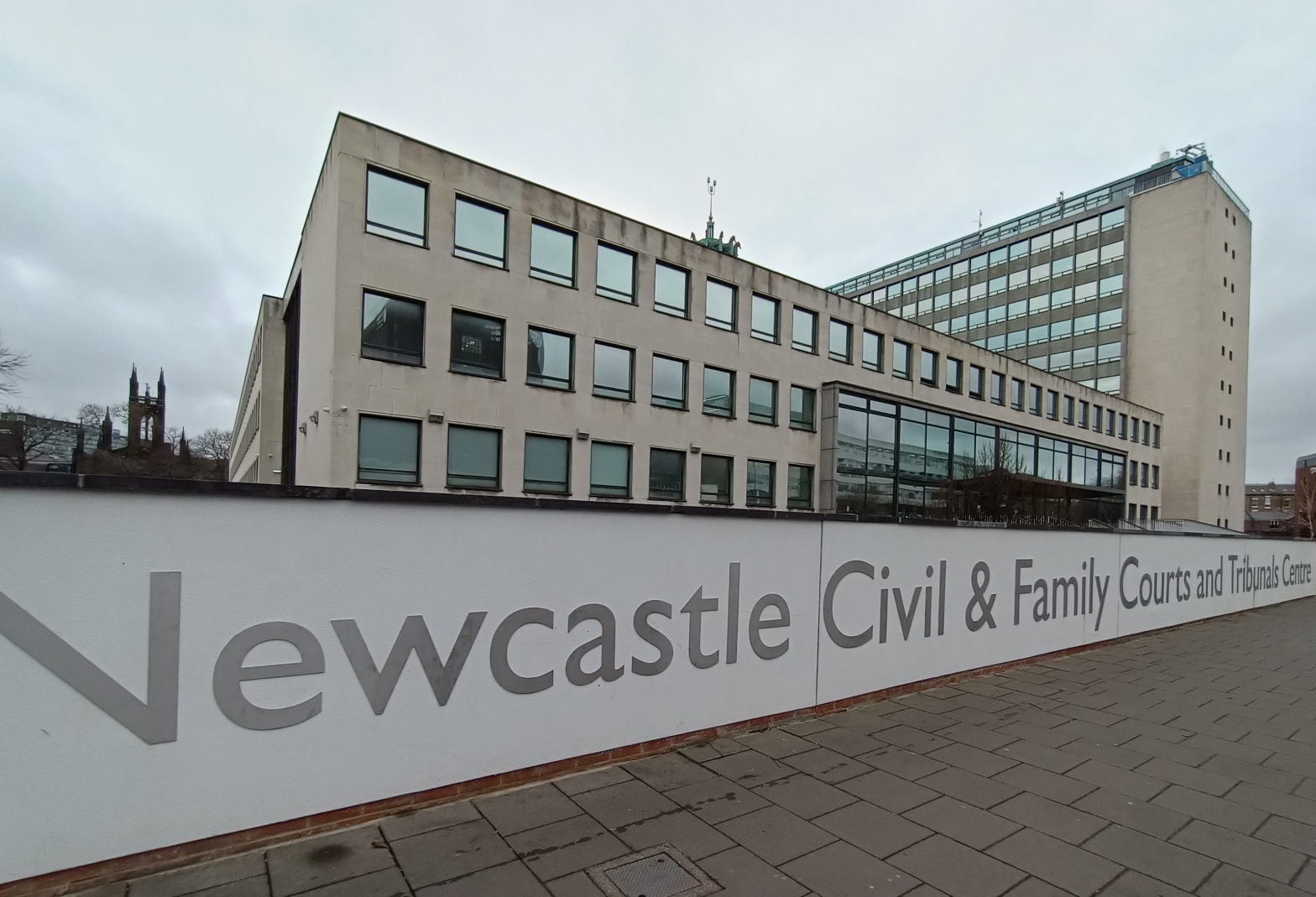



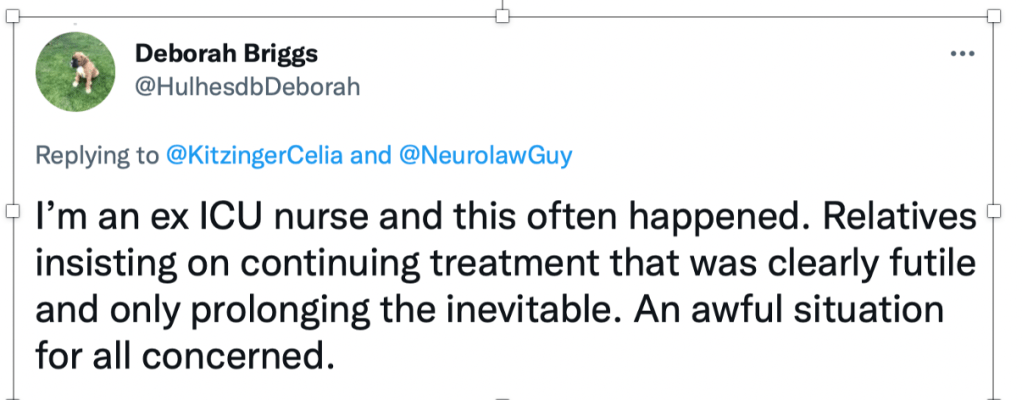
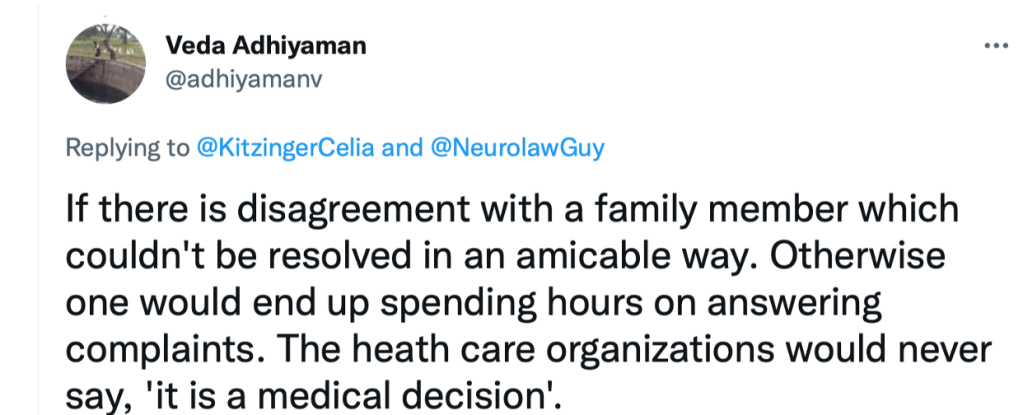





 Promoting Open Justice in the Court of Protection